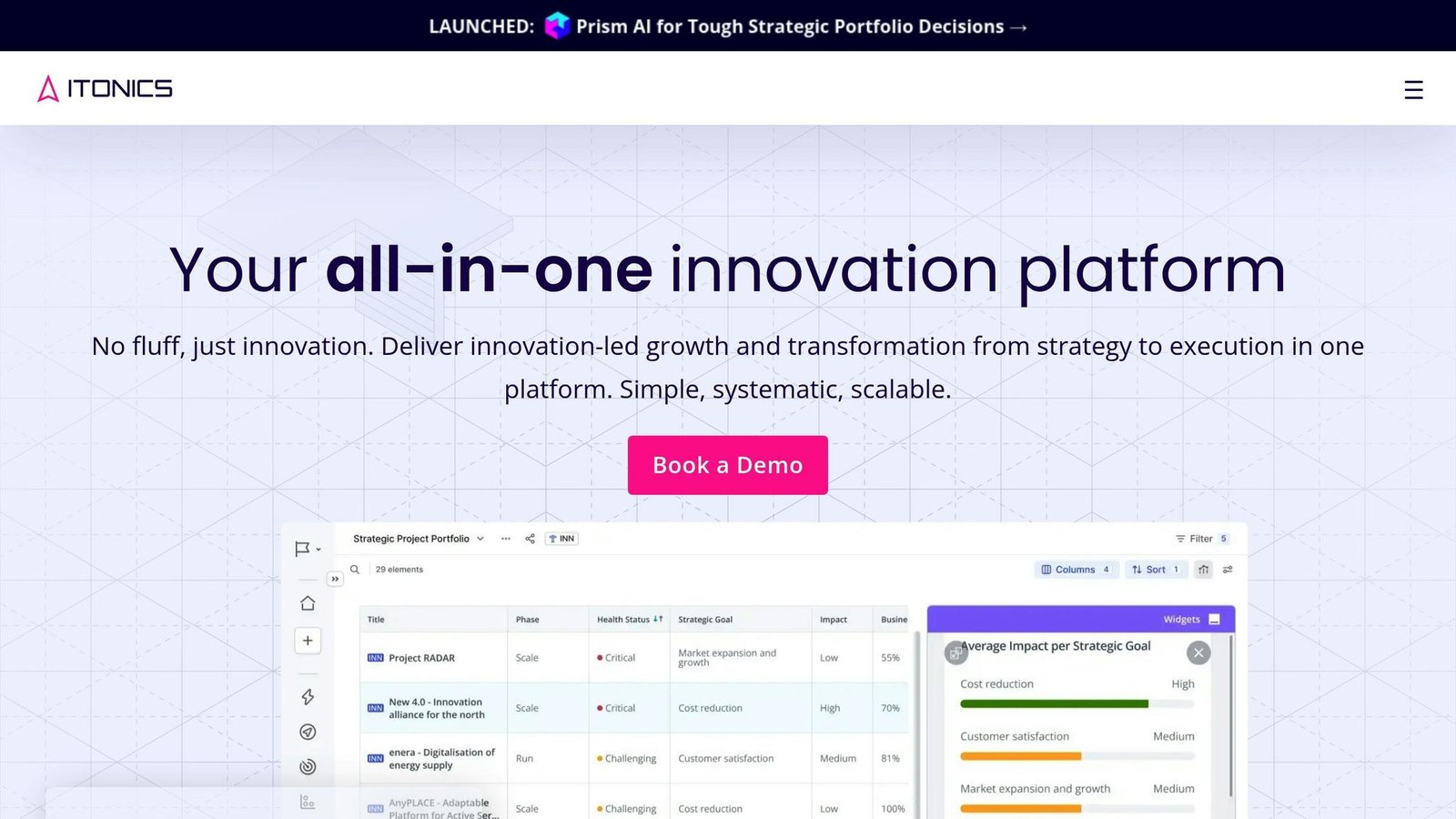


Most business leaders would agree: making data-driven decisions is critical for success.
Luckily, business analytics and optimization provide the techniques and tools to leverage data, enhance operations, and boost profits.
In this post, we’ll explore the fundamentals of business analytics and optimization, including key concepts like data-driven decision making, optimization models, and where these methods actually earn their keep.
Introduction to Business Analytics and Optimization
Business analytics and optimization work hand-in-hand to enhance business performance. By leveraging data and analytics, companies can gain actionable insights to make better decisions and optimize operations.
Understanding the Business Optimization Meaning
The core goal of business optimization is to maximize efficiency and productivity to boost profitability. It involves analyzing current business processes, identifying opportunities for improvement, and implementing changes to streamline operations.
Some key aspects of business optimization include:
- Reviewing workflows to reduce redundant or manual tasks
- Leveraging technology to automate business processes
- Monitoring business metrics and KPIs to identify performance gaps
- Adjusting strategies based on changing market conditions or customer needs
Ultimately, business optimization enables companies to do more with less – reducing costs while driving growth.
The Role of Business Analytics in Strategic Planning
Business analytics transforms raw data into insights leaders can use to shape strategy. Key ways analytics enables effective planning include:
- Market analysis: Identifying growth opportunities by assessing market size, trends, competition, and customer segmentation.
- Operational analytics: Pinpointing inefficiencies in workflows, supply chains, or budgets to optimize.
- Risk assessment: Detecting early warning signs to mitigate financial, operational, or cybersecurity risks.
By leveraging analytics to understand internal operations and external market forces, companies can pursue evidence-based strategies tailored to their unique business context. This data-driven approach to planning boosts the likelihood of successful execution.
What is business analytics and optimization?
Business analytics refers to the processes and techniques used to analyze business data to drive better decision making. It encompasses a range of methods to transform raw data into actionable insights that can optimize business operations.
Some key aspects of business analytics and optimization include:
Data Collection and Management
The first step is gathering relevant business data from various sources like sales numbers, website analytics, social media metrics, inventory systems etc. Proper data management using databases and data warehouses is crucial to enable analysis.
Data Visualization
Data visualization refers to representing information graphically using charts, graphs and dashboards. It enables decision makers to easily spot patterns and trends.
Predictive Modeling
Predictive modeling uses statistical and machine learning algorithms to identify trends and make predictions about future outcomes based on historical data.
Simulation
Simulation models mimic real world processes digitally. Businesses can test decisions in a risk-free setting to evaluate their impact.
Forecasting
Forecasting analyzes historical data to estimate future business metrics like sales, demand etc. It enables planning production, logistics and budgets.
Optimization
Optimization involves using analytics insights to improve business processes and operations. It can involve anything from supply chain optimization to improving marketing ROI.
In summary, business analytics empowers organizations to base decisions on data rather than intuition alone. It enables them to optimize operations, boost profits and gain competitive edge. The key is to focus analytics efforts on business priorities using both data and domain expertise.
What is analytics and optimization?
Business analytics and optimization refers to the use of data, statistical models, and optimization techniques to drive data-informed business decisions and maximize operational efficiency.
At its core, business analytics involves collecting, managing, analyzing, and visualizing data to uncover actionable insights that can guide strategic business choices. Meanwhile, optimization leverages analytical findings to identify and implement changes that will improve business processes and outcomes.
Together, business analytics and optimization enable organizations to:
- Track KPIs to measure performance
- Identify inefficiencies in operations
- Model different business scenarios to predict outcomes
- Determine optimal resource allocation
- Automate and streamline processes
- Boost productivity and profitability
In essence, analytics provides the vital information needed to diagnose issues and opportunities, while optimization applies that knowledge to enhance how the business runs from end to end.
Adopting business analytics and optimization practices allows companies to base their plans and investments on hard data rather than assumptions or gut feelings. This data-driven approach translates into more informed, calculated decision-making for everything from budgeting to inventory management and beyond.
With the ability to collect and analyze data at an unprecedented scale, business analytics and optimization has become an invaluable asset for organizations seeking to maximize productivity, efficiency, and success in today’s highly competitive markets.
What are the 4 types of business analytics?
Business analytics is crucial for gaining actionable insights to optimize business performance. There are four main types of business analytics:
Descriptive Analytics
Descriptive analytics focuses on using historical data to understand what has happened in the past. This provides context for business performance over time. Key techniques include data aggregation, data mining, and reporting.
Descriptive analytics enables businesses to track key performance indicators (KPIs) to monitor progress. Common use cases include sales reports, web traffic analytics, social media metrics, and inventory levels.
Diagnostic Analytics
Diagnostic analytics digs deeper into data to understand why something occurred. The goal is to identify root causes and patterns that explain business outcomes.
Techniques like drill-down analysis, data discovery, and correlations allow businesses to diagnose problems or opportunities. For example, finding out why website conversion rates dropped last month.
Predictive Analytics
Predictive analytics forecasts what could happen in the future based on historical data and statistical modeling. The goal is estimating future outcomes to guide planning.
Machine learning algorithms help predict trends like future sales, employee turnover, manufacturing faults, and customer churn. This supports data-driven planning and mitigating risks proactively.
Prescriptive Analytics
Prescriptive analytics recommends the best course of action to capitalize on predictions and insights. The focus is optimizing decisions to achieve business goals.
Optimization algorithms, simulation models, and decision modeling software can prescribe optimal pricing, inventory levels, logistics plans, and customized recommendations. This enables strategy alignment across the organization.
Understanding these four types of analytics helps businesses utilize data effectively at strategic and operational levels. Combining descriptive, diagnostic, predictive, and prescriptive analytics drives better decision making for business optimization.
What is optimization model in business analytics?
Optimization modeling refers to creating mathematical models to find the best possible solution to a problem given certain constraints. It is an essential technique in business analytics and operations research to maximize efficiency and minimize costs.
Some key things to know about optimization models in business analytics:
- They help organizations allocate limited resources in the most optimal way to maximize profits, reduce costs, or achieve other goals. Common examples include supply chain optimization, production scheduling, inventory management, and logistics network design.
- Optimization models have objective functions that define the goal, such as maximizing profit or minimizing shipping costs. They also define the decision variables, constraints, and relationships between them.
- Powerful optimization software uses techniques like linear programming, integer programming, and stochastic modeling to quickly solve complex optimization problems. This enables large-scale optimization of global supply chains, manufacturing systems, etc.
- Inputs into the models include operational data like costs, demand forecasts, supply constraints, and other variables that impact the outcomes. The optimization engine then computes the best possible plan to achieve the stated goal.
- Business leaders use the recommended optimized plans from these models to guide operational decision-making. For example, how much to produce, where to source materials, optimal distribution plans, etc.
In summary, optimization modeling is an invaluable analytics method to boost business productivity and performance. The ability to determine optimal business plans allows companies to significantly cut costs and maximize profits.
Foundations of Business Analytics
Data-Driven Decision Making: An Overview
Data-driven decision making refers to the practice of basing business decisions on insights derived from data analysis rather than intuition or observation alone. With the rise of big data and advanced analytics techniques, organizations now have unprecedented access to data that can inform strategic choices.
Adopting a data-driven approach starts with identifying key business questions and determining what data is needed to answer them. Relevant data is then collected from internal systems and external sources before being organized and analyzed using statistical methods and data visualization tools. These analytic processes transform raw data into actionable information leaders can use to guide plans and operations.
Shifting to data-driven decision making offers many benefits, including:
- More accurate identification of growth opportunities
- Improved risk management
- Higher efficiency and cost reductions
- Better alignment between strategy and organizational execution
However, realizing these benefits requires an analytics-oriented culture and the right technology stack to store data and perform analyses. Most importantly, decision makers must resist intuition bias and commit to letting data guide choices even when findings contradict established beliefs.
Business Analytics Techniques and Tools
Business analytics encompasses an array of quantitative methods used to analyze data and optimize business performance. Choosing the right techniques and tools is key to deriving meaningful insights.
Descriptive analytics focuses on understanding what happened by assessing historical data. Common descriptive techniques include:
- Data visualization with charts and graphs
- Reporting metrics like sales volumes over time
- Segmentation to group customers by behavior
Diagnostic analytics aims to explain why something happened and predict what will happen next. Statistical techniques and machine learning models can detect patterns and quantify relationships between variables.
Prescriptive analytics suggests data-backed actions to take advantage of insights. Optimization algorithms and simulation modeling facilitate decision making by showing potential outcomes of choices.
Many business analytics tools exist to support analysis techniques, including:
- Microsoft Excel for basic data manipulation
- Tableau for interactive data visualization
- R and Python for statistical analysis and machine learning
- Business intelligence platforms like Microsoft Power BI
The most impactful analytics initiatives combine both technique expertise and the right technology to transform data into business value. A strategic analytics plan aligned to key objectives ensures efforts target areas that will maximize operational and financial performance.
Optimization Techniques in Business Analytics
Business analytics encompasses a wide range of quantitative methods and techniques to drive data-based decision making. Optimizing business processes and gaining actionable insights are key goals of implementing analytics. There are various optimization techniques used in business analytics:
Linear and Non-Linear Optimization
Linear optimization involves maximizing or minimizing a linear objective function subject to linear constraints. Some examples include:
- Linear programming to optimize production plans, shipping schedules, etc. to maximize profit or minimize cost.
- Network flow optimization for supply chain logistics.
- Workforce scheduling optimization.
Non-linear optimization deals with non-linear objective functions or constraints. Examples include:
- Production optimization with economies of scale (non-linear production costs).
- Optimizing marketing spend with diminishing returns.
- Financial portfolio optimization with risk constraints.
Both techniques help businesses allocate limited resources efficiently to optimize operations.
Heuristic and Metaheuristic Approaches
For complex problems with many variables, traditional optimization methods may be intractable or take too long to solve. Heuristics provide quick, good-enough solutions by trading off accuracy for speed.
Common heuristic methods include:
- Greedy algorithms that make locally optimal choices at each step.
- Construction and improvement heuristics that start with an initial solution and then refine it.
- Priority rules based heuristics for scheduling problems.
Metaheuristics enhance the effectiveness of heuristics by guiding the search for better solutions. Examples include simulated annealing, tabu search, genetic algorithms, and ant colony optimization.
Heuristic approaches enable businesses to solve large-scale optimization problems with reasonable computation time and resources.
Where Optimization Actually Pays Off
This section used to contain four worked examples: an ecommerce company that cut inventory and saved millions, a software company whose pricing model added millions in revenue, a retailer that doubled email open rates, and a manufacturer that cut machine downtime by a third. Every one of them was anonymous, every one carried a precise result, and none could be sourced. All four have been removed.
That is worth being direct about, because unsourced case studies are the standard currency of analytics marketing and they are almost impossible to check. What follows instead is where the money actually comes from in the two most common applications, and what determines whether you see any of it.
Inventory Optimization
Inventory optimization works by pricing a trade-off you are already making implicitly. Holding stock costs money: capital tied up, storage, insurance, obsolescence. Running out costs money too: lost sales, expedited shipping, customers who go elsewhere. A model makes both costs explicit and finds the stocking level where their sum is lowest, per product, given how variable demand and lead times are.
The gain therefore depends almost entirely on two things. The first is how much of your inventory is currently set by rules of thumb rather than by analysis – a reorder point somebody picked years ago and nobody has revisited. The second is demand variability: if demand is steady and lead times are reliable, a simple rule is already close to optimal and a model will not find much. The businesses that see large savings are the ones with many SKUs, lumpy demand, and safety stock levels set by instinct.
The usual failure is data quality. An optimization model fed inaccurate stock counts or lead times that do not reflect reality will confidently recommend the wrong numbers, and it will keep doing so until someone checks.
Pricing Optimization
Pricing analysis is valuable because most prices are set by cost-plus arithmetic or by copying a competitor, and neither method knows anything about what customers will actually pay. Techniques like conjoint analysis and regression modelling estimate demand at different price points, and an optimization step then searches for the price or set of prices that maximises revenue or margin.
Two cautions. First, stated preference is not revealed preference: what people say they would pay in a survey systematically overstates what they do pay, so treat modelled demand curves as directional and validate with a live test on a subset of traffic. Second, a revenue-maximising price is not always the right price. It can raise churn, damage relationships with your largest customers, or invite a competitor response that leaves everyone worse off. The model optimises what you tell it to; deciding what to optimise remains a judgement call.
How to Get a Number You Can Trust
If you want to know what analytics is worth in your business, measure it in your business. Pick one decision, record the baseline for a defined period, change only that decision, and compare. It is slower than quoting someone else’s percentage, and it is the only figure that will survive scrutiny from your own finance team.
Business Analytics and Optimization in Action
Business analytics and optimization techniques empower organizations to make data-driven decisions, boost operational efficiency, and maximize return on investment. When applied strategically across key business functions, analytics transforms raw data into actionable insights for sustained growth and profitability.
Optimizing Marketing Campaigns
Marketing analytics enables organizations to optimize campaigns for superior performance. By leveraging data and analytics, marketers can:
- Identify high-value customer segments to target
- Determine optimal spending allocation across campaigns
- Continuously optimize messaging and offers using A/B testing
- Measure campaign impact on sales and revenue
The mechanism here is segmentation plus measurement. Sending the same message to everyone wastes spend on people who were never going to buy and under-serves the customers worth most to you. Splitting the list by behaviour and lifetime value, then testing offers against each segment, concentrates budget where it converts. Note the trap: open rate is a vanity metric, easily moved by subject lines and increasingly distorted by mail clients that pre-fetch images. Measure revenue per recipient instead.
Operational Efficiency through Analytics
Business analytics also uncovers opportunities to streamline operations and boost productivity. Common applications include:
- Forecasting demand to optimize inventory and supply chain agility
- Identifying workflow inefficiencies with process mining
- Minimizing waste and improving quality control
- Monitoring equipment performance to minimize downtime
Condition monitoring is the clearest case. Sensors on machinery produce signals – vibration, temperature, current draw – that shift before a failure. Detecting that shift converts an unplanned stoppage into a scheduled maintenance window, which is cheaper because you choose when it happens. Whether it is worth the instrumentation depends on what an hour of downtime costs you and how often failures currently surprise you. On a line that rarely stops, the sensors will not pay for themselves.
In summary, business analytics and optimization enable data-backed decision making for marketing, operations, and beyond. The size of the improvement is specific to your operation, which is why this article no longer quotes numbers from businesses it cannot name.
Advancing Skills through Business Analytics and Optimisation Courses
Business analytics and optimization are essential competencies for data-driven decision making and operational efficiency. Structured training through courses and programs can provide critical knowledge and practical skills to excel in these domains.
Curriculum and Learning Outcomes
Courses in business analytics and optimization typically cover concepts such as:
- Statistical analysis and data modeling
- Data visualization and business intelligence
- Forecasting, predictions, and simulations
- Optimization algorithms and techniques
- Decision analysis frameworks
The curriculum aims to equip learners with technical proficiency in analytics tools and platforms, as well as the strategic perspective to apply insights for business impact.
Upon completion, you can expect to gain competencies such as:
- Conducting statistical analysis on business data
- Building predictive models and simulations
- Creating interactive dashboards and visualizations
- Identifying and implementing optimization opportunities
- Communicating data-driven insights to stakeholders
This develops your capability to leverage analytics and optimization methodologies to enhance data-driven decision making, planning, and operations.
Selecting the Right Program for Your Career Goals
When choosing a business analytics and optimization course, consider how it aligns with your specific career aspirations, such as:
For business analysts: Programs focused on statistical modeling, BI tools, SQL, Python, dashboard creation
For operations managers: Courses on optimization algorithms, simulations, decision analysis, process improvement
For marketing analysts: Training on web analytics, A/B testing, campaign measurement, attribution modeling
For financial analysts: Education in statistical analysis, forecasting models, risk modeling, portfolio optimization
Seeking a program that directly caters to your target role and industry can maximize relevance. Consider blended formats with a mix of self-paced and instructor-led training for flexibility. Ultimately, the right course equips you with specialized skills to advance in your analytics and optimization career.
Conclusion: Embracing Analytics and Optimization for Business Excellence
Business analytics and optimization have become indispensable to modern business practices. As this article has shown, leveraging data and analytics can lead to smarter decisions, improved efficiency, and better financial outcomes.
Key Takeaways from Business Analytics and Optimization
Here are some of the key benefits that business analytics and optimization provide:
- Enhanced data-driven decision making leading to increased revenue and profits
- Streamlined operations and reduced costs through process optimization
- Improved productivity and resource allocation
- Better understanding of customers and ability to meet their needs
- Increased agility and adaptability to market changes
Adopting analytics and optimization strategies enables fact-based, objective decision making. Rather than relying on assumptions or intuition, businesses can leverage hard data analytics to guide choices. This leads to measurable business improvements – measurable being the operative word, and the reason to insist on measuring your own.
The Future of Business Decision Making
As technology continues advancing, so too will the capabilities of business analytics and optimization. Key developments to expect include:
- Automation of more analytical and optimization processes through AI and machine learning
- Faster and more scalable analysis of exponentially growing data
- Deeper insights from unstructured data using natural language processing and computer vision
- Increased adoption of analytics and optimization among small and medium businesses
- Tighter integration of analytics into business workflows and management systems
Business leaders would do well to stay abreast of these innovations and incorporate them into their practices. Analytics and optimization fluency will become an even more vital skill for future success. Rather than being disrupted, organizations must actively embrace these capabilities to thrive.
More on this topic
Browse all 53 articles on Data & Analytics.