
The choice between on-premise and cloud-based warehouse management systems (WMS) depends on your business size, budget, and operational needs. Here’s the gist:
- On-Premise WMS: Large capital purchase, full control over data, extensive customization, slower deployment and higher ongoing maintenance demands.
- Cloud WMS: Recurring subscription, faster setup, scales without hardware, vendor-managed updates, but depends on stable internet and gives you less control over data.
An editorial note. This article previously quoted specific price ranges for both models, a training cost range, a maintenance percentage, deployment timelines, a market-size forecast, and a claim that over 60% of U.S. businesses now prefer cloud WMS. None was attributed to a source, and the on-premise figure was quoted inconsistently in different sections – $50,000 in one table and $20,000 in another – which is what unsourced numbers tend to do. All of them have been removed, along with two case studies about an unnamed pharmaceutical distributor and an unnamed retailer. What replaces them is guidance on getting real numbers for your own situation, which is more useful than a range invented for an article.
Quick Comparison
| Feature | Cloud WMS | On-Premise WMS |
|---|---|---|
| Cost Shape | Recurring subscription, per user or per site | Capital purchase plus annual maintenance |
| Deployment | Faster – no hardware to procure | Slower – hardware, install, configuration |
| Scalability | Subscription change | Requires new hardware |
| Maintenance | Vendor-managed | IT team-managed |
| Data Control | Vendor-managed, off-site | Fully company-controlled |
| Remote Access | Accessible anywhere | Limited without extra setup |
Key Takeaway: Cloud WMS suits lower capital budgets and faster scaling. On-premise suits strict data control or heavy customization requirements. Read on for vendor evaluation tips.
Main Differences Between On-Premise and Cloud WMS
Setup Costs and Pricing Models
The two models differ in cost shape more than in total. On-premise concentrates spend upfront – hardware, perpetual licences, installation – then adds an annual maintenance fee. Cloud spreads it into a recurring subscription with no capital outlay.
Which is cheaper over five years depends on your headcount, site count, transaction volume, and how much customization you need. That is genuinely why published ranges for this category are unreliable: a single-site operation with fifteen users and a twelve-site operation with four hundred are both “a WMS purchase” and share almost nothing.
Both models carry costs that do not appear in the headline. On-premise adds hardware refresh, IT staff time, upgrade projects, and downtime during maintenance windows. Cloud adds overage charges when you exceed usage tiers, premium support tiers, and per-integration fees. Ask for both to be quoted explicitly.
Growth and Flexibility Options
Cloud WMS handles growth and seasonality more easily – adding users or volume is a subscription change rather than a procurement cycle. That matters most for businesses with sharp seasonal peaks, where the on-premise alternative means owning capacity you use for two months a year.
Scaling on-premise means buying and installing hardware, which takes weeks or months. Cloud also simplifies multi-site operation through central management, where on-premise typically means an installation per location and the synchronisation problems that come with it.
System Updates and Maintenance
Cloud systems deploy faster because there is no hardware to procure and rack, and they update automatically. On-premise takes longer to stand up and updates on your IT team’s schedule – which in practice often means running an old version for years because the upgrade project keeps getting deferred.
That deferral is the real risk with on-premise, not the update effort itself. An unpatched warehouse system connected to your ERP is a security problem as well as a functionality one.
Data Ownership and Security
On-premise gives you full ownership and control of storage location and security protocols. That matters for pharmaceuticals, defence, and anywhere with data residency requirements written into contracts.
Cloud WMS stores data on vendor-managed servers with vendor-managed security. For most businesses this is a security improvement rather than a downgrade, because the vendor employs specialists you do not. The genuine issues are residency, contractual exit terms, and what happens to your data if the vendor is acquired.
System Access and Third-Party Connections
Cloud WMS is reachable from any internet-connected device, which suits distributed teams and multi-site operations. On-premise restricts access to the local network unless you add remote access infrastructure, with the security work that implies.
On integration, cloud products generally ship APIs and pre-built connectors for ERP, accounting and e-commerce platforms. On-premise more often needs custom development, which is both a cost and an ongoing maintenance liability – custom integrations break when either end updates.
| Feature | Cloud WMS | On‑Premise WMS |
|---|---|---|
| Cost Shape | Operating expense, recurring | Capital expense plus maintenance |
| Deployment | Weeks, typically | Months, typically |
| Scalability | Quick subscription changes | Additional hardware needed |
| Updates | Automatic, vendor-managed | Manual, IT-managed |
| Data Location | Vendor-managed, off-site | On-site, company-controlled |
| Remote Access | Accessible from anywhere | Limited to local network |
| Integration | APIs and connectors | Often custom development |
How to Evaluate WMS Vendors
Complete Cost Analysis
Since no published range will fit your operation, build the number yourself. Ask every vendor on your shortlist to quote against the same written scenario: your site count, user count, order volume, SKU count, integrations required, and expected growth over three years. Identical inputs are what make quotes comparable.
For cloud WMS, get subscription fees, data migration, training, and the price of the integrations you need in writing. Ask specifically what happens when you exceed a usage tier and what the renewal uplift has been for existing customers.
For on-premise, get licence cost, hardware specification and cost, installation, and the annual maintenance fee as a percentage of licence. Then add your own IT team’s time, which is a real cost even though nobody invoices you for it.
Training is a line item vendors often leave vague. Ask for a training plan with days and headcount, and clarify whether refresher courses and onboarding new staff later cost extra.
Request a modelled total cost of ownership over three to five years, not year one. Year one flatters cloud; year five often flatters on-premise. Seeing both is the point.
Setup Time and Vendor Support
Ask for a timeline with named milestones and dependencies, and ask what has caused slippage on comparable projects. Vendors who have done this often will answer; vendors who have not will give you a Gantt chart with no risk in it.
Good vendors assign an onboarding specialist, run structured training, and provide technical support through go-live. Some include project management and scheduled check-ins.
For ongoing support, compare channels, hours, and response commitments by severity. Cloud vendors typically offer helpdesk access and automatic updates; on-premise vendors may offer on-site visits.
Read the service level agreement properly. It should state uptime commitments, response times, and escalation paths, along with the remedy when they are missed – and whether you have to claim it.
Vendor Track Record and Customer Service
Read third-party reviews, focusing on businesses your size in your sector. Ask for references and actually call them, with specific questions about implementation overruns and support quality rather than general satisfaction.
Check how long the vendor has operated and ask about client retention. Ask what proportion of customers are on the current version – a large tail on old releases tells you something about upgrade difficulty.
Watch how they respond to you during evaluation. Responsiveness before you have signed anything is the best version of their service you will ever see.
For narrowing the field, directories like BizBot list WMS vendors so you can compare features and requirements side by side before you start booking demos.
| Evaluation Factor | Key Criteria |
|---|---|
| Total Cost | Modelled 3- to 5-year cost, from your own scenario |
| Implementation | Timeline with milestones and stated risks |
| Support Quality | Documented response commitments by severity |
| Track Record | References you can call, in your sector |
| Integration | Native connectors for the systems you run |
Pros and Cons: On-Premise vs Cloud WMS
On-Premise WMS: Benefits and Drawbacks
On-premise gives full control over the system, data storage and security – which matters where regulation or contracts require it.
Customization is the other advantage. On-premise systems can be shaped around unusual operational processes rather than the reverse. That is a genuine benefit for operations that are genuinely unusual, and a trap for those that only believe they are: heavy customization is what makes upgrades expensive and vendors reluctant.
The drawbacks are capital cost, slower scaling, and maintenance falling to your IT team, including the downtime that comes with it.
Cloud WMS: Benefits and Drawbacks
Cloud deploys faster, integrates with online sales platforms readily, and reduces the load on internal IT through vendor-managed maintenance and automatic updates. Remote access lets managers see operations from anywhere.
The limitations are real too. Cloud depends on connectivity, and warehouses are often exactly the buildings with poor coverage – ask about offline modes for scanning before you assume it works. Data sits off-site, which may conflict with residency requirements. And customization is bounded by what the vendor supports, which is the flip side of the upgrade benefit.
Comparison Table: On-Premise vs Cloud WMS
| Aspect | On-Premise WMS | Cloud WMS |
|---|---|---|
| Cost Model | Capital plus annual maintenance | Recurring subscription |
| Deployment Time | Longer | Shorter |
| Customization | Extensive, fully controllable | Limited to vendor options |
| Maintenance | In-house IT responsibility | Vendor-managed |
| Scalability | Complex, hardware-dependent | Flexible, subscription-based |
| Data Control | Complete ownership | Vendor-managed, off-site |
| Internet Dependency | Not a primary concern for core ops | Critical for operational access |
Choosing the Right WMS Vendor
Evaluating Company Size and IT Capabilities
Your size and internal resources largely settle the deployment model. Small and mid-sized businesses generally do better with cloud, because they lack the staff to run server infrastructure and would rather not acquire them.
Larger organisations with existing IT functions and regulatory constraints may reasonably prefer on-premise for data control and customization.
Assess:
- Technical Expertise: On-premise needs skilled IT staff on the payroll. Cloud shifts that to the vendor.
- Budget Structure: Whether your business can fund a capital purchase, and whether operating expense or capital expense suits your accounting.
- Growth Projections: Fast or lumpy growth favours cloud, because capacity changes are a phone call rather than a project.
- Regulatory Considerations: Check whether your obligations actually require on-premise, or whether a cloud vendor’s certifications satisfy them. Many do; assumptions here cost money.
Using BizBot for Vendor Research
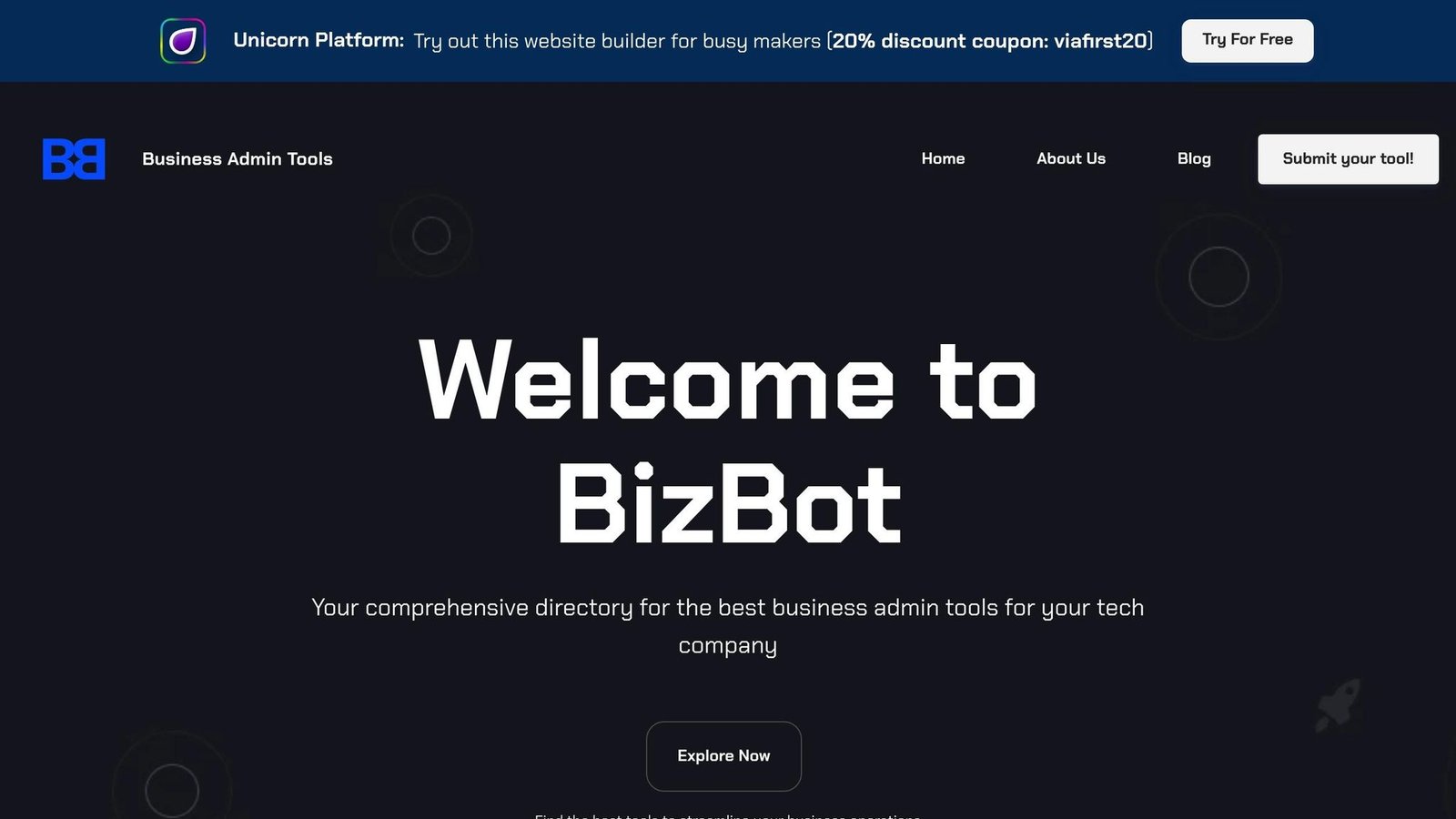
BizBot is a directory of business administration tools, including WMS products, organised by business size and industry.
You can filter by company size, industry, and functionality to shortlist products worth a demo, and compare listings side by side on integration and support details.
It also covers subscription management, which is relevant here: a WMS is rarely the only recurring software bill in an operations stack, and tracking them together is how duplicate spend surfaces.
Whatever the source of your shortlist, prioritise vendors with transparent pricing and references from businesses like yours. Demos and pilots tell you more than feature matrices.
Key Points for WMS Vendor Selection
Decide between on-premise and cloud on cost structure, control requirements, and growth plans – not on which is currently fashionable.
Scalability: cloud adjusts capacity by subscription; on-premise needs hardware. If your volume is stable, this matters less than vendors suggest.
Maintenance: vendor-managed in cloud; your responsibility on-premise, including the security patching that gets deferred.
| Critical Factor | Cloud WMS | On-Premise WMS |
|---|---|---|
| Initial Investment | Low, subscription-based | High, capital purchase |
| Scaling Speed | Rapid | Requires hardware upgrades |
| Maintenance | Vendor-managed | IT team-managed |
| Remote Access | Accessible anywhere with internet | Limited without extra setup |
| Implementation Time | Shorter – no hardware procurement | Longer |
Data handling: on-premise gives full control of storage and protocols, which regulated sectors may require. Cloud gives standardised vendor-managed security, which for most businesses is stronger than what they would build themselves.
Integration: cloud generally connects to third-party tools out of the box; on-premise more often needs custom work that must then be maintained.
To shortlist, BizBot’s directory lets you filter WMS products by size and requirement.
When you decide, favour vendors with clear pricing, real demonstrations, and references you can call. And build your own cost model from quotes against a written scenario – that number is the only one that describes your business.
FAQs
What should I consider when choosing between an on-premise and cloud-based WMS for my business?
- Cost Structure: On-premise concentrates spend upfront; cloud spreads it. Which suits you depends as much on how you fund purchases as on the total.
- Scalability: Cloud adjusts without procurement. On-premise needs hardware for expansion.
- Maintenance and Updates: Cloud is handled by the provider. On-premise consumes in-house IT capacity indefinitely.
- Accessibility: Cloud works from anywhere with a connection, which suits multi-site operations. On-premise is local unless you build remote access.
How do cloud-based WMS solutions ensure data security and compliance compared to on-premise systems?
Cloud WMS providers use encryption, apply security updates centrally, and hold certifications such as SOC 2, GDPR compliance, or ISO standards, maintained by staff whose only job is security.
On-premise security depends on your own IT team’s expertise and available time. Full control is genuine, and so is full responsibility – including for the patching that competes with every other IT priority.
Ask cloud vendors for their actual audit reports rather than accepting a badge, and ask on-premise vendors how they deliver security patches and how quickly.
What hidden costs should businesses consider when choosing between on-premise and cloud-based WMS solutions?
With an on-premise WMS: hardware refresh, routine maintenance, IT support time, power and rack space, and upgrade projects that may carry their own fees and downtime.
With a cloud WMS: usage overages, charges for advanced features and third-party integrations, per-user growth, and renewal increases. Ask what the last two renewal cycles looked like for existing customers.
For both: data migration, training, and the cost of getting your data out again if you leave. That last one is worth asking about before you sign, not after.
More on this topic
Browse all 86 articles on Business Operations, or jump straight to our buying guide: Best Productivity Tools for Small Teams.