
Disclosure: This page contains commercial links. BizBot may earn a commission from qualifying purchases. Paid placements do not buy a better ranking. Read our affiliate disclosure.
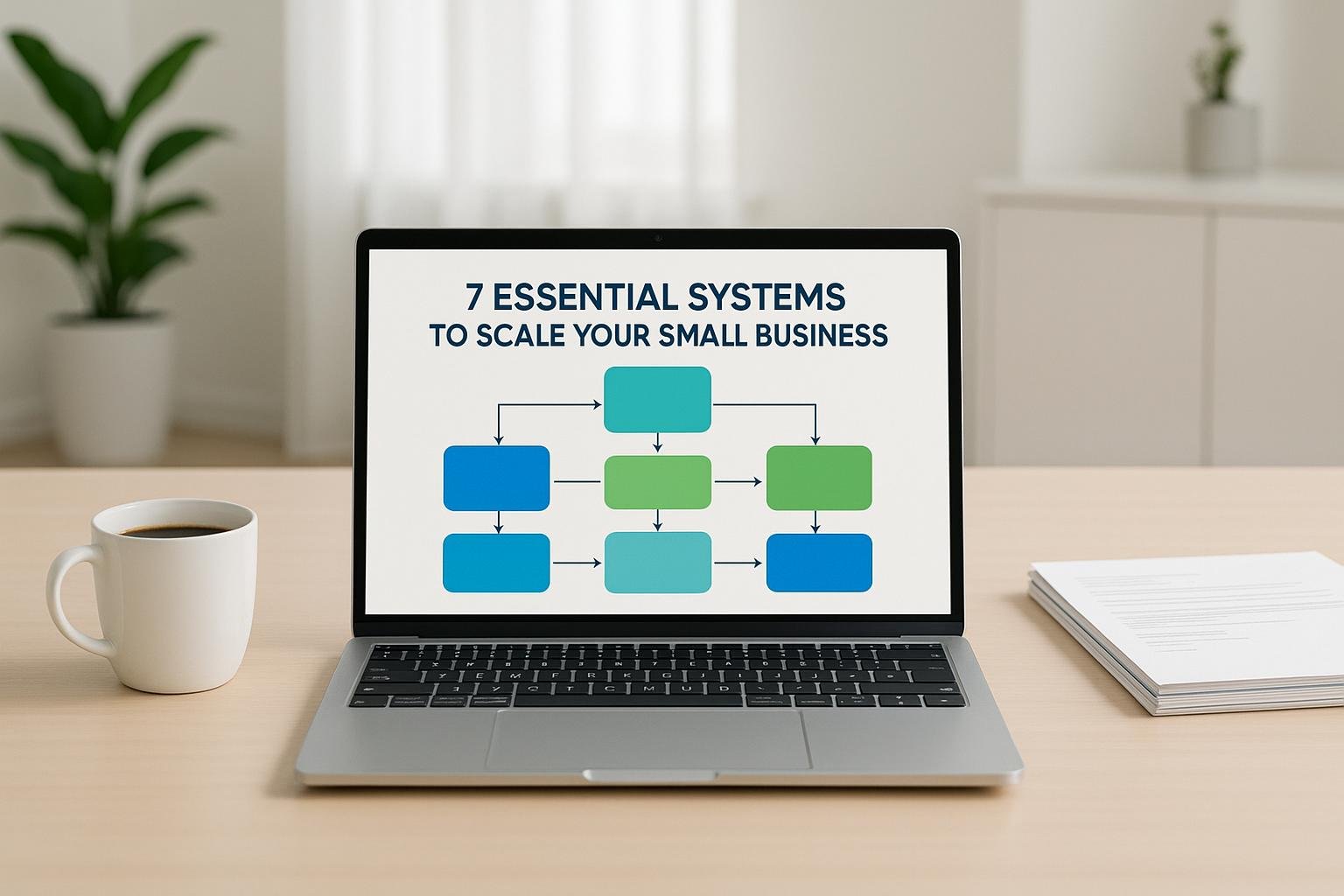
Scaling your business beyond six figures is an exciting milestone, but it’s also the stage where operational inefficiencies have the potential to derail growth. Without proper systems and processes in place, you risk bottlenecks, burnout, and profit leaks that can jeopardize long-term sustainability. Whether you’re a small business owner, entrepreneur, or corporate manager, this article outlines the seven essential systems your business needs to optimize operations and thrive as it scales.
Why Systems Are Non-Negotiable for Growth
Many businesses, even those generating strong revenue or boasting large followings, struggle with disorganization behind the scenes. From manual processes to disjointed workflows, these inefficiencies can snowball into operational chaos. But there’s hope: by implementing key systems, you can structure your business for smooth scaling, better client experiences, and higher profitability.
Let’s dive into the seven must-have systems for taking your business to the next level.
1. Offer Delivery System: Seamless Product Access
An offer delivery system ensures that your customers receive your products or services efficiently and without delays.
For businesses selling digital products, this system should automate delivery. Customers shouldn’t have to wait hours or days to access what they’ve purchased. Instead, tools like automated emails, file delivery platforms, or membership portals can provide instant gratification.
For service providers and coaches, streamline your onboarding process. This could include:
- Automated welcome emails with next steps
- Intake forms for gathering client information
- Orientation videos or checklists to set expectations
The key is to eliminate manual intervention that slows down the delivery process. Without this system, you risk being the bottleneck in your own business, losing revenue opportunities, and frustrating customers.
2. Client Relationship Management (CRM) System
A Client Relationship Management (CRM) system is critical for tracking customer interactions, maintaining relationships, and converting leads into clients.
With a CRM, you can:
- Monitor the customer journey from prospect to purchase
- Store purchase histories and preferences
- Automate follow-ups to nurture leads
Failing to use a CRM means you’re likely missing out on sales and retention opportunities simply because you’re unable to track where clients are in their journey. Whether you’re a solopreneur or managing a team, a CRM consolidates client data in one place, making it easier to upsell, cross-sell, and provide tailored experiences.
3. Product Lining System: Tailored Offers for Every Stage
A product lining system enables you to create a suite of products or services that meet your customers’ evolving needs as they move through their journey.
Consider creating a progression of offerings, such as:
- Entry-level products that solve an initial problem
- Intermediate services that address more advanced challenges
- High-ticket offerings for clients needing premium solutions
For example, a business consultant might offer:
- A low-cost e-book on business basics
- A mid-tier group coaching program
- One-on-one consulting for established businesses
By developing a product ladder, you can retain customers more effectively, guiding them from one stage of their growth to the next. This strategy ensures that no matter where clients are in their journey, you have a relevant offer for them.
4. Standard Operating Procedures (SOPs): Document Everything
Standard Operating Procedures (SOPs) are the backbone of consistency in business operations. When tasks are documented step-by-step, anyone on your team can replicate processes with the same quality and efficiency.
Why SOPs are essential:
- They ensure uniformity in outputs, regardless of who performs the task.
- They reduce onboarding and training time for new team members.
- They prevent knowledge loss if a key team member leaves.
From email templates to social media posting guidelines, documenting these processes creates a playbook for your business that allows you to scale without sacrificing quality.
5. Project Management System: Stay Organized
A project management tool helps you track tasks, deadlines, and responsibilities in your business. Tools like Asana, Trello, or ClickUp are invaluable for ensuring projects stay on course.
Benefits of a project management system:
- Streamline communication with your team
- Track progress on tasks and projects
- Prevent deadlines from slipping through the cracks
For solopreneurs, sticky notes and to-do lists might suffice initially, but as your business grows, these methods become unsustainable. A project management system ensures everything is organized and accessible, making it easier to delegate and manage larger workloads.
6. Launch Management System: Prepare for Success
Launching a new product or service is one of the most critical moments in any business. A launch management system ensures that you have a repeatable process to execute successful launches.
Your system might include:
- Pre-launch planning: Set goals, create assets, and outline your marketing timeline.
- Execution: Coordinate email campaigns, social media posts, and ads.
- Post-launch review: Analyze metrics to refine future launches.
By systematizing your launches, you can predict outcomes, maximize revenue, and avoid last-minute chaos. Consistency in your approach allows you to refine strategies over time for even better results.
7. Metrics and Analytics System: Track Your Numbers
Data-driven decision-making is the key to sustainable growth. A metrics and analytics system allows you to track and analyze important KPIs (key performance indicators), so you can make informed decisions about your business.
Key metrics to track include:
- Revenue and expenses
- Conversion rates
- Customer acquisition costs (CAC)
- Website traffic and performance
When you monitor these numbers regularly, you can identify what’s working, what’s not, and make adjustments as needed. For example, if a product isn’t selling well, data can help you determine whether it’s due to poor marketing, pricing, or the product itself. Remember: the numbers don’t lie.
Key Takeaways
Here are the most valuable insights from this guide:
- Offer Delivery System: Automate product access and onboarding to reduce delays.
- CRM System: Track client relationships to capture more sales and improve retention.
- Product Lining System: Build a suite of offerings that meet client needs at every stage.
- SOPs: Document processes to maintain consistency and simplify scaling.
- Project Management System: Stay organized and ensure deadlines are met.
- Launch Management System: Systematize your launches for predictable success.
- Metrics and Analytics: Base decisions on data to optimize performance and profitability.
Actionable Steps:
- Audit your current processes to identify bottlenecks and inefficiencies.
- Prioritize implementing one system at a time based on your most pressing needs.
- Regularly review and refine your systems as your business evolves.
Final Thoughts
As your business grows, the systems you put in place will either enable smooth scaling or hinder progress. By adopting these seven essential systems, you can position your business for success, ensuring sustainability, efficiency, and profitability at every stage.
Scaling isn’t just about growing revenue – it’s about creating a structure that supports long-term stability and growth. Start small, but start now. The systems you build today will be the foundation of your business tomorrow.
Source: “7 Essential Small Business Systems for Women (so your business runs without you)” – Ebony Evaughn, YouTube, Sep 2, 2025 – https://www.youtube.com/watch?v=NhcC4xk_OJQ
Use: Embedded for reference. Brief quotes used for commentary/review.
More on this topic
Browse all 86 articles on Business Operations, or jump straight to our buying guide: Best Productivity Tools for Small Teams.