
Disclosure: This page contains commercial links. BizBot may earn a commission from qualifying purchases. Paid placements do not buy a better ranking. Read our affiliate disclosure.
Shopping cart software is the part of an online business that is hardest to change later, so the price you pay in year three matters more than the one you pay in month one.
Pricing note. Every price below was checked against the vendor’s own pricing page in August 2026. Most of the figures previously published here were wrong, two vendors have renamed their entire plan line-up, one has replaced its pricing model outright, and one no longer has a free tier. Confirm rates before committing — and note that where a headline price looks familiar, it is usually the annual rate, not the monthly one.
For Small Businesses
| Software | Entry cost (checked Aug 2026) | Key Features |
|---|---|---|
| Shopify | Basic $29/month billed annually, $39 monthly | Online store, payments, inventory |
| WooCommerce | Free plugin; you pay for hosting | WordPress storefront, extensions |
| BigCommerce | Core $29/month billed annually, $39 monthly | Multi-channel, no transaction fees |
| Ecwid | Starter $5/month | Add a cart to an existing site |
| Wix | Light $17.77/month on a yearly plan | Site builder with commerce |
| Shift4Shop | $41/month | Full feature set on one plan |
1. Shopify

What is Shopify?
A hosted platform that runs the store, the checkout and the payments. The default choice, and the one with the largest app ecosystem.
Key Features
- Hosted storefront with themes
- Payments, shipping and tax handling
- Inventory and order management
- Multi-channel selling
- Large app store
Pricing Plans
The $29 / $79 / $299 figures in the previous version were the annual rates presented as monthly ones. Both columns:
| Plan | Billed annually | Billed monthly | Card rates from |
|---|---|---|---|
| Basic | $29/month | $39/month | 2.9% + 30¢ |
| Grow | $79/month | $105/month | 2.7% + 30¢ |
| Advanced | $299/month | $399/month | 2.5% + 30¢ |
| Plus | Not offered | From $2,300/month | Negotiated |
Pros and Cons
Pros: fastest to launch, huge app ecosystem, reliable checkout.
Cons: card fees on every sale, and additional fees if you use a payment provider other than Shopify Payments. Apps add up quickly — budget for them separately.
The “4.5 out of 5 stars from over 10,000 user reviews” rating previously quoted here named no review platform or date and has been removed.
2. BigCommerce
What is BigCommerce?
A hosted platform positioned against Shopify, with more built in and fewer paid apps required.
Key Features
- Unlimited products and storage
- Multi-channel selling across marketplaces and social
- Built-in promotions and discounts
- No platform transaction fees
- 24/7 support
Pricing Plans
The plan names have changed. Standard, Plus and Pro no longer exist; the tiers are now Core, Growth, Scale and Performance.
| Plan | Billed annually | Billed monthly | Sales limit |
|---|---|---|---|
| Core | $29/month | $39/month | Up to $30K trailing-twelve-month GMV, then auto-upgrades |
| Growth | $79/month | $105/month | Up to $100K TTM GMV, then auto-upgrades |
| Scale | $299/month | $399/month | $33,333/month, then 0.9% on GMV above the cap |
| Performance | From $1,499/month | Custom | |
The GMV thresholds are the detail that catches people out: BigCommerce upgrades your plan automatically when you cross them, so a successful quarter raises your bill without you doing anything. Annual billing saves 25%.
Pros and Cons
Pros: no platform transaction fees, a lot included as standard, strong multi-channel.
Cons: automatic plan upgrades on sales volume; fewer free themes than Shopify.
3. WooCommerce
What is WooCommerce?
A free, open-source WordPress plugin. The only genuinely free option here — with the caveat that free software still needs paid hosting.
Key Features
- Full control over the storefront and data
- Enormous extension library
- No platform fee on sales
- Runs on your own hosting
Pricing
The plugin is free. Your real costs are hosting, a theme, paid extensions for things the hosted platforms include as standard, and someone to handle updates and security. For a small store that adds up to less than Shopify; for a store with several paid extensions it often does not.
Pros and Cons
Pros: no platform fees, complete control, huge ecosystem.
Cons: you own the maintenance, the security patches and the downtime.
An unsourced “4.5 out of 5 from over 10,000 reviews” rating has been removed from this section, along with an editorial note left in the published text stating that the content was machine-generated and might not be accurate.
4. Ecwid
What is Ecwid?
A cart you bolt onto a site you already have, rather than a platform you migrate to.
Key Features
- Embeds into an existing website or social page
- No setup or transaction fees on any plan
- Unlimited bandwidth and storage
- Multi-channel selling
Pricing Plans
Two corrections: Ecwid no longer has a free plan, and none of the previously published figures match current tiers.
| Plan | Billed annually | Billed monthly | Products |
|---|---|---|---|
| Starter | $5/month | $5/month | Up to 10 |
| Venture | $29/month | $35/month | Up to 100, plus digital goods |
| Business | $49/month | $65/month | Up to 2,500 |
| Unlimited | $119/month | $149/month | Unlimited |
Pros and Cons
Pros: cheapest entry point on this page, no transaction fees, minimal disruption to an existing site.
Cons: product limits bite early; the free tier is gone.
5. Adobe Commerce (Magento)

What is Adobe Commerce?
Enterprise ecommerce, formerly Magento Commerce. Magento Open Source still exists as a separate free product and is not the same thing.
Key Features
- Deep customisation and B2B capability
- Multi-store and multi-currency
- Advanced merchandising and pricing rules
- Integrates with the wider Adobe stack
Pricing
The previous version of this article listed Adobe Commerce at “$2,000 a month, $24,000 a year” and a second tier at “$40,000 a month, $480,000 a year”. Adobe publishes no prices for Commerce at all. Its pricing page carries only “Get customized pricing” calls to action. Both figures have been removed.
What is true: Adobe Commerce is licensed on a negotiated contract, typically scaled to order volume, and the licence is only part of the cost — implementation and ongoing development usually exceed it. Magento Open Source remains free to download and self-host.
Pros and Cons
Pros: the most capable platform here for complex catalogues and B2B.
Cons: no published pricing, and a development project rather than a signup.
6. PrestaShop
What is PrestaShop?
Open-source ecommerce with an optional hosted service. Popular in Europe.
Key Features
- Free, self-hosted Classic edition
- Large module and theme marketplace
- Multi-language and multi-currency
- Hosted option for those who do not want to run servers
Pricing
The Classic edition is free to download and self-host. PrestaShop also sells a Hosted option, but no rate was displayed when we checked in August 2026, so the “from €24 per month” figure previously published here has been removed. Ask PrestaShop for the current hosted rate in your currency.
Pros and Cons
Pros: free core, strong European market presence, extensive modules.
Cons: paid modules add up; self-hosting means self-maintaining.
7. Shift4Shop

What is Shift4Shop?
A full ecommerce platform owned by payments company Shift4.
Key Features
- All features included in the core software
- Integrated payment processing
- Multi-channel selling
- SEO and marketing tools
Pricing
The pricing model has changed. There is no longer a $29 / $79 / $229 tier structure, and the previously described free plan conditional on processing at least $500 a month through Shift4’s gateway is no longer how it is presented.
As of August 2026, Shift4Shop advertises an unlimited, enterprise-grade plan at $41 a month, with all features built into the core software. Payment processing fees are separate. Confirm the terms, particularly any requirement to use Shift4 as your processor, before committing.
Pros and Cons
Pros: one plan, everything included, low monthly cost.
Cons: tied to a payments company, so read the processing terms carefully.
8. Wix
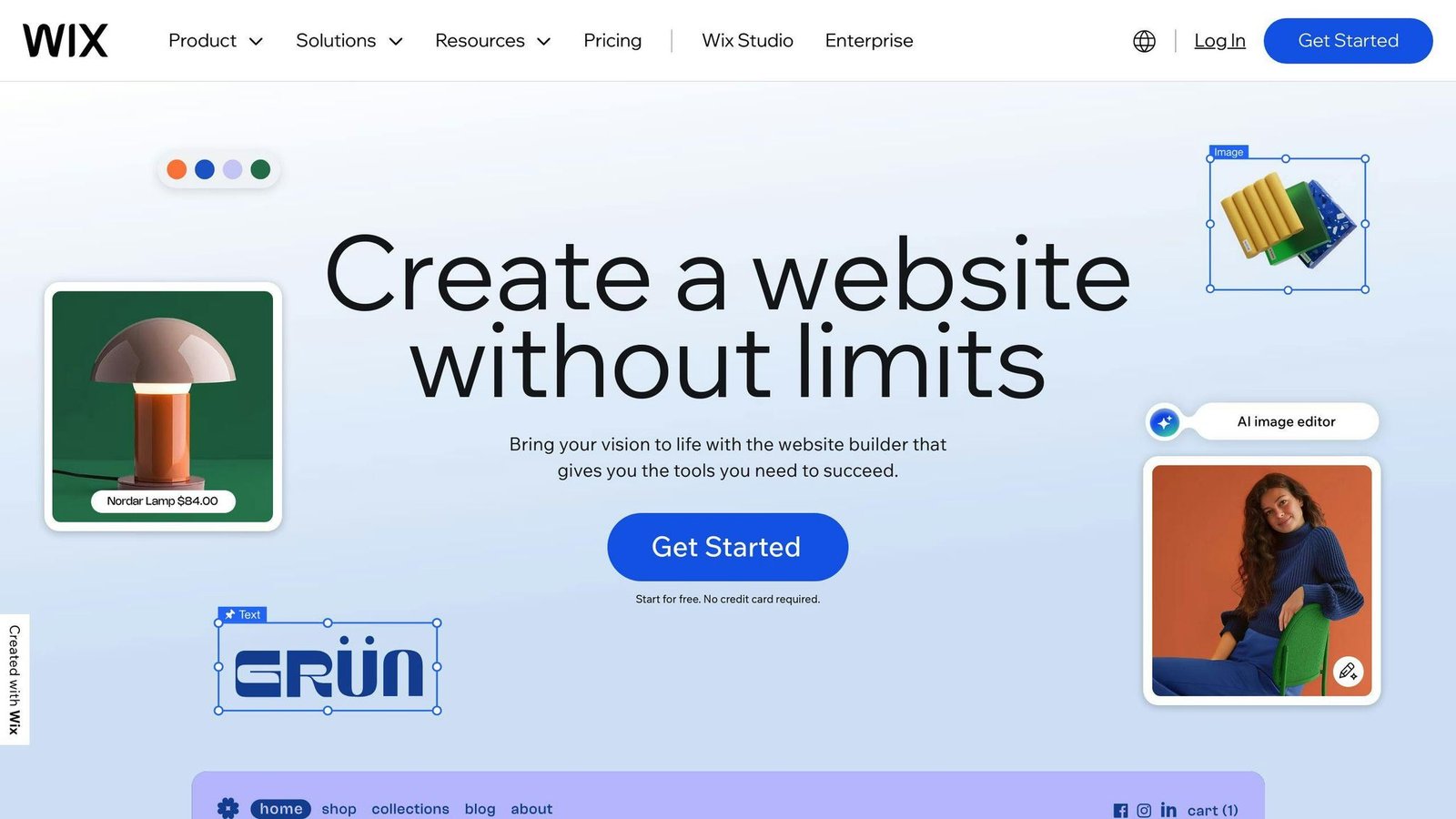
What is Wix?
A website builder with ecommerce attached. Strongest where the site matters as much as the store, and where you want a online presence built without a developer.
Key Features
- Drag-and-drop site building
- Templates and app market
- Built-in payments and shipping
- Marketing and SEO tools
Pricing Plans
None of the previously listed figures ($27, $32, $159) matched. Current plans, on yearly subscriptions paid in full:
| Plan | Price per month |
|---|---|
| Free | $0, no card required |
| Light | $17.77 |
| Core | $29.77 |
| Business | $39.77 |
| Business Elite | $159.77 |
Wix states that displayed prices are for yearly subscriptions paid up front, and that prices and currency vary by location — so check the figure shown in your own country.
Pros and Cons
Pros: easiest site building here, genuine free tier for a non-commerce site.
Cons: less depth on inventory and multi-channel than the dedicated platforms; harder to migrate away from.
9. SamCart
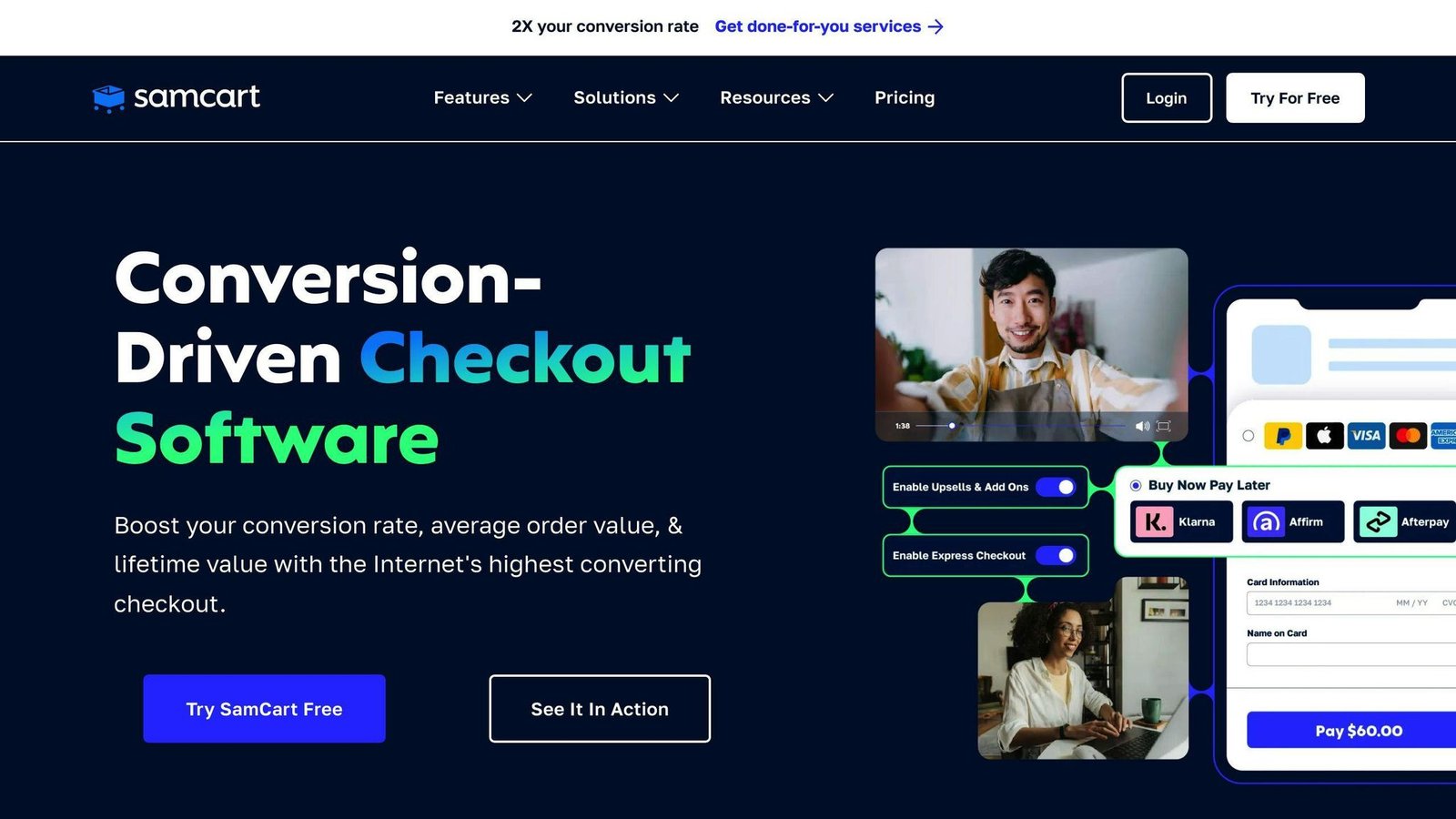
What is SamCart?
Not a full store. SamCart is a checkout and landing-page tool for selling a small number of products, typically digital ones, with heavy conversion optimisation.
Key Features
- Optimised checkout pages
- Order bumps and one-click upsells
- Subscription and payment plan handling
- A/B testing on checkout pages
Pricing Plans
The $49 and $99 tiers previously listed here do not exist. Current pricing:
| Plan | Price |
|---|---|
| Core | $79/month |
| Pro | $199/month |
| Done For You | Quoted after a consultation |
SamCart advertises a 25% discount for annual billing.
Pros and Cons
Pros: the best checkout conversion tooling on this page.
Cons: the most expensive entry price here, and it is not a catalogue platform.
10. X-Cart
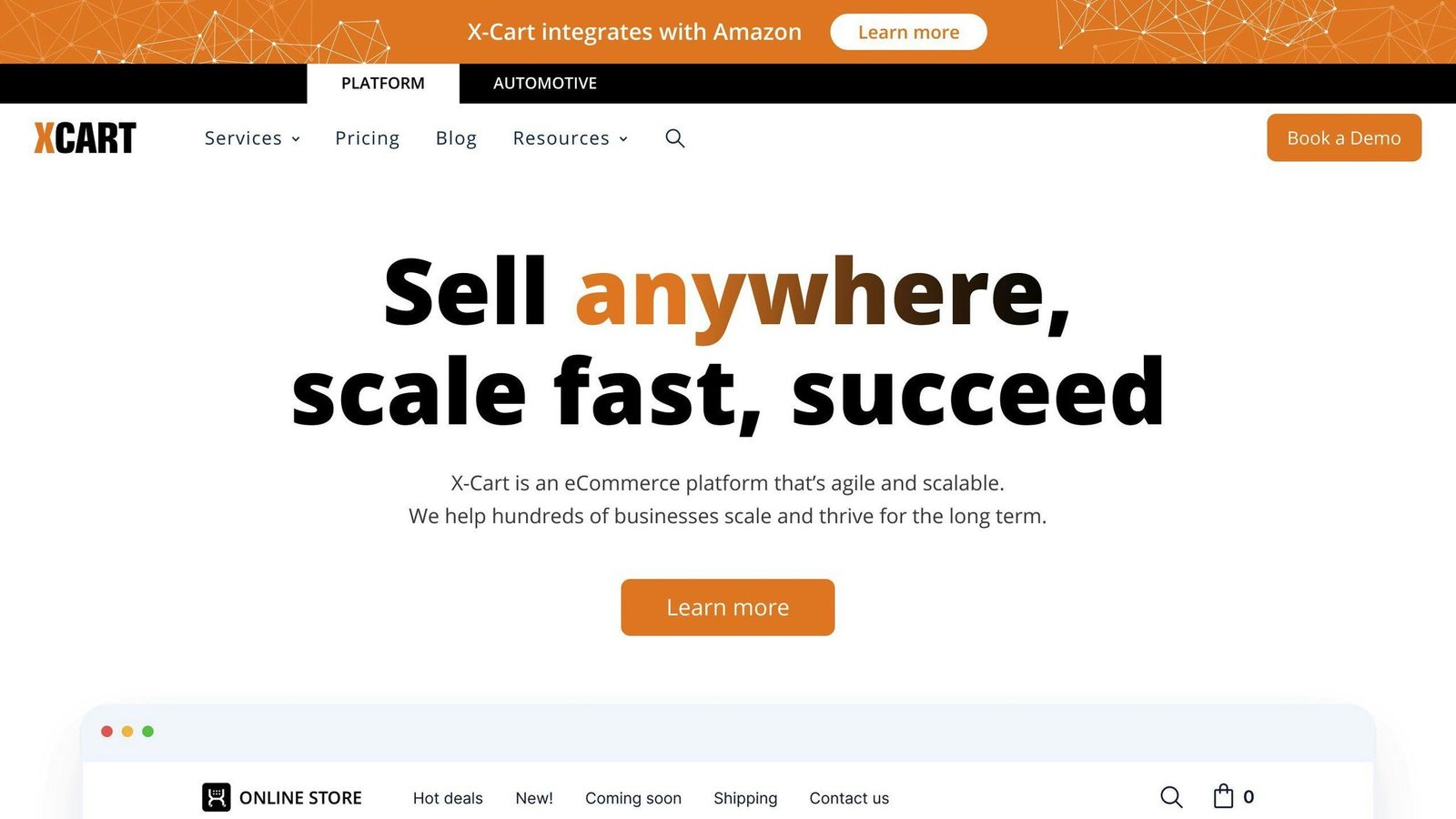
What is X-Cart?
A self-hosted ecommerce platform aimed at larger catalogues and B2B, historically sold as a one-time licence rather than a subscription.
Key Features
- Self-hosted, so no platform transaction fees
- Advanced inventory and B2B features
- Multi-vendor capability
- Extensive customisation
Pricing
X-Cart’s pricing page is now a demo-booking landing page with no tiers displayed. The one-time licence figures previously published here — $495, $1,495 and $5,995 — and the “$29.95/month” alternative could not be found on the vendor’s site in August 2026, so all four have been removed.
X-Cart’s own meta description still describes “shopping cart software without monthly payments”, which suggests the perpetual licence model persists, but get the current figure and what it includes in writing.
Pros and Cons
Pros: no recurring platform fee if the licence model holds; strong B2B features.
Cons: no published pricing; self-hosting means you own the infrastructure.
Comparison
All figures checked August 2026. Where two prices appear, the first is the annual rate.
| Software | Entry cost | Platform transaction fee | Hosting included |
|---|---|---|---|
| Ecwid | $5/month (Starter, 10 products) | None | Yes |
| Wix | $17.77/month (Light, yearly) | Varies by plan | Yes |
| Shopify | $29/month annually, $39 monthly | Card rates from 2.9% + 30¢ | Yes |
| BigCommerce | $29/month annually, $39 monthly | None, but GMV caps auto-upgrade the plan | Yes |
| Shift4Shop | $41/month | Processing fees separate | Yes |
| SamCart | $79/month (Core) | Processing fees separate | Yes |
| WooCommerce | Free plugin | None | No — you buy hosting |
| PrestaShop | Free (Classic, self-hosted) | None | No, unless you take the hosted option |
| X-Cart | Not published | None | No |
| Adobe Commerce | Not published | Negotiated | Depends on contract |
Choosing
Three things decide this more reliably than a feature grid.
Where the fees are. Shopify charges a card rate on every sale. BigCommerce charges none but raises your plan automatically as sales grow. Self-hosted platforms charge nothing but bill you in server costs and maintenance time. Work out your annual cost at your expected sales volume, not at zero.
What you are actually selling. A handful of digital products is a checkout problem, and SamCart solves it. A 5,000-item catalogue with B2B pricing is a platform problem, and Adobe Commerce or X-Cart solve it. Most businesses are in between, which is why Shopify and BigCommerce exist.
How hard it is to leave. Migration is the hidden cost in this category. Check what your product, customer and order data looks like on export before you import it anywhere.
FAQs
What is the best shopping cart software?
There is no single answer. For most small businesses it is Shopify or BigCommerce, and the choice between them comes down to whether you would rather pay card fees or accept automatic plan upgrades on volume. For a cart on an existing site, Ecwid at $5 a month is the cheapest real option. For full control and no platform fees, WooCommerce, with hosting and maintenance in the budget.
Which shopping cart is cheapest?
WooCommerce and PrestaShop are free to install, but not free to run — hosting, extensions and maintenance are real costs. Among hosted platforms, Ecwid Starter at $5 a month is the lowest published price, with a 10-product limit that most stores will outgrow.
More on this topic
Browse all 44 articles on Marketing & Growth, or jump straight to our buying guide: Best Marketing and CRM Tools for Small Businesses.