
Effective Suspicious Activity Report (SAR) filing is crucial for financial institutions to combat money laundering, terrorist financing, and other financial crimes. Here are the key best practices:
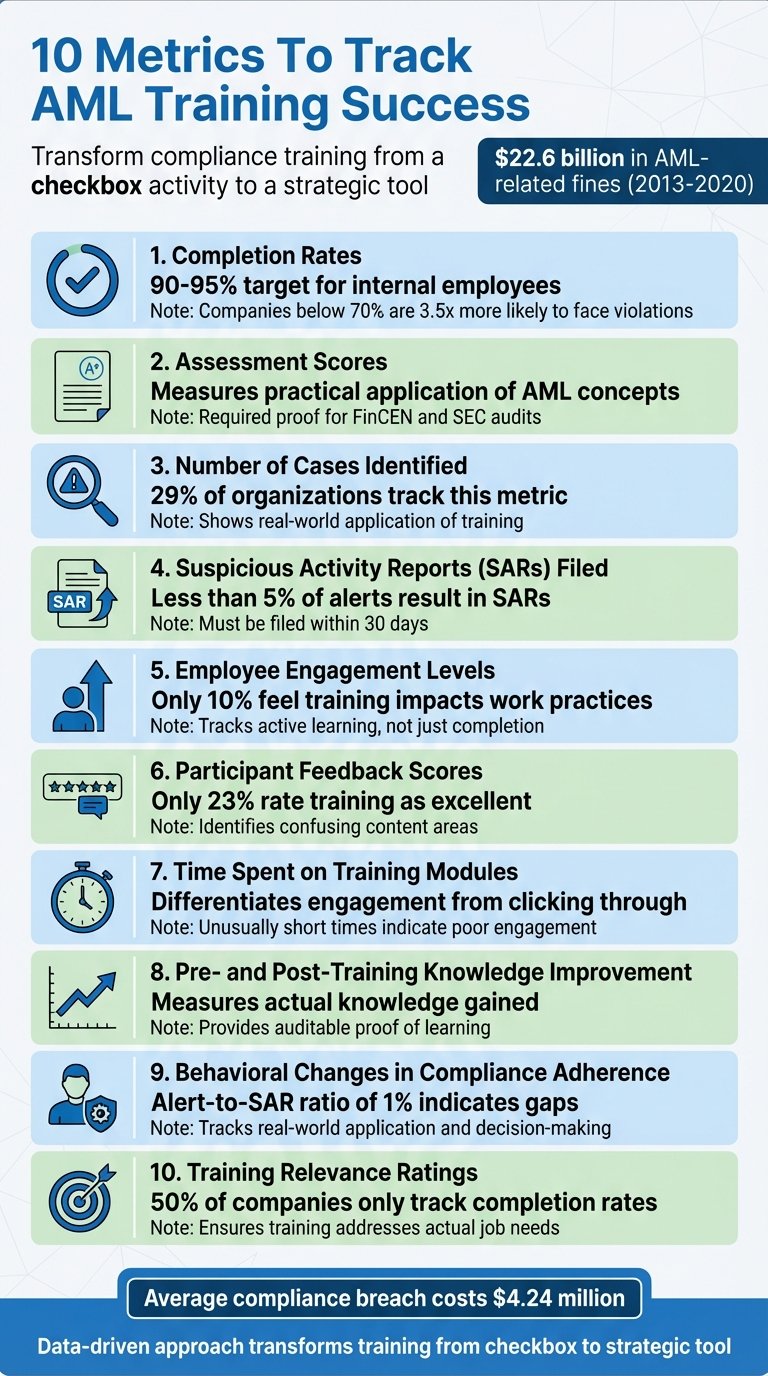
1. Comprehensive Training
- Provide compliance teams with thorough training on regulations, red flags, and reporting procedures
- Utilize advanced transaction monitoring tools and software
2. Advanced Transaction Monitoring Tools
- Leverage machine learning and data analytics to detect suspicious activity in real-time
- Reduce false positives and increase efficiency
3. Prompt Reporting
- File SARs within 30 days (or 60 days in some cases) of detecting suspicious activity
- Aim to report as soon as possible to enable swift law enforcement action
4. Clear and Detailed SAR Narratives
- Describe the who, what, where, when, why, and how of the activity
- Focus on key facts and avoid jargon
- Utilize tools to analyze data and generate detailed narratives
5. Standardize and Automate Processes
- Automate data collection, analysis, and report generation
- Use tools to pre-fill forms and create templates for consistency
6. Continuous Monitoring and Follow-up
- Stay updated with regulations and new threats
- Provide additional information and collaborate with law enforcement
Related video from YouTube
Quick Comparison of SAR Filing Tools
This table used to compare three unnamed placeholder columns on invented scales. Two of its three links pointed at real products, so those two are named below. Every cell is what the vendor says on its own product page, nothing more.
| Capability | Nasdaq Verafin | Unit21 |
|---|---|---|
| Filing to FinCEN | A completed SAR is queued for automated overnight e-filing direct to FinCEN | Auto-files SARs, and also STRs, CTRs, 314(a) and goAML reports |
| Form population | Fills every data field when the report is generated and flags missing required information | AI agents assemble the case and draft a narrative and recommendation |
| Case management | Open an investigative case straight from an alert, attach files, assign tasks | Alert to case to SAR workflow, with graph analysis across linked entities |
| Published pricing | None | None |
By following these best practices and leveraging the right tools, financial institutions can ensure effective SAR filing, maintain compliance, and contribute to the fight against financial crimes.
1. Ensure Comprehensive Training for Compliance Teams
Effective Suspicious Activity Reporting (SAR) filing starts with thorough training for compliance teams. To help your team spot and report suspicious activity, provide them with the right knowledge and skills.
Training and Knowledge
Compliance teams should regularly train on:
- The Bank Secrecy Act (BSA) and the USA PATRIOT Act
- FinCEN regulations and guidance
- Red flags and signs of suspicious activity
- Customer due diligence (CDD) and enhanced due diligence (EDD)
- Reporting requirements and procedures
Tool Utilization
Teams should also learn to use advanced transaction monitoring tools and software. These tools help identify suspicious activity and automate reporting, reducing human error and increasing efficiency.
2. Utilize Advanced Transaction Monitoring Tools
Effective SAR filing depends on quickly spotting suspicious activity. Advanced transaction monitoring tools help financial institutions detect and report such activity, cut down on false positives, and boost the efficiency of their AML programs.
Tool Utilization
These tools use machine learning, data analytics, and other technologies to find patterns and anomalies in transactions. They can monitor transactions in real-time, allowing for quick detection and reporting of suspicious activity. This reduces false positives, saving time and resources for compliance teams.
Timeliness
Timeliness is key in SAR filing. Advanced tools help financial institutions detect and report suspicious activity as it happens, which is crucial for stopping financial crimes. These tools enable swift reporting and investigation.
3. Report Suspicious Activity Promptly
Reporting suspicious activity quickly is key to stopping financial crimes. Delays can let illegal activities continue, harming people and the financial system. Financial institutions need a strong system to detect and report suspicious activity fast.
Timeliness
- Deadline: File a SAR within 30 days of detecting suspicious activity. In some cases, this can be extended to 60 days.
- Goal: Aim to file SARs as soon as possible to help law enforcement act quickly.
Tool Utilization
- Transaction Monitoring Software: Use software to analyze large amounts of data in real-time. This helps spot patterns and anomalies that may indicate illegal activity.
- Efficiency: These tools help reduce the time it takes to detect and report suspicious activity, allowing for prompt SAR filing.
4. Craft Clear and Detailed SAR Narratives
When filing a Suspicious Activity Report (SAR), the narrative is crucial. A well-written narrative helps law enforcement understand the suspicious activity.
Narrative Quality
A clear and detailed SAR narrative should:
- Describe the who, what, where, when, and why of the activity
- Be concise and logical
- Avoid jargon and technical terms
- Focus on key facts
Use the 5 Ws and H (who, what, where, when, why, and how) to guide your narrative.
Tool Utilization
Advanced transaction monitoring tools can help by:
- Analyzing large amounts of data in real-time
- Identifying patterns and anomalies
- Generating detailed reports and narratives
- Automating the SAR filing process
Follow-up
After filing a SAR, continuous monitoring and follow-up are essential. This includes:
- Providing additional information to law enforcement as needed
- Updating the SAR narrative with new information
- Collaborating with law enforcement to build a strong case
5. Standardize and Automate SAR Filing Processes
Standardizing and automating SAR filing can save time and effort for compliance teams. Using technology and tools can make the process smoother.
Automation
Automating parts of the SAR filing process can reduce manual work. This includes:
- Data Collection: Automatically gather data needed for SARs.
- Analysis: Use tools to analyze transactions for red flags.
- Report Generation: Create SAR drafts automatically.
Tool Utilization
Using tools to pre-fill forms ensures data consistency and speeds up the process. Modern tools can:
- Pre-populate Forms: Automatically fill in standard information.
- Fill Subject and Activity Info: Use data from fraud case management systems.
- Templates and AI: Speed up narrative creation with templates and AI.
Benefits
| Task | Manual Process | Automated Process |
|---|---|---|
| Data Collection | Time-consuming and prone to errors | Quick and accurate |
| Analysis | Manual review of transactions | Real-time monitoring with tools |
| Report Generation | Manually writing reports | Automated draft creation |
| Form Filling | Manually entering data | Pre-filled forms with consistent data |
6. Maintain Continuous Monitoring and Follow-up
Effective SAR filing doesn’t end with submitting a report. Continuous monitoring and follow-up are crucial to ensure suspicious activity is fully investigated and addressed.
Training and Knowledge
Compliance teams should stay updated with the latest regulations and best practices. Regular training helps teams recognize and respond to new threats.
Tool Utilization
Advanced transaction monitoring tools can:
- Identify suspicious activity in real-time
- Provide data to support SAR filing and investigation
Timeliness
Timely follow-up is essential to:
- Ensure thorough investigation of suspicious activity
- Prevent further illegal activity
- Avoid reputational damage and regulatory penalties
Comparison Table
Two named products are compared below: Nasdaq Verafin and Unit21. Each cell states what the vendor itself publishes about the product. Where a vendor does not describe something, the cell says so rather than guessing.
| Capability | Nasdaq Verafin | Unit21 |
|---|---|---|
| Filing to FinCEN | A completed SAR is queued for automated overnight e-filing direct to FinCEN | Auto-filing of regulatory reports to the relevant regulator |
| Report types described | SAR | SAR, STR, CTR, 314(a), goAML |
| Form population | All data fields completed when the report is generated, with missing required fields flagged; the analyst writes the narrative | AI agents gather case evidence and draft the narrative and a recommendation |
| Case management | Open a case directly from an alert, upload files, assign tasks | Alert to case to SAR workflow, with graph analysis linking entities |
| Monitoring in the same product | Cases and SARs are generated from alerts inside the platform | Real-time monitoring across RTP, FedNow, ACH, card and crypto rails, plus sanctions and payment screening |
| Deadline and status tracking | 90-day reminder that a SAR may need refiling for continuing activity; dashboard tracks status through to FinCEN acceptance | Not described on the product page |
| Audit trail and retention | Logs who generated, reviewed and submitted each report; digital archive kept for a minimum of five years | Audit trail for every decision |
| Stated buyers | Not stated on the product page | Fintechs, crypto platforms, sponsor banks and other financial institutions |
| Published pricing | None | None |
Both descriptions come from the vendors, so read them as claims rather than test results. Neither publishes a price, which means any budget you build before a sales call is a guess. Two things are worth checking in a demo, because they decide how much work the tool actually removes: how many fields the SAR is filled with before a human touches it, and whether the alert that started the case carries its supporting transactions into the report. A tool that files fast but forces analysts to re-key subject data has moved the work rather than removed it.
Conclusion
Effective SAR filing is key for financial institutions to fight financial crimes and meet regulations. By following these six best practices, compliance teams can ensure their SAR filings are accurate, complete, and timely:
- Training: Regularly train compliance teams on laws, regulations, and red flags.
- Tools: Use advanced transaction monitoring tools to detect suspicious activity.
- Prompt Reporting: Report suspicious activity quickly to prevent further crimes.
- Clear Narratives: Write clear and detailed SAR narratives.
- Standardization and Automation: Standardize and automate SAR filing processes.
- Continuous Monitoring: Keep monitoring and follow up on suspicious activities.
More on this topic
Browse all 79 articles on Security & Compliance.