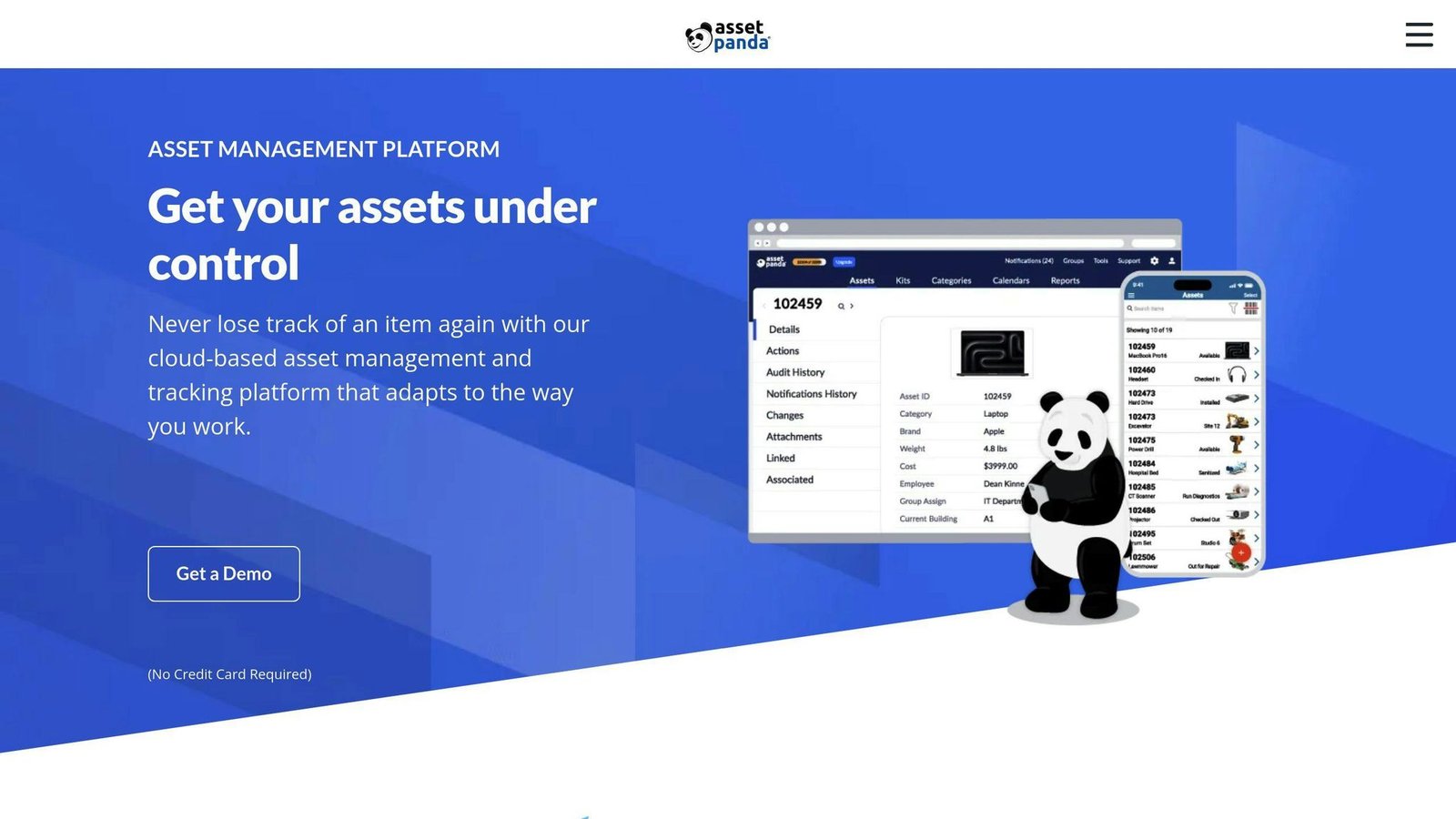


Company asset management software keeps a record of what a business owns — laptops, software licences, vehicles, machinery, office furniture — along with where each item is, who has it, and what it costs to keep. Here is the short version:
- What it does: Tracks assets through their whole life, from purchase to disposal, with data on usage, maintenance and remaining value.
- Why it matters: Mostly it stops you buying things you already own and paying for licences nobody uses.
- Key features: Asset tracking, maintenance management, inventory control, and reporting & analytics.
- The catch: The software is only as good as the data people put in it. An asset register nobody updates is worse than none, because it is trusted and wrong.
A note on terminology before you search further. “Asset management” also means the investment industry — firms managing money for clients. That is a completely different business from the software described here, and search results mix the two constantly. This article is about tracking company property. The investment sense is covered separately at the end.
What is Asset Management?
Asset management covers an item from acquisition to disposal. It applies to physical things — tools, equipment, vehicles — and to intangible ones such as software licences and data. The aim is to get full use out of what the company owns while keeping cost, risk and compliance under control.
In practice that means:
- Knowing where things are and what condition they are in
- Knowing when they need servicing
- Moving under-used items to where they are needed
- Deciding when to repair, replace or dispose
Someone has to own this. Without a named owner the register decays within a year, and every implementation that fails, fails here rather than in the software.
Why is Asset Management Important?
It reduces spend
- Stops duplicate purchases of things you already have in a cupboard
- Stops renewals on licences nobody has opened in a year
It reduces loss
- Assets assigned to a named person go missing less often
- Leavers return equipment when someone knows what they had
It supports compliance
- Software licence audits are far cheaper to survive with a current register
- Regulated equipment inspections have a documented history
It improves decisions
- Replace-or-repair becomes a calculation rather than an argument
- Capital planning starts from real remaining-life data
One honest caveat. Vendors in this category publish large savings percentages. Most are drawn from customer case studies the vendor selected and cannot be independently checked, so this article does not repeat any of them. The savings are real in principle; the size depends entirely on how bad your current records are.
What is Company Asset Management Software?
It is a database of what the company owns, with workflow attached. Records typically hold:
- Purchase date and cost
- Warranty and service contract details
- Location and assigned user
- Condition
- Usage and maintenance history
- Expected useful life and depreciation
Keeping that in one place is what makes planned maintenance, redeployment and replacement decisions possible.
Types of Assets Managed
Tangible assets
- Buildings and facilities
- Vehicles
- Plant and machinery
- IT equipment — computers, phones, network hardware
- Furniture
- Stock and spare parts
Intangible assets
- Software and licences
- Patents and other intellectual property
- Customer data
Some vendors market the ability to track “reputation” and “employee knowledge” as assets. Treat that as marketing. Neither has a serial number, a location or a depreciation schedule, and putting them in an asset register does not manage them.
Key Benefits
- Utilisation — find the equipment sitting idle in another site
- Accountability — know who holds what
- One record — instead of a spreadsheet per department
- Planned maintenance — fewer unplanned failures
- Audit readiness — particularly for software licensing
- Cost visibility — total cost of ownership rather than purchase price
Core Features
Asset Tracking
- Identify items with barcodes, QR codes, RFID tags or GPS, depending on value and mobility
- Record location, custody and movement history
- Reduce loss and theft
- Support replace-or-retire decisions with usage data
Match the tagging method to the asset. GPS on a laptop is overkill; a printed barcode on a £40,000 machine that moves between sites is not enough.
Maintenance Management
- Schedule servicing by date, runtime or usage
- Record work done, parts used and cost
- Notify the responsible team ahead of time
- Extend service life through preventive rather than reactive maintenance
- Identify assets whose maintenance cost has passed the point of replacement
Inventory Control
- Set minimum and maximum stock levels from actual consumption
- Alert on overstock and shortages
- Reduce capital tied up in spares
- Avoid downtime waiting for a part
Reporting & Analytics
- Report on value, age, utilisation and maintenance cost
- Identify under-used assets for redeployment or disposal
- Calculate total cost of ownership
- Forecast capital expenditure
- Surface recurring faults that signal a systemic problem
Key Benefits in Practice
Efficiency
- Automates tracking work that otherwise happens in spreadsheets
- Shows current asset status rather than last quarter’s
- Surfaces idle assets
- Keeps maintenance on a schedule
Cost Control
- Prevents duplicate purchasing
- Extends asset life through maintenance
- Catches faults before they become failures
- Cuts unused software licences, which is usually the fastest saving available
Better Decisions
- One current source of asset data
- Reporting that supports planning rather than describing the past
- Buy, repair and retire decisions grounded in cost history
- Budgeting based on real ownership cost
Risk
- Fewer losses when custody is recorded
- Licence compliance evidence when an audit arrives
- Scheduled maintenance reduces failure-driven downtime
Planning
- Remaining-life data for replacement planning
- Cost history for capital requests
- Utilisation data to size future purchases
How to Choose
Define needs and requirements
- List the asset classes you actually need to track. Resist tracking everything at once.
- Decide which features are required — barcode scanning, location tracking, maintenance scheduling.
- Decide who needs access and at what permission level.
- Set the outcome you want, so you can tell later whether it worked.
Research options
- Shortlist a handful of products that cover your required features.
- Check mobile capability — stocktakes happen on a phone, not at a desk.
- Check integrations with your finance and IT systems.
- Cost it over three to five years, including implementation and per-user growth, not just the first year’s licence.
Compare and evaluate
- Watch demos, then ask to see the parts they skipped.
- Trial with your own data rather than the vendor’s sample set.
- Test the import path for your existing records — this is where projects stall.
- Score against your own requirements list, not against the vendor’s comparison chart.
Select and implement
- Choose, then plan the rollout before you sign.
- Name an owner for the register.
- Decide whether to import existing records or start with a fresh physical audit. A fresh audit is more work and usually the better answer.
- Train the people who will scan and update, not just the administrator.
Pricing
Products in this category are priced in several incompatible ways: per user per month, per tracked asset, per site, or as an annual licence with an implementation fee. Some vendors publish rates and many quote only. Because the units differ, headline prices are not comparable — get quotes in writing and normalise them to your own asset and user counts before deciding. This article does not publish specific rates, because they change and vary by contract.
Conclusion
Asset management software is worth it when you have enough assets, in enough locations, that nobody can answer “what do we own and where is it” from memory. Below that threshold a maintained spreadsheet genuinely does the job.
What you get when it works:
- One register covering location, custody and condition
- Cost data for repair-or-replace decisions
- Fewer duplicate purchases and fewer unused licence renewals
- Planned maintenance instead of emergency callouts
- Audit evidence when it is asked for
What decides success is not the product. It is whether one named person owns the data and whether the people handling assets actually update it.
Related Questions
What is asset management software?
Software that records what an organisation owns from purchase to disposal, covering:
- Location and custody
- Maintenance scheduling and history
- Cost and depreciation over time
- Utilisation
What is the asset management industry, and is it the same thing?
No — and this is the main source of confusion when researching the term. The asset management industry means firms that manage investments on behalf of clients. It has nothing to do with tracking company laptops.
For scale: BCG’s Global Asset Management Report puts global assets under management at $147 trillion at the end of 2025, and notes that more than 80% of the industry’s revenue growth came from market performance rather than net new client money. An earlier version of this article said “more than $100 trillion” with no source; that figure has been replaced with the sourced one.
Other characteristics of that industry: a mix of very large global managers and small specialists, continued movement of client money into low-cost index products, and fee pressure as a result.
What does an asset management firm do?
Investment asset managers pool client money and invest it, offering:
- Professional management and defined strategies
- Diversification across more holdings than an individual could hold directly
- Access to instruments with high minimum investments
They charge for it, usually as a percentage of assets managed. That fee is the reason the shift to low-cost index funds has reshaped the industry.
What is an example of Software Asset Management?
Software Asset Management (SAM) is the sub-discipline concerned with licences rather than physical equipment. Real examples, checked in August 2026:
- ServiceNow Software Asset Management — licence position and entitlement management inside the ServiceNow platform.
- Flexera — licence optimisation and entitlement reconciliation across vendors.
- Snow — now part of Flexera. Flexera completed its acquisition of Snow Software in February 2024. If Snow is on an older shortlist as an independent alternative to Flexera, it is not one any more.
- Microsoft licence management — an earlier version of this article listed “Microsoft SAM” as a product. It is not one. Microsoft runs SAM engagements and reviews, and licence assignment for Microsoft 365 and Azure is handled in the Microsoft admin centres. Neither is a third-party SAM tool, so the entry has been corrected rather than left in the list.
The practical value of SAM is narrow and real: knowing your true licence position before a vendor audit, and cancelling the seats nobody uses.
More on this topic
Browse all 86 articles on Business Operations, or jump straight to our buying guide: Best Productivity Tools for Small Teams.