
Disclosure: This page contains commercial links. BizBot may earn a commission from qualifying purchases. Paid placements do not buy a better ranking. Read our affiliate disclosure.
Cybersecurity risk assessment tools help organizations identify, analyze, and evaluate potential cybersecurity risks. The right tool improves how you find vulnerabilities, prioritise them, and explain the result to people who control budgets.
Two things to know before the list. First, it is not ranked. The numbering is for reference only; there is no basis on which any of these could be placed first. Second, entry 9 is a methodology rather than a product, and is included because people shortlist it alongside software — it is labelled as such below. An earlier version of this article presented it as a purchasable tool with a user interface and scalability characteristics. It has none, because it is not software.
This article was reviewed in August 2026. None of the vendors below publishes list pricing. Every one of them quotes on request, typically on an annual contract scaled by assets, users or entities under management. Any price you see quoted for these products elsewhere came from someone else’s negotiation and will not be yours.
Quick Comparison
| Entry | What it actually is | Best suited to | Published pricing |
|---|---|---|---|
| Riskonnect | Integrated risk management and GRC suite — enterprise risk, compliance, internal audit, third-party risk, business continuity | Organisations managing risk as a governance function across departments | None. Quote on request. |
| ProcessUnity | Third-party and vendor risk management, with compliance and audit workflows | Teams whose main exposure is through suppliers | None. Quote on request. |
| Cybereason | Endpoint detection and response / XDR platform. Now owned by LevelBlue — see the note below. | Detecting and responding to active attacks, not assessing risk on paper | None. Quote on request. |
| LogicGate Risk Cloud | No-code GRC platform for building risk and compliance workflows | Teams that need to model their own process rather than adopt a fixed one | None. Quote on request. |
| Tenable Vulnerability Management | Vulnerability scanning and management across assets | Finding and prioritising technical vulnerabilities | None published for enterprise use. Quote on request. |
| Archer Evolv | Enterprise GRC platform, strongest in regulatory change management | Heavily regulated organisations with dedicated GRC staff | None. Quote on request. |
| MetricStream | Enterprise GRC with cyber risk quantification in monetary terms | Organisations that must present cyber risk in financial language to a board | None. Quote on request. |
| Qualys VMDR | Vulnerability management, detection and response with risk-based prioritisation | Finding and prioritising technical vulnerabilities | None published for enterprise use. Quote on request. |
| FAIR | A methodology, not a product. A framework for expressing information risk in financial terms. | Anyone who needs a defensible way to quantify risk, with or without software | Not applicable. The standard itself is a body of practice. |
| ConnectWise Identify Assessment | Security risk assessment tooling aimed at managed service providers and their clients | MSPs assessing small and mid-sized client environments | None. Quote on request. |
Notice how little of that table is a genuine comparison. That is deliberate. An earlier version of this article carried four comparison tables in which almost every vendor was described identically — all “user-friendly”, all “scalable for large enterprises”, all offering “dedicated support, online resources, training”. Rows that say the same thing about ten different products compare nothing. They have been removed.
These products also do not all do the same job. Vulnerability scanners, GRC platforms and endpoint detection tools solve different problems and are frequently bought alongside each other rather than instead of each other. Work out which of the three you actually need before comparing anything.
1. Riskonnect
What It Is
Correction. An earlier version of this article described Riskonnect as producing scan-based reports covering website security, email security, phishing and malware, and brand reputation risk. That describes a security ratings service, not this product, and could not be matched to anything Riskonnect publishes. It has been removed.
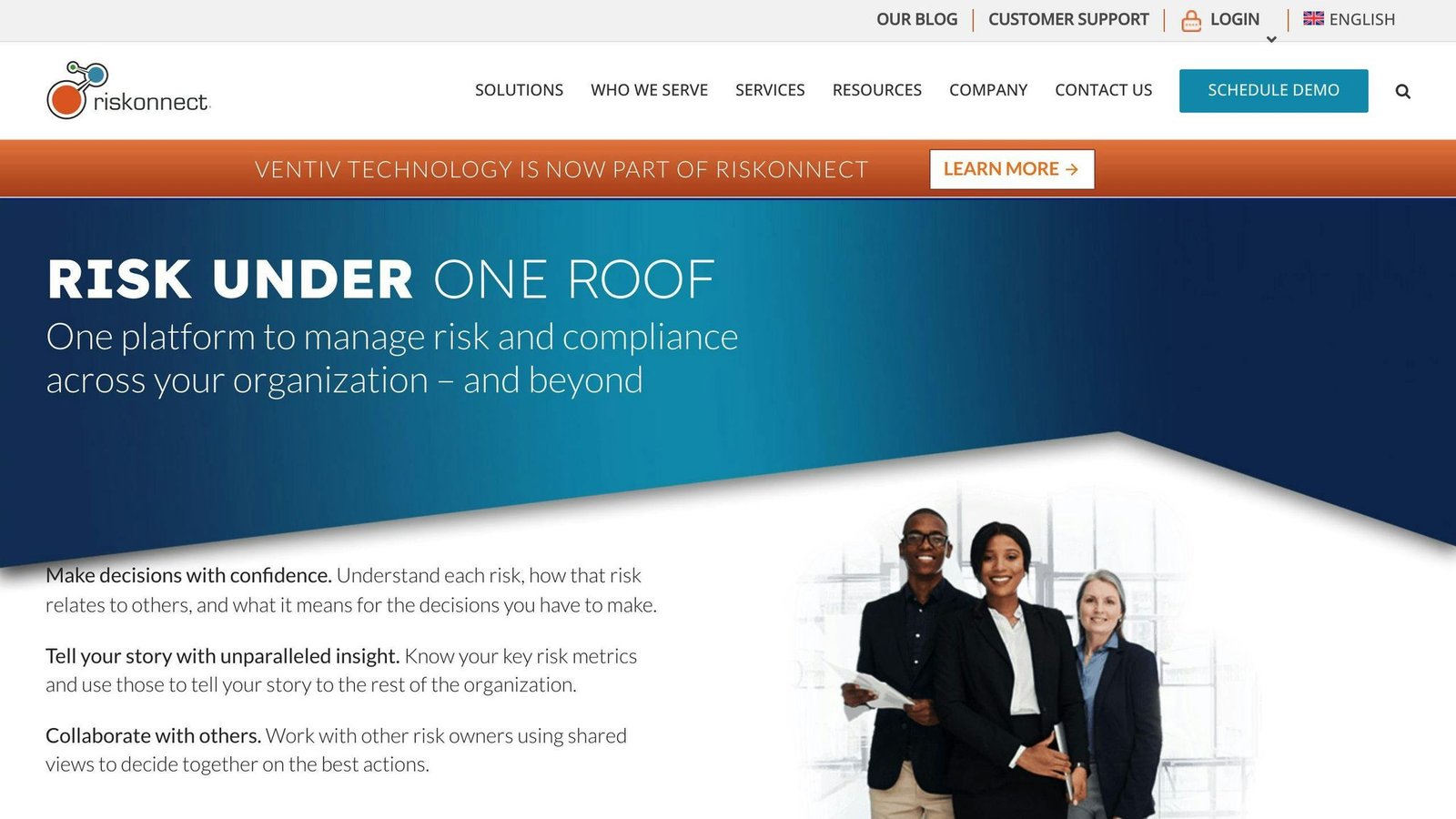
Riskonnect is an integrated risk management and GRC platform, sold as modules across three areas: insurable risk (claims, policy administration, health and safety), governance risk and compliance (enterprise risk, compliance, internal audit, third-party risk), and business continuity and resilience.
Risk Assessment Features
Within the GRC modules it covers enterprise and third-party risk assessment, compliance obligations, and internal audit. Because it is modular, what you get depends entirely on which modules are in your contract — check the module list against your requirements line by line rather than assuming platform-wide coverage.
Usability and Support
Riskonnect provides documentation, a customer support function, and training resources. No independent usability rating is quoted here because there is not one this article can source.
2. ProcessUnity
What It Is
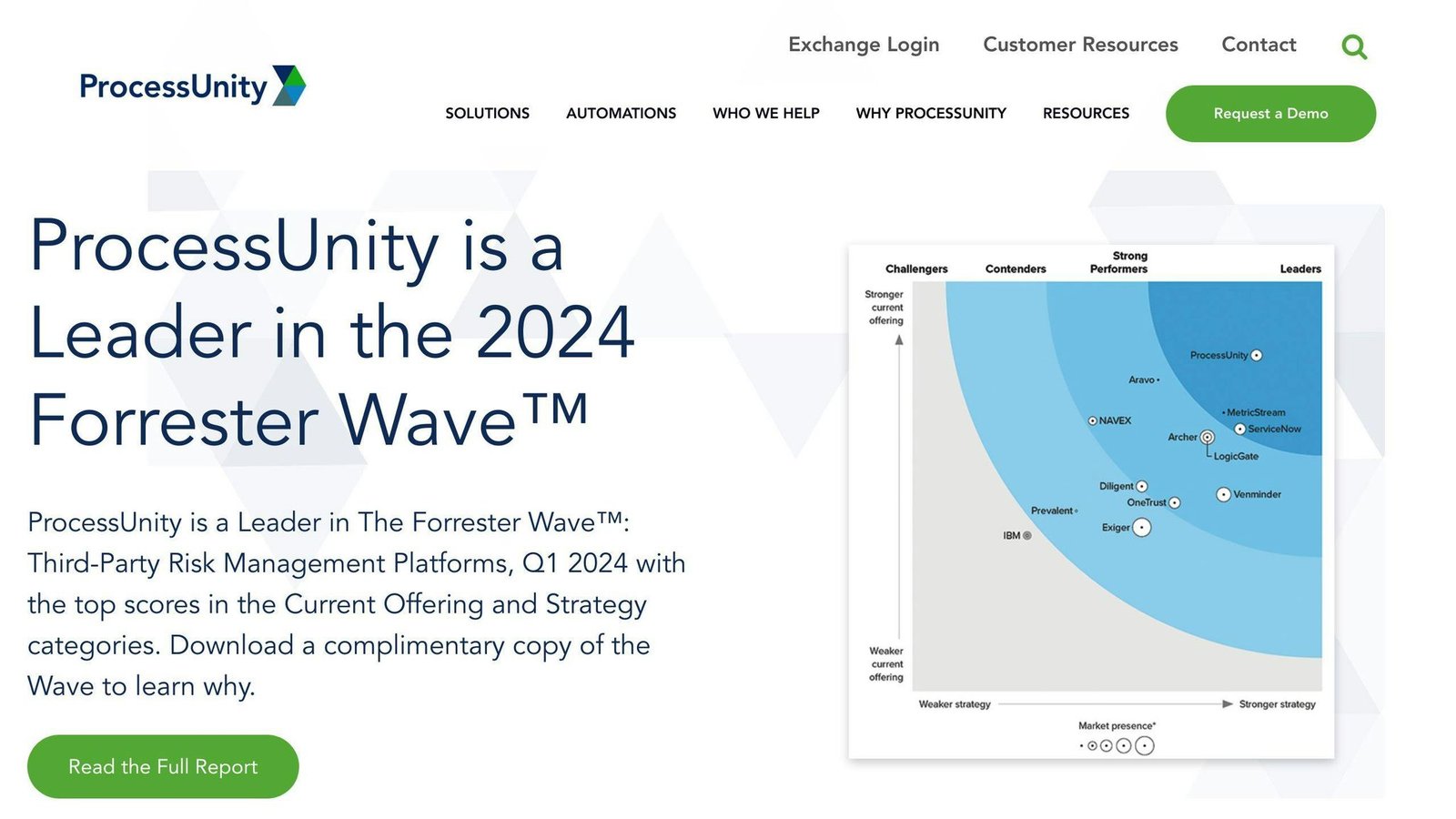
ProcessUnity is best known for third-party and vendor risk management: sending, chasing and scoring supplier security questionnaires, and tracking the findings through to remediation. It also covers compliance and audit workflows.
Risk Assessment Features
| Feature | Description |
|---|---|
| Risk Identification | Identify potential risks and vulnerabilities across the organization and its suppliers |
| Risk Assessment | Assess the likelihood and impact of identified risks |
| Risk Mitigation | Develop and track remediation through to closure |
| Compliance Management | Ensure compliance with relevant regulations and standards |
Who It Suits
If most of your risk arrives through suppliers, this category is the right one. If your concern is your own infrastructure, a vulnerability scanner will tell you more.
3. Cybereason
Ownership Change
Cybereason was acquired by LevelBlue. The deal was announced in mid-October 2025 and closed on 1 December 2025. LevelBlue has described the acquisition as bringing Cybereason’s XDR technology and research team into its own managed security offering. If you are evaluating Cybereason, confirm directly with LevelBlue how the product is sold and supported now, and what the roadmap is — an acquisition of this kind frequently changes both.
What It Is
It is not a risk assessment tool. Cybereason is an endpoint detection and response platform. It finds and responds to attacks that are happening, using behavioural analysis across endpoints. That is a different job from assessing what your risks are before anything happens, and an earlier version of this article grouped it with GRC platforms as though the two were interchangeable.
Features
| Feature | Description |
|---|---|
| MalOp Detection | Ties related malicious behaviours into a single attack narrative rather than isolated alerts |
| Remediation Actions | Lets analysts act on affected devices from within the console |
| Behavioural Detection | Uses behavioural analysis and machine learning to identify threats |
Detection accuracy claims from any vendor in this category should be checked against independent evaluations rather than taken from marketing material.
4. LogicGate
Risk Assessment Features
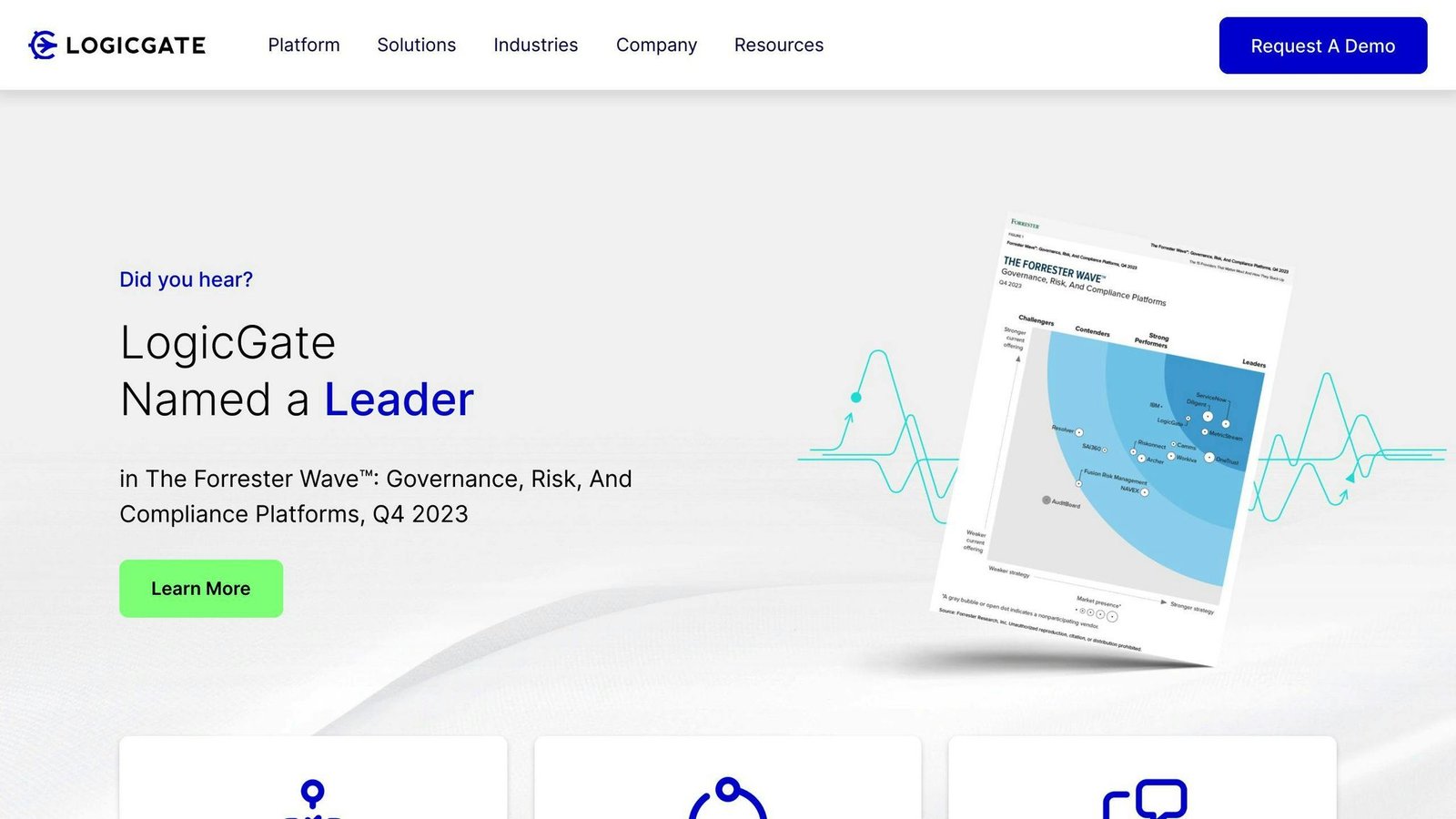
LogicGate Risk Cloud is a no-code GRC platform. Its features include:
- No coding required: Build and automate risk management workflows without writing code.
- FAIR support: The platform supports quantitative analysis using the FAIR methodology described at entry 9.
- Application templates: Pre-built templates for common risk and compliance processes.
Who It Suits
The no-code approach suits teams whose risk process does not match an off-the-shelf model and who would otherwise be bending a rigid platform to fit. The trade-off is the same as with any no-code tool: you own the design, including the parts of it that turn out badly.
5. Tenable Vulnerability Management
An earlier version of this article was missing the heading for this entry, so it appeared to be part of the LogicGate section and the list ran 1, 2, 3, 4, 6. The numbering has been repaired.
Risk Assessment Features
| Feature | Description |
|---|---|
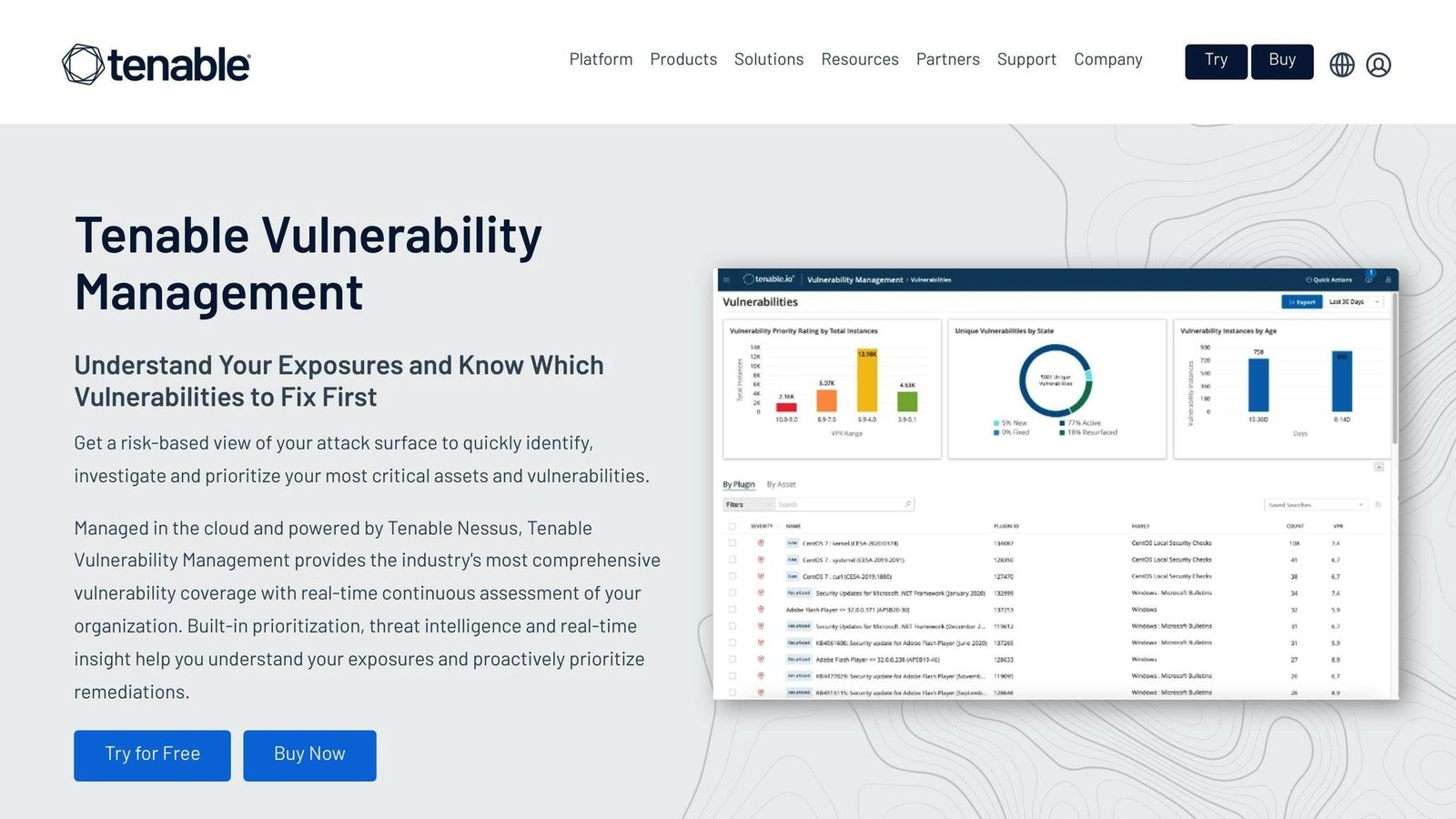
| Vulnerability Scanning | Scans assets to detect known vulnerabilities |
| Monitoring and Alerting | Ongoing monitoring with alerting on new findings |
| Prioritization | Ranks findings so remediation effort goes to what matters |
What to Check
Vulnerability management products are usually priced by the number of assets scanned. Count your assets, including cloud instances that come and go, before asking for a quote — that number is what the price is built on, and it is the number most often underestimated.
6. Archer
Naming
Archer’s current platform is Archer Evolv, made up of Evolv Compliance, Evolv Risk and Evolv Intelligence. The product has a long history under previous ownership and older documentation and shortlists may refer to it by an earlier name. If an internal document names an older version, confirm what it maps to now before comparing capabilities.
Risk Assessment Features
Archer is an enterprise GRC platform, with regulatory change management as the area it leads on: tracking what changed in the rules and tracing that through to affected policies, risks and controls.
Who It Suits
Organisations with dedicated GRC staff and a real regulatory burden. It is not a lightweight product, and a company without someone whose job is compliance will struggle to get value from it.
7. MetricStream
Risk Assessment Features
| Feature | Description |
|---|---|
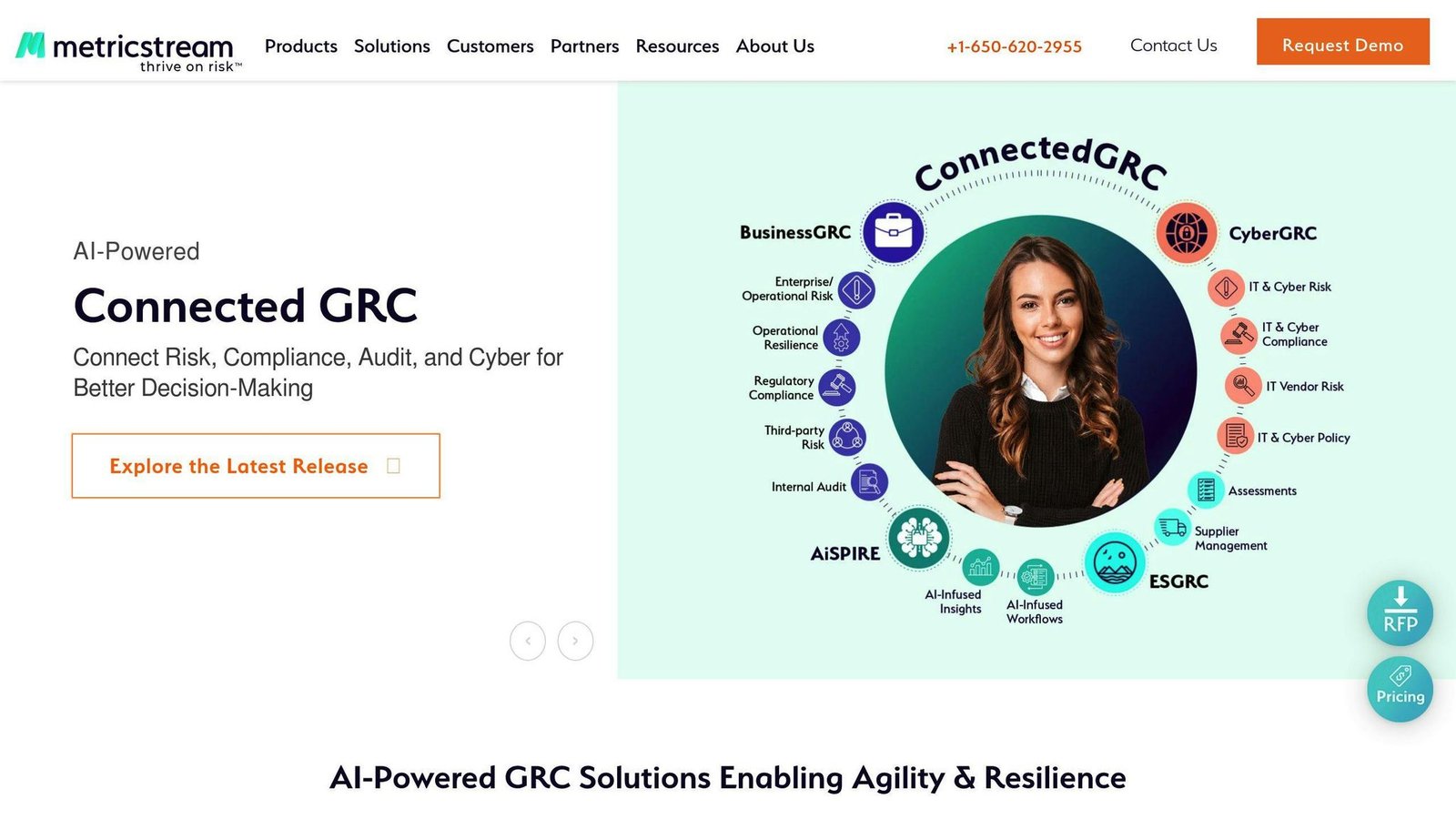
| Cyber Risk Quantification | Expresses cyber risk in monetary terms using Monte Carlo simulation over defined risk scenarios |
| Consolidated Risk View | Presents top risks across first and second lines of defence in one place |
| Regulatory Change and Compliance | Links regulatory changes to affected policies, risks and controls |
On Quantification
Quantifying cyber risk in currency is genuinely useful for board conversations, and it is worth being clear about what it is. A Monte Carlo simulation propagates your assumptions about frequency and loss magnitude; it does not discover them. The output is exactly as good as the inputs, and a precise-looking figure derived from guessed inputs is more dangerous than an honest range. Document where each input came from.
8. Qualys VMDR
Risk Assessment Features
| Feature | Description |
|---|---|
| TruRisk Scoring | Assigns a risk score to each vulnerability to drive prioritisation |
| Threat Intelligence | Incorporates threat data on which vulnerabilities are being exploited |
| Vulnerability Prioritization | Orders findings by risk rather than by raw severity |
Compared to Tenable
Qualys VMDR and Tenable Vulnerability Management occupy the same category and are routinely evaluated against each other. Both scan assets and both prioritise findings. The decision usually comes down to what integrates with your existing stack, how each handles your particular asset mix, and what each quotes for your asset count. Run both trials against the same subset of your estate and compare the findings, not the brochures.
9. FAIR — a framework, not a product
Correction. An earlier version of this article listed “FAIR Risk Management” as the ninth tool, with a heading missing, and attributed to it a user-friendly interface, customisable dashboards, enterprise scalability, and integrations with security tools and workflows. FAIR has none of those things, because it is not software. Those attributes were invented and have been removed.
FAIR (Factor Analysis of Information Risk) is a methodology for analysing information risk in financial terms. It gives you a structured way to decompose a risk into measurable components and estimate it quantitatively.
How the Method Works
| Factor | Description |
|---|---|
| Loss Event Frequency (LEF) | How often a loss event is expected to occur within a given timeframe |
| Loss Magnitude (LM) | The size of the loss when such an event occurs |
Standing
FAIR is published as an Open Group standard for quantifying information risk, and is promoted and maintained through the FAIR Institute. Several of the platforms above, LogicGate and MetricStream among them, implement FAIR-style analysis inside their products.
Why It Is Still on This List
Because people shortlist it alongside software, and because adopting the method matters more than which tool runs it. You can apply FAIR in a spreadsheet. Buying a platform that supports FAIR without anyone in the organisation understanding the method produces confident numbers nobody can defend.
10. ConnectWise
Risk Assessment Features
ConnectWise Identify Assessment produces a visual summary of security weaknesses, indicating overall risk level and ordering issues by likelihood and financial impact. It ranges from high-level scans to more detailed assessments.
Who It Suits
ConnectWise’s tooling is built around managed service providers assessing client environments, and its value is partly in producing a report an MSP can walk a client through. If you are an end customer rather than a service provider, check whether it is sold to you directly.
How to Choose
Start by identifying which of these three jobs you are trying to do. Most confusion in this category comes from treating them as one.
| Job | Category | Entries above |
|---|---|---|
| Find technical weaknesses in my systems | Vulnerability management | Tenable, Qualys VMDR |
| Govern risk and compliance as a process, including suppliers | GRC and third-party risk | Riskonnect, ProcessUnity, LogicGate, Archer, MetricStream |
| Detect and stop attacks in progress | Endpoint detection and response | Cybereason (LevelBlue) |
FAIR sits across all three as a way of expressing whatever you find in financial terms. ConnectWise Identify is aimed at the service-provider channel rather than at any one of these categories.
Key Factors to Consider
| Factor | Description |
|---|---|
| Scope of assessment | Define the assets, processes, and systems to be evaluated. This number drives the price. |
| Features and capabilities | Identify the required functionalities, such as scanning, analytics, monitoring, and reporting. Confirm which module each sits in. |
| Integration capabilities | Check integration against your actual stack, by name, in a trial. Vendor integration lists are aspirational. |
| Who will operate it | These are not tools that run themselves. If nobody owns the process, the platform becomes an expensive record of unfinished work. |
| Corporate stability | This category is consolidating. Ask who owns the vendor and what has been announced about the product’s future. |
On Pros and Cons
An earlier version of this article carried a pros-and-cons table asserting specific weaknesses of named vendors — that one had limited customer support, another limited third-party integration, others high costs. None of those claims carried a source, and several contradicted the same article’s own descriptions. The table has been removed rather than corrected, because unsourced negative claims about named companies should not have been published in the first place.
If you want comparative judgements, get them from a trial against your own environment and from reference customers of a similar size to you. That is slower than reading a table, and it is the only version that will be true about your situation.
More on this topic
Browse all 79 articles on Security & Compliance.