AML data integration means consolidating financial and customer data into one system so monitoring, reporting and compliance can work from a single picture. Here is why it matters and how it works:
- Why It Matters: Regulators expect faster reporting, detailed transaction data, and adaptive risk management. Manual systems struggle with the volume.
- Key Components: AML compliance relies on customer due diligence, transaction monitoring, and suspicious activity reporting — all of which need integrated data.
- Technologies: AI and machine learning are used to improve detection and reduce false positives; cloud computing provides scalability and real-time processing.
- Challenges: Legacy systems, inconsistent data quality, and implementation cost.
- Best Practices: Assess your systems, map your data needs, set governance rules, train people, and roll out in phases.
What Changed in 2026
Two federal changes in 2026 affect how this work should be scoped. They pull in different directions and are easy to confuse.
- 13 February 2026 — CDD Rule relief. FinCEN issued an exceptive relief order (FIN-2026-R001) removing the requirement for covered financial institutions to identify and verify beneficial owners at every new account opening. Verification is now required at the first account opening, whenever facts call earlier information into question, and otherwise on a risk basis under the institution’s own ongoing due diligence procedures. The order took effect on issuance.
- 11 August 2026 — beneficial ownership reporting ends for US companies. FinCEN published a final rule permanently removing the requirement for US companies and US persons to report beneficial ownership information under the Corporate Transparency Act, and said it would delete information already filed by US persons. Foreign reporting companies still report their foreign beneficial owners.
For a data integration project the practical reading is this. The second change removes a data source people had been planning to lean on: the FinCEN beneficial ownership database will not contain US company data. Your institution’s own obligation to identify beneficial owners of legal entity customers under the CDD Rule has not gone away. If anything, corporate registry and internal collection become more important, not less, because there is one fewer authoritative external source to check against.
The first change alters the trigger logic in your systems rather than removing a requirement. If your platform was built to force re-verification on every account opening, that behaviour is now optional and can be replaced with risk-based triggers — which is a configuration change worth making deliberately rather than by default.
This section reflects the position in August 2026 and is a summary, not legal advice. Confirm current requirements with counsel before changing a programme.
Key Technologies Driving AML Data Integration
AI and Machine Learning in AML
Machine learning is used in AML to find patterns that rule-based systems miss, particularly in layered transaction schemes.
Pattern recognition lets algorithms work across large datasets to identify behaviours that a fixed rule would not catch, and to update as they see more history.
Reducing false positives is the benefit institutions actually buy. Rule-based systems generate large alert volumes, most of which close as no further action. Models that account for customer behaviour, transaction timing and context can narrow that. Note the word “can”: whether they do depends on the quality and volume of your labelled historical outcomes. A model trained on alerts nobody recorded the disposition of will not learn anything useful.
Network analysis maps relationships between accounts to expose shell companies and coordinated activity across entities that look unconnected individually. This is where integrated data earns its cost, because the connections only appear when the data sits together.
One caution on machine learning in AML: your model has to be explainable to an examiner. A detection you cannot justify is a detection you cannot defend, and model governance is a regulatory expectation rather than an engineering nicety. Ask any vendor how their model’s decisions are documented before asking how accurate it is.
Cloud Computing’s Role
Cloud platforms offer scalability without hardware purchases, and adjust resources to demand. For AML this matters at month-end and during onboarding surges.
Real-time processing allows transactions to be screened as they occur rather than in an overnight batch, which matters for payment types that settle instantly.
Data integration is generally easier in a cloud environment, with connectors to banking systems, customer databases and external watchlists, and tooling to standardise formats.
Security in cloud platforms operates on a shared responsibility model. The provider secures the infrastructure; configuration, access control and data classification remain yours. Most incidents in this pattern come from the customer’s half.
Cost follows usage rather than capacity. That cuts both ways: consumption pricing is efficient when volumes are variable and unpleasant when they grow steadily. Model it against projected volume, not current volume.
External Data Sources for Compliance
AML compliance depends on external data that internal records cannot supply.
Sanctions lists are foundational. Institutions screen customers and transactions against government watchlists including those from the Office of Foreign Assets Control (OFAC), the United Nations, and the European Union. These lists change frequently, so the update mechanism matters as much as the screening logic.
Politically Exposed Persons (PEP) databases identify individuals in prominent public roles, plus their families and close associates. Name matching across transliterations and formats is the hard part.
Adverse media screening scans news, regulatory notices and public records for negative coverage. Natural language processing handles the volume. Precision is the problem: common names produce large numbers of irrelevant hits.
Corporate registry data provides ownership structure information. As noted above, this source became relatively more important in 2026 for US entities, because the FinCEN beneficial ownership database no longer holds US company data.
Geographic risk data assesses risk by country or region and drives enhanced scrutiny of higher-risk jurisdictions.
Each of these is a separate subscription with its own cost, update frequency and licence terms. Budget for the data feeds separately from the platform — they are a recurring cost that often approaches the software cost, and they are easy to leave out of a business case.
Benefits and Challenges of AML Data Integration
Key Benefits
Improved Detection Accuracy: combining internal transaction data with external sources creates a fuller view of customer risk, surfacing activity that neither source shows alone.
Lower Operational Costs: automation reduces manual alert review, investigation and report compilation. The saving is in analyst hours, and it is real only if those hours go somewhere else.
Real-Time Risk Assessment: risks can be flagged as they occur rather than after settlement.
Stronger Regulatory Compliance: integrated monitoring demonstrates that multiple risk factors are considered together, which is what examiners look for.
Fewer False Positives: better discrimination means fewer legitimate customers caught up in reviews.
Scalability: integrated cloud platforms absorb growth without proportional headcount increases.
Challenges and Limitations
Integrating Legacy Systems: core banking systems built decades ago often lack modern interfaces. This is usually the single largest line in the project.
Inconsistent Data Quality: external sources differ in format, schedule and standards. Variation in how names, addresses and timestamps are recorded produces both missed matches and false alerts.
Privacy and Data Protection: integration must respect data protection obligations alongside Bank Secrecy Act requirements.
Managing False Positives: tuning sensitivity is continuous, and it is a governance activity, not just a technical one. Every threshold change should be documented and justified.
Implementation Cost and Timeline: these projects are long and expensive. See the note below on why no figures are quoted.
Training and Change Management: staff used to manual processes need new skills, and productivity dips during transition.
Comparing Approaches
Correction, August 2026. An earlier version of this article contained a table comparing four “approaches” — on-premises, cloud-based, manual and automated — with cost ranges for each ($500K-$2M+, $50K-$200K, $10K-$50K, $100K-$500K), implementation timelines, and comparative false positive rates. It also stated that large AML integration projects take 12-18 months and cost millions.
That table has been removed, for two reasons.
First, none of the figures carried a source. They were presented as though they described the market, and nothing in the article supported them.
Second, the comparison did not make sense. On-premises versus cloud is a deployment question. Manual versus automated is a question of how much of the work a machine does. They are two independent axes, not four alternatives: a cloud system is automated, and an on-premises system can be too. Presenting them as four columns to choose between would have led a reader to a false decision.
Here is the honest version of the same guidance:
| Decision | What actually drives it |
|---|---|
| On-premises or cloud | Your data residency obligations, your existing infrastructure, and whether you have staff to run it. Cloud deploys faster and updates automatically; on-premises gives you direct control and suits institutions with strict internal data requirements. |
| How much to automate | Your transaction volume and alert load. Below a certain volume, manual review by people who know the customers outperforms a poorly-tuned system. Above it, manual review stops being possible. |
| Build or buy | Whether your requirements are genuinely unusual. Most are not, and a bought platform carries the vendor’s regulatory update work with it. |
On cost: no figures are quoted in this article. AML platform vendors do not publish rates, and the total varies by orders of magnitude with institution size, transaction volume, number of external data feeds, and how much legacy integration work is required. Get written quotes covering licence, implementation, integration, data feeds and annual support as separate lines. A quote that bundles them is a quote you cannot compare.
On timelines: ask vendors for reference customers of your size and ask those customers how long it actually took, rather than relying on a published range. The variable that dominates is the state of your source systems, which only you can assess.
Many institutions run hybrid arrangements: automated monitoring for routine screening, with human review for complex cases. That is a sensible default rather than a compromise.
Best Practices for Implementing AML Data Integration
Step-by-Step Integration Process
Begin with a thorough assessment of your current systems. Examine core banking systems, data storage, and compliance workflows to find the gaps. Outdated systems should be dealt with before integration, not during it.
Define your data needs, internal and external. Transaction records, customer profiles and account histories on one side; OFAC lists, adverse media, PEP databases and corporate registry data on the other. Produce a data mapping document.
Establish data ownership and validation rules. Standardise formats for dates, names and addresses across sources.
Select an integration architecture matched to your size and technical resources.
Implement data governance protocols. Assign an owner for each data source, define validation rules, and monitor data flow. Audit regularly.
Test under realistic conditions. Use production-scale data volumes, and test against known historical cases where you already know the right answer. A system that fails to flag a case you previously reported is telling you something important before go-live rather than after.
Train your compliance team before launch, with hands-on work on sample cases.
Roll out in phases. Start with one business unit or customer segment. Run the new system in parallel with the old one for a period rather than cutting over, so you can compare what each catches.
Continuous Improvement Strategies
Monitor key metrics regularly — alert rates, false positive rates, investigation times. A spike in false positives usually means a threshold or a data feed changed.
Stay current on regulatory change. As 2026 demonstrated, requirements that have been stable for years can change in a single order. Subscribe to updates from FinCEN and review quarterly.
Evaluate external data providers periodically. Data quality drifts. Compare providers annually on accuracy, update frequency and cost.
Gather feedback from investigators. Front-line staff see patterns that metrics do not capture.
Plan for scale as you grow or enter new markets, which may bring new data sources and local obligations.
Document decisions, not just outcomes. Record why a threshold was set where it was. When an examiner asks in two years, and the person who set it has left, that document is the whole answer.
Choosing the Right AML Data Integration Tools
Key Criteria for Tool Selection
-
Real-Time Monitoring:
Batch-only processing leaves gaps on instant payment rails. -
Data Source Compatibility:
The tool must connect to your core systems, payment processors, wire transfers and external lists. Check support for standard APIs and formats, and confirm against your systems by name. -
Scalability:
It should handle daily loads and volume spikes. -
False Positive Management:
Ask during demonstrations how alerts are tuned, and who does the tuning after go-live — you or the vendor. -
Model Explainability:
Ask how the system documents why it flagged something. You will need that in an examination. -
Regulatory Reporting:
It should produce Suspicious Activity Reports in FinCEN-compliant formats with audit trails. -
User Interface Design:
Investigators live in this software all day. Watch one use it before buying.
Using BizBot to Identify Solutions
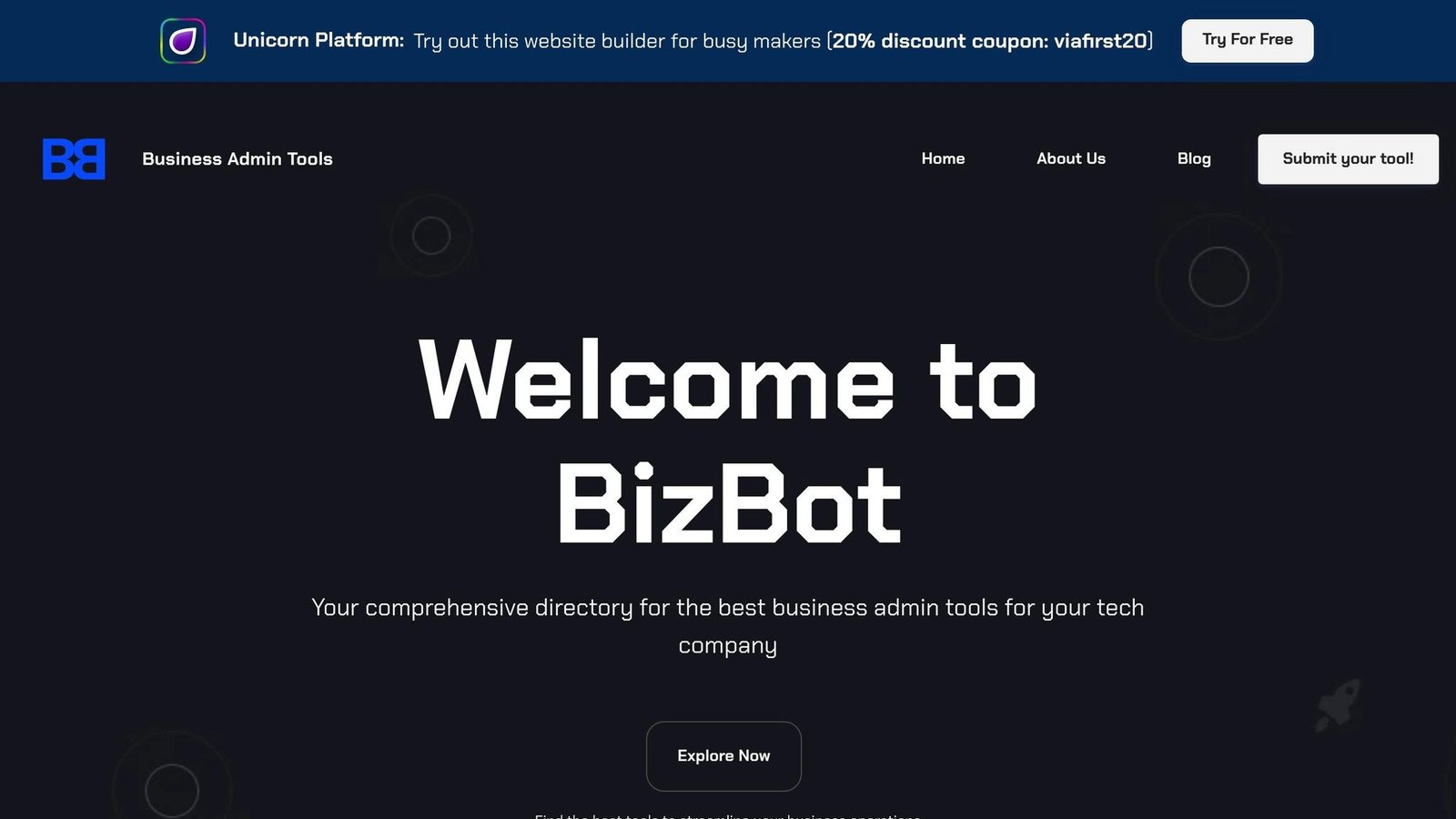
BizBot is a directory of business administration software, organised by the kind of criteria listed above. It is a starting point for building a shortlist, particularly for smaller institutions without a procurement team. It is not a substitute for demonstrations against your own data, and no directory listing — here or anywhere — tells you what a vendor will quote you.
Comparison of AML Tools
-
Total Cost of Ownership:
Licence, implementation, training, support, and external data feeds. The feeds are the line most often forgotten. -
Implementation Timeline:
Pre-built connectors to your specific core system reduce this substantially. Ask whether the connector exists today or would be built for you. -
Scalability and Performance:
Request benchmarks at your peak volume. -
Alert Accuracy:
Ask for false positive rates from a named reference customer of similar size, not from marketing material. -
Vendor Stability:
This market consolidates. Ask about ownership and product roadmap.
Conclusion
AML data integration is a compliance obligation that, done well, also reduces the cost of meeting it. Digital payments, cryptocurrency and cross-border flows have made the picture more complex, and single-system monitoring no longer covers it.
AI, machine learning and cloud computing have made real-time monitoring available to institutions that could not previously have built it. That is a genuine change, and it lowers the entry cost for community banks and fintechs.
Technology alone does not solve this. The systems that work combine tooling with defined processes and trained people. Software bought without process design produces alert volumes nobody investigates, which is a worse position than the manual one it replaced — you now have documented evidence of risks you did not act on.
2026 showed how fast the rules move. Both changes described at the top of this article arrived within six months of each other, and one reversed a requirement that had been treated as settled since 2018. Build systems whose trigger logic and data sources can be reconfigured, and keep a documented record of why each setting is where it is.
Start from your own risk profile. A regional bank handling traditional transactions and a fintech processing digital payments have different exposures, different data, and different answers.
FAQs
How do AI and machine learning improve the accuracy of AML data integration systems?
Machine learning analyses transaction patterns to identify anomalies that fixed rules miss, and adapts as it processes more data. In practice the main gain is reducing false positives, which frees analysts to work the cases that matter.
Two caveats. The models learn from your historical alert outcomes, so if those dispositions were never recorded properly there is nothing to learn from. And any detection must be explainable to an examiner, which constrains which techniques are usable regardless of raw accuracy.
What challenges do financial institutions face when upgrading legacy systems for modern AML data integration?
Legacy core systems often predate modern interfaces, which causes data mismatches and makes standardisation difficult. Downtime during migration disrupts operations, and transitional periods can open security gaps. Missing documentation and departed staff who understood the old system are a common and underestimated obstacle.
This is usually the largest and least predictable part of the project. Assess it honestly before committing to a timeline.
Why is cloud computing more scalable than on-premises for AML data integration?
Cloud resources adjust to demand without hardware purchases, which suits variable workloads and shifting compliance requirements, and deployment is faster.
The trade-offs are real, though: security operates on a shared responsibility model where configuration remains your job, consumption pricing rises with steady growth, and data residency obligations may constrain where processing can happen. Cloud is the right default for most institutions, not an automatic answer for all of them.
Does the end of Corporate Transparency Act reporting change my AML data sources?
Yes. The final rule published on 11 August 2026 permanently removed beneficial ownership reporting for US companies and US persons, and FinCEN said it would delete information US persons had already filed. Foreign reporting companies still report foreign beneficial owners.
For integration planning: do not architect around the FinCEN beneficial ownership database as a source for US entities. Your own CDD Rule obligation to identify beneficial owners of legal entity customers is unchanged, so corporate registry feeds and your own collection carry more weight than they would have.
More on this topic
Browse all 79 articles on Security & Compliance.