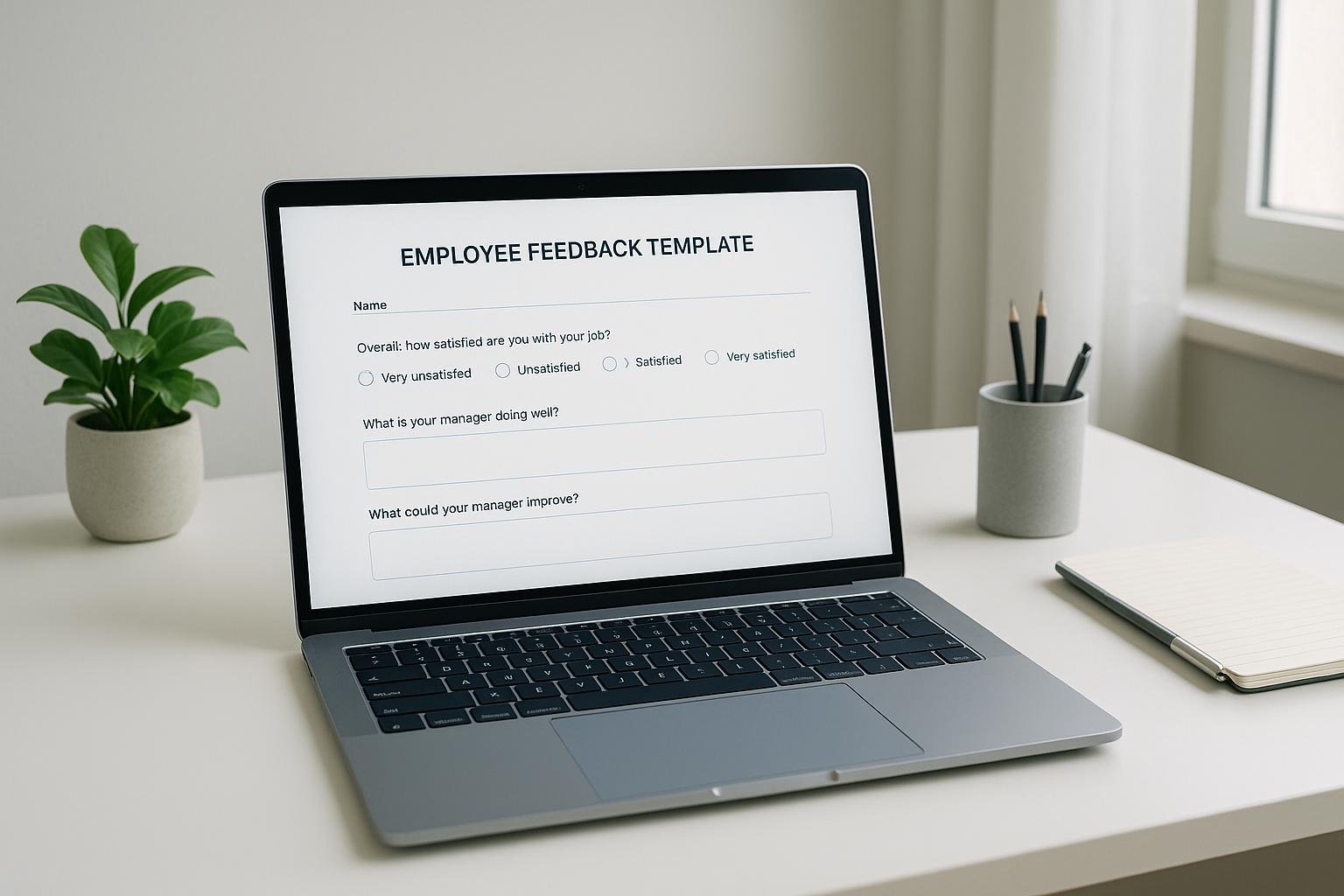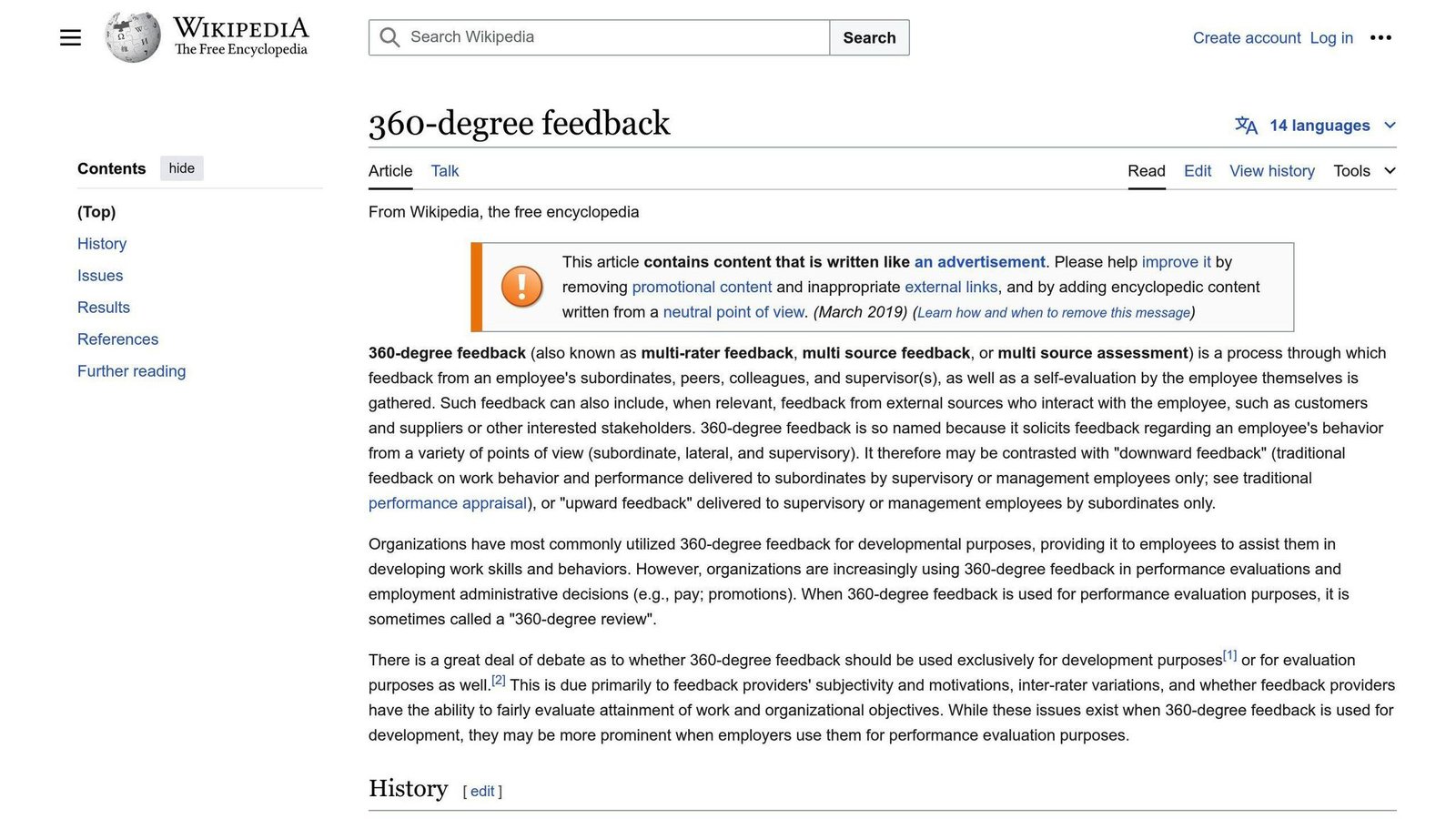
360-degree feedback collects anonymous input on an employee’s performance from managers, peers, direct reports, and sometimes external stakeholders. Unlike a traditional review, it gathers more than one perspective on the same person.
What the evidence actually shows
Start here, because it changes how you should run the process. The largest published review of the question — Smither, London and Reilly’s meta-analysis of 24 longitudinal studies, “Does Performance Improve Following Multisource Feedback?” in Personnel Psychology — found that performance does tend to improve afterwards, but by very little. Corrected mean effect sizes were .15 for direct report ratings, .15 for supervisor ratings, .05 for peer ratings, and −.04 for self-ratings.
The more useful finding is what separates the cases where it works from the cases where it does not. The same review reported a substantially larger effect when feedback was used purely for development rather than for administrative decisions: .25 against .08. Improvement was also more likely when the recipient believed change was needed, set specific goals, and did something about it — discussed the results, worked with a coach, took part in development activity.
The practical read: 360 feedback is a development instrument. Wire it into pay or promotion decisions and you roughly cut its effect in half, because you change what raters and recipients are optimising for.
Key Benefits
- Self-Understanding: Employees see the gap between how they rate themselves and how others rate them.
- Team Collaboration: Gives teams a structured way to say things they otherwise leave unsaid.
- Leadership Insights: Aggregated data shows where skill gaps cluster across an organisation.
Features of a Strong System
- Anonymous Feedback: Encourages honesty.
- Multi-Rater Input: Dilutes any single rater’s bias.
- Structured Frameworks: Keeps ratings comparable between people and between cycles.
- Action Plans: Converts feedback into specific goals, which the evidence says is the part that matters.
How to Succeed
- Design a clear process with secure data collection and real confidentiality.
- Train participants to give and receive feedback.
- Keep it separate from compensation decisions.
- Turn feedback into goals, and follow up on them.
Main Advantages
Better Self-Understanding
360-degree feedback gives an employee more than one reading of their own behaviour. Gathering input from several sources surfaces things a single manager’s review misses.
A structured feedback process helps employees:
- Spot behaviour patterns they might not notice themselves
- See how their actions land with different groups
- Compare their self-perception with how others see them
- Identify strengths they had not counted
That last gap is the one worth watching. The meta-analysis above found the smallest effect of all on self-ratings, slightly negative in fact, which is consistent with people who over-rate themselves adjusting downwards rather than everyone simply improving.
| Feedback Area | Self-Assessment | Others’ View | What the gap suggests |
|---|---|---|---|
| Communication | Often clear | Sometimes rushed | Potential misunderstandings |
| Leadership | Supportive | Highly motivating | Strength the person is undercounting |
| Collaboration | Regular participation | Valuable contributor | Aligned; no action needed |
This table is an illustration of how to read a self-versus-other gap, not data from any organisation.
Team Performance
Done well, 360 feedback gives teams a structured occasion to say things that otherwise stay unsaid. Done badly — thin anonymity, or results that feed a ranking — it does the opposite, and people write what is safe.
Where it helps:
- Better collaboration: Team members get a clearer read on each other’s working styles
- Accountability: Standards get stated rather than assumed
- Stronger bonds: Open conversations build trust, provided the process earns it first
- Earlier conflict resolution: Friction surfaces in a structured setting instead of a meeting
Data-Driven Leadership
Aggregated across an organisation, feedback data shows where the same gap appears repeatedly — which is more actionable than any individual report.
Leadership uses include:
- Identifying skill gaps: Spot patterns across teams and point training at them
- Monitoring progress: Track whether a development effort actually moved ratings
- Strategic planning: Using aggregated data, organisations can:
- Identify potential future leaders
- Plan for leadership transitions
- Align training with business objectives
- Evaluate whether development programmes did anything
One caution. Aggregate ratings are still ratings, not outcomes. Treat a movement in scores as a signal to investigate, not as proof a programme worked.
Setup and Operation
Process Design
Build the system around the skills your organisation actually cares about. Define the assessment criteria, set rating scales, choose a mixed group of raters, and decide the cycle length before you launch rather than after.
Privacy Protection
Confidentiality is what makes honest feedback possible, and it is easy to break by accident. Set a minimum number of raters below which a group’s results are not reported separately, aggregate before showing anything, restrict access to people who need it, and encrypt stored responses.
Be careful with small teams. If someone has three direct reports, a “direct reports” breakdown is effectively attributable, and everyone in the room knows it.
Participant Training
- Feedback Providers: Teach them to describe observable behaviour with specific examples rather than rate personality.
- Feedback Recipients: Help them read for patterns across raters instead of fixating on the one harsh comment.
- Managers and Facilitators: Train them to run the follow-up conversation and turn it into a plan.
Common Problems and Solutions
Reducing Bias
Ratings carry the rater’s biases as well as the subject’s behaviour. You cannot remove that, only dilute and constrain it.
- Use standardised assessment forms: Rubrics with behavioural examples at each rating level give raters something concrete to anchor on.
- Use enough raters, from different relationships: More raters and more varied vantage points dilute any single distorted view. There is no research-backed magic number, and an earlier version of this article stated a specific range as though there were. Pick a number that gives you genuine anonymity in each rater group without exhausting people.
- Separate it from the pay cycle: This is the one with actual evidence behind it. Development-only use produced roughly three times the effect of administrative use in the meta-analysis cited above.
Preventing Burnout
Feedback fatigue shows up as short, generic answers and falling response rates. The fix is asking less, less often.
- Cap how many people any one person is asked to rate in a cycle, and stick to the cap.
- Run the full review annually rather than quarterly. Use lighter check-ins in between if you want more frequent signal.
- Keep the questionnaire short enough that the last question gets as much thought as the first.
- Use digital tools to automate reminders and collection, so the administrative load does not land on the participants.
Specific caps and question counts quoted in an earlier version of this article were presented as recommended figures without a source. They were conventions, not findings, and have been removed.
Handling Critical Feedback
Critical feedback only helps if the recipient does something with it, and the research is clear that the doing is where the effect lives.
1. Structured review process
Give recipients time to read their report privately before discussing it. A first reaction to a harsh comment is not a useful basis for a conversation.
2. Development opportunities
Link each theme to something concrete — training, mentoring, a stretch assignment. Feedback with no attached resource tends to produce agreement and no change.
3. Ongoing support
Schedule follow-up conversations. The meta-analysis found improvement was more likely for people who discussed their feedback and worked with someone on it, which is an argument for the check-in rather than the report.
Success Guidelines
Goals and Metrics
Decide what you will measure before the first cycle, so you have a baseline. Sensible things to track:
| Metric Category | What to Measure | Why it matters |
|---|---|---|
| Participation | Evaluator response rate | A falling rate is the earliest sign the process has lost credibility |
| Quality | Proportion of responses with specific, behavioural comments | Generic comments mean the questionnaire or the training needs work |
| Action | Development plans created and reviewed | This is the step the evidence links to improvement |
| Impact | Change in ratings on targeted behaviours, cycle over cycle | Expect small movements; the published effect sizes are small |
An earlier version of this article published a “target range” for each of these — a response rate band, a comment count, a completion percentage, and a percentage improvement in skills. None of those came from a source, and the improvement figure in particular was far above what the published research reports. They have been removed. Set your own baselines from your first cycle and compare against those.
Results and Action Plans
Sort feedback into immediate, medium-term and long-term, then build the plan:
- Pick a small number of behaviours to work on. Two or three is usually all anyone sustains.
- Set goals with a deadline and an observable outcome, for example “complete presentation skills training and present at two team reviews before the end of the next quarter”.
- Allocate real time and budget to the development activity.
- Schedule the follow-up conversations now, not later.
A 6- to 12-month horizon is a reasonable planning assumption for behavioural change, broken into smaller steps.
Training Integration
- Skills-based learning paths: Connect feedback themes to specific training. If communication is the theme, that means active listening, presentation or writing — not a general course.
- Personalised learning: Mix self-paced material with sessions that force practice, because reading about a behaviour does not change it.
- Continuous development: Spread sessions through the year rather than stacking them after the review.
Next Steps
Main Points
- Planning: Confirm goals, participants and what you will measure.
- Setup: Configure the system, refresh the criteria, train the evaluators.
- Execution: Collect from varied sources, analyse, produce plans.
- Follow-up: Track progress and adjust. This is the step organisations skip and the step the evidence supports.
If you only get one thing right, make it the separation between development feedback and pay decisions. That is the difference the research is clearest about.
Available Tools
Tooling matters less than process design here, but it does decide how much administrative load the process creates. Platforms such as BizBot list business tools, including HR management solutions that handle 360 cycles. Look for:
- Automated collection and reminders.
- Reporting that shows rater-group breakdowns while enforcing a minimum group size.
- Development planning that survives past the review date.
- Access controls and encryption you can actually verify.
Check pricing directly with the vendor before budgeting; rates in this category are usually quoted per participant per cycle or per employee per year, and they change.
More on this topic
Browse all 52 articles on HR & People Ops.