Carta is an equity management platform: it keeps a company’s cap table, issues and tracks shares and options, and handles the paperwork around them. Instead of maintaining ownership records in a spreadsheet and a folder of signed PDFs, you run issuances, vesting, exercises and transfers in one system that shareholders and employees can log into. Beyond startups, Carta has expanded into fund administration and back-office services for venture and private equity firms.
What you can actually do with it
The core is a single, always-current record of who owns what, plus the workflows that keep it accurate.
- Maintain the cap table. Track common and preferred shares, options, SAFEs, convertible notes and warrants, with the history of every change rather than a snapshot.
- Issue and sign electronically. Grant options and issue shares with electronic certificates and signature flows, so board approvals and grant documents live with the record.
- Run vesting and exercises. Vesting schedules update automatically, and employees can view and exercise grants through their own portal.
- Get 409A valuations. Carta performs the independent valuations US companies need to set option strike prices, delivered inside the same platform.
- Model financing and exits. Build scenarios for a new round or an exit and see dilution and waterfall distributions across share classes.
- Produce reporting for accountants and auditors. Export stock-based compensation figures, board and investor reports, and the schedules auditors typically ask for.
- Administer funds and SPVs. Fund managers can use Carta for fund accounting, capital calls, LP reporting and SPV formation.
Who it fits best
It fits venture-backed startups from the first priced round onwards, where the cap table has multiple investors, an option pool and employees who need visibility into their grants. Founders, finance leads and the company’s lawyers are the usual day-to-day users, and investors often expect or actively prefer it because they already see other portfolio companies there.
It fits less well for a two-founder company with no outside investors and no option pool, where a well-kept spreadsheet checked by a lawyer is still adequate. It is also less relevant if your company is outside the US and does not need 409A valuations, though Carta does support companies in other jurisdictions.
Things worth knowing before you commit
- Cost tends to scale with stakeholders. Pricing is generally tied to how many holders are on your cap table and which services you add, so it grows as you hire and raise. Check the current structure directly.
- Migration is real work. Getting historical grants, documents and share classes loaded correctly takes effort, and errors carried over from a spreadsheet stay errors. Moving away later is similarly involved.
- It records decisions, it does not make them. The platform will not tell you what a grant should be worth to you or how an exercise affects your personal position. Equity and tax questions need a qualified accountant or lawyer.
- Your cap table is sensitive data. Ownership records are among the most confidential information a company holds, so read the data-use and permissions settings and control who inside the company can see the full table.
- Services and software are bundled. Valuations, tax filings and fund administration are delivered as services with their own turnaround times, which is a different relationship from buying software alone.
Alternatives to compare it against
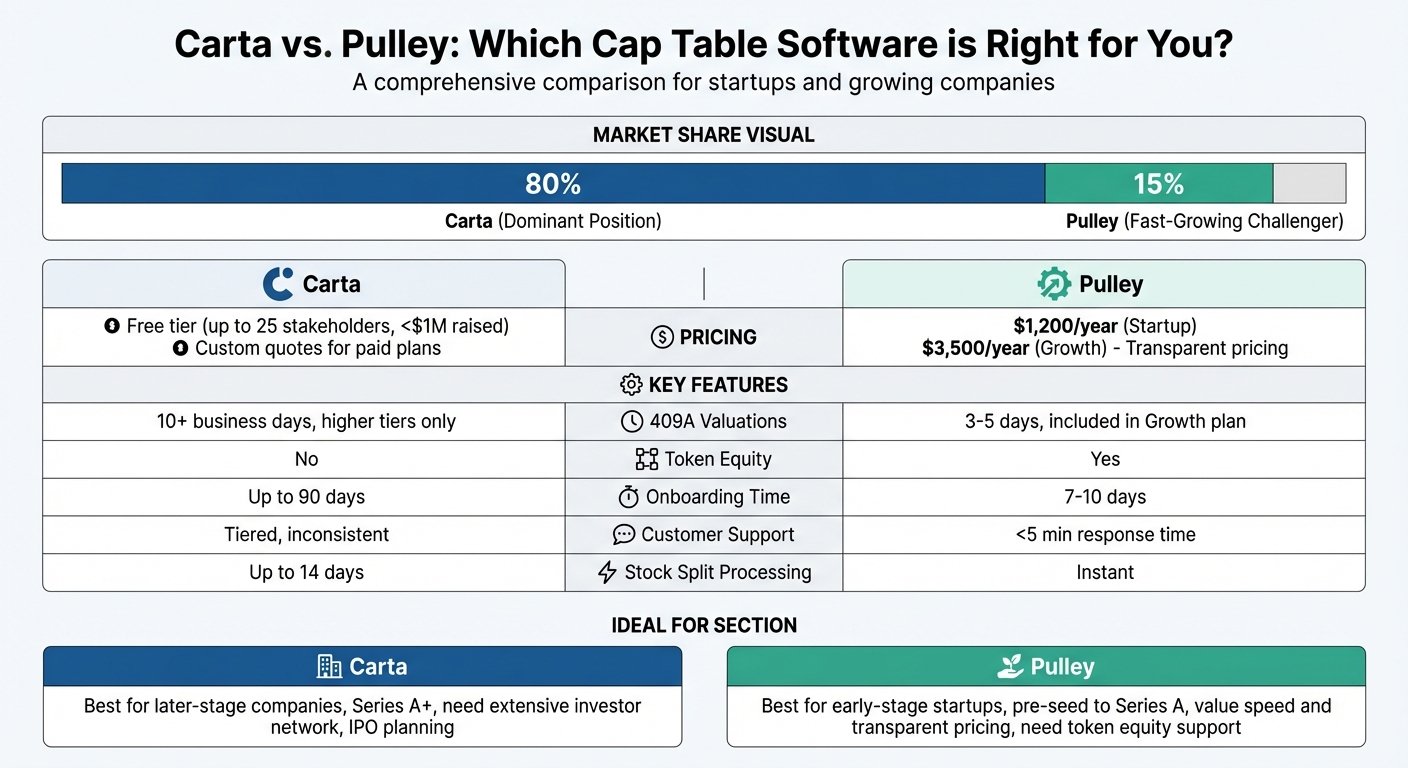
Pulley and Ledgy are the usual head-to-head comparisons, with Ledgy often favoured by European companies for local share schemes; Eqvista and Cake Equity aim at smaller or earlier companies at a lower cost. Larger or later-stage companies sometimes move to Shareworks or similar enterprise equity platforms as they approach a listing. If your cap table is genuinely simple, a lawyer-maintained spreadsheet is still a legitimate option, and separate specialists exist for valuations alone. Whatever you choose, the decision about how to structure equity itself belongs with your legal and tax advisers, not with the software vendor.
Plans, service inclusions and pricing change regularly and vary by company stage and region. Check Carta’s own pricing page for current details before deciding.
Further reading
- The Best 5 Equity Management Tools for Start-ups and SMEs — direct comparison of the cap table platforms named in the alternatives section.
- ‘5 Investor Tools Every Start-up Should Use for Growth and Funding’ — the fundraising tooling that typically sits alongside a cap table system.
- 7 Key Financial Management Practices for Startups — context for the stock-based compensation and audit reporting Carta exports.
- Legal Compliance in Company Management — the board approval and corporate record obligations behind each share issuance.
Have you used Carta?
One sentence is enough. Would you pick it again, and why or why not? We publish the critical reviews too — that is the point.