Disclosure: This page contains commercial links. BizBot may earn a commission from qualifying purchases. Paid placements do not buy a better ranking. Read our affiliate disclosure.

Building a custom team chat app means owning every part of it: the messaging layer, the storage, the mobile clients, the compliance obligations, and the maintenance for as long as you run it. This guide covers what that involves, from requirements through deployment.
First: should you build this at all?
For most businesses the answer is no, and a guide that skips this question is not being straight with you.
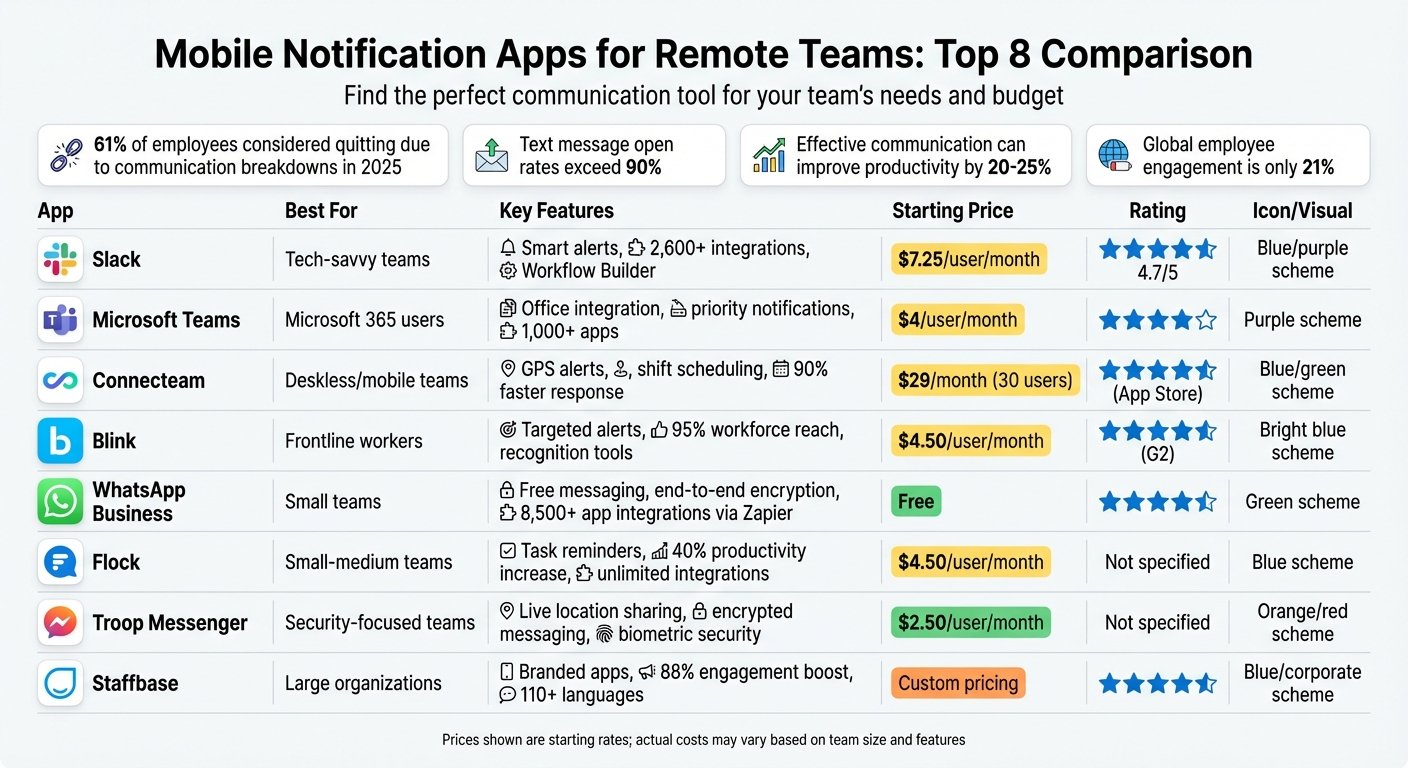
Slack, Microsoft Teams and Google Chat exist, are cheap per seat, and have absorbed years of work on the parts that are genuinely hard: message ordering, offline sync, push notification reliability across iOS and Android, search at scale, and the endless compatibility work of maintaining native clients. Reproducing that is not a project, it is a product line.
Building is worth considering when:
- Chat is your product, or a core feature of it, rather than internal plumbing
- Regulatory or data residency requirements genuinely rule out the hosted options, and you have checked rather than assumed
- You need deep embedding in your own application that no vendor’s SDK supports
- You have the engineering capacity to maintain it indefinitely, which is the requirement most often underestimated
A middle path worth pricing before you commit: chat infrastructure providers supply the real-time messaging layer, presence, and client SDKs, leaving you to build the interface and business logic. That removes most of the hard distributed-systems work while keeping control of the experience, and it is usually the right answer when “buy” is too rigid and “build” is too expensive.
If you have worked through that and building is still right, the rest of this guide covers it.
Key Points
-
Understand Chat App Needs
- Identify key features like real-time messaging, file sharing, and integrations
- Gather user input through interviews, surveys, and observations
-
Choose Tech Stack
- Select front-end frameworks like React, Angular, or Vue.js
- Use back-end technologies like Node.js, Python, or Ruby on Rails
- Implement real-time communication with WebSockets, XMPP, or MQTT
- Choose a database: relational, document, or in-memory
-
User Experience Design
- Design simple, logical navigation and structure
- Incorporate visual design and branding
- Ensure accessibility and responsiveness across devices
- Conduct user testing and gather feedback
-
Core Features Implementation
- Real-time messaging using WebSockets
- Group chats and channels
- File sharing with cloud storage services
- Tool integrations via APIs and webhooks
- Search and archive
- Notifications and alerts
-
Advanced Features
- Bots and automation
- Moderation tools
- Analytics and reporting
- Personalization options
- Localization
-
Security and Compliance
- Encryption in transit and at rest
- User authentication and access control
- Regulatory compliance (GDPR, HIPAA)
- Secure data storage and backups
-
Testing and Deployment
- Unit, integration, end-to-end, and load testing
- User acceptance testing
- Deployment and maintenance strategies
Understanding Chat App Needs
Key Features
- Real-time messaging: Instant delivery between team members.
- Group chats and channels: Conversations organised by topic or project.
- File sharing: Attachments alongside conversation.
- Integrations: Connections to the tools your team already uses.
- Search: Finding a message from four months ago. Consistently underestimated, and the feature users complain about first.
- Notifications: Alerts on mentions and direct messages, without becoming noise.
- Message history and sync: The same conversation state on every device, including after being offline.
That last item is where most home-built chat apps fail. Delivering a message to a connected browser is straightforward. Making sure a user who was offline for two days on their phone sees exactly the same history in the right order is the actual engineering problem.
Gathering User Input
| Method | Description |
|---|---|
| Interviews | Understand how people actually communicate now. |
| Surveys | Gather habits and needs at scale. |
| User observations | Watch people use existing tools; what they do differs from what they report. |
| Feedback sessions | Review the app during development, not after. |
Choosing Tech Stack
Front-end Frameworks
| Framework | Advantages | Drawbacks |
|---|---|---|
| React | Large ecosystem, easy hiring, React Native shares skills with mobile | Requires assembling your own stack around it |
| Angular | Batteries included, strong typing, opinionated structure | Steeper learning curve, heavier |
| Vue.js | Approachable, flexible, good documentation | Smaller hiring pool than React |
For a chat app the deciding factor is usually hiring and mobile strategy rather than framework merit. All three are capable.
Back-end Tech
| Language/Framework | Advantages | Drawbacks |
|---|---|---|
| Node.js | Good fit for many concurrent open connections, shares language with the front end | Poor fit for CPU-heavy work |
| Python | Fast to develop in, strong ecosystem, async frameworks available | Needs an async framework to handle many long-lived connections well |
| Ruby on Rails | Strong conventions, quick to build the non-real-time parts | Real-time connections are not its strength |
| Elixir or Go | Both designed for large numbers of concurrent connections, which is the core requirement here | Smaller hiring pools |
Real-time Communication
| Protocol | Advantages | Drawbacks |
|---|---|---|
| WebSockets | Bi-directional, low latency, universally supported in browsers. The default choice. | Stateful connections complicate load balancing and horizontal scaling |
| XMPP | Mature open standard with existing server implementations and federation | Verbose, and the ecosystem has thinned considerably |
| MQTT | Lightweight, good on unreliable mobile networks | Designed for telemetry rather than chat; you build the messaging semantics yourself |
Most teams should start with WebSockets and plan for the scaling problem early. Because connections are stateful, adding a second server means messages must reach whichever server holds the recipient’s connection, which usually means a pub/sub layer such as Redis behind your application servers. Design for this before you need it; retrofitting it is painful.
Databases
| Database | Advantages | Drawbacks |
|---|---|---|
| Relational (PostgreSQL, MySQL) | Reliable, well understood, handles chat workloads comfortably at typical scale | Needs partitioning strategy for very large message volumes |
| Document or wide-column (MongoDB, Cassandra) | Scales writes horizontally; Cassandra suits append-heavy message history | Weaker consistency guarantees, more operational complexity |
| In-memory (Redis) | Fast; the usual choice for presence, pub/sub and caching | Not a durable store for message history on its own |
A common and sensible pattern: PostgreSQL for durable message storage, Redis for presence and cross-server pub/sub, and a dedicated search index for history.
User Experience Design
Navigation and Structure
- Group features into clear categories
- Use a consistent design throughout
- Make important features easy to find
- Include capable search to locate old messages and files
Visual Design and Branding
- Choose colours that fit your brand
- Use clear, readable fonts consistently
- Keep icons simple and recognisable
- Design for different devices and screen sizes
Accessibility and Responsiveness
- Follow the current accessibility guidelines. WCAG 2.2 has been the W3C recommendation since October 2023 and supersedes 2.1.
- Support keyboard navigation and screen readers, which matters more in chat than most interfaces because of the constant stream of updates
- Announce new messages politely to assistive technology rather than interrupting
- Test on real devices and browsers
User Testing
- Run usability tests to find issues
- Gather feedback through surveys and interviews
- Watch behaviour and metrics after launch
Interface Examples
| App | Worth studying for |
|---|---|
| Slack | Channel navigation, threading, search syntax |
| Microsoft Teams | Integration with a wider productivity suite |
| Google Chat | Minimal interface, Drive and Calendar integration |
Core Features Implementation
The code below is illustrative rather than production-ready. In particular, none of it includes the authentication, authorisation, input validation, or error handling a real implementation requires.
Real-time Messaging
WebSockets are the usual foundation. Opening a connection from the browser:
const socket = new WebSocket('wss://example.com/ws');

socket.onmessage = (event) => {
  console.log(`Received message: ${event.data}`);
};

socket.onopen = () => {
  console.log('Connected to the WebSocket server');
};

socket.onerror = (event) => {
  console.log('Error connecting to the WebSocket server');
};

socket.onclose = () => {
  console.log('Disconnected from the WebSocket server');
};
Note wss:// rather than ws://: the unencrypted form should not be used outside local development.
What this example omits is most of the work. A production client needs automatic reconnection with backoff, a way to fetch messages missed while disconnected, deduplication so a retry does not double-post, and message ordering that survives reconnection. Budget considerably more time for those than for the connection itself.
Group Chats and Channels
Model channels and membership, then build creation, management, and permissions. A minimal endpoint sketch in Node.js:
const express = require('express');
const app = express();

app.post('/channels', async (req, res) => {
  const { channelName, channelDescription } = req.body;

  // Validate input and check the caller's permissions before this point.
  try {
    await db.query(
      'INSERT INTO channels (name, description) VALUES ($1, $2)',
      [channelName, channelDescription]
    );
    res.send({ message: 'Channel created successfully' });
  } catch (err) {
    res.status(500).send({ error: 'Failed to create channel' });
  }
});
Note the parameterised query. Concatenating user input into SQL is how chat apps get compromised.
File Sharing
Use an object store such as Amazon S3 or Google Cloud Storage. Using the current AWS SDK for JavaScript (v3):
const { S3Client, PutObjectCommand } = require('@aws-sdk/client-s3');
const fs = require('fs');

// Credentials come from the environment or an IAM role.
// Never hard-code access keys in source.
const s3 = new S3Client({ region: process.env.AWS_REGION });

await s3.send(new PutObjectCommand({
  Bucket: process.env.S3_BUCKET,
  Key: 'example.txt',
  Body: fs.readFileSync('example.txt')
}));
Two points worth stating plainly. Credentials belong in environment variables or an IAM role attached to the instance, never in source control. And uploaded files must not be publicly readable by default: serve them through short-lived signed URLs issued only to users entitled to the channel the file was shared in.
Tool Integrations
Connect to other services through their APIs and webhooks. Fetching issues from the GitHub API:
const response = await fetch(
  'https://api.github.com/repos/octocat/hello-world/issues',
  { headers: { Authorization: `Bearer ${process.env.GITHUB_TOKEN}` } }
);
const issues = await response.json();
Verify webhook signatures on anything arriving from outside. An unauthenticated webhook endpoint lets anyone post messages into your channels.
Search and Archive
Message search needs a real index. Elasticsearch, OpenSearch, or Algolia all work; PostgreSQL full-text search is often enough at smaller scale and saves you a system to operate.
const { Client } = require('@elastic/elasticsearch');

const client = new Client({ node: process.env.ELASTICSEARCH_URL });

await client.indices.create({ index: 'messages' });
Use the maintained @elastic/elasticsearch client; the older elasticsearch npm package is deprecated.
The hard part is permissions. Search must never return a message from a private channel the searcher cannot access, and enforcing that inside the index rather than filtering afterwards is what keeps it both correct and fast.
Notifications and Alerts
Use Firebase Cloud Messaging and Apple Push Notification Service for mobile push:
const admin = require('firebase-admin');

admin.initializeApp({
  credential: admin.credential.applicationDefault()
});

await admin.messaging().send({
  notification: {
    title: 'New message',
    body: 'You were mentioned in #general'
  },
  token: deviceToken
});
Notification logic is where users’ patience is won or lost. Respect per-channel mute settings, do not notify someone who is actively reading the channel on another device, and think carefully about what appears on a lock screen given message content may be sensitive.
Advanced Features
Bots and Automation
Bots can answer common questions, post alerts from other systems, and handle routine tasks. When implementing them:
- Define narrow, clear functionality
- Make the bot easy to invoke and easy to ignore
- Rate-limit bot posting, or an integration will flood a channel and people will mute it
Moderation Tools
| Tool | Description |
|---|---|
| User banning or suspension | Restrict access temporarily or permanently |
| Message deletion or editing | Remove or amend inappropriate content |
| Retention and export | Legal hold and export for investigations |
| Audit logging | Record who deleted or exported what |
Admin capabilities need their own audit trail. A moderator who can silently delete messages and leave no record is a problem in any workplace tool.
Analytics and Reporting
- Engagement metrics such as active users and message volume
- Technical metrics such as delivery latency and connection stability, which matter more
Be careful with employee-level analytics. Reporting on individuals’ messaging activity raises privacy obligations in many jurisdictions and destroys trust in the tool. Aggregate by default.
Personalization Options
- Customisable notification settings, per channel
- Profile customisation
- Theme and layout options, including a dark theme
Localization
- Translation and locale-appropriate date, time, and number formatting
- Right-to-left layout support, which is a structural decision rather than a translation task
- Regional compliance and data residency requirements
Security and Compliance
Encryption
A distinction that is frequently muddled and matters here:
- TLS encrypts data in transit between client and server. This is mandatory and straightforward.
- Encryption at rest protects the stored database and file storage.
- End-to-end encryption means the server cannot read message content at all. This is a different and much larger undertaking, and it is fundamentally incompatible with server-side search, server-side moderation, and compliance export. Decide early, because it cannot be added later without rebuilding.
Most workplace chat tools deliberately do not use end-to-end encryption, precisely because employers need retention, discovery, and moderation. Be clear about which you are building and tell your users honestly.
User Authentication
| Method | Description |
|---|---|
| Single sign-on | SAML or OIDC against your identity provider. Expected in any workplace tool, and it removes password handling from your problem list. |
| Multi-factor authentication | Required for admin accounts at minimum |
| Secure password storage | A modern password hashing algorithm, if you handle passwords at all |
| Access control policies | Channel-level permissions enforced server-side on every request, not in the client |
Regulatory Compliance
- Establish a retention policy and enforce it. Chat logs held indefinitely are a liability in both privacy and litigation terms.
- Be able to export or delete one individual’s data on request, which needs designing in rather than bolting on.
- For HIPAA, know that message content and even metadata may constitute protected health information.
- Know where your data is stored, since data residency requirements are increasingly common.
Data Storage and Backup
| Practice | Description |
|---|---|
| Secure storage | Encrypted databases and object storage |
| Regular backups | Automated and scheduled |
| Tested restores | An untested backup is an assumption |
| Backup retention | Deleted messages must eventually leave backups too, or your deletion policy is fiction |
Testing and Deployment
Testing Your App
Unit Testing
Test individual functions and modules in isolation.
Integration Testing
Test how components work together, particularly the message path from client through server to database and back out.
End-to-End Testing
Simulate real usage across the whole system, including multiple simultaneous clients.
Load Testing
Chat load testing is specific: you need many concurrent open connections, not many sequential requests. Tools that support WebSocket load testing include k6, Artillery, and Apache JMeter with a WebSocket plugin. An earlier version of this guide named “WebRTC Test” and “WebSocket Test” as tools; we could not identify those as real products and have replaced them with ones that are.
Test what happens at your connection limit, and what happens when a server holding thousands of connections restarts and every client reconnects at once.
User Acceptance Testing
Get real users on it before launch, on their own devices and networks.
Deploying Your App
- Set up servers and configure databases
- Configure load balancers for sticky sessions or a shared pub/sub layer, since WebSocket connections are stateful
- Plan how deployments happen without dropping every connection at once
Docker and an orchestrator make deployment repeatable.
Maintaining and Updating
| Task | Description |
|---|---|
| Monitoring performance | Message delivery latency, connection counts, error rates |
| Fixing bugs | Message loss and ordering bugs first; they destroy trust fastest |
| Dependency updates | Ongoing security patching, indefinitely |
| Mobile OS updates | Annual iOS and Android releases regularly break push notifications and background behaviour |
That last row is the recurring cost people forget when estimating a build. Native clients need maintenance every year whether or not you ship any new features.
Conclusion
Building a custom team chat app is achievable, and it is a long-term commitment rather than a project with an end date.
The parts that look hard, such as the interface, are mostly straightforward. The parts that look straightforward, such as reliable delivery, offline sync, permissioned search, and push notifications that work on every device, are where the time goes.
Before you start, price the alternatives honestly: per-seat licences for an existing tool, or a chat infrastructure provider that handles the real-time layer while you build the rest. If either covers your requirements, it will almost certainly cost less over five years than building and maintaining your own.
If you have compared those properly and building is still the right answer, the guidance above covers what the work involves.
More on this topic
Browse all 39 articles on IT, Cloud & Integrations, or jump straight to our buying guide: Best Collaboration Tools for Small Teams.