
Disclosure: This page contains commercial links. BizBot may earn a commission from qualifying purchases. Paid placements do not buy a better ranking. Read our affiliate disclosure.

Discover how service startups are transforming business operations by enhancing efficiency, reducing costs, and simplifying processes. From workflow automation to financial management and AI-driven data analytics, these innovative companies offer scalable, user-friendly solutions designed to meet the diverse needs of modern businesses.
- Workflow Automation: Tools like Zapier and Make (formerly Integromat) automate repetitive tasks, making processes faster and more efficient.
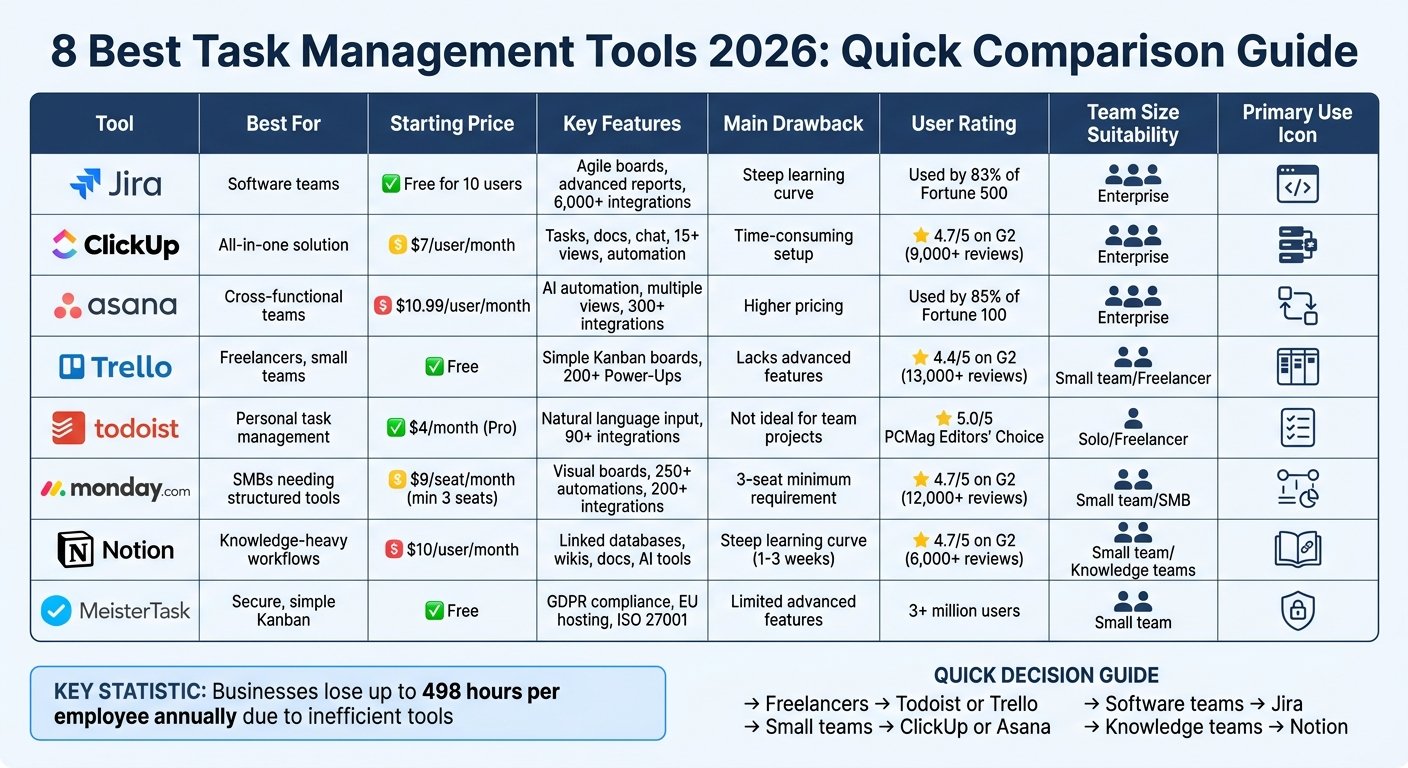
- Task Management Solutions: Tools such as Asana, Trello, and Monday.com help teams collaborate and manage projects effectively.
- CRM Innovations: Platforms like HubSpot and Salesforce provide comprehensive customer relationship management solutions.
- Financial Management Automation: QuickBooks and Xero simplify financial tracking and reporting for businesses.
- Supply Chain and Logistics Innovations: Startups like Flexe and Stord optimize inventory and shipping operations.
- AI Startups: Companies such as DeepL use artificial intelligence to enhance data analysis and customer service.
- SaaS Advantages: Software as a Service (SaaS) platforms offer flexible, cost-effective software solutions that support business growth.
These startups address various business challenges through advanced technologies such as AI, automation, and cloud services, offering significant benefits in terms of cost-efficiency, scalability, ease of implementation, and innovative features.
A note on the prices in this article
Every figure below was checked against the vendor’s own pricing page in August 2026, with the plan name and billing basis stated. Two things to watch: most of these products price per user per month and advertise the annual rate, and several have renamed themselves since this article was first written. Where a rate could not be confirmed, we say so rather than guess.
Cost-Efficiency
- Affordability: It’s important that these services are a good deal. They should offer lots of useful features without costing too much. Startups often try to be cheaper than older, established companies.
- Scalable pricing: The best services can adjust their prices as a business grows. Paying based on how much you use the service is a good approach.
- Integration costs: Some services might need extra work to fit into your current system. Those that are easy to add without much hassle are better.
Scalability
- Automated workflows: Services that use automation, AI, and well-thought-out processes can handle more work as your business grows.
- Cloud infrastructure: Using the cloud means a service can grow its capacity as needed, making it easier for your business to expand.
- Customizability: Services that let you tweak things to suit your specific needs are great because they can work for a variety of customers.
Ease of Implementation
- Intuitive UI: A service should be easy to use. If you can figure out how to navigate it without a manual, that’s a big plus.
- Minimal training: If a service doesn’t require much training, it’s easier to start using it quickly. Features that help you learn as you go are helpful.
- Third-party connectors: Being able to link up with other apps you use without a lot of trouble is important. It makes everything work together more smoothly.
Relevant Features
- Process digitization: Moving from paper to digital is a big step towards being more efficient. This includes making forms digital.
- Actionable analytics: Being able to see and understand data in real time helps you make better decisions. Dashboards that show key performance indicators (KPIs) are really useful.
- Collaboration tools: Being able to share messages, documents, and manage projects with others makes working together easier.
By looking at startups through these points, businesses can find the right tools that fit what they need and help them work better and more efficiently. The best options are those that balance cost, growth potential, ease of use, and useful features.
Comparative Analysis of Selected Startups
1. Workflow Automation Startups
Cost-Efficiency
Workflow automation startups are all about making things cheaper and simpler. They turn manual tasks digital, saving time and money. Their prices go up or down based on how much you use them, which is great for businesses that are growing. They also make sure their tools can easily work with the software you already have, like CRMs or accounting programs, so you don’t have to spend extra to get started. Zapier, for example, has a free tier capped at 100 tasks a month, then Professional at $19.99 a month billed monthly, with Team plans starting from $69 a month.
Scalability
These companies use cloud technology to quickly adjust to your business’s needs, whether you’re getting bigger or need to cut back. Their services can handle more work without you having to do much, thanks to smart software that learns and improves over time. They’re also designed to work for different kinds of businesses, no matter the size or industry.
Ease of Implementation
Getting started with these services is usually pretty straightforward. They have user-friendly screens, templates you can change as needed, and you don’t need to know how to code. They’re made to easily connect with other apps you use, thanks to something called APIs, which let different software talk to each other. Make – the product formerly sold as Integromat, renamed in 2022 – lets you build multi-step scenarios with drag-and-drop tools across a large app catalogue.
Innovative Features
What makes these services stand out are features that take care of repetitive tasks for you, like sending alerts, handling approvals, and starting actions based on data. They can read and organize information automatically, which helps keep everything running smoothly. Some even help with creating documents, signing them online, and suggesting ways to make your processes better using AI.
2. Task Management Solutions
Cost-Efficiency
Task management solutions help startups and small businesses manage their work without spending a lot of money. Many of these tools are free to start with, and as your business grows, you can pay for more features without breaking the bank. ClickUp has a genuinely free tier, then Unlimited at $7 per user per month billed annually ($10 month to month) and Business at $12 annually ($19 monthly). A “$5 per user” figure previously printed here does not match ClickUp’s pricing page and has been corrected. They try to give you a lot for a little, focusing on being helpful rather than just making money.
Some ways these tools save you money include:
- Free versions for small teams
- Paying only for what you need, like more storage or users
- Different levels of plans so you can choose what fits best without overspending
- Cheaper prices if you pay for the whole year instead of month by month
- Working with apps you already have to avoid extra costs
Scalability
These tools use the cloud, which means they can grow with your business easily. If your team gets bigger or you need more space for files, it’s no problem.
They also use smart automation and AI to handle more work as you grow, learning from how you use them to get even better over time.
You can also customize these tools to fit your business, whether you’re just starting or getting pretty big. This includes making your own rules for how things should work, managing who can do what, and connecting with other apps you use.
Ease of Implementation
Task management tools are designed to be easy to start using, even if you don’t have a tech team. They’re made to be straightforward with features like:
- Simple designs that work on phones too
- Ready-made templates for common projects
- Help guides, online workshops, and support anytime you need it
- Easy ways to work with apps you already use, like email and chat
- Tools to move your old data over without hassle
They also have quick learning resources so everyone can get the hang of it fast.
Innovative Features
These tools come with neat features that make managing work easier, not harder. They have smart helpers that suggest what to do next, dashboards that show what’s most important, and analytics to give you insights.
Other cool things include:
- Making your own workflow with special rules
- Chatting and commenting in real time
- Dashboards that show how your startup is doing
- Fun ways to get people using the tool
- Bots that take care of repeat tasks
- Sharing files and signing them online
By mixing powerful features with being easy to use, task management platforms help startups stay organized and grow.
3. Customer Relationship Management (CRM) Innovations
Cost-Efficiency
Startups that create CRM tools want to make them cheap and easy for small businesses to use. They often have a free version for starters, and then you can pay more if you need extra features. This way, you only spend money on what you really use. They also make sure these tools work well with other programs you’re already using, so you don’t have to pay extra. For example, HubSpot offers a free CRM, though the free tier caps you at 2 users. Sales Hub Starter is $20 per seat per month month-to-month, or $7 per seat per month billed annually. The “$50 a month” figure this article used to carry did not match HubSpot’s pricing page.
Scalability
These CRM startups use the cloud, so it’s easy to adjust the service as your business grows or shrinks. You pay for more features only when you need them. They’re also built to connect with other business apps, which helps you use more data as your company gets bigger. Salesforce is the obvious example, though note that Essentials no longer exists: the small-business entry tier is now called Starter Suite. You can still move up to heavier Salesforce products later.
Ease of Implementation
Setting up these CRM tools is straightforward. They’re designed to be user-friendly, with drag-and-drop features that don’t require any coding skills. They come with helpful guides and support to make things easier. Plus, they can connect with the tools your business already uses, like email and calendars, making it simple to bring all your data together. HubSpot, for instance, has tutorials and webinars to help you get started quickly.
Innovative Features
CRM startups are creating tools that automatically gather more information about your customers. This helps you see everything in one place and makes it easier to follow up. They track website visitors, sync emails, and log calls without you having to do anything. The dashboards show where sales might come from, and team tools help everyone stay on the same page. They also set up automatic reminders, tasks, and emails based on what your customers do. Insightly, for example, uses AI to understand how happy your customers are from your interactions with them.
4. Financial Management Automation
Cost-Efficiency
Financial management automation startups are all about helping you handle your money better without costing a lot. They usually have a free trial or a basic plan that’s perfect for startups or small businesses just starting out. As your business grows, you pay more based on how much you use it. Here are some ways they help save money:
- Free trials or starter plans
- Pay more as your business grows
- Works with the accounting tools you already have to avoid extra costs
- Can connect to other business apps you use
This way, businesses of all sizes can start automating their finances without a big initial cost.
Scalability
These startups make it easy for your business to grow without a lot of extra work. They use the cloud, which means they can handle more data as you get bigger. They also get smarter over time, helping you see new things about your money. Here’s what makes them scalable:
- They’re based in the cloud, so they can grow with you
- They learn and get better as you use them
- They have tools to look at new kinds of data as your business changes
- They can connect with more and more of the apps you use
This means these platforms can support you whether you’re just starting or running a big company.
Ease of Implementation
Getting started with these tools is pretty easy. They focus on making things straightforward, with simple designs and lots of help if you need it. Here’s what makes them easy to use:
- Dashboards that are easy to understand
- Lots of help guides and resources to get you started
- They work with the programs you already use
- Tools to bring over your old financial data easily
- Quick training videos for your team
Most businesses can get these systems up and running quickly, without needing months to set them up.
Innovative Features
These startups stand out because of their cool features that make managing money easier. They use AI to help you make better decisions and spot things you might miss. Here are some of their top features:
- Dashboards that show your money info in real time
- Predictions on future spending or cash flow
- Alerts for when something doesn’t look right
- Notifications for when you’re spending too much
- Chatbots you can ask finance questions
- Tools that automatically fix mistakes in transactions
- Ways to help you spend money more wisely across your business
By adding new features all the time, these startups make it easier to take care of your finances with the latest technology.
5. Supply Chain and Logistics Innovations
Cost-Efficiency
Startups focusing on supply chain and logistics help businesses cut costs by making the way they handle shipping and keeping track of inventory smarter. They offer plans that are easy on the wallet, perfect for smaller and medium-sized businesses, with the price going up as your business grows. Here’s how they save you money:
- Free trials to start without paying
- Basic plans that offer important features without costing a lot
- Prices based on how much you actually use their services
- Easy to connect with the accounting programs you already have
They use tech to streamline how work gets done, cutting down on extra expenses and giving those savings back to you.
Scalability
These companies use the cloud, so it’s easy to handle more orders or keep track of more items as your business gets bigger. Here are some ways they help you grow:
- Cloud systems that can quickly handle more work
- Automatic processes for managing more orders
- Pricing that grows with your business
- Easy to link up with more tools as you need them
They also get smarter as they go, thanks to learning from the data they handle, which means they work better the more you use them.
Ease of Implementation
Getting these systems up and running is pretty straightforward. They have simple layouts, help you through the setup, and offer support when you need it. Here’s what makes them user-friendly:
- Easy-to-use interfaces that don’t need much training
- Clear instructions for getting started
- Can work with the shipping and inventory systems you already use
- Help is available if you get stuck
They focus on making things easy so you can start improving how you manage logistics right away.
Innovative Features
These startups bring new tools to the table that older systems don’t have, like:
- Tracking shipments in real time
- Figuring out the best way to keep inventory based on what customers want
- Automatically choosing shipping options
- Making warehouses run smoother with robots
- Keeping an eye on the whole supply chain with new tech like IoT and blockchain
- Tracking how green your shipping and inventory are
By using the newest tech, they offer features that help you make smarter choices and become more efficient over time.
6. AI Startups Transforming Data Science and Analytics
Cost-Efficiency
AI startups that work on data science want to make smart data analysis affordable for all businesses. They often let you start for free or with a basic plan, and you only pay more if you use more features. Here’s how they help you save money:
- You pay based on how much you use, so it’s fair.
- They use free tools and methods to keep costs down.
- Since everything’s online, you don’t need to spend much on computer stuff.
- They fit right in with the data tools you already have, so you don’t waste money.
This way, even small teams can use AI to make smart decisions without spending a lot of money upfront.
Scalability
These AI startups are built to grow with you. They use online tech and flexible designs so they can handle more data and more complex questions as your business grows. They also improve on their own by learning from new data. Here’s what helps them grow with you:
- They work whether you keep data on your computers or online.
- They connect with all kinds of data storage places.
- They’re good with lots of data coming in all the time.
- They make sure everything’s secure and follows rules.
This makes it easy to get bigger and smarter with your data without hitting roadblocks.
Ease of Implementation
These startups make it easy for anyone to start using AI. They have simple tools and guides so you don’t need to be a tech expert. Here’s what makes them user-friendly:
- They have ready-made setups for common tasks.
- You can drag and drop to build models without writing code.
- There’s a lot of help available online to get you started.
- They work well with other data analysis tools you might use.
- They follow open standards, so everything works well together.
With these features, you can quickly start using AI to help with your work.
Innovative Features
These startups are creating new ways to use AI that can really change how we understand data. They make it possible to predict what might happen next, suggest the best actions, and handle complicated data tasks automatically. Here are some cool things they do:
- They build models quickly with automated learning.
- You can talk to the system in plain language to get answers.
- They’re really good with pictures, videos, and voice data.
- They let you test different scenarios easily.
- They show data in new, interactive ways.
- They make it easy to see how the AI makes decisions.
These new tools are making data analysis more powerful and easier to use for everyone.
7. SaaS Advantages for Startups
SaaS (Software as a Service) is like renting software over the internet, which can help startups grow and manage their work more easily.
Cost-Efficiency
With SaaS, startups can:
- Pay only for what they need, making it easier to manage money
- Skip spending a lot on buying and setting up software
- Plan their budgets better because costs are predictable
- Use their money for other important parts of their business
Scalability
SaaS makes it easy for startups to grow by:
- Allowing them to use more or less of the service without a hassle
- Making sure the tech grows with the company
- Handling busy times without trouble
Ease of Implementation
SaaS makes starting and using software simple by:
- Cutting out complicated setup steps
- Having easy-to-use designs that people can quickly get used to
- Making it easy to connect with other tools the company uses
- Reducing the need for training
Innovative Features
SaaS gives startups access to cool tools like:
- Instant updates on how the business is doing
- Automatic tasks to save time
- Ways for teams to work together online
- Easy connections with other apps
- Regular updates with new features
By using SaaS, startups can save money, grow easily, bring in new ideas, and stay ahead in the market.
Workflow Automation Startups
Zapier and Make handle the repetitive plumbing between apps. Integromat is now called Make – the company rebranded in 2022, and the old name is what you will still see in older comparison articles, including earlier versions of this one. Here is how the two compare.
| Zapier | Make (formerly Integromat) | |
|---|---|---|
| Cost | Free tier (100 tasks/month); Professional $19.99/month; Team from $69/month. | Free tier (1,000 credits/month); Core $12/month; Pro $21/month; Teams $38/month. Around 15% off for annual billing. |
| Ease of Use | Super straightforward. You can drag and drop to make workflows without needing to know how to code. | Easy to use with a clear way to set up workflows. It has lots of ready-to-go setups. |
| Scalability | Can handle a lot of tasks and connections. As your business grows, you can adjust your plan. | Good at dealing with lots of data quickly. You pay more as you need more. |
| Integrations | Zapier advertises 9,000+ app integrations. Has templates for common setups. | Large app catalogue plus APIs and webhooks for anything not covered. App counts previously quoted here were out of date. |
| Key Features | – Can do multiple steps in one workflow – Lets you set up your own triggers and actions
– Can send you alerts |
– Has a visual way to see your workflows – Lets you schedule tasks and set up rules
– You can add custom code for more complex needs |
| Pros | – Really easy for beginners – Lots of app connections
– Good for simple task setups |
– Great for detailed workflows – Can handle complex data and rules
– Good value for the money |
| Cons | – Might get tricky with more complex workflows – Higher plans can be pricey | – Might take some time to learn – Not as many ready-made setups
– Extra costs for using other apps |
Overall, Zapier is great if you want something easy that works right away, especially for simple tasks. It has a huge range of apps it can work with.
Make is better if you need to do more detailed work that involves a lot of steps, data, and custom rules. It gives you powerful tools for setting up complex workflows.
The best option depends on what you need. For easy and quick setups, Zapier is a great choice. But if you’re looking for more control and options for your workflows, Make is the way to go. Note the different pricing models: Zapier meters tasks, Make meters credits, and which is cheaper depends entirely on the shape of your workflows rather than on the headline rate.
Task Management Solutions
Task management tools like Asana, Trello, and Monday.com help teams work together better and keep track of what needs to be done. Let’s compare these popular options to help you understand what each one offers.
Cost Efficiency
All three tools have free versions for small teams and paid versions with more features. The cost usually depends on how many people are using the tool.
- Asana’s free Personal plan now caps collaboration at 2 people, not 15. Starter is $10.99 per user per month billed annually, or $13.49 month to month.
- Trello’s free plan covers up to 10 collaborators and 10 boards per Workspace. Standard is $5 per user per month billed annually ($6 monthly); the $12.50 figure previously printed here is the month-to-month rate for the higher Premium tier, not the starting price.
- Monday.com’s free plan covers 2 seats. Basic is $9 per seat per month, and paid plans have a three-seat minimum – so the real floor is about $27 a month, not $9.
Scalability
These tools are online, so they can grow with your team. They also have automation to help manage more work easily.
- Asana gets smarter and offers suggestions as you use it more.
- Trello has automation called Butler that helps with tasks as you add more to your boards.
- Monday.com has tools to help share work across bigger teams.
Ease of Use
These platforms are made to be easy for everyone. They have guides and support to help you start.
- Asana has a clear layout showing what needs to be done and when.
- Trello is very visual, making it easy for new users.
- Monday.com is user-friendly with drag-and-drop and a clean look.
Key Features
| Feature | Asana | Trello | Monday.com |
|---|---|---|---|
| Interface Style | List-based project manager | Card wall board | Spreadsheet-style rows/columns |
| Key Highlights | Tasks, projects, status views | Cards, lists, boards | Visual builder, charts |
| Automations | 100+ task templates Rules | Butler scripts Buttons | 125+ automations Recipes |
| Integrations | Google Workspace, Slack, wide app directory | Slack, Google Workspace, large Power-Up directory | Slack, Zapier, app marketplace |
Pros and Cons
Asana
Pros:
- Good for detailed project planning
- Strong reporting and mobile apps
Cons:
- Might be too much for simple tasks
- Reporting is only in paid versions
Trello
Pros:
- Simple to use with a visual setup
- Quick to start with
Cons:
- Not the best for very complex projects
- Might need manual work for big projects
Monday.com
Pros:
- Very flexible and can be customized
- Great for seeing data and automating tasks
Cons:
- Might take some time to learn
- Can become expensive with more people
In short, Asana is great for detailed planning, Trello is super simple, and Monday.com is very flexible. The best choice depends on what your team needs to stay organized and work together.
Customer Relationship Management (CRM) Innovations
CRM systems are tools that help businesses keep track of their customers, sales, and support. Companies like HubSpot and Salesforce have created new tools to make this easier. Here’s a simple look at what they offer.
Cost-Efficiency
Both HubSpot and Salesforce want to make their CRM tools affordable:
- HubSpot has a free version that covers basic needs like keeping track of contacts, capped at 2 users. Sales Hub Starter is $20 per seat per month month-to-month, or $7 per seat billed annually; Professional is $100 per seat monthly and carries a one-off $1,500 onboarding fee.
- Salesforce Essentials has been retired. The entry product is now Starter Suite at $25 per user per month, with Pro Suite at $100 and Enterprise at $175, both on annual commitments. If you are working from an older shortlist that names Essentials, that plan is gone.
This means HubSpot might be a better choice for new businesses, while Salesforce has options for bigger companies.
Scalability
Both HubSpot and Salesforce can grow with your business:
- HubSpot collects data from emails and websites to help you understand your customers better.
- Salesforce connects data across your company as it grows, making it easier to manage.
Both can adapt as your business needs change.
Ease of Implementation
Setting up these platforms is meant to be easy, with tools and guides to help:
- HubSpot offers free online training and help from their team.
- Salesforce provides detailed guides and support.
They make it possible to start using the system without needing a lot of tech knowledge.
Automation Features
| Feature | HubSpot | Salesforce |
|---|---|---|
| Lead Scoring | Ranks leads based on their actions | Lets you set rules to rank leads |
| Email Sequences | Ready-made email plans for reaching out | Lets you create automated email plans |
| Activity Tracking | Keeps track of emails and website visits | Helps manage your calendar and logs activities |
| Reporting | Easy-to-customize reports | Advanced custom reports |
Key points:
- HubSpot is user-friendly and quick to start with for automating sales and marketing.
- Salesforce offers more detailed customization but might take a bit more time to set up.
So, if you’re looking for something simple and quick, HubSpot could be the way to go. But if your business is larger or you need more detailed control, Salesforce might be a better fit.
Financial Management Automation
Startups like QuickBooks and Xero are changing the way small businesses manage their money. These tools help with tasks like sending bills, making reports, and understanding your finances better. They also let you see your financial information anytime, which helps you make smarter choices.
Cost-Efficiency
These startups offer prices that make sense for small businesses:
- You can try them for free to see if you like them.
- They have different plans so you can choose what you need without spending too much.
- You pay every month for each user, which helps you plan your budget.
- They work with the programs you already use, so you don’t have to pay for those again.
QuickBooks Online starts at $38 a month for Simple Start, and Xero starts at $25 a month for Early. Both run heavy introductory discounts – Xero was advertising 90% off for six months when we checked, which is where the $9 figure previously printed here came from. That is a promotional rate, not the price. This way, you can use your money for other important things in your business.
Scalability
These tools are online, so you can use them from anywhere and they grow with your business:
- You can access them from any place.
- They let you send as many invoices and do as many transactions as you need.
- You can customize the dashboard to show more information as your business grows.
- They can connect with more tools you use as your business needs change.
QuickBooks Online and Xero also get smarter as they collect more data, giving you better advice.
Ease of Implementation
They are easy to start using, with lots of help available:
- They guide you step by step to set them up.
- They have online classes and guides to help you learn how to use them.
- If you have questions, you can talk to support through chat, email, or phone.
- Moving your financial information to these tools is straightforward, so you don’t have to enter everything by hand.
Most people can start using these tools to manage their money on the same day they sign up.
Innovative Features
These tools have some really helpful features:
- They can do tasks like sending out bills on their own, so you don’t have to.
- They make reports and dashboards that help you understand your finances.
- They can alert you if there’s a problem with your cash flow.
- You can accept payments directly, making it easier for your customers.
- They use AI to show you trends and areas where you can do better.
In short, startups like QuickBooks and Xero are making it easier for small businesses to handle their finances efficiently and make better decisions.
Supply Chain and Logistics Innovations
Startups like Flexe and Stord are changing the way businesses handle their supply chain. They make it easier and cheaper to store and send goods. Let’s look at what makes them stand out:
Cost-Efficiency
- On-demand warehousing: Flexe allows businesses to use space in warehouses only when they need it, which can save a lot of money compared to owning or renting a warehouse all the time.
- Flexible pricing: Stord charges businesses based on the shipping services they actually use. This means you only pay for what you need, when you need it.
- Easy integration: Both Flexe and Stord can be easily connected to the systems businesses already use for managing orders and logistics. This means you won’t have to spend extra money to get them to work with your existing setup.
Scalability
- Cloud-based: Both startups use cloud technology, which lets them quickly adjust to handle more or less work as needed.
- Automation: They use smart software to manage increasing amounts of shipments without slowing down.
- Modular services: Businesses can start with just a few services and add more as they grow.
Ease of Implementation
- Intuitive platforms: Their systems are easy to use, so you don’t need special training to get started.
- Pre-built integrations: They already work with many of the online stores, marketplaces, and business software you might be using.
- Onboarding support: They have people ready to help you move your operations over to their platforms.
Innovative Features
- Real-time visibility: You can see where your inventory is and track shipments as they happen.
- Predictive analytics: They offer advice on where to keep your stock and how to plan shipments based on what’s selling and what’s not.
- Automated workflows: You can set rules that automatically reorder stock, create shipping labels, and more.
In short, Flexe and Stord make it easier for businesses to manage their supply chain without spending a lot on infrastructure. Their services are flexible, easy to use, and come with features that help you stay on top of things.
AI Startups Transforming Data Science and Analytics
AI startups are using really smart technology to make big changes in how we understand and use data. They’re bringing in tools like machine learning and natural language processing to help businesses make better decisions based on data.
Overview of Key Players
Some of the startups making waves include:
- DeepL: This company is really good at translating languages using computers, making it easier for people to communicate and understand data from all over the world.
- Frame AI – acquired by HubSpot. It analysed customer support conversations to surface what customers actually needed. HubSpot announced and completed the acquisition, so Frame AI is no longer a company you buy from independently; the technology now sits inside HubSpot.
- Uizard – acquired by Miro. It turns rough ideas into app and website designs using AI. Uizard announced it had joined Miro, so treat it as a Miro product rather than an independent startup.
Comparative Analysis
| DeepL | Frame AI | Uizard | |
|---|---|---|---|
| Status | Independent | Acquired by HubSpot | Acquired by Miro |
| Key Technology | Computer translations | Understanding customer chats | Design help |
| Primary Service | Making translations easy | Analyzing customer feedback | Making design simpler |
| Key Benefits | – Talk to people in other languages easily – Helps with understanding global data | – Find out what customers are unhappy about – Make support better | – Design apps and websites faster – Make using them nicer |
| Ideal Customers | Companies working globally, data analysts | Support teams, account managers | Designers, product teams |
| Pricing Model | Pay as you go | Monthly plans | Pay with credits |
How AI Startups Are Transforming Data Science
These AI startups are doing a lot of cool things:
- Making tasks like translating and designing faster and easier
- Pulling out useful info from things like texts and pictures using AI
- Predicting what might happen next to help businesses plan better
- Making powerful AI tools available to more people
- Always learning and getting better with more data
- Making it clear how AI makes decisions
Their work shows how AI can help us do things better and come up with new ideas. As more businesses start using AI, these startups can help keep them up to date.
Conclusion
DeepL, Frame AI and Uizard show how quickly this category moves – and how quickly it consolidates. Two of the three named here have been bought by larger platforms since this article was written, which is worth remembering before you build a process around a small AI vendor. Their work is a big part of how AI is helping change the way we do business across different areas.
SaaS Advantages for Startups
SaaS (Software as a Service) is like renting software over the internet, which can help startups grow and manage their work more easily.
Cost Efficiency
With SaaS, startups can:
- Pay only for what they need, making it easier to manage money
- Skip spending a lot on buying and setting up software
- Plan their budgets better because costs are predictable
- Use their money for other important parts of their business
Scalability
SaaS makes it easy for startups to grow by:
- Allowing them to use more or less of the service without a hassle
- Making sure the tech grows with the company
- Handling busy times without trouble
Ease of Implementation
SaaS makes starting and using software simple by:
- Cutting out complicated setup steps
- Having easy-to-use designs that people can quickly get used to
- Making it easy to connect with other tools the company uses
- Reducing the need for training
Innovative Features
SaaS gives startups access to cool tools like:
- Instant updates on how the business is doing
- Automatic tasks to save time
- Ways for teams to work together online
- Easy connections with other apps
- Regular updates with new features
By using SaaS, startups can save money, grow easily, bring in new ideas, and stay ahead in the market.
Challenges and Future Outlook
When businesses think about using new services from startups to work better and faster, they might run into a few problems:
Integration Difficulties
- It can be hard to make new systems work well with what you already have.
- Moving information from old to new systems can take a while.
- It takes time and effort to teach your team how to use these new tools.
Budget Constraints
- A lot of startups aim their services at big companies, so their prices might be too high for smaller businesses.
- Even though prices can change as your company grows, it can still end up being expensive.
- Spending money on something new can be risky, especially if you don’t have much to begin with.
Vendor Reliability Concerns
- Startups haven’t been around as long as bigger, more established companies, so they might not be as reliable.
- Newer companies might not offer the same level of support.
- Not having many examples of long-term success with these services can make businesses unsure.
But, there’s also a lot of good that can come from these innovative services:
Continued Product Improvement
- They quickly make their products better based on what users say.
- They often update their services to fix problems and add new features.
- They keep up with the latest technology.
Increasing Affordability
- As these startups grow, it can become cheaper to run and use their services.
- Offering free versions of their service can attract more users.
- As more companies enter the market, the competition can help lower prices.
Industry Specialization
- They create products that meet the specific needs of certain industries.
- They become experts in their field, understanding the ins and outs of the industries they serve.
- Focusing on specific areas of business can help them grow.
Using services from startups has its challenges, but the benefits of working more efficiently often outweigh the problems. As these startups grow and improve their products and business models, more established companies can feel more confident using them to enhance productivity, save money, and stay ahead of the competition.
Conclusion
New startups are making it easier for businesses to run smoothly by offering smart, helpful tools. Let’s look at what makes these startups stand out:
Cost-Efficiency
These startups have pricing that grows with your business. This means you can control costs better because you pay for what you use.
Scalability
They use the cloud, so their services can grow with your business. They’re also flexible, meaning they can change as your needs do. Automation makes tasks easier, and you can adjust the services to fit your business better.
Ease of Adoption
The tools these startups offer are easy to start using. They work well with other apps you might already use, and they don’t require a lot of training to get started. This means you can get up and running quickly.
Powerful Capabilities
These startups use the latest tech like AI to offer strong features. This includes being able to predict trends, automate repetitive tasks, and more.
While there are some challenges, like making sure these new tools work well with your current systems, the trend is towards using these services. As these startups continue to improve their offerings, more businesses will use their tools to work better and save money. Looking ahead, we expect more businesses to use these types of services to make things run smoother and more efficiently.
More on this topic
Browse all 86 articles on Business Operations, or jump straight to our buying guide: Best Productivity Tools for Small Teams.