HiBob, usually just called Bob, is an HR system for mid-sized companies that keeps employee records, time off, performance and compensation in one place. It is designed for modern, often distributed teams rather than traditional factory-floor workforces, and puts noticeable effort into the employee-facing side: profiles, org charts, shout-outs and self-service. Most companies adopt it when spreadsheets and a folder of contracts stop being a defensible way to run HR.
What you can actually do with it
The core is a single employee record that everything else hangs off, with managers and staff doing much of the data entry themselves.
- Keep one employee record. Contracts, roles, salaries, documents and history in one place, with permissions controlling who sees what and self-service for personal details.
- Run onboarding. Task lists across HR, IT and the hiring manager, plus paperwork and introductions before someone’s first day.
- Manage time off and attendance. Policies per country or team, approval flows and calendars, with balances visible to employees rather than held in a spreadsheet.
- Handle performance cycles. Review rounds, goals, one-to-ones and calibration, with reminders that reduce the chasing HR usually does.
- Plan compensation. Salary bands and review cycles with budget visibility, so managers propose changes inside a controlled process.
- Run surveys and see engagement. Built-in survey tools with reporting on trends by team, tenure and location.
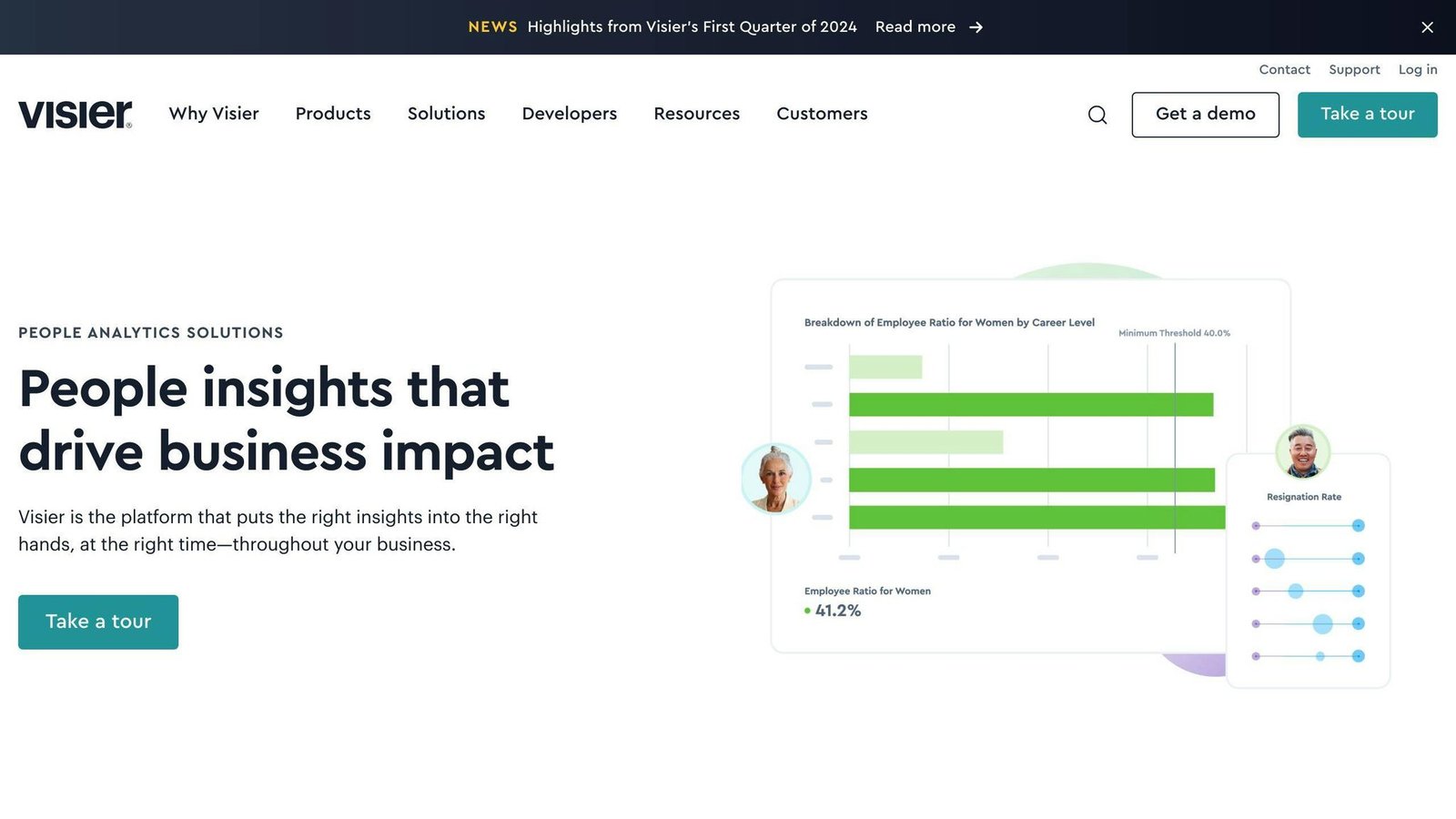
- Report on your people data. Dashboards for headcount, turnover, diversity and cost, and connections to payroll, ATS, IT provisioning and finance tools.
Who it fits best
It fits companies of roughly one hundred to a couple of thousand employees, particularly those with staff in several countries and a small HR team that needs the system to absorb administration. Technology, professional services, media and other office-based sectors are the usual customers, and HR leads who care about employee experience tend to like it more than those buying purely on compliance grounds.
It is generally too much for a company of twenty people, where a lighter tool or your payroll provider’s portal will do. It is also less suited to shift-heavy operations such as hospitality, retail and manufacturing, where rota planning and clock-in are the main problem and specialist workforce management software fits better.
Things worth knowing before you commit
- Pricing is quoted per employee. Cost scales with headcount and depends on which modules you take, and there is usually an implementation fee. Ask for the whole picture, and check the vendor’s pricing page for the current structure.
- Modules are sold separately. Performance, compensation, time tracking and surveys are typically add-ons rather than included, so the platform price and the useful configuration are different numbers.
- It is not a global payroll engine. It connects to payroll providers and has payroll capability in certain markets, but in most countries you will still run payroll elsewhere and integrate. Confirm what applies in yours.
- Implementation needs internal time. Data migration, permission design and policy configuration take weeks, and someone in HR has to own it rather than delegating entirely to the vendor.
- Employment records are sensitive data. Check data residency, retention and access controls against your obligations, and decide who internally can see salary and document fields before rollout.
Alternatives to compare it against
Personio is the main European comparison and is often stronger on local compliance and payroll integration in German-speaking markets. BambooHR covers similar ground for smaller and mid-sized companies, particularly in the US, and is quicker to set up. If you are hiring internationally through an employer of record, Deel and Remote bundle HR features with employment and payments, which may cover both needs. Larger organisations tend to end up with Workday or SAP SuccessFactors, which offer more depth at considerably higher cost and complexity. If your real pain is only holiday tracking or rota planning, a single-purpose tool will be cheaper and faster.
Module inclusions, per-employee rates and implementation fees change and are quoted per company. Check HiBob’s own pricing page for the current details before deciding.
Further reading
- Cloud Based HRIS: An Overview — explains the single-employee-record model that HiBob is built around.
- Top 8 HR Software Solutions for Effective Workforce Management — puts HiBob’s rivals such as Personio, BambooHR and Workday side by side.
- Checklist for Choosing Onboarding Tools — useful when judging whether HiBob’s onboarding module is worth the add-on cost.
- 10 Best HR Analytics Software 2024 — context for HiBob’s headcount, turnover and diversity dashboards.
- HR Process Optimization: Key Techniques — covers the policy and approval-flow design work implementation demands.
Have you used HiBob?
One sentence is enough. Would you pick it again, and why or why not? We publish the critical reviews too — that is the point.