GetResponse is an email marketing platform that has grown into a broader toolkit covering automation, landing pages, webinars, a website builder and online course selling. The core is still the list: you collect contacts, segment them, and send campaigns or automated sequences. What distinguishes it from pure email tools is the range of things bolted around that core, particularly webinars and course monetisation, which are unusual to find inside an email product. That breadth is the appeal for small businesses trying to avoid stitching together four subscriptions.
What you can actually do with it
Everything runs off your contact list, with contacts flowing in from forms, pop-ups, imports or your shop.
- Send campaigns and autoresponders. A drag-and-drop editor covers newsletters, and autoresponder series handle welcome sequences and scheduled follow-ups without building a full workflow.
- Build automation visually. A workflow builder lets you branch on behaviour such as opens, clicks, purchases and tags, though the number of workflows you can run is tied to your plan.
- Capture leads with your own pages. Landing pages, signup forms and pop-ups are built in, with A/B testing, so you do not need a separate page builder for a campaign.
- Run webinars. Live and on-demand webinar hosting is included on the relevant plans, with registration pages and follow-up emails tied to the same contact list.
- Sell courses and paid newsletters. The creator-oriented tools cover course building, quizzes and paid subscriptions, aimed at people monetising an audience directly.
- Connect an online shop. Integrations with Shopify, WooCommerce and other platforms support abandoned cart emails, product recommendations and revenue reporting.
- Reach people beyond email. SMS and web push notifications are available alongside email campaigns for time-sensitive messages.
Who it fits best
GetResponse fits small businesses, solo marketers and creators who want one subscription instead of several: coaches and course sellers, small e-commerce shops running cart recovery and promotions, and local businesses building a mailing list. It is a reasonable choice when you value having landing pages and webinars in the same tool as your email, and you do not need best-in-class depth in any single area.
Larger marketing teams with complex B2B nurture, detailed lead scoring and heavy CRM integration will find it thinner than a dedicated automation platform. If email deliverability at high volume is your central concern, evaluate carefully rather than assuming.
Things worth knowing before you commit
- Cost scales with contact count. As with most email platforms, your bill grows as the list grows, whether or not you email everyone. Prune inactive contacts regularly or you pay for people who never open anything.
- The free account is genuinely limited. New accounts get a period of premium access, after which the free tier drops back to basic functionality. Treat it as a trial, not a long-term plan.
- Important features sit on specific tiers. Unlimited automation workflows, tagging and scoring, e-commerce features, webinars and course tools are spread across different plans. Identify which tier holds your must-haves before comparing prices.
- Breadth over depth. The website builder, webinar tool and course features are competent rather than class-leading. If one of them is central to your business, compare it against a specialist product.
- Migration effort is real. Moving lists, forms and automations from another platform takes longer than the marketing suggests, particularly rebuilding sequences and re-establishing sender reputation.
Alternatives to compare it against
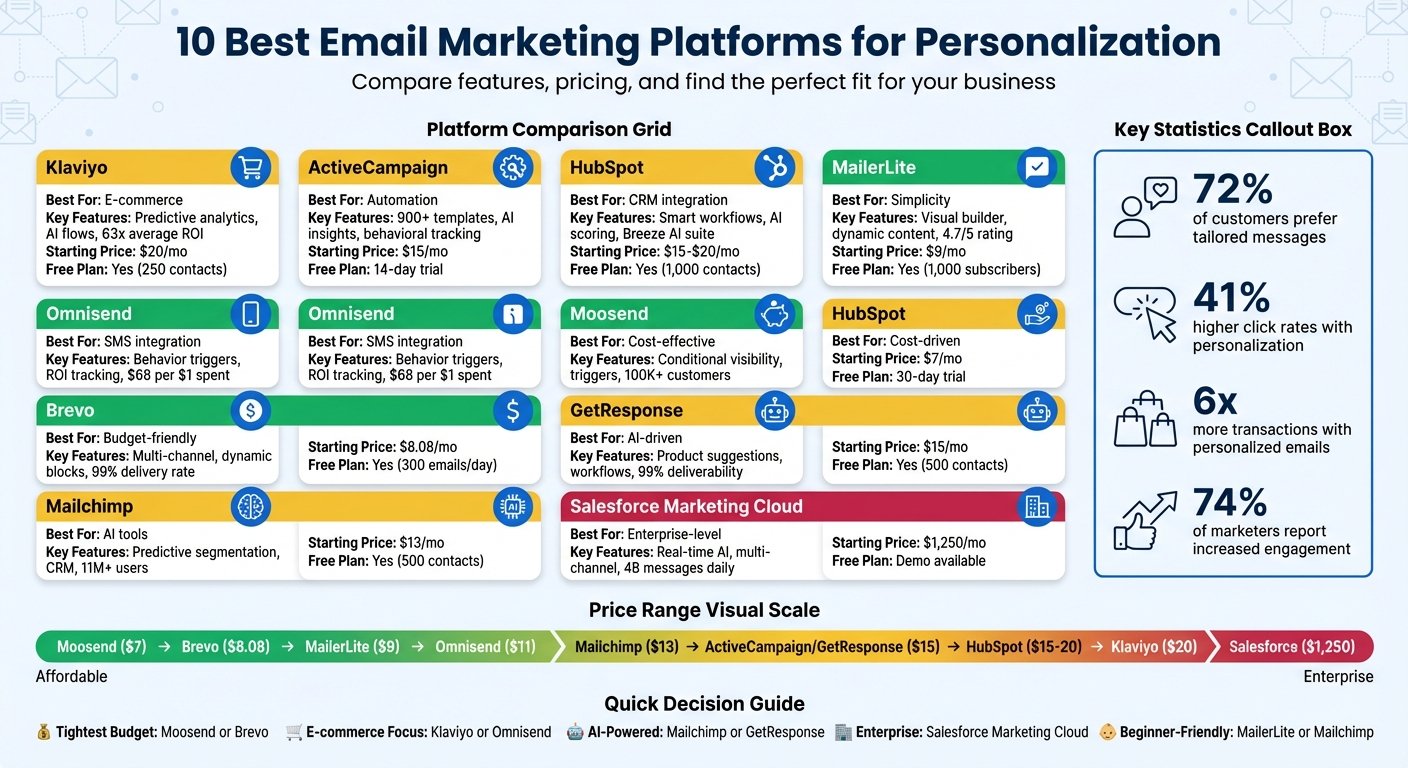
Mailchimp and Brevo are the closest general comparisons for small business email, with Brevo often cheaper at volume because of how it counts sends rather than contacts. ActiveCampaign is stronger if automation logic and CRM features matter more than extras. Kit and Beehiiv are better suited to creators focused purely on newsletters and paid subscriptions. If webinars are the reason you are considering GetResponse, price a dedicated webinar tool alongside a simpler email platform before deciding the bundle wins.
Plan tiers, contact-based pricing and which features sit on which plan change regularly. Check GetResponse’s own pricing page before you commit.
Further reading
- Best Email Deliverability Tools for Businesses in 2026 — addresses the sender reputation problem that decides whether your GetResponse campaigns reach the inbox.
- 10 Best Email Marketing Platforms for Personalization — direct comparison set for the segmentation and personalisation side of the product.
- 10 Best CRM Email Marketing Software 2024 — worth checking if you need contact records and deals rather than just a mailing list.
- E-commerce Personalization: Complete Guide [2024] — covers the cart recovery and product recommendation campaigns GetResponse connects to your shop.
Have you used GetResponse?
One sentence is enough. Would you pick it again, and why or why not? We publish the critical reviews too — that is the point.