Disclosure: This page contains commercial links. BizBot may earn a commission from qualifying purchases. Paid placements do not buy a better ranking. Read our affiliate disclosure.
Personalized email marketing works. It lifts engagement and, in e-commerce, revenue per send. Choosing the right platform matters. Here’s a quick look at the top 10 email marketing platforms for personalization. A note before the list: this article previously carried a long run of performance percentages, customer counts and return-on-investment multiples, none of which had a source attached. They have been removed. Prices below come from each vendor’s own pricing page and were checked in August 2026; where a vendor does not publish a rate, we say so.
- Klaviyo: Best for e-commerce, with advanced segmentation and predictive analytics.
- ActiveCampaign: Excels in behavioral insights and automation recipes.
- Omnisend: Perfect for e-commerce with behavior-based triggers and SMS integration.
- Brevo: Affordable with dynamic content and multi-channel automation.
- Mailchimp: Strong predictive tools and AI-powered content creation.
- HubSpot: Combines CRM with advanced workflows and AI personalization.
- MailerLite: Easy-to-use with dynamic content and visual automation.
- Moosend: Budget-friendly with conditional visibility and e-commerce tools.
- GetResponse: AI-driven recommendations and seamless e-commerce integrations.
- Salesforce Marketing Cloud: Enterprise-level with real-time AI insights and multi-channel reach.
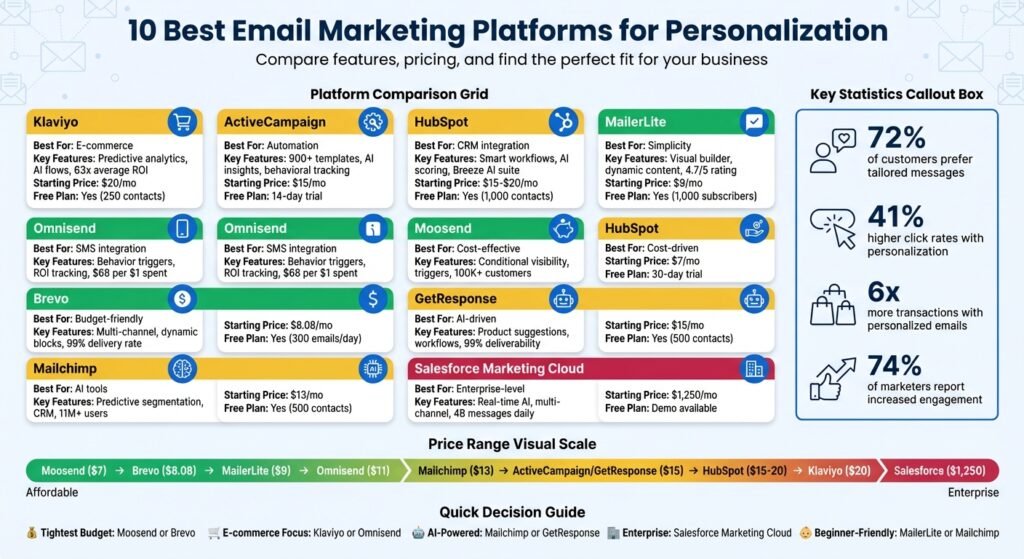
Each platform offers unique features for businesses of all sizes. Below is a quick comparison to help you decide.
Quick Comparison
| Platform | Best For | Key Features | Starting Price | Free Plan |
|---|---|---|---|---|
| Klaviyo | E-commerce | Predictive analytics, AI flows | Not published; priced by active profiles | Free tier available |
| ActiveCampaign | Automation | 900+ templates, AI insights | Not published; priced per contact, billed annually | 14-day trial, no free plan |
| Omnisend | SMS integration | Behavior triggers, ROI tracking | $11.20/mo for 500 contacts | Yes (250 contacts, 500 emails/mo) |
| Brevo | Budget-friendly | Multi-channel, dynamic blocks | Paid tiers not published | Yes (300 emails/day) |
| Mailchimp | AI tools | Predictive segmentation, CRM | $13/mo Essentials, 500 contacts | Yes (250 contacts, 500 emails/mo) |
| HubSpot | CRM integration | Smart workflows, AI scoring | Marketing Hub Starter $7/seat/mo annual, $20 monthly | Yes |
| MailerLite | Simplicity | Visual builder, dynamic content | Comfort from $12/mo; Power from $25/mo | Yes (250 subscribers, 2,500 emails/mo) |
| Moosend | Cost-effective | Conditional visibility, triggers | Not published; sliding scale by subscriber count | 30-day trial, no free plan |
| GetResponse | AI-driven | Product suggestions, workflows | Starter $19/mo, or $15.58 billed annually | Free trial |
| Salesforce Marketing Cloud | Enterprise-level | Real-time AI, multi-channel | Marketing Cloud Next Growth $1,500/org/mo, billed annually | Demo available |
Choose a platform based on your goals, whether it’s e-commerce, automation, or enterprise-level capabilities.
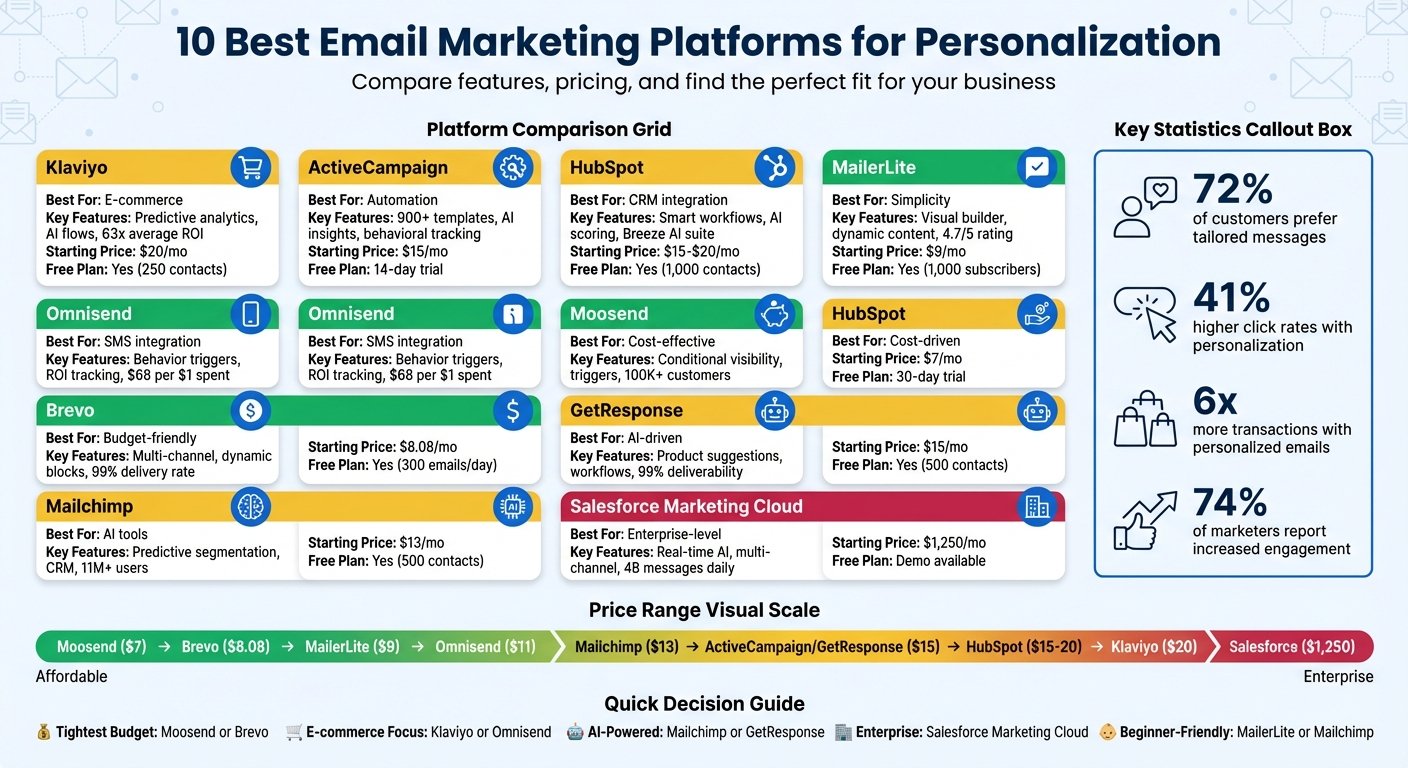
Email Marketing Platforms Comparison: Features, Pricing & Best Use Cases
1. Klaviyo
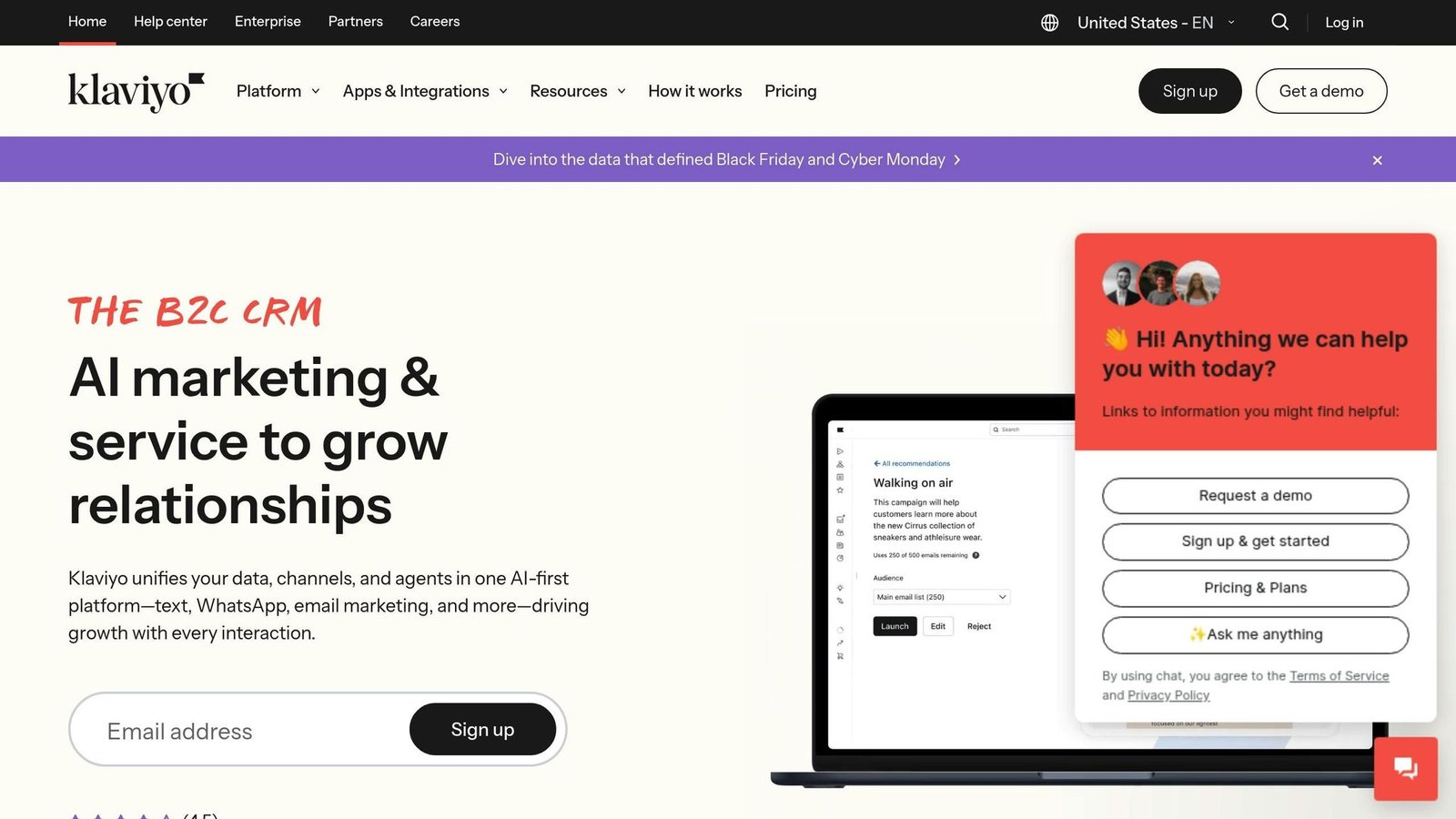
Klaviyo is a platform tailored for e-commerce brands looking to deliver highly personalized experiences. What makes Klaviyo stand out is its ability to consolidate customer data from multiple touchpoints – such as email interactions, website activity, purchases, support tickets, and reviews – into comprehensive, real-time profiles.
Personalization Capabilities
Klaviyo excels in personalization by using dynamic content blocks to present tailored product recommendations based on each shopper’s browsing and purchase history. Its advanced segmentation tools allow marketers to create real-time audience groups by analyzing live behaviors, demographic data, and AI-generated predictive metrics like churn risk and Customer Lifetime Value (CLTV). This means businesses can target customers who are at risk of leaving or identify those with the potential to become top spenders.
“Having one unified customer profile, where everything about a customer is in the same place – it’s huge.” – Katherine Cabe, Senior Director of Retention, AS Beauty Group
These personalization features are complemented by automation tools that make campaign management more efficient.
Automation and Workflow Features
Klaviyo’s automation tools ensure that messages are sent at the right time to the right audience. The platform can trigger communications instantly based on customer actions, such as abandoning a cart, viewing a product page, or submitting a review. These messages can be delivered across various channels, including email, SMS, WhatsApp, and push notifications.
With its Flows AI feature, Klaviyo enables users to outline a customer journey in plain language, which the platform then converts into fully functional automation workflows. Additionally, the Smart Send Time feature analyzes user engagement patterns to ensure messages are delivered when they’re most likely to be opened.
AI-Driven Insights and Recommendations
Klaviyo leverages AI to refine every aspect of marketing campaigns. Its K:AI feature predicts customer behavior, generates on-brand email copy and subject lines, and identifies at-risk customers while forecasting their next purchases. The platform also calculates lifetime value to help businesses launch proactive campaigns. With autonomous A/B testing, Klaviyo’s AI determines the best-performing subject lines and send times for different audience segments. To maintain high deliverability rates, it even monitors and repairs email sending reputations.
E-Commerce Integrations and Support
Klaviyo integrates seamlessly with over 350 platforms, including Shopify, Magento, and WooCommerce, ensuring that all customer data is synced effortlessly. This integrated data fuels its personalization and automation capabilities. Klaviyo prices by active profiles rather than by seat, so the bill moves with your list. There is a free tier. We could not read a starting rate from Klaviyo’s pricing page, so the $20 and $60 figures this article used to carry have been removed; use the calculator on the site with your own profile count. Checked August 2026.
“Klaviyo is the ESP that I love the most. I have seen unparalleled success from the platform and would recommend it over anything else.” – Chelsea Kinne, Retention Consultant, Tushy
2. ActiveCampaign
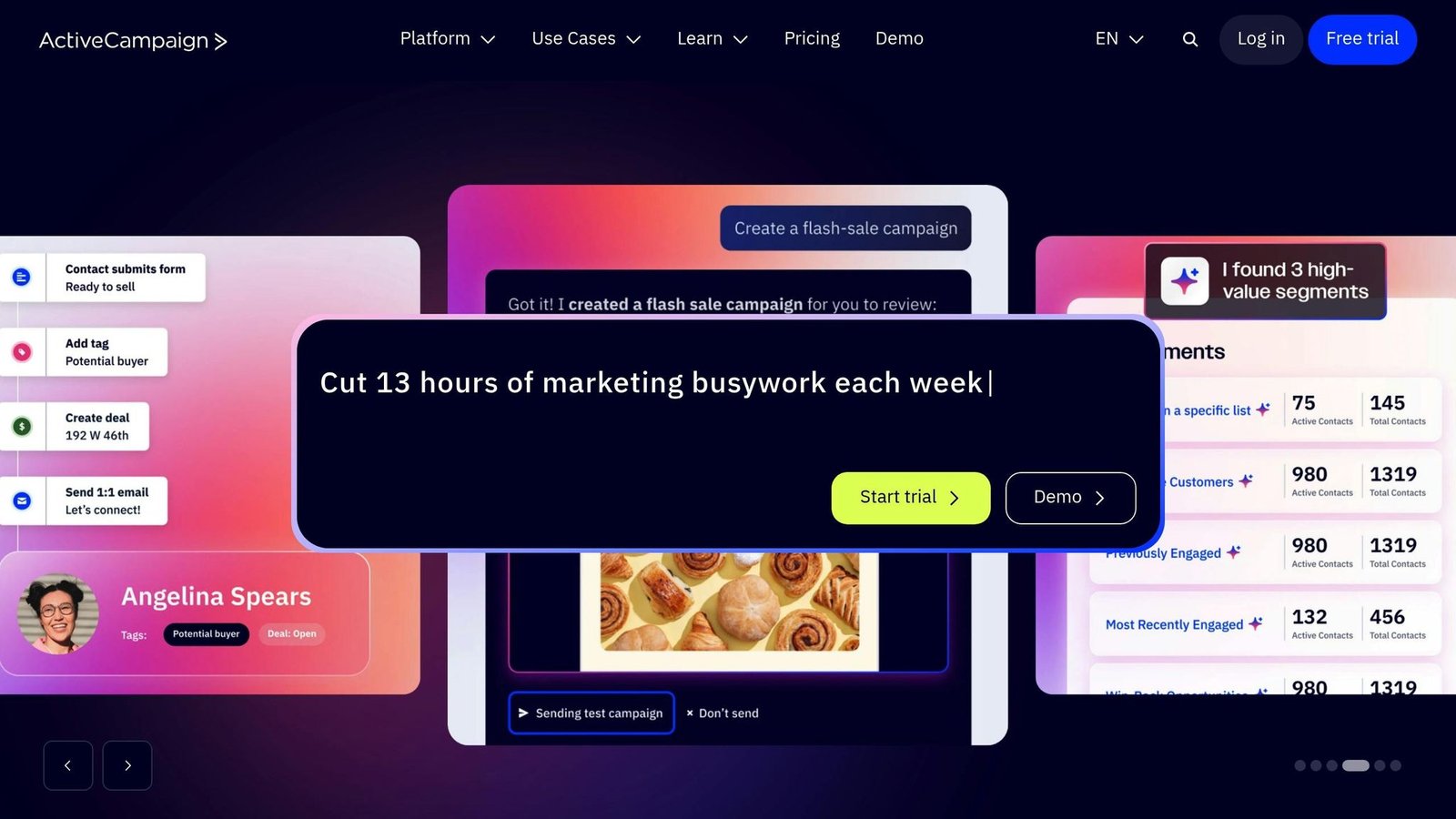
ActiveCampaign stands out as a tool that helps businesses connect with customers on a deeper level by using real-time behavioral insights to craft personalized experiences. It’s no surprise that it was named the “Best Email Marketing Tool of 2025” by EmailToolTester and recognized as a “Leader in Marketing Platforms for Small Businesses” by IDC MarketScape. ActiveCampaign prices per contact and bills annually, and it does not display the rate on its pricing page; you configure a plan by contact count to see it. There is a 14-day trial and no free plan. Checked August 2026.
Here’s a closer look at the features that make ActiveCampaign a go-to choice for personalization and automation.
Personalization Capabilities
ActiveCampaign takes personalization to the next level by tailoring content, timing, and messaging based on user behavior. Its dynamic content blocks let you show or hide specific elements – like images, text, or call-to-action buttons – depending on tags, purchase history, or custom fields.
The platform also uses AI-Suggested Segments to identify high-value micro-audiences by analyzing factors like website visits, engagement levels, and CRM data. This makes it easier to target specific groups with campaigns that feel tailor-made for them.
“We needed a system that could deliver personalized content at scale… With ActiveCampaign, we were able to do that pretty flawlessly.” – Tori Dunlap, Founder, Her First 100K
These personalization tools seamlessly integrate with its powerful automation features.
Automation and Workflow Features
ActiveCampaign simplifies automation with over 900 prebuilt recipes and a drag-and-drop workflow builder. Its Active Intelligence feature suggests complete automation sequences based on your business goals.
Behavioral tracking is another standout feature. The platform monitors which pages subscribers visit and triggers automated follow-ups based on their activity. For instance, if someone repeatedly visits a sales page without purchasing, the system can send them a targeted discount code.
“It used to take me a week to do one email. Now, with AI, it’s three emails a week. It removed the hesitation to even start.” – Amy Chinitz, Founder, Spark Joy New York
AI-Driven Insights and Recommendations
ActiveCampaign’s AI tools help businesses fine-tune their marketing strategies. Predictive Sending works out when each contact is most likely to open, and sends then. Whether that helps depends on how spread out your list is across time zones and routines; for a single-market list it moves very little.
The platform also uses advanced tools like sentiment analysis, win probability, and lead scoring to prioritize high-intent buyers. Its AI Campaign Builder can craft entire campaigns – including subject lines and layouts – from a single plain-language prompt. Additional features like an image generator, translation services, and a brand kit ensure that all content stays on-brand.
E-Commerce Integrations and Support
ActiveCampaign integrates effortlessly with major e-commerce platforms like Shopify, WooCommerce, BigCommerce, and Adobe Commerce (Magento). These integrations enable automation scenarios such as abandoned cart recovery and post-purchase follow-ups. With over 1,000 third-party integrations, ActiveCampaign acts as a central hub, connecting e-commerce, CRM, and customer support systems to ensure every interaction feels tailored and timely.
“ActiveCampaign’s inbox receive rates were way better. There were a bunch of factors that y’all were taking into account that other email providers just weren’t.” – Nyk Rayne, Director of Operations and Design, UN|HUSHED
3. Omnisend
Omnisend is a personalization tool designed specifically for e-commerce businesses. The free plan covers up to 250 contacts and 500 emails a month. Standard is $11.20 a month at 500 contacts and 6,000 emails; Pro is $41.30 a month at 2,500 contacts with unlimited email. Above 150,000 contacts it is quoted. Checked August 2026.
Personalization Capabilities
Omnisend’s personalization features are tailored to create highly relevant customer experiences. Using conditional personalization, the platform adjusts content based on specific subscriber criteria like location and shopping habits. Its if/else logic ensures that content blocks dynamically adapt depending on factors such as country or language.
Behavior-based segmentation is another standout feature. It automatically organizes customers into groups based on their shopping patterns, purchase history, and engagement levels. Segmented campaigns generally outperform a single blast to the whole list, though by how much depends entirely on how different your segments actually are.
Automation and Workflow Features
Omnisend simplifies e-commerce operations with automation tools designed for key actions like abandoned cart recovery, browse recovery, and post-purchase follow-ups. Its omnichannel approach incorporates email, SMS, and web push notifications to maximize engagement.
Two customer results were quoted here, with precise conversion rates and revenue per email. Neither could be sourced, so both have been removed. Abandoned-cart flows do tend to be the highest-earning automation in most e-commerce accounts, because the intent is already established; the size of the effect depends on your cart abandonment rate and basket value, not on the software.
E-Commerce Integrations and Support
Omnisend seamlessly integrates with major e-commerce platforms like Shopify, WooCommerce, BigCommerce, Wix, and Adobe Commerce (Magento). These native integrations allow real-time synchronization of store data, enabling businesses to access live customer behavior and purchase information without needing additional connectors.
“It’s intuitive, integrates well with Shopify, doesn’t have a steep learning curve, and has great reporting which helps us to understand the results.” – Maria Nakazono, CRM/Digital Marketing Specialist, Salomon Japan
The platform also supports web push notifications and includes a Campaign Booster feature. This tool resends emails with updated subject lines to improve visibility and engagement.
4. Brevo
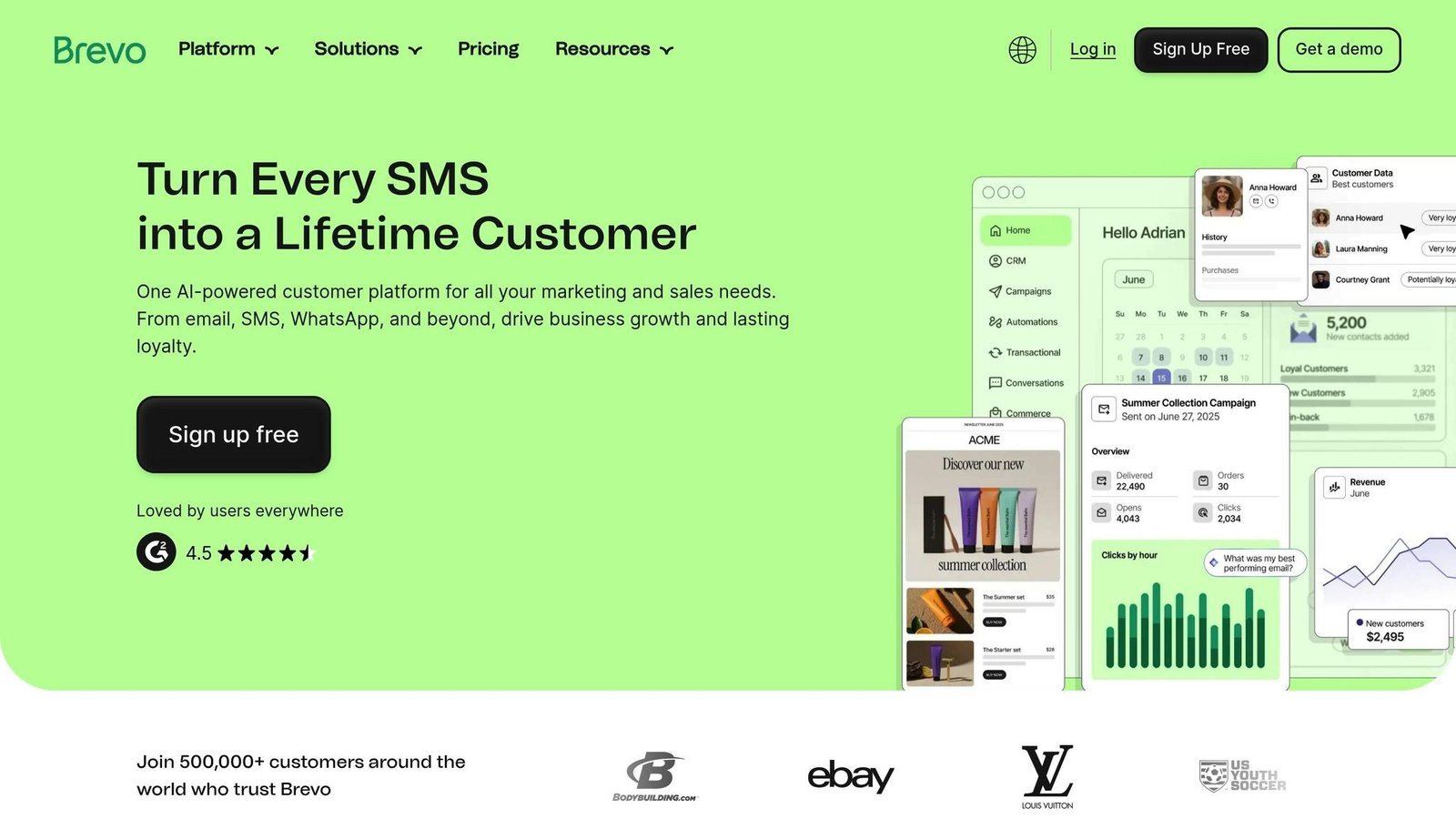
Brevo, like other leading platforms, puts personalization at the heart of its email marketing approach. Its free plan allows up to 300 emails a day with basic segmentation. Brevo does not display the prices of its Starter, Standard and Professional tiers on its pricing page, so the $8.08 figure this article used to quote has been removed; Enterprise is quoted. Checked August 2026.
Personalization Capabilities
Brevo makes personalization simple and impactful by using merge tags to automatically include recipient details – like names, locations, or purchase history – into subject lines and email content. Merge tags are cheap to set up and hard to get wrong, which is the main argument for them; the size of the lift varies by list and is easy to overstate.
Its dynamic content blocks take things further. You can set conditions to show or hide specific email sections based on recipient data. For example, you could display a local store opening announcement only to contacts in a specific state – no need to create multiple templates. Plus, Brevo tracks user behavior on your website, letting you tailor emails to include items left in abandoned carts or dynamically update pricing.
“The automation tool is better than expected and it’s possible to personalize everything, from the contacts fields to the email templates.” – Maurizio Porcu, Brevo User
These tools make personalization seamless, setting the stage for effective, automated email campaigns.
Automation and Workflow Features
Brevo’s automation capabilities ensure emails are triggered by customer actions, like visiting a website or abandoning a cart. Paul Lacitinola, owner of Vintage Camper Trailers, shared his experience:
“Brevo’s campaign builder is very straightforward. I can create professional emails in minutes.”
Its visual workflow builder offers pre-designed templates for common scenarios, such as welcome sequences or birthday rewards. Integrations with platforms like WordPress and Shopify make it easy to trigger automated messages based on user actions or website events. Beyond email, Brevo enables multi-channel campaigns across SMS, WhatsApp, push notifications, and even Facebook ads.
AI-Driven Insights and Recommendations
Brevo takes automation up a notch with its AI-powered Aura suite. This feature combines content generation, performance analytics, and smart segmentation to group audiences based on real-time data. One standout tool is the “Send at Best Time” feature, which uses predictive algorithms to schedule emails for when recipients are most likely to engage, based on their past behavior.
E-Commerce Integrations and Support
For e-commerce businesses, Brevo integrates seamlessly with platforms like Shopify, WooCommerce, PrestaShop, and Shopware, syncing customer data in real time. This allows for advanced segmentation based on purchase history or browsing behavior. Its transactional email service, which Brevo prices separately and does not list on the marketing pricing page, lets businesses separate marketing and transactional emails with distinct IP addresses, protecting sender reputation.
| Feature Category | Key Capabilities |
|---|---|
| Personalization | Merge tags, dynamic content blocks, location-based customization |
| Automation | Visual workflows, cart abandonment triggers, welcome sequences, web tracking |
| AI Features | Aura AI tools, predictive send-time optimization, audience segmentation |
| E-commerce | Shopify/WooCommerce integrations, real-time customer data sync, product recommendations |
| Channels | Email, SMS, WhatsApp, Push Notifications, Facebook Ads |
5. Mailchimp
Mailchimp offers four pricing tiers, starting with a free plan that supports up to 250 contacts and 500 monthly email sends. Essentials is $13 a month at up to 500 contacts, Standard $20, and Premium $350 at up to 10,000 contacts. Checked August 2026. The user count and deliverability figure this article used to open with had no source and have been removed. Thanks to its advanced personalization tools, Mailchimp enables targeted campaigns that can lead to noticeable revenue growth.
Personalization Capabilities
Mailchimp allows users to create highly tailored emails using merge tags and dynamic content blocks. For example, a pet store might show dog-related products to dog owners while presenting cat-related items to cat owners. The platform also supports advanced segmentation based on factors like demographics, location, psychographics, and behavioral data such as purchase history or website activity.
For even more precise targeting, Mailchimp offers predictive segmentation. This feature identifies key customer groups, such as those with a high “Likelihood to Purchase” or a strong “Customer Lifetime Value.” Predictive segmentation is available on the Standard and Premium plans only. The revenue-increase percentages this article used to quote were vendor marketing with no study attached and have been removed.
Automation and Workflow Features
Mailchimp’s Customer Journey Builder simplifies automation with over 50 behavior triggers, such as sign-ups, purchases, or website interactions. Pre-built templates cover abandoned cart follow-ups, welcome emails, cross-selling, and re-engagement campaigns.
The platform’s Campaign Manager enables users to manage multichannel marketing efforts, including email and SMS, from a single dashboard. To add a personal touch, sender details can be customized to make the brand feel more approachable and encourage direct replies. Mailchimp also supports A/B testing for subject lines and designs, while Premium users can access multivariate testing with up to eight variations.
AI-Driven Insights and Recommendations
Mailchimp integrates artificial intelligence to enhance marketing efforts. Its beta generative AI tool, Intuit Assist, drafts email copy from simple prompts, while Smart Recommendations help improve open and click rates by tailoring content. Dynamic content within automations allows businesses to personalize product recommendations, such as showcasing best sellers or new arrivals, based on individual customer behavior. These AI-powered tools are available on Standard and Premium plans, starting at $20 per month.
E-Commerce Integrations and Support
Mailchimp integrates seamlessly with over 300 platforms, including Shopify, WooCommerce, Squarespace Commerce, and Magento. These integrations sync customer, product, and purchase data, making it easier to execute targeted marketing campaigns. Kelly O’Connell, Senior Design & Marketing Manager at the Museum of Contemporary Art Denver, highlighted the flexibility Mailchimp offers:
“Because Mailchimp has so many integrations and APIs, we really have a lot of freedom to choose tools that make sense. It’s really helped us grow.”
Connected stores unlock automated workflows for tasks like abandoned cart emails, welcome series, and post-purchase feedback. Dynamic product feeds also display items tailored to customers’ browsing and purchase history.
| Plan | Starting Price | Max Contacts | Key Personalization Features |
|---|---|---|---|
| Free | $0/month | 250 | Basic automation, merge tags, basic segmentation |
| Essentials | $13/month | 500+ | A/B testing, basic automated workflows |
| Standard | $20/month | 500+ | Predictive segmentation, enhanced automation, Intuit Assist AI |
| Premium | $350/month | 10,000+ | Multivariate testing, priority support, unlimited contacts |
6. HubSpot
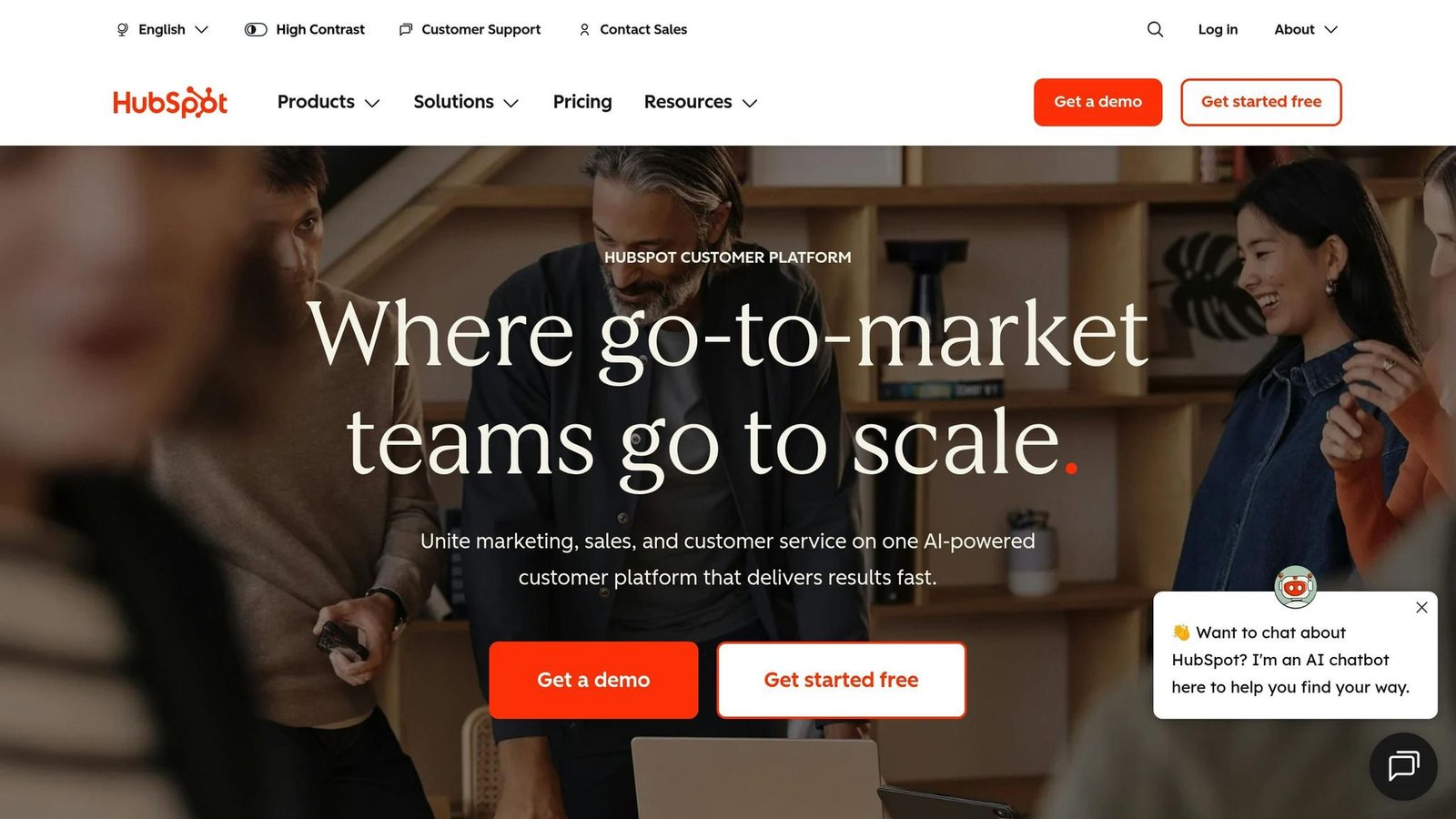
HubSpot blends a robust CRM with advanced email marketing tools, making it a great option for businesses looking to deliver highly tailored experiences. It offers four pricing levels, starting with a free plan that includes basic email automation and lead capture forms. Marketing Hub Starter is $7 per seat per month billed annually, or $20 billed monthly; Professional is $800 a month on an annual commitment with three core seats; Enterprise starts at $3,600 a month with five core seats. Budget for onboarding too: HubSpot charges a one-off $3,000 on Professional and $7,000 on Enterprise. Checked August 2026. The customer-result percentages this article used to carry here had no source and have been removed.
Personalization Capabilities
For those using Marketing Hub Professional or Enterprise, HubSpot provides advanced personalization options through HubL, enabling dynamic, CRM-based content targeting. Enterprise users can take this further with custom objects and HubDB tables for even more precise targeting. For example, a real estate agency could send emails featuring property listings filtered by each recipient’s budget and preferred location as stored in the CRM. HubSpot’s Breeze AI suite expands these capabilities with tools like the Personalization Agent (currently in beta), an AI Email Writer for creating tailored messages at scale, and Lookalike Lists to identify high-potential prospects by analyzing your top-performing customers.
Automation and Workflow Features
HubSpot’s workflow automation uses data-driven triggers to send emails at just the right moment, based on user actions. With Breeze AI Agents, it even personalizes outreach by interpreting CRM buying signals. For instance, if someone fills out a form, HubSpot can automatically send customized recommendations based on the provided details. The Pathfinder tool analyzes customer journey data to identify when a visitor is most likely to convert, allowing marketers to create impactful automated touchpoints. The named customer results previously quoted here, including a claim of 750 hours saved weekly, could not be sourced and have been removed.
AI-Driven Insights and Recommendations
HubSpot’s Breeze Assistant acts as an AI-powered partner, offering strategic insights tailored to your company’s data rather than generic information. Its AEO (Answer Engine Optimization) Strategy helps brands stay visible in AI-driven search platforms like ChatGPT and Perplexity. These AI tools not only improve efficiency but also attract highly qualified traffic through personalized, data-backed strategies.
E-Commerce Integrations and Support
HubSpot ensures seamless collaboration between marketing and sales teams with a bi-directional sync with Salesforce, automatically sharing lead intelligence such as email opens and website activity. Its marketplace offers over 1,900 custom integrations, allowing businesses to connect various e-commerce and marketing tools. By unifying customer data across its Marketing, Sales, and Service Hubs, HubSpot enables deeply personalized experiences at every stage of the customer journey. For those using programmable content or HubDB for dynamic emails, it’s essential to configure fallback data to prevent blank emails if no records match. Additionally, avoid using complex HubL functions in A/B tests, as their slower send times can lead to unreliable results. These integrations and best practices underscore HubSpot’s ability to deliver a cohesive and personalized customer journey.
7. MailerLite
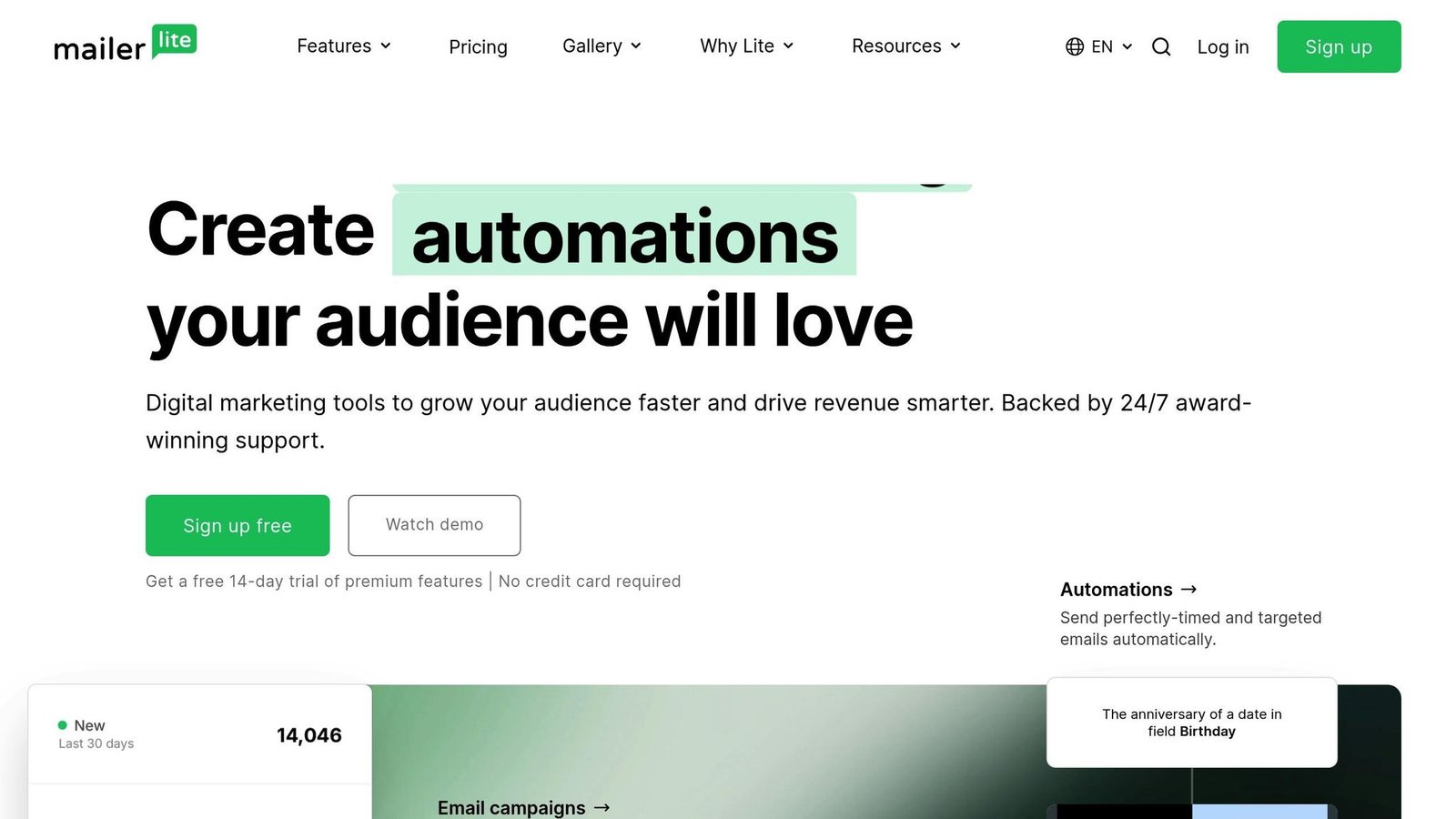
MailerLite stands out as a platform that combines affordability with powerful tools for creating personalized email campaigns. Its free plan covers up to 250 subscribers and 2,500 emails a month, not the 1,000 subscribers and 12,000 emails this article used to claim. Paid plans start at $12 a month for Comfort and $25 for Power; there is no $9 tier. Enterprise, above 200,000 subscribers, is quoted. Checked August 2026. Users often highlight its interface and its automation. Let’s dive into what makes MailerLite a go-to choice for personalization, automation, and e-commerce integration.
Personalization Capabilities
MailerLite makes personalization easy with dynamic content blocks and custom variables like {$name|default(friend)}, allowing users to tailor everything from subject lines to body text. The platform also supports segmentation based on factors like interests, engagement, location, and time zones. For instance, Jennifer Peddio, founder of the boutique candle brand Hyggekrog, uses custom fields to gather customer birth dates. This enables her to send automated birthday emails with personalized discount codes. Her welcome email introduces a loyalty programme with a 10 per cent discount code.
Automation and Workflow Features
MailerLite takes automation to the next level with its visual automation builder. This tool allows users to design customer journeys using triggers, delays, and conditional logic, enabling workflows based on actions like link clicks, purchases, or cart abandonment. ProShot & Tidal Sports, for example, implemented a post-purchase email series that sends educational guides immediately after a purchase.
The platform’s “Smart Sending” feature uses AI to determine the best time to send emails for maximum engagement, while A/B testing helps fine-tune subject lines and content within workflows.
“Our post-purchase email flow is so important for our customers. It’s so nice that we can have a chain of emails that ensures customers understand how to use our products after they purchase them.” – Daphne Bruno, Head of Marketing, ProShot and Tidal Sports
E-Commerce Integrations and Support
MailerLite integrates seamlessly with Shopify and WooCommerce, enabling users to sync order data for precise targeting. Jonathan Barbera, founder of the emergency medical kit brand Live The Creed, uses MailerLite to send product recommendation emails two weeks after an initial purchase. This timing gives customers a chance to familiarize themselves with their first product before receiving suggestions for complementary items – a strategy that consistently drives repeat sales.
For advanced users, MailerLite’s Model Context Protocol (MCP) connects with AI tools like ChatGPT or Claude, offering insights into automation drop-off points and suggesting improvements.
8. Moosend
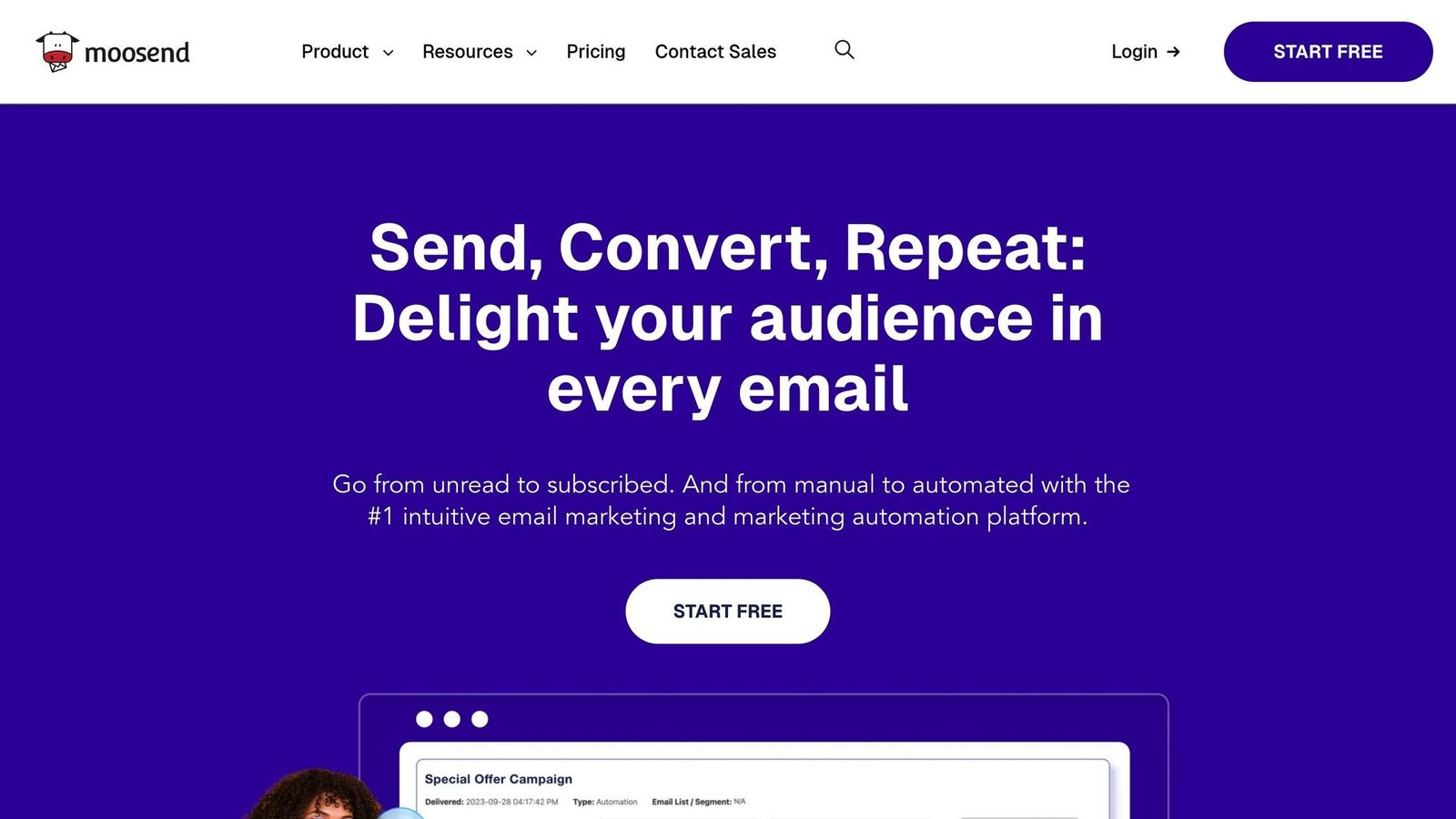
Moosend offers robust tools for personalization at a budget-friendly price, making it an attractive option for businesses of all sizes. Moosend does not display its rates; the Pro plan runs on a sliding scale by subscriber count that you configure on the pricing page, with 15 per cent off half-yearly and 20 per cent off annual terms and a 25 per cent nonprofit discount. There is a 30-day trial rather than a free plan. The $7 and $9 monthly figures this article used to quote could not be sourced and have been removed. Checked August 2026. Alex Melvani, Membership Officer at WWF, praises the platform, saying:
“Moosend is a user friendly professional platform with a great support team. And the most incredible thing is that it’s cost efficient”.
Let’s dive into what makes Moosend stand out.
Personalization Capabilities
Moosend uses personalization tags to customize subject lines, email content, and preview text with recipient-specific details like names or company data. It also supports custom fields for other data points, such as birthdays, age, and location, which helps create highly tailored campaigns. A standout feature, “conditional visibility”, allows marketers to show or hide specific visuals or text blocks for different recipients within the same email. This eliminates the hassle of creating multiple versions of the same campaign.
Automation and Workflow Features
The platform’s visual workflow builder is packed with over 100 triggers and comes with a library of pre-designed “Automation Recipes” for common email sequences, such as abandoned cart reminders, onboarding series, and loyalty programs. One unique feature is its weather-based automation, which tailors product recommendations based on local forecasts. Additionally, behavioral triggers, like website visits or link clicks, enable marketers to craft workflows that feel personal and timely. Dipak Raghuwansi, Email Marketing Associate at Vogue, shares:
“From seamless onsite event tracking to amazing support, there’s no other tool matching the feature set & price point offered”.
AI-Driven Insights and Recommendations
Moosend’s “Audience Discovery” tool uses AI to analyze customer behavior, turning user actions into actionable insights and smart tags. The platform also includes an AI Writer to help generate subject lines and email copy, plus a subject line tester to optimize open rates.
E-Commerce Integrations and Support
Moosend integrates effortlessly with platforms like WooCommerce, Magento, and Shopify, syncing product data to enable shoppable emails featuring descriptions and prices. Users can easily drag and drop product blocks into their email designs. The platform also tracks visitor behavior to trigger personalized recommendations and automate abandoned cart recovery sequences. To top it off, a dedicated e-commerce dashboard offers clear insights into metrics like revenue, total orders, and the performance of individual products.
9. GetResponse
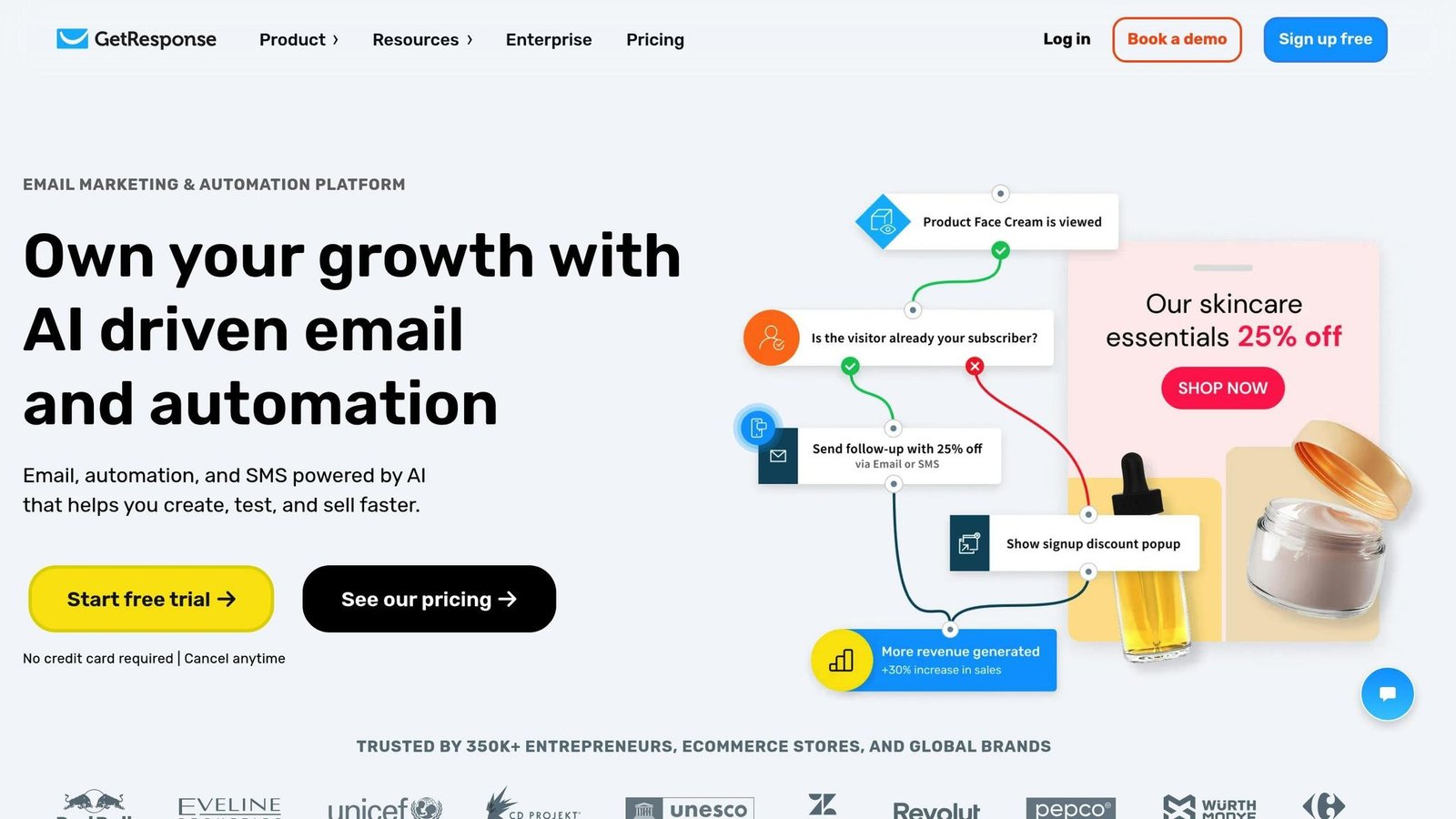
GetResponse takes email marketing to the next level with its AI-powered automation and personalization tools. Starter is $19 a month billed monthly, or $15.58 billed annually, an 18 per cent discount. Marketer is $59 or $48.38, and Creator $69 or $56.58. Enterprise is quoted. GetResponse offers a free trial of the paid tiers; we could not confirm a permanent free plan on the pricing page. Checked August 2026. The customer count, deliverability rate and the return-on-investment figures this article attributed to Forrester have been removed, because none was linked to a source we could read. Its standout personalization features make it a top choice for marketers.
Personalization Capabilities
GetResponse excels at creating emails that feel tailor-made. Dynamic content blocks allow you to show or hide specific sections – like images, text, or calls-to-action – based on tags, custom fields, or list membership. Personalized URLs can be generated using contact details, while fallback values ensure that fields like names don’t go blank, using default text like “Friend” instead. Advanced segmentation and engagement scoring keep your campaigns laser-focused as your subscriber data evolves.
Automation and Workflow Features
The platform’s visual workflow builder makes designing customer journeys simple with its drag-and-drop interface. You can set up triggers, conditions, and actions to automate tasks. For example, behavioral triggers can launch automations when users visit your site, download content, log in, or abandon a cart. Important dates like birthdays or anniversaries can also act as triggers. Need a head start? Prebuilt templates handle everything from welcome series and win-back campaigns to lead magnet funnels.
Two named customer revenue results were quoted here. Neither could be sourced, so both have been removed. These workflows are further amplified by advanced AI features.
AI-Driven Insights and Recommendations
GetResponse’s OpenAI-powered tools include an AI email generator and a subject line assistant. David Jones, CMO at Thundering Herd Marketing, shares his experience:
“I love the GetResponse AI Email Generator. It creates excellent copy and gives me ideas that I can edit and add to my email marketing. It has increased my open rates on the tested emails.”
The Perfect Timing tool uses subscriber behavior insights to send emails when recipients are most likely to open them. Additionally, AI product recommendations analyze shopping habits to suggest relevant items.
E-Commerce Integrations and Support
GetResponse integrates seamlessly with platforms like Shopify, PrestaShop, and Magento. These one-click integrations sync product data effortlessly, making campaign creation smooth and efficient. Features like synchronized promo codes, abandoned cart recovery emails, and revenue tracking help e-commerce businesses recover lost sales and increase customer lifetime value with personalized follow-ups.
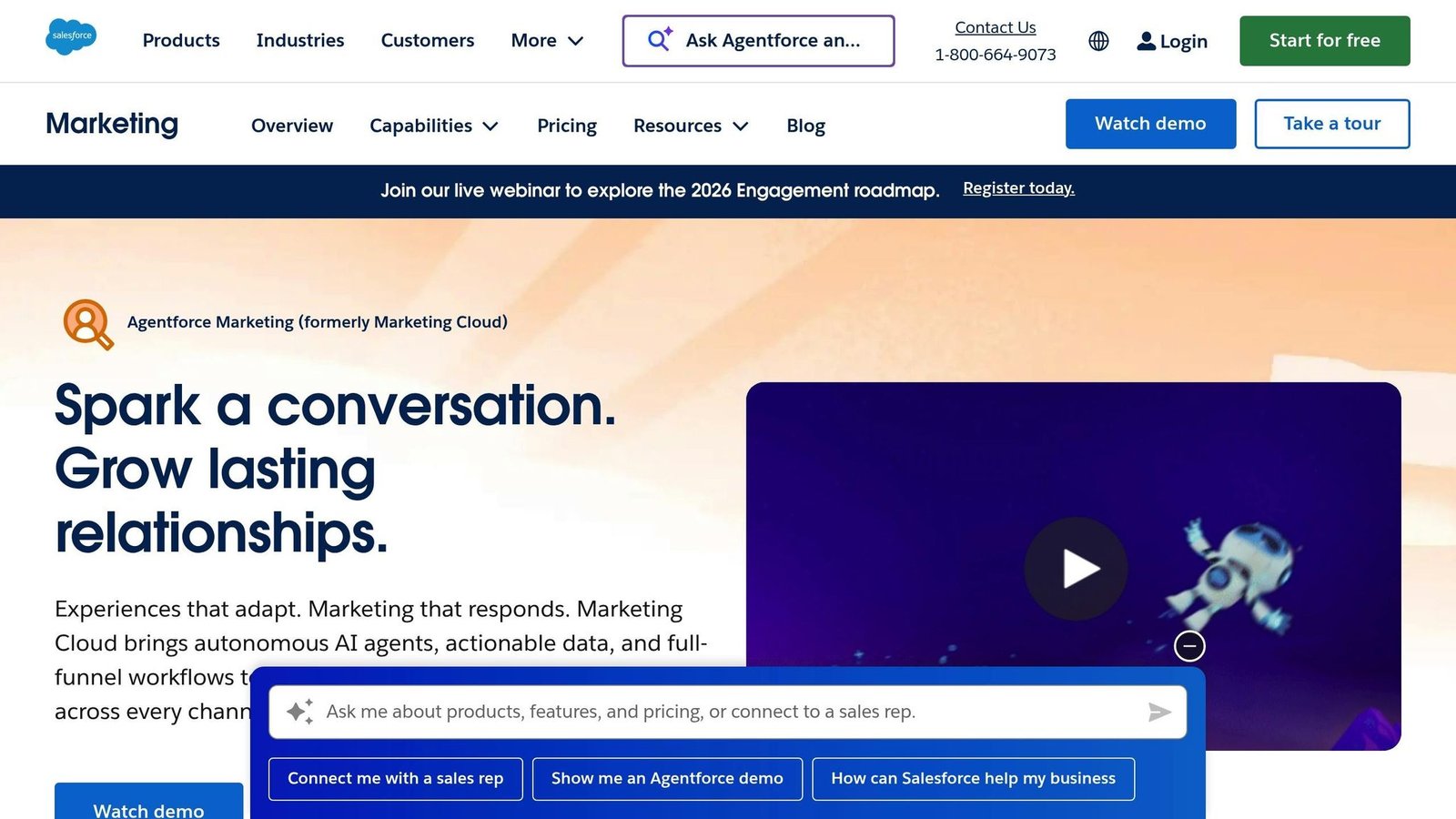
Salesforce Marketing Cloud is the enterprise option here, and it is priced like one. There is no $1,250 Professional Edition on the current pricing page. Marketing Cloud Next Growth Edition is $1,500 per org per month billed annually, and Advanced Edition is $3,250 per org per month. Salesforce Starter, a much smaller product, is $25 per user per month. Note the unit: these are per organisation, not per seat. Checked August 2026. The message volume, the Gartner placement and the return-on-investment percentages this article used to quote all lacked a linked source and have been removed. Doug Martin, Chief Brand and Disruptive Growth Officer at General Mills, highlights its core advantage:
“AI, Data, and CRM are how we achieve the promise of speaking directly to consumers with the thing that matters most to them.”
Here’s a closer look at what makes Salesforce Marketing Cloud stand out.
Personalization Capabilities
Salesforce Marketing Cloud takes personalization to another level with AMPscript, enabling dynamic customization of emails based on customer data. Whether it’s images, text, or calls-to-action, content adapts to fit each subscriber’s profile. Features like interactive carousels and real-time weather updates make emails feel timely and engaging. Advanced audience segmentation ensures every message is tailored to its audience, hitting just the right note.
Automation and Workflow Features
The platform’s Journey Builder simplifies creating multichannel customer journeys with its drag-and-drop interface. It can send event-triggered emails automatically – whether it’s a welcome message, a transaction confirmation, or a reminder about an abandoned cart. Trigger-based emails generally open better than scheduled campaigns, because they arrive when the recipient has just done something. With real-time data processing, the system responds instantly to customer actions. An “Approvals” feature streamlines internal workflows, ensuring teams are on the same page before campaigns go live. Together, these tools enhance both efficiency and precision in marketing efforts.
AI-Driven Insights and Recommendations
The Einstein AI suite offers predictive tools that remove the guesswork from email marketing. Einstein Engagement Scoring evaluates subscriber behavior – like opens, clicks, and conversions – so you can focus on the most engaged users or re-engage those who’ve gone quiet. Features like Send Time Optimization pinpoint the best moment to send emails, while Engagement Frequency ensures subscribers don’t feel overwhelmed. Generative AI tools take it further, crafting subject lines and content tailored to each audience segment. Plus, Einstein Recommendations analyzes browsing behavior, email interactions, and purchase history to suggest products.
E-Commerce Integrations and Support
Salesforce Marketing Cloud integrates seamlessly with Salesforce Commerce Cloud and Service Cloud, offering a unified view of the customer. It automates messages for actions like abandoned carts, order confirmations, and personalized discounts based on shopping habits. The Data Cloud pulls together commerce data with other sources to deliver real-time analytics, while Loyalty Management software uses AI to create tailored rewards programs. Kyall Mai, SVP & Chief Innovation Officer at Esquire, notes the impact:
“After adopting Salesforce Marketing Cloud and using it to hyper-target our audience, we are able to reduce the waste of our current marketing budget and become more efficient with spending on initiatives that deliver better results.”
The Agentforce system adds another layer of sophistication, automatically generating audience segments and continuously adapting experiences across channels – all in real time, 24/7.
Platform Comparison Table
Here’s a breakdown of how the top 10 email marketing platforms stack up when it comes to personalization, automation, AI features, e-commerce integrations, and pricing.
| Platform | Segmentation & Personalization | Automation Features | AI Capabilities | E-commerce Integrations | Starting Price | Free Plan |
|---|---|---|---|---|---|---|
| Klaviyo | Predictive insights like churn risk and lifetime value; dynamic product recommendations | AI-powered flows based on browsing behavior | Predictive analytics and automated flow creation | Shopify, WooCommerce, Magento, BigCommerce | Not published; priced by active profiles | Free tier available |
| ActiveCampaign | Advanced behavioral segmentation with machine learning insights | 900+ automation recipes; visual builder with conditional logic | Predictive sending and timing optimization | Shopify, WooCommerce, BigCommerce | Not published; priced per contact, billed annually | 14-day trial, no free plan |
| Omnisend | Customer Lifecycle Map; conditional content blocks | Tools like product pickers and discount code generators; abandoned cart recovery | Behavior-based triggers and engagement scoring | Shopify, BigCommerce, WooCommerce | $11.20/mo for 500 contacts | Yes (250 contacts, 500 emails/mo) |
| Brevo | Multi-channel segmentation (email, SMS, WhatsApp) | Transactional email automation for receipts and shipping updates | AI-generated subject lines | WooCommerce, Magento, Shopify | Paid tiers not published | Yes (300 emails/day) |
| Mailchimp | Predictive segmentation; 50+ behavior triggers | Customer journey builder with ready-to-use templates | Intuit Assist (generative AI) and predictive analytics | Shopify, WooCommerce, Squarespace | $13/mo Essentials, 500 contacts | Yes (250 contacts, 500 emails/mo) |
| HubSpot | Behavior-triggered emails and lead scoring via integrated CRM | Smart send times based on user engagement patterns | Predictive lead scoring and content recommendations | Shopify, Salesforce | Marketing Hub Starter $7/seat/mo annual, $20 monthly | Yes |
| MailerLite | Visual workflows with web tracking; product boxes | E-commerce triggers and revenue tracking | Basic automation based on behavior | Shopify, WooCommerce | Comfort from $12/mo; Power from $25/mo | Yes (250 subscribers, 2,500 emails/mo) |
| Moosend | Web tracking with 25+ automation triggers | Behavior-based workflows like abandoned cart recovery | Basic predictive analytics | Shopify, WooCommerce | Not published; sliding scale by subscriber count | 30-day trial, no free plan |
| GetResponse | Conversion funnels and behavior tracking | Automated product recommendations and cart recovery | AI email and subject line generation | Shopify, WooCommerce | Starter $19/mo, or $15.58 billed annually | Free trial |
| Salesforce Marketing Cloud | Real-time audience segmentation with Einstein Engagement Scoring | Multi-channel orchestration via Journey Builder | Einstein AI suite for predictive sending, content creation, and product recommendations | Salesforce Commerce Cloud, Salesforce CRM | Marketing Cloud Next Growth $1,500/org/mo, billed annually | Demo available |
This table highlights the variety of options available, catering to businesses of all sizes and needs. For those on tighter budgets, Moosend and Brevo stand out with affordable plans, and Brevo’s email-volume pricing adds scalability. On the other end, Salesforce Marketing Cloud is designed for enterprises, offering powerful real-time capabilities and advanced AI tools. Whether you’re looking for simple personalization or cutting-edge AI solutions, there’s a platform tailored for your goals.
Conclusion
Personalisation is worth doing, but the numbers usually quoted for it come from vendor marketing rather than independent research, and this article has stopped repeating them. The practical question is not whether to personalise but which platform will handle the data you actually hold, at a price you can predict as the list grows.
When choosing a platform, focus on what matches your business size, goals, and budget by exploring the best business administration tools available. Whether you need a cost-effective entry-level tool, robust e-commerce integrations, or a solution for enterprise-level multi-channel campaigns, there’s something out there for everyone.
Start by defining your main goal: Is it nurturing leads? Driving e-commerce sales? Retaining customers? Once you know, test platforms using free trials to ensure they can handle crucial data points like purchase history and browsing behavior.
The ideal platform should integrate smoothly with your existing tools, feature user-friendly automation builders, and grow alongside your business. Begin with simple personalization, like adding subscriber names to subject lines, then work your way up to dynamic content and AI-powered product recommendations. The right platform doesn’t just help you send emails – it helps you turn occasional buyers into loyal customers through messages that feel timely and tailored.
FAQs
How can I select the best email marketing platform for my business?
To find the right email marketing platform, start by pinpointing what your business needs most. Think about the level of personalization you’ll require – whether that’s simple merge tags, dynamic content tailored to customer behavior, or advanced AI-driven product suggestions. You’ll also want to look at features like automation (such as workflows triggered by actions like abandoned carts), data integration (syncing customer details from your website, CRM, or e-commerce platform), and the platform’s ability to handle growth as your subscriber list expands.
Don’t overlook practical considerations like pricing – make sure the plans fit your budget – along with ease of use and the quality of customer support. Taking advantage of free trials can be a smart way to test out platforms, giving you a chance to measure performance metrics like open rates and click-through rates. It’s also essential to ensure the platform complies with regulations such as CAN-SPAM and GDPR. The ideal choice will not only align with your goals but also integrate smoothly with your existing tools and help you maintain meaningful engagement – all without breaking the bank.
What are the benefits of using AI for email marketing personalization?
AI takes the guesswork out of email marketing by diving into customer data to design campaigns that feel tailor-made for each recipient. It can determine the ideal times to send emails, craft attention-grabbing subject lines, and customize content to align with individual preferences – all of which lead to higher open and click-through rates.
On top of that, AI handles repetitive tasks like writing personalized messages and suggesting products, freeing up time and resources for marketers. With the help of predictive modeling, it ensures the right offers land in inboxes at just the right moments, increasing engagement and driving sales. By automating processes and delivering a more personal touch, AI empowers marketers to build deeper connections with their audience and see better results.
How do I connect my e-commerce platform with an email marketing tool?
Connecting your e-commerce platform to an email marketing tool is a big improvement for creating personalized, automated campaigns. By syncing customer, product, and order data, you can deliver tailored messages that resonate with your audience. Luckily, many email marketing platforms come with built-in integrations for popular e-commerce systems like Shopify, WooCommerce, BigCommerce, and Magento. These integrations make it easy to share real-time data, such as inventory updates, purchase history, and cart activity, without lifting a finger.
If your platform doesn’t offer a direct integration, don’t worry – you can still connect the dots using the platform’s API or third-party tools. This setup lets you automate essential tasks like sending cart recovery emails or recommending products based on browsing behavior. Once everything is linked, you can create dynamic campaigns that respond to customer actions, like sending a special discount after a purchase or a reminder for items left in their cart. These data-driven emails not only boost engagement but also help drive sales while making the shopping experience smoother than ever.
More on this topic
Browse all 44 articles on Marketing & Growth, or jump straight to our buying guide: Best Marketing and CRM Tools for Small Businesses.
![E-commerce Personalization: Complete Guide [2024]](https://bizbot.com/wp-content/uploads/2026/08/662e9e5db17fd355c0be37e7-6b9799a37e5bf25bac30efcc2c0f1eed.png "E-commerce Personalization: Complete Guide [2026]")