

Privacy in DEI (Diversity, Equity, and Inclusion) data is crucial for protecting sensitive employee information while enabling organizations to improve workplace inclusion. This guide covers how to collect, manage, and report DEI data securely and in compliance with privacy laws like GDPR, CCPA, and ADA.
Key Takeaways:
- What is DEI Data?
Includes demographic details (e.g., race, gender), professional metrics (e.g., pay levels), and employee feedback. - Privacy Risks:
Risks include data sensitivity, re-identification, legal violations, and loss of employee trust. - Compliance Steps:
Obtain clear consent, encrypt data, anonymize identifiers, and enforce access controls. - Reporting Safely:
Aggregate data, set minimum group sizes, and use ethical reporting practices to protect identities. - Tools to Use:
Privacy management systems, secure data transfer tools, and software with automated compliance monitoring.
This guide outlines practical strategies to safeguard DEI data, comply with regulations, and build trust through privacy-conscious reporting.
Privacy Laws and Regulations
Handling DEI data demands careful compliance with privacy laws to safeguard sensitive employee information.
US and Global Privacy Laws
In the United States, multiple federal and state laws regulate DEI data privacy:
- Equal Employment Opportunity Commission (EEOC) Requirements: Demographic data must remain confidential and safeguarded.
- Americans with Disabilities Act (ADA): Disability-related details must be stored separately, accessible only to authorized personnel.
- Health Insurance Portability and Accountability Act (HIPAA): Where DEI programs touch health information – for example wellness or accommodation data – HIPAA safeguards apply on top of employment law.
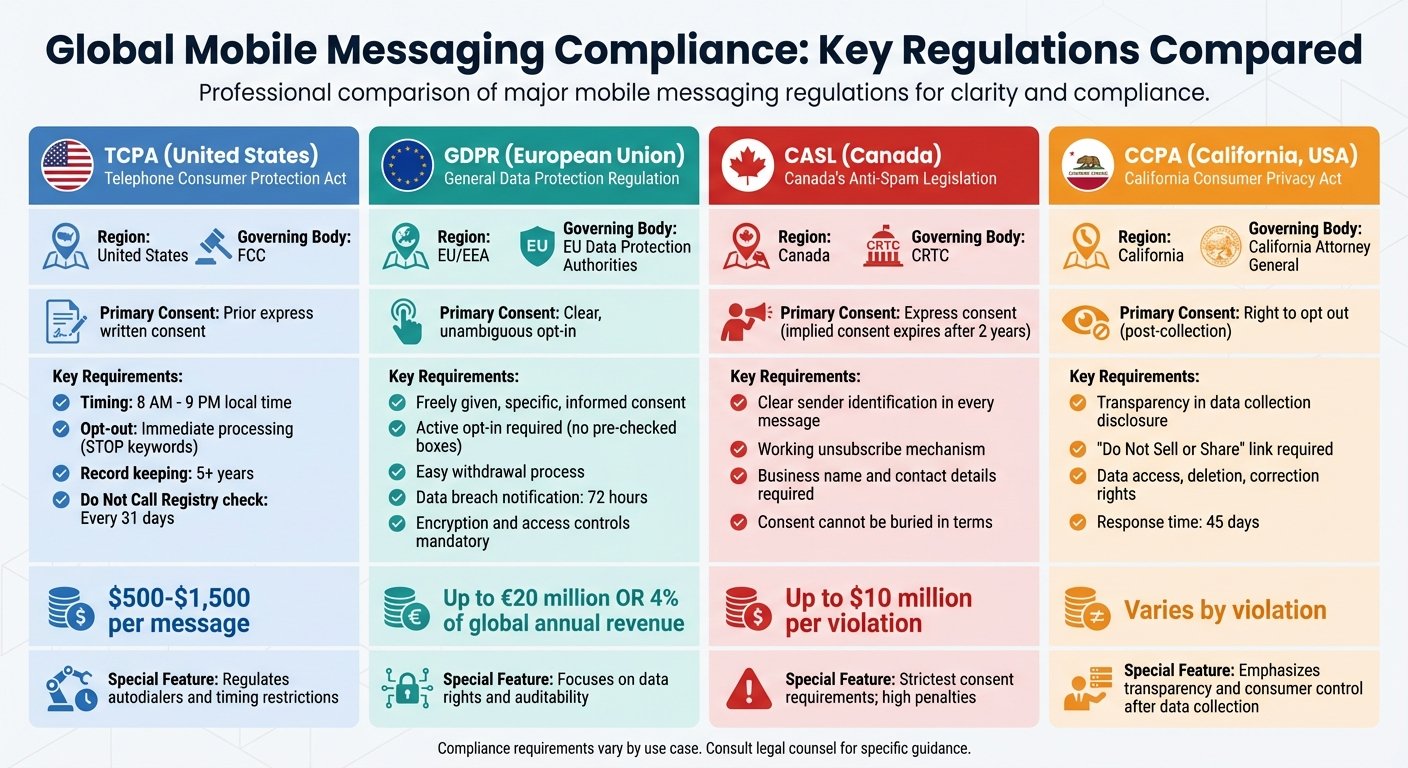
- California Consumer Privacy Act (CCPA): Grants employees rights over their personal data, including the ability to request information or deletion.
- California Privacy Rights Act (CPRA): Adds stricter protections for sensitive personal data, effective January 1, 2023.
Globally, other regulations also dictate how DEI data is handled:
- GDPR (European Union): Identifies data like racial or ethnic origin and religious beliefs as “special category data” requiring extra safeguards.
- PIPEDA (Canada): Mandates clear consent for collecting and using personal details, including diversity-related data.
Given the sensitive nature of DEI data, failing to comply with these laws can lead to serious consequences. Next, let’s explore common compliance risks and how to address them.
Compliance Risks
DEI data laws carry hefty penalties for violations. Here are some of the most common risks:
- Data Breaches: Unauthorized access can lead to mandatory notifications and financial penalties.
- Improper Data Sharing: Sharing identifiable DEI information without proper consent or security measures.
- Insufficient Documentation: Failing to keep records of consent and data processing activities.
- Access Control Failures: Not enforcing strict limits on who can view or manage sensitive DEI data.
- Overcollection and Stale Data: Gathering more detail than the program needs, or holding it long after the retention period has lapsed.
To address these risks, organizations should take the following steps:
- Keep detailed records of consents, data processing, and access logs.
- Conduct regular audits and privacy impact assessments for DEI data.
- Provide ongoing privacy training for employees handling sensitive information.
- Limit data collection to what’s necessary and frequently review retention policies.
Privacy Law Checklist
Use a recurring checklist so compliance work does not drift between audits:
| Area | Action Items | Review Frequency |
|---|---|---|
| Documentation | Update privacy notices, consent forms, and processing records | Quarterly |
| Data Security | Ensure access controls, encryption, and breach response plans | Monthly |
| Training | Conduct staff privacy awareness and compliance updates | Semi-annually |
| Auditing | Perform internal reviews and schedule external assessments | Annually |
For more precise guidance, consult legal professionals to align your DEI efforts with these regulations effectively.
Data Collection and Management Steps
Audit Your Current Practices
Before changing anything, establish a baseline. A structured audit of your existing DEI data practices shows you where the real exposure sits. Break the review into four areas:
- Collection Methods: Evaluate how data is gathered and confirm you hold properly documented consent.
- Storage Systems: Check where data physically lives and what security measures protect it.
- Access Controls: Verify that permissions still match actual job needs.
- Retention Periods: Confirm retention timelines and deletion protocols are genuinely being followed.
Record your findings using standardized forms across teams so evaluations stay consistent and trends become visible over time. Then prioritize: tackle high-risk vulnerabilities with serious potential consequences first, and fold lower-priority issues into routine updates. Pay particular attention to data transfers, third-party sharing arrangements, and any storage that predates your current policy.
Getting Valid Consent
Create clear and straightforward consent forms that explain exactly what data is being collected, why it’s needed, who will have access, how long it will be stored, and how individuals can withdraw their consent. Provide these forms in multiple languages and formats to ensure accessibility. Make sure to securely log all consents with timestamps and keep track of version changes.
Once you’ve obtained valid consent, focus on implementing strong security measures to safeguard the data.
Data Protection Methods
Use multiple layers of security to keep DEI data safe:
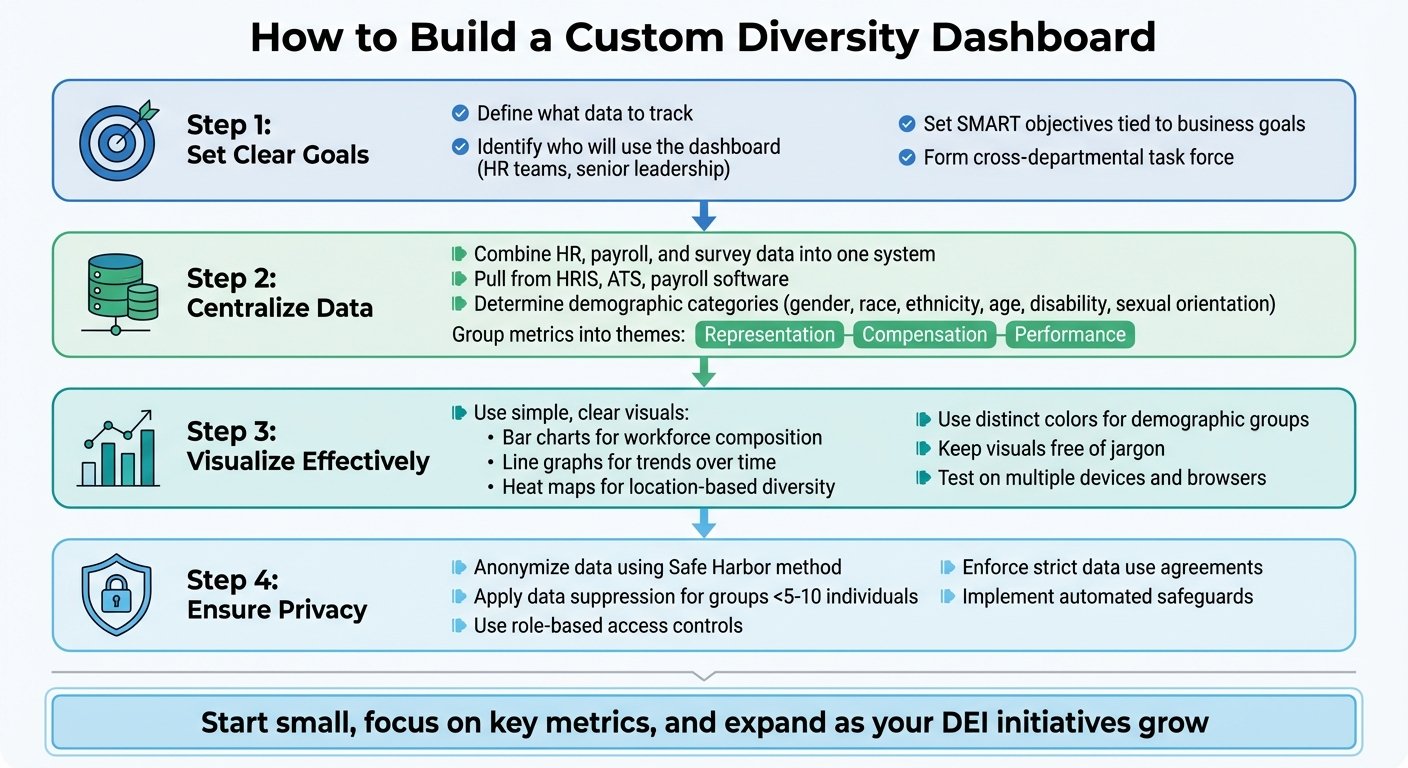
- Collect Only What’s Necessary: Limit data collection to only what’s needed, remove unnecessary identifiers, and use summarized data when possible.
- Encryption: Use end-to-end encryption for both data storage and transmission. Also, apply at-rest encryption for stored data.
- Anonymization: Replace personal identifiers with random codes, group data into ranges instead of precise values, and mask any unique identifiers.
Data minimization works best when it is a documented decision rather than an instinct. Before adding any field to a DEI dataset, run it through a short checklist:
- Define Purpose: Document exactly how this data point will be used.
- Establish Relevance: Confirm it directly supports a stated program goal.
- Set Retention Limits: Decide up front how long it needs to be kept.
- Explore Alternatives: Look for a less intrusive way to measure the same progress.
In practice this narrows scope considerably. An initiative focused on gender diversity in leadership may only need gender distribution across management levels, promotion rates by gender, and participation in leadership development programs – not a full demographic profile of every employee.
For anonymization, three techniques do most of the work:
- Aggregation: Group values into broader bands rather than exact figures – age ranges such as 18–25, 26–35, 36–45 and 46+ instead of dates of birth.
- Masking: Replace employee IDs with randomized numbers, use region codes instead of specific offices, and roll departments into broader functional groups.
- Statistical controls: Apply minimum group thresholds, combine small groups into larger categories, and report percentage ranges instead of exact counts.
For datasets that will be analyzed repeatedly, consider applying k-anonymity – ensuring every combination of attributes in the set appears at least k times. This gives you a measurable privacy guarantee rather than a judgment call, while keeping the data useful for analysis.
After applying these methods, ensure access to the data is tightly controlled.
Access Control Rules
Use role-based access control to manage who can view or modify sensitive DEI data:
- Access Levels:
- HR administrators: Full access to raw data.
- Department managers: Access to aggregated data for their teams.
- Analysts: Access limited to anonymized datasets.
- General staff: No access to individual records.
- Security Measures:
- Require multi-factor authentication (MFA) for all users.
- Regularly review and update access permissions.
- Monitor logs automatically for unusual activity.
Specialized HR tools like BambooHR or HiBob can help enforce these rules by offering detailed permission settings, audit trails, and automated reviews.
Keep detailed logs that track:
- Who accessed the data.
- When the access occurred.
- What actions were taken.
- Any changes to access permissions.
Auditing these logs on a regular basis helps identify potential security risks early.
Staff Privacy Training
Technical controls only hold if the people using them understand why they exist. Build a training program covering data privacy principles, handling sensitive DEI information, reporting security incidents, and staying compliant with privacy laws.
Ground the training in situations staff actually encounter: sharing demographic reports, discussing diversity metrics in meetings, managing survey responses, and handling employee feedback. Schedule onboarding sessions, regular refreshers, annual assessments, and immediate updates whenever policy changes. Track participation and test understanding with hands-on evaluations rather than attendance alone.
Core practices worth reinforcing repeatedly:
- Never share login credentials.
- Use strong, unique passwords.
- Lock computers when unattended.
- Report suspicious activity immediately.
- Double-check recipient lists before sending sensitive information.
Keep security procedures documented, accessible, and refreshed in line with current standards.
Privacy Protection Tools
Data Protection Software
Protecting DEI data requires software that secures sensitive information while staying user-friendly. Look for solutions that provide:
- Automated data discovery to locate and classify sensitive DEI data
- Real-time monitoring of data access and usage
- Customizable privacy rules based on data sensitivity
- Audit trails to document compliance efforts
Platforms like Box combine strong security features with collaboration tools. For instance, they offer automated data classification and strict role-based access controls. Additionally, secure data transfer protocols ensure that sensitive information remains protected during transit.
Secure Data Transfer
Use tools with end-to-end encryption, digital signature verification, and secure enterprise file-sharing protocols. Services like Google Workspace and Microsoft Teams provide built-in encryption, access controls, and secure environments for communication and file sharing.
Privacy Management Systems
Modern privacy management platforms simplify compliance and improve how DEI data is handled. Common features include:
| Feature | Purpose | Impact |
|---|---|---|
| Automated Compliance Monitoring | Tracks privacy regulations and updates | Minimizes compliance risks |
| Consent Management | Records and manages privacy preferences | Ensures legal compliance |
| Access Request Handling | Manages data access requests | Speeds up response times |
| Privacy Impact Assessments | Identifies privacy risks in new processes | Reduces chances of data breaches |
It helps to think in categories rather than individual products. A complete stack usually spans four:
| Tool Category | Primary Functions | Key Features |
|---|---|---|
| Data Encryption | Safeguards data during storage and transmission | Built-in encryption protocols, automated security checks |
| Privacy Management | Oversees and enforces privacy policies | Consent tracking, automated compliance monitoring, data mapping |
| HR Analytics | Handles DEI metrics securely | Anonymous reporting, aggregated data, privacy-focused analytics |
| Access Control | Regulates user permissions | Role-based permissions, authentication systems, activity tracking |
Choose tools that integrate seamlessly with existing HR systems and offer strong privacy controls. For example, BizBot can help pinpoint such solutions, with curated categories spanning data security management, HR management systems with built-in privacy features, and legal compliance software. Microsoft Teams also stands out with encrypted communication, controlled file sharing, built-in compliance tools, and audit logging. These features help maintain data privacy while enabling smooth communication for DEI programs. Together, these tools create a solid foundation for DEI reporting and ongoing privacy compliance.
DEI Reporting Guidelines
Ensuring privacy is key to effective DEI reporting. With the right controls, you can protect individual identities while still gaining useful insights.
Data Aggregation Methods
When compiling data, use these strategies to safeguard privacy:
- Set a minimum group size of 10 to keep identities confidential.
- Use broader categories for smaller demographic groups.
- Combine multiple data points into unified metrics.
- Apply rolling averages across different time periods.
For particularly sensitive data, consider reporting ranges (e.g., “15-20%”) instead of precise figures.
Privacy Ethics in Reports
Ethical DEI reporting requires balancing transparency with privacy. Here are some guiding principles:
| Principle | How to Apply It | Privacy Benefit |
|---|---|---|
| Data Minimization | Share only essential metrics | Lowers risk of exposure |
| Contextual Integrity | Provide clear context | Prevents misinterpretation |
| Informed Consent | Explain how data is used | Builds trust with participants |
| Redaction Standards | Remove identifiable details | Protects individual privacy |
When sharing reports externally, strip out any details that could reveal someone’s identity. This might include job titles in small teams or rare demographic combinations.
Report Writing Tips
To create privacy-conscious DEI reports, follow these best practices:
1. Use Relative Metrics
Focus on proportional changes or percentages rather than raw numbers. For example, say “representation increased by 25%” instead of specifying headcounts.
2. Organize in Layers
Start with high-level summaries and only include detailed breakdowns when group sizes are large enough to ensure privacy.
3. Follow Consistent Data Rules
- Round percentages for clarity.
- Omit data for groups smaller than 10 people.
- Use consistent terminology across the report.
- Include a clear privacy statement.
These practices not only protect individual identities but also set the stage for evolving DEI privacy standards, as outlined in the next section.
Next Steps in DEI Privacy
As DEI (Diversity, Equity, and Inclusion) initiatives grow, privacy practices must keep pace. Here’s a look at key steps and trends to maintain compliance while safeguarding sensitive data.
Main Points Review
When handling DEI data, these privacy measures are crucial:
- Data Collection Standards: Collect data with explicit consent, use secure methods, limit access, and keep sensitive records separate.
- Security Measures: Use layered protections like end-to-end encryption, multi-factor authentication, regular audits, and automated anonymization.
- Reporting Framework: Standardize reporting by setting thresholds, aggregating data at departmental or company levels, updating regularly, and enforcing role-based access.
| Element | Practice | Outcome |
|---|---|---|
| Data Thresholds | Minimum group size of 10 | Prevents individual identification |
| Aggregation Level | Departmental or company-wide | Maintains confidentiality |
| Update Frequency | Quarterly or bi-annual updates | Reduces tracking risks |
| Access Controls | Role-based permissions | Limits data exposure |
These practices provide a solid foundation for meeting current privacy standards and preparing for future changes.
Measuring Whether It Is Working
Privacy programs drift when nobody measures them. Alongside the quarterly review cycle, track a small set of indicators that show whether controls are functioning in practice:
- The number of approved data access requests, and how many were declined.
- Time taken to resolve privacy concerns once raised.
- Percentage of employees who have completed current training.
- Frequency and outcomes of security checks.
Evaluate both the technical safeguards and the people operating them. Automated monitoring paired with consistent staff training reduces risk far more than either does alone.
Future Privacy Changes
DEI privacy requirements are constantly evolving. To stay ahead, consider these upcoming developments:
Regulatory Updates
- New state-level privacy laws with stricter consent requirements.
- Updated standards for cross-border data transfers.
- Expanded protections for additional identity categories.
Technological Advancements
- AI tools for anonymizing sensitive data.
- Blockchain systems for managing consent.
- Enhanced encryption techniques.
- Automated systems for monitoring compliance.
Shifting Best Practices
- Ongoing management of consent to reflect changes in data use.
- Embedding privacy considerations into the design of systems and processes.
- Adopting frameworks tailored to specific industries.
- Using standardized metrics to measure privacy efforts.
Regularly review your privacy strategies – ideally every quarter – to stay aligned with these trends and ensure compliance.
More on this topic
Browse all 79 articles on Security & Compliance.