Disclosure: This page contains commercial links. BizBot may earn a commission from qualifying purchases. Paid placements do not buy a better ranking. Read our affiliate disclosure.
Cloud security is more critical than ever as businesses shift operations online. Spending is enormous: Gartner forecast worldwide public cloud end-user spending at $679 billion for 2024. This article used to open with two more figures, one about global cyber-attack costs and one about the share of incidents that start in the cloud. Neither could be traced to a published study saying what we said it said, so both are gone. Threat detection tools still matter for protecting sensitive data and meeting compliance obligations.
Here are 9 leading cloud threat detection tools:
- SentinelOne Singularity Cloud Native Security: Agentless, AI-driven platform for multi-cloud environments with advanced threat simulation and automated response.
- CrowdStrike Falcon XDR: Combines endpoint and cloud protection with precise detection across the security stack.
- Microsoft Defender XDR: Integrates with Microsoft 365, offering automated responses and cross-platform protection.
- AccuKnox Threat Detection: Kubernetes-focused, zero-trust platform with preemptive inline security.
- CloudSEK XVigil: Monitors surface, deep, and dark web threats, offering brand and infrastructure protection.
- SentinelOne Cloud Workload Security: Provides runtime threat detection for workloads with deep OS-level visibility.
- Exabeam Threat Intelligence Platform: Focuses on behavior analytics to detect insider threats and compromised credentials.
- IBM Security X-Force: Combines AI with expert threat hunting and incident response for cloud and hybrid setups.
- Tenable Security for Cloud: Emphasizes vulnerability management, compliance, and identity risk reduction.
Key Takeaways:
- These tools address challenges like misconfigurations, compliance, and advanced threats.
- Features include AI-driven detection, multi-cloud compatibility, and automation.
- Choosing the right tool depends on your infrastructure, regulatory needs, and operational priorities.
Quick Comparison:
| Tool | Key Features | Best For |
|---|---|---|
| SentinelOne Singularity | AI-driven, multi-cloud protection | Enterprises needing unified security |
| CrowdStrike Falcon XDR | Endpoint + cloud protection | Comprehensive security across stacks |
| Microsoft Defender XDR | Microsoft ecosystem integration | Microsoft-heavy setups |
| AccuKnox | Kubernetes-native, zero-trust | Containerized environments |
| CloudSEK XVigil | External threat monitoring | Dark web and brand protection |
| SentinelOne Cloud Workload | Runtime workload protection | Dynamic cloud environments |
| Exabeam | Behavior analytics | Insider threat detection |
| IBM Security X-Force | Threat hunting + AI | Large enterprises needing managed services |
| Tenable Security for Cloud | Compliance + identity risk focus | Vulnerability management and compliance |
Each tool offers distinct advantages. Evaluate your needs to select the best fit for your organization.
One warning before the tool list. Security vendors publish detection and response percentages constantly, and almost none of them come from an independent test. We removed every performance figure in this article that we could not tie to a named, published test or report. What survives is labelled with the test or report it came from. Where a vendor has only its own marketing to offer, we say what the product does and leave the percentage out.
1. SentinelOne Singularity Cloud Native Security
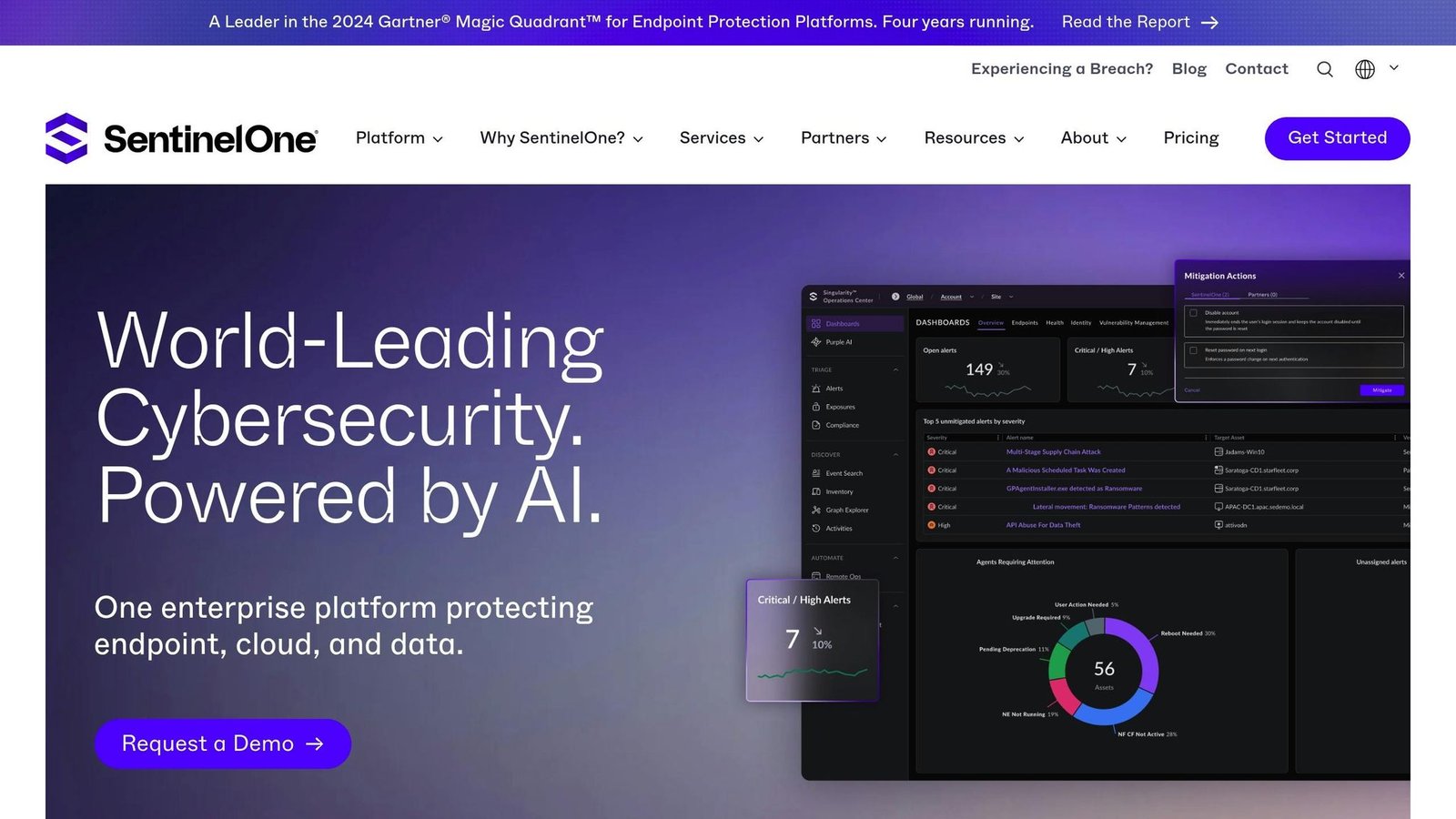
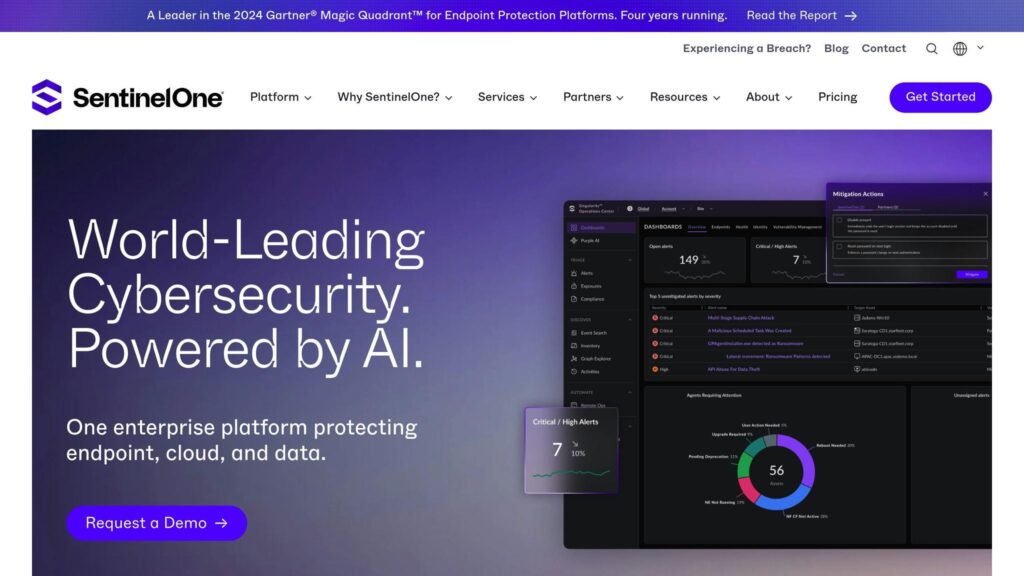
SentinelOne Singularity Cloud Native Security is an agentless platform designed for multi-cloud environments. With an impressive 4.9/5 rating on G2 and over 240 awards, it provides comprehensive visibility while minimizing alert fatigue. As the first tool in our lineup, it establishes a solid starting point for cloud threat detection.
Threat Detection Capabilities
SentinelOne stands out with its Offensive Security Engine, a unique feature that simulates attacks to identify exploitable vulnerabilities, drastically reducing false positives.
An anonymous customer testimonial and three headline percentages for detection time, response time, and false positives used to sit here. The testimonial named no one, and the percentages came with no test behind them, so we cut all four. The platform uses AI-driven analysis to deliver real-time threat detection and response, continuously monitoring cloud environments to preemptively address potential risks. It also includes a powerful secrets leakage prevention system that scans more than 750 types of secrets, such as AWS, GCP authentication tokens, and Stripe tokens.
For containerized applications, SentinelOne ensures protection from development to production. It also offers Cloud Detection and Response (CDR) capabilities, enabling organizations to customize security policies using OPA/Rego scripts tailored to their specific needs.
Cloud Compatibility (AWS, Azure, GCP, etc.)
The platform supports all major cloud providers, including AWS, Azure, and GCP, as well as additional platforms like OCI, DigitalOcean, and Alibaba Cloud. This wide compatibility ensures consistent security policies across multi-cloud infrastructures. With agentless onboarding, it provides instant visibility and a unified view of cloud security, simplifying management. Additionally, it includes over 2,000 built-in checks for Cloud Security Posture Management (CSPM) to identify misconfigurations and potential security gaps.
AI/Automation Features
SentinelOne uses AI and automation to power its adaptive SIEM for real-time threat detection and response. Its no-code Hyperautomation workflow enables quick and effective reactions. SentinelOne describes it as analyzing signals at very large scale; the specific counts it publishes are its own and are not independently audited.
A standout feature is Purple AI, an autonomous SOC analyst that handles routine security tasks and investigations.
“Innovation is king and we have to move fast. SentinelOne gives us the confidence to move quickly, knowing that it has our back.” – Lou Senko, Chief Availability Officer at Q2
Automation extends to Infrastructure as Code (IaC) scanning, allowing DevOps teams to detect and resolve security issues early in the pipeline, before deploying infrastructure.
Compliance and Regulatory Support
SentinelOne supports over 29 compliance frameworks, including NIST, CIS, MITRE, HIPAA, PCI DSS, and SOC2. Its compliance tools are integrated, automatically checking configurations and policies against these standards. This automation reduces the manual effort required to maintain compliance and helps organizations avoid regulatory violations.
Gartner Peer Insights has recognized SentinelOne as a Customers’ Choice in Cloud-Native Application Protection Platforms, with a 96% recommendation rate. This combination of security and compliance makes it a benchmark as we move on to explore the next tool.
2. CrowdStrike Falcon XDR
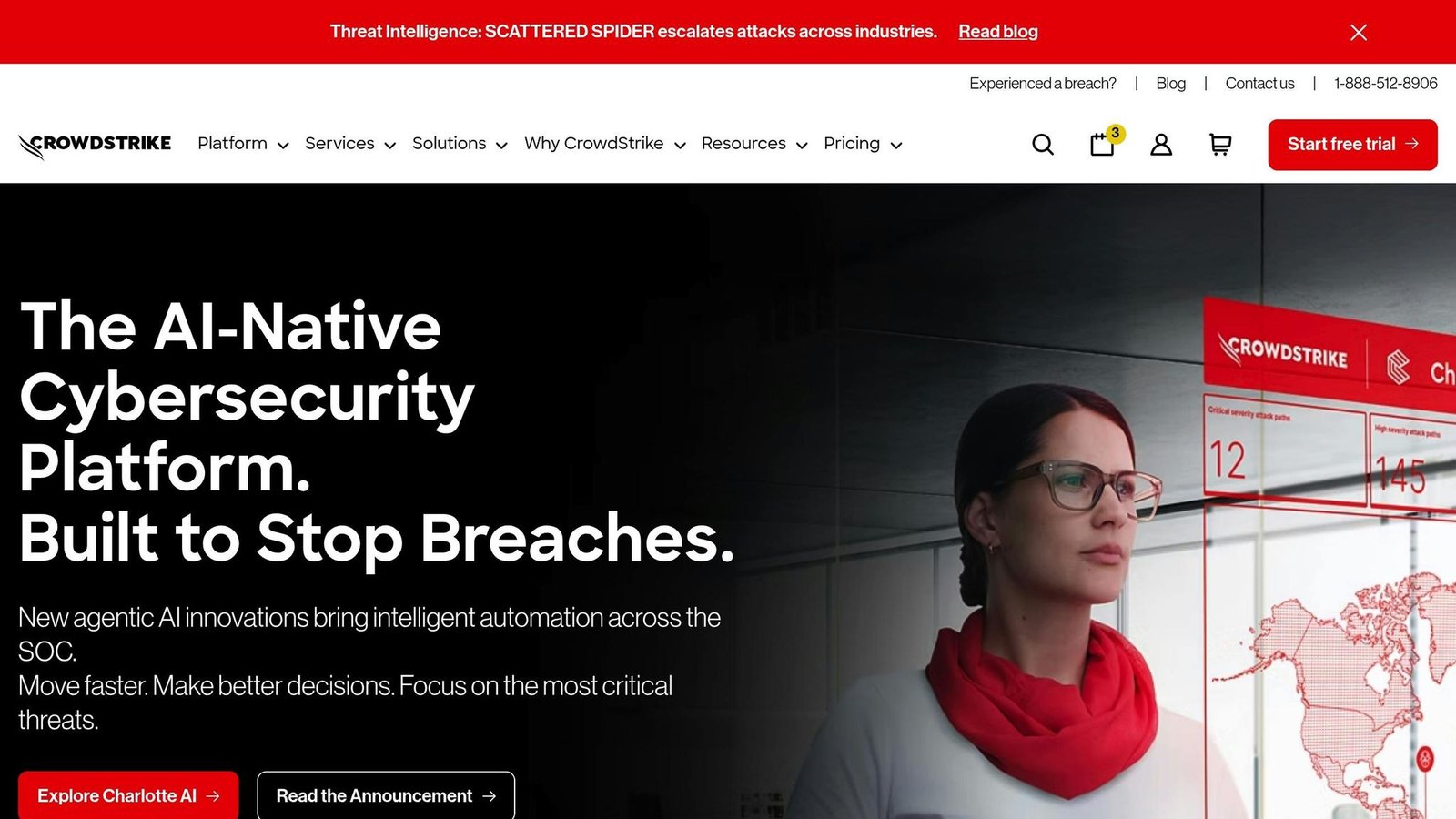
CrowdStrike Falcon XDR offers a streamlined approach to cloud threat detection, breaking down traditional security silos and consolidating detection capabilities into a single, easy-to-use console. Built on the foundation of endpoint detection and response (EDR), this platform extends its protective reach across the entire security stack. Its precision is no small feat – it achieved 100% detection accuracy with zero false positives in the Q3 2024 SE Labs Enterprise Advanced Security test. Designed to work across multi-cloud environments, it’s built to tackle the complexities of modern cloud infrastructures.
Threat Detection Capabilities
CrowdStrike Falcon XDR excels at converting fragmented signals from various security tools into real-time, high-accuracy detections with detailed investigation context. By unifying telemetry from both Falcon and non-Falcon sources, it provides a complete view of potential threats.
“True XDR must be built on the foundation of EDR, enriching EDR data with the most relevant telemetry from vendor-specific security data to enable enterprise-wide threat detection, investigation, response, and hunting across the entire enterprise security stack.” – Michael Sentonas
The platform integrates Cloud Native Application Protection Platform (CNAPP) capabilities, which combine Cloud Workload Protection, Cloud Security Posture Management, Cloud Infrastructure Entitlement Management, and container security into a single, cohesive solution. CrowdStrike publishes its own threat research on rising cloud intrusion activity. Read the growth figures in its annual threat report directly rather than through a summary like this one, because the counting method matters more than the headline number.
Falcon Cloud Security enhances runtime detections with application insights, offering deeper visibility into critical services. It also incorporates Application Security Posture Management (ASPM) findings, enabling better risk assessment and understanding of business-critical dependencies through cross-domain telemetry.
The platform’s compatibility with various cloud environments further strengthens its security capabilities.
Cloud Compatibility (AWS, Azure, GCP, etc.)
CrowdStrike Falcon Cloud Security supports a range of cloud providers, including AWS, GCP, and Azure. Its integration with AWS is particularly extensive, connecting to over 50 AWS services and utilizing AWS Built-in for automated, event-driven deployments across multi-account environments.
“The latest innovations from CrowdStrike enable DevSecOps teams to proactively understand adversaries, identify unprotected cloud workloads and deploy protection with one click of a button, and use snapshots to maintain visibility and protection when an asset can’t support an agent.” – Raj Rajamani, Chief Product Officer, DICE (data, identity, cloud, endpoint), at CrowdStrike
AI/Automation Features
CrowdStrike Falcon XDR harnesses the power of CrowdStrike Charlotte AI™, a generative AI tool designed to enhance threat detection accuracy and turn complex data into actionable insights. Using advanced machine learning, it identifies new and emerging threats while minimizing false positives.
Automation is the point: triage a human would work through alert by alert gets collapsed into a first-pass decision. CrowdStrike publishes precise percentages for the time saved and the accuracy of that first pass. We removed them, because they are marketing figures with no published test behind them and because triage accuracy depends entirely on the alert mix in your own environment.
The platform’s Falcon Fusion security orchestration automation and response (SOAR) simplifies large-scale tasks, automating workflows to isolate compromised devices and block malicious activities.
Charlotte AI also answers plain-language questions about the environment and helps write queries, which is where a lot of analyst time goes. By analyzing user, device, and application behavior, it detects anomalies and accelerates incident investigations with insights into root causes and timelines.
A quote from a CISO identified only by name and job title used to close this section. We could not confirm where he works or that he was talking about this product, so we removed it. The checkable claim stands on its own: the platform recorded 100% ransomware protection in the 2024 SE Labs Enterprise Advanced Security (EDR) Ransomware test.
3. Microsoft Defender XDR
Microsoft Defender XDR brings together security across endpoints, identities, and cloud assets, offering a unified view to detect and respond to threats. This platform is designed to automatically counter advanced cyberattacks while speeding up response times across endpoints, IoT devices, hybrid identities, email, collaboration tools, SaaS applications, cloud workloads, and data. Its effectiveness was highlighted in the 2023 MITRE Engenuity ATT&CK Evaluations, where it achieved comprehensive protection. Like its counterparts, Defender XDR ensures uninterrupted security across various cloud environments.
Threat Detection Capabilities
Microsoft Defender XDR combines data from endpoints, identities, cloud applications, and email, tapping into AI and machine learning to identify even the most complex attacks. Once threats are detected, the platform automatically neutralizes them across the Microsoft 365 ecosystem.
Here are some standout detection features:
- XDR-prioritized incidents for quicker response times
- AI-guided actions powered by Security Copilot
- Automatic asset recovery to restore systems swiftly
- Proactive threat hunting with custom queries and automated playbooks
“Having a strong security posture focused on protecting physical security and the security of devices, identities, and data is critical to company stability and were key components to a successful defense against cyberattacks.”
– Eric McKinney, Enterprise Infrastructure Director, G&J Pepsi-Cola Bottlers
The platform integrates with the other Microsoft Defender products, extending detection across cloud environments.
Cloud Compatibility (AWS, Azure, GCP, etc.)
Microsoft Defender XDR provides consistent security and visibility across multiple clouds, platforms, and endpoints. While it is deeply integrated with Microsoft Azure, it also extends protection to other leading cloud providers through Microsoft Defender for Cloud. This feature supports Azure, AWS, and Google Cloud, enabling organizations to connect their workloads in AWS and GCP to Defender for Cloud. This integration ensures that security alerts from these platforms are unified within the Defender dashboard. Additionally, Defender for Cloud functions as a Cloud-Native Application Protection Platform (CNAPP), combining tools like DevSecOps, cloud security posture management, and cloud workload protection.
Defender XDR also utilizes automation to streamline threat response, further enhancing its multi-cloud capabilities.
AI and Automation Features
AI and automation play a central role in Microsoft Defender XDR, simplifying threat detection and response. The platform uses Automated Investigation and Response (AIR) to manage high volumes of alerts efficiently, correlating signals from Defender for Identity, Defender for Endpoint, and Defender for Office 365. By automating attack mitigation, it reduces the workload for security teams. Advanced AI models, combined with insights from Microsoft security researchers, enable features like automatic attack disruption. Defender for Cloud also extends these AI capabilities to generative AI applications, offering advanced threat protection.
A 2022 Forrester Total Economic Impact study reported a 242% return on investment over three years and a net present value of $17 million for Microsoft 365 Defender. Two caveats the headline number never carries: Microsoft commissioned the study, and the model is built on a composite organization rather than a real customer.
4. AccuKnox Threat Detection
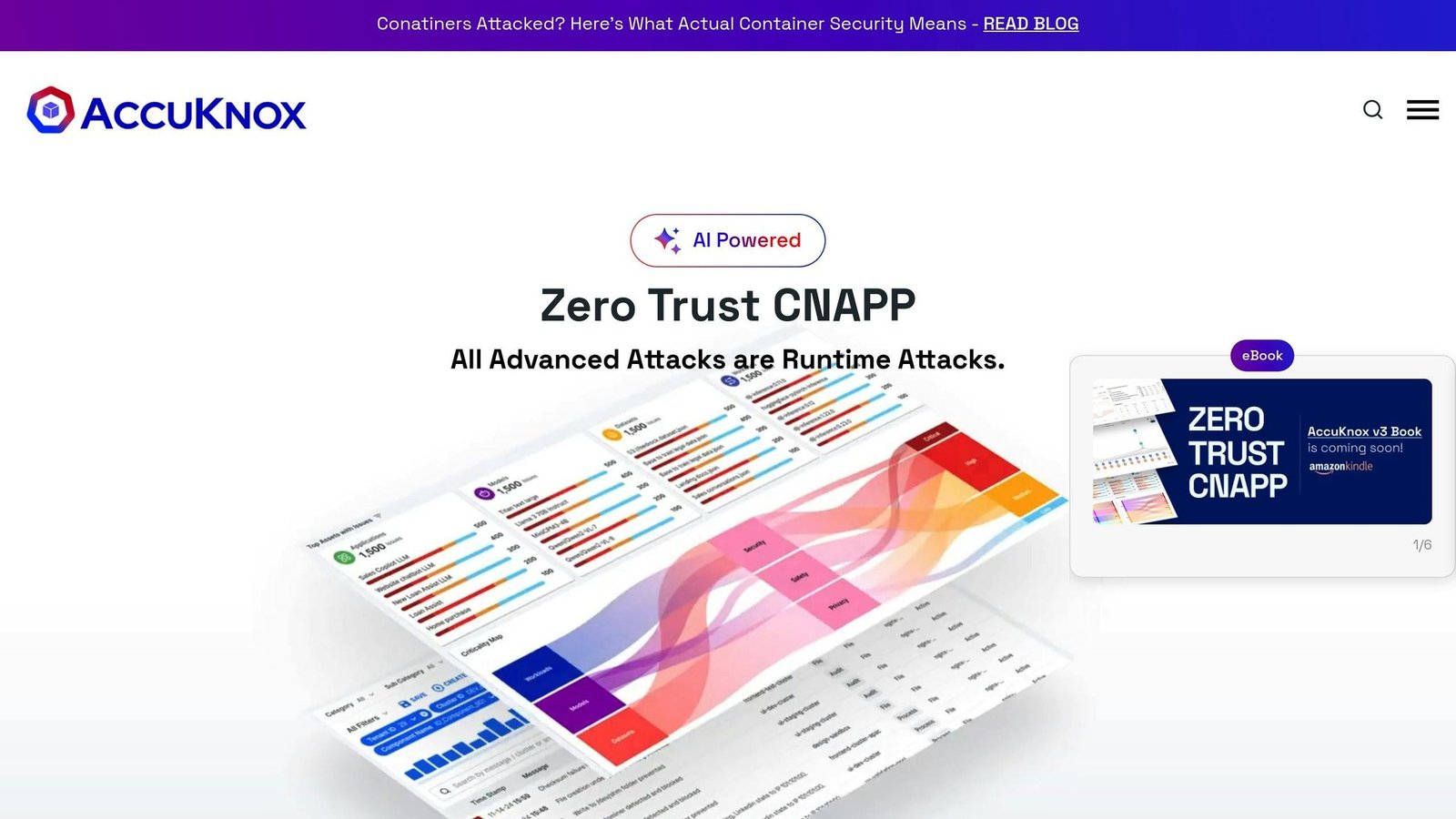
Building on the capabilities of SentinelOne, CrowdStrike, and Microsoft Defender, AccuKnox offers a unified approach to real-time threat detection in cloud environments. It delivers broad visibility and threat response capabilities across containerized systems, going beyond traditional, isolated solutions. AccuKnox publishes counts of blocked container escape attempts and KubeArmor downloads. Download counts measure interest rather than effectiveness, and the block counts are self-reported, so neither belongs in a buying decision.
Threat Detection Capabilities
AccuKnox excels at identifying anomalies, unauthorized access, and exploits in real time. Its Cloud ADR (CADR) solution provides detailed insights into API communications, enabling it to detect unauthorized access attempts, brute-force attacks, and potential data exposures before they cause harm.
The platform also scans containerized workloads for vulnerabilities and misconfigurations. By monitoring Kubernetes API calls and configurations, it ensures the security of containerized workloads, mitigates risks in software supply chains, and safeguards cloud configurations against breaches.
What sets AccuKnox apart is its preemptive inline security strategy. Unlike traditional tools that focus on post-attack mitigation, AccuKnox emphasizes proactive measures. It automates security monitoring, correlating events across runtime, API, and cloud environments to deliver unified threat insights.
“AccuKnox does a job at showing the complexity of different approaches to Kubernetes security in terms of the speed of sending a response against emerging CVEs and unknown cloud attacks.” – James Berthoty, Founder & Security Analyst
The platform supports both block-based hardening policies and allow-based behavioral policies, creating a zero-trust environment. It integrates with over 50 tools to enhance visibility, observability, and enforcement at scale.
Cloud Compatibility (AWS, Azure, GCP, etc.)
AccuKnox offers protection across major public cloud platforms like AWS, Google Cloud Platform (GCP), and Microsoft Azure, while also extending its security capabilities to private clouds such as RedHat OpenShift and VMware Tanzu.
For public clouds, it uses agentless scanning through CSPM, while private infrastructure benefits from agent-based deployment, ensuring consistent protection across hybrid environments. This multi-cloud compatibility, which also includes Nutanix, makes it an excellent choice for enterprises managing diverse cloud infrastructures.
AI and Automation Features
AccuKnox uses AI and automation to streamline threat detection and response. Its AI tools cut alert fatigue by correlating events across multi-cloud and on-premise environments, so related signals arrive as one item rather than twenty. The reduction percentages AccuKnox quotes have no published test behind them, so they are not repeated here.
The platform’s AI CoPilot uses generative AI for automated threat modeling and guidance, while its AI Security feature automates compliance checks against frameworks like the NIST AI Risk Management Framework and the EU AI Act. Features like AI-assisted remediation and lifecycle management simplify security operations, while AI-driven behavior monitoring helps prevent API-based threats through real-time analysis. This approach enables quicker decision-making and reduces operational overhead.
Compliance and Regulatory Support
AccuKnox supports compliance requirements with its automated AI Security tools, which check for adherence to standards such as the NIST AI Risk Management Framework and the EU AI Act. This automation minimizes the need for manual oversight, helping organizations stay compliant with evolving regulations. Its zero-trust architecture aligns perfectly with modern security frameworks.
“Zero Trust is no longer a nice to have, it is a must-have. AccuKnox’s solution balances continuous innovation and appropriate security measures.” – Chad Raduege, Brig Gen, U.S. Air Force
Beyond traditional compliance, AccuKnox addresses AI-specific regulations, making it particularly beneficial for organizations utilizing AI and machine learning in cloud environments.
5. CloudSEK XVigil
CloudSEK XVigil is designed to protect organizations from digital risks lurking across the surface web, deep web, and dark web. With the ability to monitor over 500 sources, it provides real-time defense against more than 200 Initial Access Vectors (IAVs). By combining cyber intelligence, brand monitoring, attack surface monitoring, infrastructure tracking, and supply chain insights, XVigil offers organizations a clear view of potential threats that could jeopardize their cloud environments.
Threat Detection Capabilities
XVigil specializes in identifying compromised data and threats across various digital channels in real time. It actively scans dark web and deep web forums, keeps an eye on social media for fraudulent activities or brand reputation issues, and detects leaked data and sensitive credentials early on. When a breach is flagged, XVigil delivers detailed insights, helping organizations evaluate the scope of the incident and confirm if the exposed data is theirs. This allows for quick action to mitigate risks. Beyond detection, the platform provides takedown services to remove fraudulent websites, apps, and social media pages. For instance, in a Reddoorz case study, XVigil uncovered over 200 leaked-document pages, which led to resolving internal analytics problems.
Cloud Compatibility (AWS, Azure, GCP, etc.)
As a cloud-based SaaS platform, XVigil integrates with major cloud providers like AWS, Azure, and GCP. It’s available through the AWS Marketplace, Azure Sentinel, and APIs that connect with SIEM/SOAR solutions, Slack, and ticketing systems. Specifically, for Azure, it works with Azure Sentinel to monitor and respond to threats using real-time data. On AWS, it utilizes Amazon SQS to funnel alerts into SIEM/SOAR platforms. Through its APIs, XVigil incorporates IAV intelligence into existing tools, creating a unified security framework for multi-cloud environments.
AI and Automation Features
With its advanced AI engine, XVigil contextualizes digital risks, enabling security teams to prioritize and address threats more effectively. The platform has earned a 4.8/5 rating on Gartner Peer Insights, based on 212 reviews, with users highlighting its AI-driven threat intelligence capabilities. Its machine learning features quickly identify and mitigate leaked credentials and secrets, while customizable alerts provide actionable intelligence on the spot. Real-time notifications, AI-curated summaries, and advanced correlation of global attack trends offer a well-rounded view of emerging threats. Moreover, automated risk assessments categorize and address vendor-related risks, while APIs streamline the integration of IAV intelligence into existing security tools for faster threat resolution. This AI-powered approach sets the stage for the next cloud threat detection tool.
6. SentinelOne Cloud Workload Security
SentinelOne Cloud Workload Security (CWS) offers AI-driven runtime threat protection for cloud workloads across a variety of environments. It secures servers, virtual machines, and containers in real time, utilizing an eBPF agent architecture that provides deep OS process-level visibility without compromising performance.
Threat Detection Capabilities
CWS uses a multi-layered defense strategy, integrating several detection engines to tackle threats at different stages of an attack. It combines reputation analysis, a Static AI engine trained on more than 500 million malware samples, and active endpoint detection. Its behavioral AI is particularly effective at identifying fileless ransomware attacks, while the Application Control Engine focuses on stopping unauthorized processes. This layered approach also provides detailed forensic visibility into workload telemetry, which is crucial for investigations and incident response. Together, these features create a unified security framework for workloads across all cloud platforms.
Cloud Compatibility
Built for versatility, SentinelOne Cloud Workload Security supports public, private, and multi-cloud environments. It delivers real-time threat detection and response for workloads running on AWS, Azure, Google Cloud, and traditional data centers. This ensures organizations with hybrid or evolving cloud setups can maintain consistent visibility and control over their infrastructure.
AI and Automation Features
The platform harnesses advanced AI to automate threat detection by linking anomalies across cloud workloads, endpoints, and identities. It simplifies incident response with clear alert summaries and actionable recommendations, all facilitated by no-code Hyperautomation.
“Singularity Cloud Security has helped us significantly reduce Mean Time to Detect (MTTD) by pinpointing the exact location of vulnerabilities, including mapping CVEs to specific assets and containers. Its AI-powered insights provide clear visibility into exposed areas, enabling faster, targeted responses. This precision has streamlined our cloud incident management and improved overall security efficiency.” – Ashwath Kumar, Head of Security at Razorpay
7. Exabeam Threat Intelligence Platform
Exabeam’s Security Operations Platform is built to tackle modern cloud security challenges with a focus on behavior-centric threat detection, investigation, and response. By analyzing user activity timelines, it identifies insider threats, advanced persistent threats, compromised credentials, and ransomware before they escalate. This emphasis on user behavior forms the core of its powerful threat detection capabilities.
Threat Detection Capabilities
Exabeam uses machine learning to establish baselines for user and device behavior. The platform includes a vast library of over 1,800 UEBA (User and Entity Behavior Analytics) rules and 750+ behavioral models. It also consolidates logs from various vendors and prepares them for immediate analysis, processing more than 2 million events per second (EPS) with the help of 9,500+ pre-built log parsers.
What sets Exabeam apart is its ability to craft custom correlation rules tailored to specific business needs. This ensures that every unique environment gets the right threat detection coverage. Unlike traditional signature-based systems, Exabeam’s focus on behavior enables it to uncover advanced threats that might bypass conventional security tools. This approach fits into diverse cloud environments.
Cloud Compatibility
Exabeam offers extensive integration capabilities, working with over 200 on-premises tools, 34 cloud-delivered solutions, 21 cloud infrastructure products, and 11 SaaS applications. It supports all major cloud providers, including a broad range of Google Cloud services such as App Engine, BigQuery, Cloud Storage, Compute Engine, and Cloud Identity and Access Management. Whether your infrastructure is cloud-first or hybrid, Exabeam’s flexible deployment options ensure a consistent security framework.
AI and Automation Features
Exabeam leans hard on AI and automation. Its Nova agents produce automated case summaries, MITRE ATT&CK mapping, and alert prioritization, which is where investigation time actually goes. The investigation-time and productivity percentages Exabeam attaches to this are vendor figures with no published test behind them, so we left them out.
The automation features include machine-learned behavioral analytics, automated case timelines, and smart prioritization of both internal and third-party alerts. Pre-built correlation rules and anomaly detection models reduce false positives. How much they reduce them depends on how noisy your existing rules are, which is why no vendor average is worth much here.
“Threat Center will save analysts countless hours by enabling SOC analysts to work from one single interface performing investigations and taking actions against identified threats. The Exabeam Copilot AI virtual assistant will be a force multiplier for SOC teams helping to improve cybersecurity across organizations.” – Colin Anderson, Chief Information Security Officer, Dayforce
A claim that Exabeam detects and responds to 90% of attacks faster than competing platforms used to appear here, along with two more percentages for workload and investigation speed. There is no head-to-head test behind any of them, so they are gone. The automated incident timeline is the feature worth evaluating: it removes the manual reconstruction step that eats most of an investigation.
8. IBM Security X-Force
IBM Security X-Force combines the expertise of skilled professionals with advanced AI to deliver a comprehensive threat intelligence and security operations platform. From proactive threat hunting to incident response, it provides enterprise-level protection for cloud environments.
Threat Detection Capabilities
IBM Security X-Force Threat Management (XFTM) offers around-the-clock monitoring, investigation, alerting, and incident response across cloud and hybrid environments. It gathers data from AWS tools like GuardDuty, CloudTrail, SecurityHub, Network Firewall, and Detective. This extensive data collection ensures full visibility and consistent threat management in AWS and hybrid environments. Using Threat Detection Insights (TDI) and the MITRE ATT&CK framework, it continuously refines its risk analysis.
The platform integrates with AWS Security Partner technologies, including IBM Security QRadar SIEM and Splunk. Additionally, IBM’s X-Force Red team works to identify and address exploitable vulnerabilities, while the X-Force Incident Response team specializes in detecting, containing, and recovering from active threats.
This framework is what lets it adapt across cloud environments.
Cloud Compatibility
IBM Security X-Force protects data and workloads across on-premises, hybrid, IBM Cloud, and public cloud environments. Through partnerships with AWS and Google Cloud Platform, the platform delivers end-to-end security for multi-cloud setups. It also integrates with third-party security solutions like Akamai and Check Point Software. IBM Consulting Cybersecurity Services further supports clients in securing their cloud environments, including AWS, Microsoft Azure, and Google Cloud.
Real-world applications showcase its versatility. For instance, IBM helped a European financial institution achieve a secure digital transformation across all cloud instances, improving risk management, threat detection, and compliance with GDPR and FINMA regulations. In another case, IBM developed solutions to contain ransomware attacks across over 1,200 physical sites for a global logistics company.
This multi-cloud support enables advanced AI-driven automation.
AI and Automation Features
In April 2025, IBM introduced ATOM, an AI-driven system designed for autonomous threat triage, investigation, and remediation. IBM says its AI-powered dispositioning system cuts false positives substantially; the exact percentage it publishes is its own figure rather than a tested result. IBM also launched X-Force Predictive Threat Intelligence (PTI), which combines AI with expert human insights to deliver proactive threat intelligence.
“By delivering agentic AI capabilities, IBM is automating threat hunting to help improve detection and response processes so clients can unlock new value from security operations and free up already scarce security resources.”
– Mark Hughes, Global Managing Partner for Cybersecurity Services, IBM
X-Force research highlights a sharp rise in infostealers, with an 84% increase in phishing-related incidents in 2024 compared to 2023, and early 2025 data showing a 180% surge relative to 2023. The top five infostealers accounted for over 8 million advertisements on the dark web in 2024.
IBM’s XFTM service is paired with additional managed security functions for AWS, such as vulnerability scanning, compliance monitoring, DDoS protection, endpoint detection and response, and managed web application firewall services. These features work together to reduce detection-to-response times, strengthening cloud security overall.
9. Tenable Security for Cloud
Tenable Security for Cloud is a cloud-native application protection platform (CNAPP) that combines multiple security functions into one solution. It integrates tools like cloud security posture management (CSPM), cloud infrastructure entitlement management (CIEM), data security posture management (DSPM), generative AI data security, cloud workload protection (CWP), and cloud detection and response (CDR) capabilities. What makes Tenable stand out is its focus on identity intelligence, helping organizations identify and eliminate public cloud identity risks while scaling least-privilege access.
Threat Detection Capabilities
Tenable Cloud Security keeps a constant watch on cloud applications, identifying risks before they escalate. It covers over 76,000 vulnerabilities. One of its standout features is its ability to detect the “toxic cloud trilogy” – workloads that are publicly accessible, critically vulnerable, and over-privileged. According to Tenable Research, 29% of organizations have at least one toxic cloud trilogy, and 38% are actively addressing these issues.
“This kind of exposure creates an ideal entry point for threat actors and poses a serious, immediate security risk.” – Tenable’s “2025 Cloud Security Risk Report”
HARI EDARA, an IT Manager at the State of Texas, shared how the platform has been effective:
“The solution’s vulnerability management feature has helped us identify and mitigate risks well”
The platform also excels in software composition analysis, automatically identifying security flaws in application dependencies. Its knowledge base provides actionable guidance for resolving specific vulnerabilities.
Tenable’s “2025 Cloud Security Risk Report” revealed that 9% of publicly accessible cloud storage resources contain sensitive data, with 97% of that data classified as restricted or confidential. Additionally, 54% of organizations using AWS Elastic Container Service (ECS) have at least one secret embedded in their task definitions, creating clear attack paths for malicious actors. This detection framework works directly against cloud provider APIs.
Cloud Compatibility
Tenable Cloud Security works across AWS, Azure, and Google Cloud Platform, using agentless assessments that connect directly with native APIs. This eliminates the need for complex agent deployments while ensuring full visibility.
- AWS: Tenable integrates with native APIs to identify identity exposures and asset misconfigurations, with specific connectors for EC2 and AWS Inspector.
- Azure: It analyzes CIEM data to detect identity misconfigurations in Entra ID and integrates directly with Azure Policy for enforcement.
- Google Cloud Platform: The platform connects identity risks with workload exposure through GCP APIs and supports enforcement via Google Cloud Policy Intelligence. Its Vulnerability Management connector automatically tracks asset changes.
Andreas Pfau from Bilfinger highlighted the platform’s user-friendly design:
“We’re just two clicks away from seeing what is really going on in our Azure cloud – that’s value for us”
AI and Automation Features
Tenable Cloud Security incorporates AI Security Posture Management (AI-SPM) to address security challenges tied to artificial intelligence deployments. This feature manages AI entitlements, reduces exposure risks for AI resources, and protects critical AI training data. It also uses generative AI through ExposureAI to uncover hidden insights and security vulnerabilities. Tenable AI Aware identifies both approved and unapproved AI software, libraries, and plugins.
Tenable’s research found alarming AI-related risks: over a 75-day period, more than 9 million instances of AI applications were detected on over 1 million hosts. Among cloud workloads with AI software installed, 70% had critical vulnerabilities, compared to 50% of workloads without AI software. Furthermore, 77% of organizations using Google Cloud’s Vertex AI notebooks had at least one instance configured with the overprivileged default Compute Engine service account.
Automation is another key strength. Larry Viviano, Director of Information Security at Intelycare, shared:
“Using [Tenable Cloud Security] automation allowed us to eliminate exhaustive manual processes and perform in minutes what would have taken two or three security people months to accomplish”
Liat Hayun, Vice President of Product Management for Tenable Cloud Security, added:
“DSPM and AI-SPM capabilities from Tenable Cloud Security bring context into complex risk relationships, so teams can prioritize threats based on the data involved. This gives customers the confidence to unlock the full potential of their data without compromising security.”
The platform’s automation not only saves time but also reinforces compliance and security by simplifying complex processes.
Compliance and Regulatory Support
Tenable Cloud Security offers strong support for compliance requirements by focusing on data classification and tracking. Its DSPM capabilities help organizations inventory and classify sensitive data across their cloud environments, which is critical for meeting regulations like GDPR, HIPAA, and SOX. Its identity-first approach ensures just-in-time access, limiting identity privileges and maintaining detailed audit trails to enforce least-privilege controls.
This approach is particularly valuable for regulated industries that need to demonstrate proper access management. Tenable also correlates identity, vulnerability, and network configuration data to detect high-risk setups, like toxic cloud trilogies, that could lead to compliance violations.
PeerSpot users rate Tenable Cloud Security an average of 8.4 out of 10, praising its ability to detect vulnerabilities and manage assets. However, some users have suggested improvements in operational speed, automatic remediation, and reporting features. Despite these areas for growth, the platform’s focus on compliance and security makes it a strong choice for organizations working under complex regulatory requirements.
Feature Comparison Table
Here’s a quick rundown of the core features, cloud compatibility, AI/ML capabilities, and pricing for various cloud threat detection tools. This table is designed to help you make an informed choice based on your organization’s needs.
| Tool | Key Features | Cloud Compatibility | AI/ML Capabilities | Best For | Starting Price Range |
|---|---|---|---|---|---|
| SentinelOne Singularity Cloud Native Security | Unified CNAPP platform, behavioral AI, autonomous response | AWS, Azure, GCP | Advanced AI-driven threat detection and response | Enterprises seeking consolidated security with minimal manual intervention | Enterprise pricing |
| CrowdStrike Falcon XDR | Extended detection and response, threat intelligence, cloud workload protection | Multi-cloud support | Machine learning-based behavioral analytics | Organizations needing comprehensive endpoint and cloud protection | Enterprise pricing |
| Microsoft Defender XDR | Integrated Microsoft ecosystem, unified security dashboard, automated investigation | Azure-native, multi-cloud support | AI-powered threat analysis and automated response | Microsoft-heavy organizations seeking cost-effective integration | Included with Microsoft 365 E5 |
| AccuKnox Threat Detection | Zero Trust-based, Kubernetes-native approach, runtime protection | AWS, Azure, GCP, on-premises | Behavioral analytics and anomaly detection | Container-focused environments and Kubernetes deployments | Custom pricing |
| CloudSEK XVigil | External threat intelligence, brand monitoring, dark web surveillance | Cloud-agnostic | AI-powered threat intelligence gathering | Organizations needing external threat monitoring and brand protection | Custom pricing |
| SentinelOne Cloud Workload Security | Runtime protection, vulnerability management, compliance monitoring | AWS, Azure, GCP | Autonomous threat detection and response | Workload-specific protection in dynamic cloud environments | Enterprise pricing |
| Exabeam Threat Intelligence Platform | User and entity behavior analytics (UEBA), threat hunting, incident response | Multi-cloud integration | Advanced behavioral analytics and ML | Security teams focused on insider threats and advanced persistent threats | Custom pricing |
| IBM Security X-Force | Threat intelligence, incident response, managed security services | Multi-cloud support | Watson AI integration for threat analysis | Large enterprises needing managed security services | Custom pricing |
| Tenable Security for Cloud | CNAPP with CSPM, CIEM, DSPM, vulnerability management | AWS, Azure, GCP | ExposureAI for vulnerability insights, AI-SPM capabilities | Organizations prioritizing vulnerability management and compliance | Custom pricing |
Choosing the Right Tool for Your Needs
When selecting a platform, it’s important to match the tool’s strengths with your organization’s specific requirements. Here are some key considerations:
- Small to Medium Businesses: Look for tools that provide broad coverage without requiring extensive manpower. For example, Microsoft Defender XDR integrates tightly with Microsoft services, while AccuKnox Threat Detection (rated 4.5/5 from 16 reviews) excels with its Kubernetes-native approach.
- Large Enterprises: Companies managing complex, multi-cloud environments will benefit from solutions like SentinelOne Singularity or IBM Security X-Force, which offer advanced AI capabilities and unified platforms. The more separate consoles a team has to watch, the more the case for a unified platform rests on analyst attention rather than on any feature list.
- Container-Heavy Organizations: Tools like AccuKnox and SentinelOne Cloud Workload Security are designed for containerized environments and microservices architectures, making them ideal for teams focused on Kubernetes deployments.
- Compliance-Focused Industries: For industries that prioritize regulatory needs (e.g., GDPR, HIPAA, SOX), Tenable Security for Cloud stands out with its DSPM capabilities and emphasis on compliance. Many tools also support SIEM/SOAR integration, enhancing threat detection and management.
Industry Trends and Challenges
This section carried a CNAPP market-size forecast and two precise figures about how much of cloud risk comes down to human error. We could not source any of them to a named study, so they are removed rather than restated more vaguely.
The underlying point survives without them. Most cloud incidents start with a configuration someone set and nobody reviewed: a bucket left public, a service account left on default permissions, a secret pasted into a task definition. That is why posture management and automated detection are worth paying for. It is also why a tool that only alerts, without telling you which misconfiguration to fix first, adds work instead of removing it.
Conclusion
Cloud threats are constantly changing, and choosing the right cloud threat detection solution has become a crucial decision for businesses. No single tool fits all scenarios. The best solution depends on your specific infrastructure, regulatory requirements, and operational needs.
Failing to implement proper cloud threat detection can lead to serious consequences – data breaches, legal penalties, reputational harm, and loss of customer trust. On the other hand, a well-chosen solution not only protects sensitive data but also helps meet compliance standards.
To strengthen your security strategy, start by evaluating your IT infrastructure, ensuring employees are trained on the tools you adopt, and conducting regular reviews to address new threats. These proactive steps can make selecting and managing security tools much more manageable.
For a simpler way to explore and manage cybersecurity solutions, consider using BizBot (https://bizbot.com). This platform offers a comprehensive directory where you can search by keyword, category, or specific needs to find security providers that align with your requirements.
As cloud threats continue to evolve, organizations that invest in the right tools today – and keep them updated – will be better equipped to protect their data, maintain compliance, and ensure smooth operations in the future.
FAQs
What should I consider when selecting a cloud threat detection tool for my organization?
Choosing a cloud threat detection tool means finding one that fits your organization’s specific needs. Prioritize tools that deliver real-time threat detection, automated response capabilities, and integration with your current cloud infrastructure. It’s also important to choose solutions that offer context-aware threat intelligence and help maintain compliance with industry regulations.
Make sure the tool can scale as your organization grows, provides reliable customer support, and aligns with your overall security strategy. By focusing on these key factors, you’ll be better equipped to find a solution that safeguards your cloud environment while supporting your operational goals.
What sets AI-powered cloud threat detection tools apart from traditional ones?
AI-powered cloud threat detection tools bring a new level of adaptability and responsiveness to cybersecurity. Traditional tools often depend on fixed rules or predefined signatures, which can leave gaps in threat detection. In contrast, AI uses machine learning to learn and adjust in real time, enabling it to identify, predict, and respond to potential threats more effectively. This approach not only minimizes false positives but also catches emerging risks earlier in the attack process.
What’s more, these AI-driven tools excel in scalability, speed, and precision. They’re built to keep up with the ever-changing strategies of cybercriminals, making them an essential choice for businesses aiming to stay ahead of potential threats and maintain cloud security.
How do cloud threat detection tools support compliance with regulations like GDPR and HIPAA?
Cloud threat detection tools are essential for organizations aiming to meet regulatory requirements like GDPR and HIPAA. These tools actively monitor cloud environments to spot vulnerabilities, unauthorized access, and potential data breaches, ensuring sensitive information stays secure and protective measures are always in place.
They support compliance by enabling crucial practices such as data encryption, access controls, and audit logging. By identifying risks early and maintaining strong security protocols, these tools help businesses adhere to regulations and steer clear of the hefty penalties that come with non-compliance.
More on this topic
Browse all 79 articles on Security & Compliance.