Disclosure: This page contains commercial links. BizBot may earn a commission from qualifying purchases. Paid placements do not buy a better ranking. Read our affiliate disclosure.
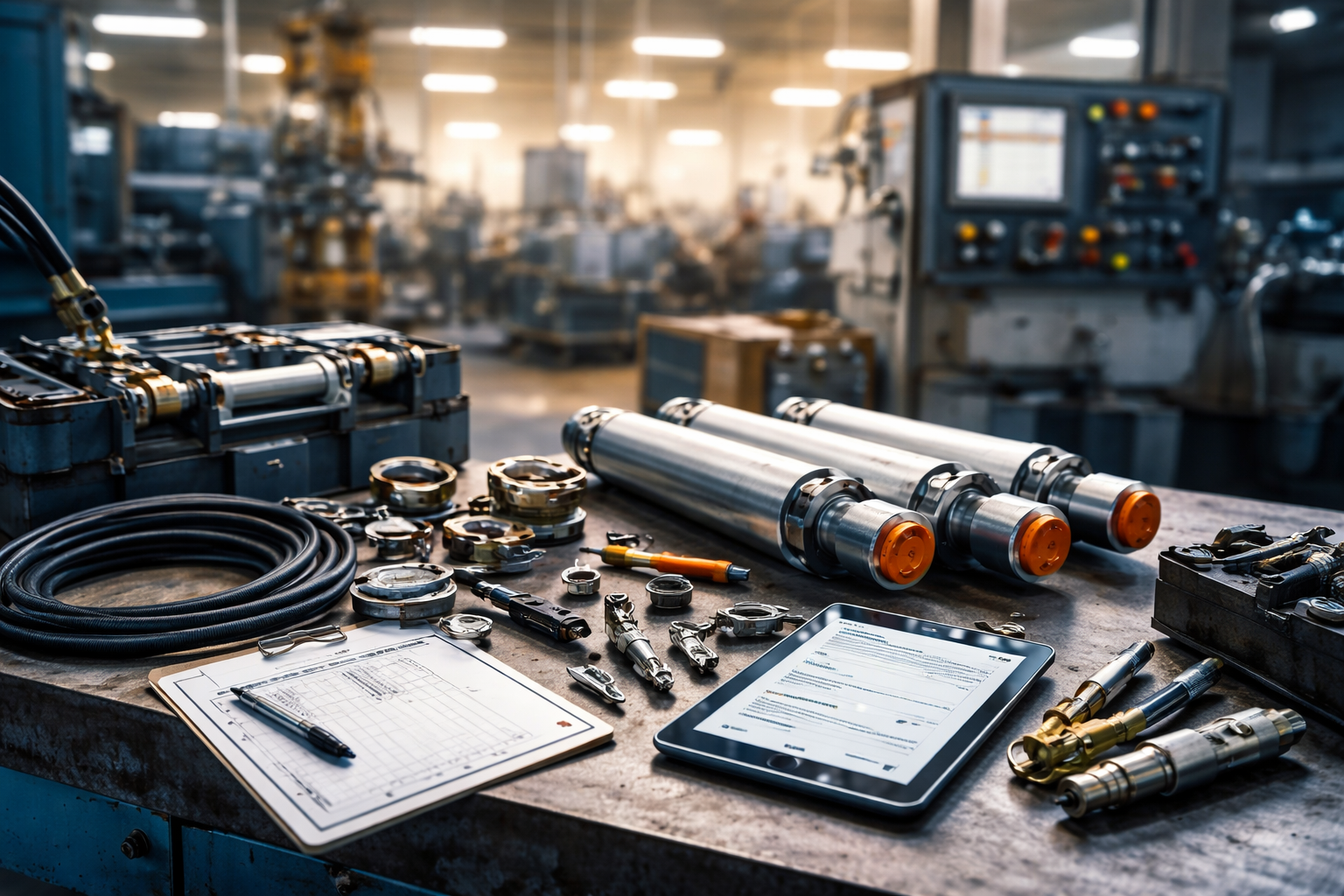
What does a “normal” day on your shop floor really look like? Machines humming, orders moving, everything on track, until something small throws it all off. A leak. A stalled cylinder. A delay that wasn’t supposed to happen. And suddenly, time starts slipping.
For small manufacturers, these interruptions don’t just disrupt workflow. They stack up fast, quietly eating into profits and deadlines. The frustrating part? It’s rarely one big failure. It’s a series of smaller ones that go unnoticed until they can’t be ignored anymore.
Deloitte’s research on predictive maintenance states that “unplanned downtime costs industrial manufacturers an estimated $50 billion each year”. That is an industry-wide total rather than anything you can scale down to your shop, and the same report notes that poor maintenance strategy can cut productive capacity by 5 to 20 percent – a range that is more useful to a small operation, because it is expressed as a proportion of what you already have.
So the real question becomes, how do you stay ahead of problems before they slow everything down?
0. Measure It Before You Fix It
Almost everything below works better once you know where the hours are going, and most small shops do not. The fix is not a system. It is a clipboard or a shared sheet at the machine, filled in during the shift rather than reconstructed on Friday.
Record four things per stoppage: which machine, when it stopped, when it ran again, and a reason code. Keep the reason codes to a fixed list of six to ten, agreed by the people who will use them. Something like: mechanical failure, electrical fault, tooling change, material shortage, quality hold, setup and changeover, no operator, waiting on upstream. If a category needs a comment box to be meaningful, it is too broad.
Two numbers come out of that log and both are worth knowing. Mean time between failures tells you how often a machine stops. Mean time to repair tells you how long it takes to get running again. They lead to different fixes: a machine that fails often but restarts in five minutes is a maintenance problem, while one that fails rarely but takes two days is a spares and lead-time problem. If you want a single figure to track, availability, meaning actual run time divided by planned production time, is the one to start with. It is also the first component of OEE, which multiplies availability by performance and quality, and there is no point calculating the full figure until availability is reliable.
After four to six weeks, sort the log by total hours lost per reason code. In most shops the top three account for the majority of lost time, and they are frequently not the causes people would have guessed. That list is your work plan for the rest of this article.
1. Stop Treating Maintenance Like a Fire Drill
Reactive maintenance feels natural. Something breaks, you fix it. But over time, that pattern creates chaos. Small manufacturers benefit from shifting to preventive habits:
● Scheduled inspections instead of emergency repairs
● Basic condition monitoring (temperature, vibration, leaks)
● Maintenance logs that actually get reviewed
It’s not about adding complexity. It’s about catching small issues before they spiral. A worn seal or slight misalignment might seem harmless until it isn’t.
Start with the machines that appear at the top of your downtime log, not with every asset you own. A preventive schedule covering three critical machines that actually gets done beats a plan covering forty that nobody follows. Base the interval on running hours or cycles rather than the calendar where you can, since a machine that ran two shifts a day all quarter has aged differently from one that sat idle.
There is a limit worth respecting. Preventive maintenance done too aggressively creates its own failures: every time an assembly is opened, seals get disturbed, contamination gets in, and something gets reassembled slightly wrong. A component replaced on schedule that had years of life left is both wasted money and a fresh opportunity to introduce a fault. If a scheduled replacement never shows meaningful wear, lengthen the interval rather than congratulating yourself on the discipline.
2. Upgrade the Parts That Fail Most Often
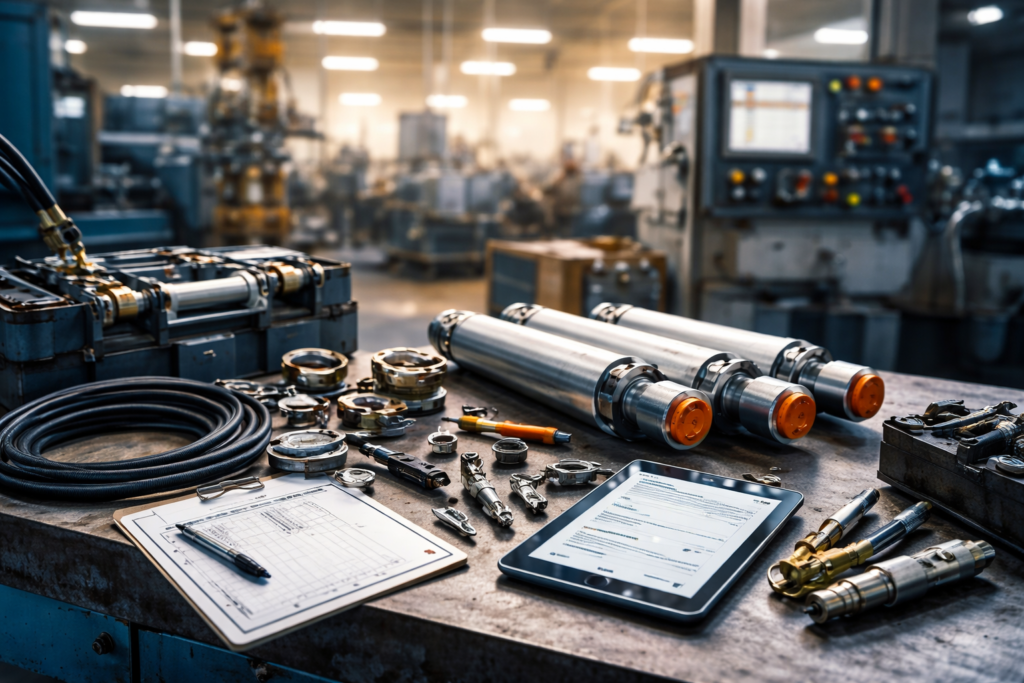
Every shop has a pattern; you start to notice which components give out first. It’s rarely random. Hydraulic parts, especially cylinders under constant load, tend to wear down faster than expected, particularly in smaller setups where machines are pushed a bit harder to meet demand.
What slows things down isn’t just the failure itself, it’s the scramble that follows. Temporary fixes, mismatched parts, waiting on replacements. It adds up.
One response is to stop stretching the life of worn components and replace them on a planned cycle instead, with replacement hydraulic cylinders specified for the duty rather than whatever fits. That link is a paid placement for Farm & Ranch Depot, and we are not in a position to tell you their cylinders outlast anyone else’s – we have not tested them and we have seen no independent data that ranks suppliers in this category. Judge a supplier on bore and stroke matching your application, seal material suited to your fluid and temperature, published pressure rating, stated warranty, and how quickly they can actually ship. Those are checkable. Reputation, in this market, mostly is not.
One caution on repeat failures: a component that keeps failing early is often a symptom rather than the fault. Cylinders that fail repeatedly usually point to contaminated fluid, a misaligned mounting, or the machine being run beyond its rated duty. Replacing the part on a shorter cycle manages the symptom and hides the cause. If you are replacing the same item more than about twice a year, the useful question is what is killing it, not where to buy the next one faster.
3. Keep Critical Spares Within Reach
Waiting on a part is where downtime stretches longer than it should. Not because the fix is complicated, but because the fix isn’t immediately possible.
Most small manufacturers don’t need a massive inventory. But having a few critical spares on hand changes the pace of everything. The usual items tend to repeat:
● Seals and hoses that wear out under pressure
● Bearings that quietly degrade over time
● Electrical relays or connectors that fail without much warning
It’s less about stocking everything and more about knowing what tends to fail in your setup. Once you see that pattern, keeping those parts nearby becomes an easy decision.
A simple rule keeps the stockroom honest. Stock a part when its supplier lead time is longer than the downtime you could tolerate on the machine it belongs to. A seal you can get same-day from a local distributor does not need to sit on your shelf. A servo drive on a six-week lead time for your only machine of that type does, whatever it costs, because the alternative is six weeks of that line standing still. Everything in between comes down to how much an hour of downtime on that machine actually costs you, which you can now estimate from the log.
Write the list down with part numbers, supplier, lead time and where it is kept, and check it twice a year. Uncontrolled spares shelves fail in a specific and irritating way: the part is there, but nobody knows it, so it gets ordered again anyway.
4. Use Simple Digital Tools
There’s a tendency to think better systems mean bigger software. For small manufacturers, that usually backfires. Complex platforms often go unused after the initial push. What works better is something simple enough to stick:
● A basic maintenance tracker
● Shared spreadsheets for inventory
● Alerts for service intervals
The goal isn’t sophistication, it’s consistency. When information is easy to access and update, small issues don’t slip through as easily.
In practice most small shops do not need a dedicated maintenance management system to start. A structured database such as Airtable holds an asset register, a downtime log and a spares list well enough, and gives you the views and filters a spreadsheet struggles with. Recurring inspections and the jobs that come out of them sit naturally in a task tool the team already uses, whether that is Asana, Trello or ClickUp; our guide to the best project management tools for small teams compares them.
Two signs tell you it is time to move up to a proper maintenance system: you are managing more than roughly twenty maintainable assets, or you need a repair history attached to each asset for warranty, insurance or audit purposes. Below that, the extra structure costs more attention than it returns. And whichever you use, the failure mode is the same one: a system where jobs get raised but never closed off is worse than a whiteboard, because it looks like a record and is not one.
5. Train Operators to Notice the “Off” Moments
Machines rarely fail without warning. There’s usually a shift, something subtle. A different sound, a slight delay, a vibration that wasn’t there before. These signals are easy to overlook in a busy shift.
Operators are the first to notice these changes, but only if they’re paying attention and feel comfortable pointing them out. When teams are encouraged to speak up early, small issues get addressed before they grow into larger disruptions.
It doesn’t require formal training programs. Just awareness, habit, and a bit of trust. Two things make it stick. The first is a route for reporting that takes under a minute, because anything longer competes with the operator’s actual job. The second is visible follow-up: if the first three reports produce no response, there will not be a fourth. Closing the loop, even to say the check was done and nothing was found, is what keeps the reports coming.
6. Always Check the Flow of Work
Not every slowdown starts with a machine. In many cases, production delays build quietly between steps: materials arriving a little late, setups taking longer than expected, or one station slowing everything behind it. Nothing appears broken, yet output drops.
These gaps often go unnoticed because they feel like part of the routine, and the productivity literature treats them as a distinct problem from equipment reliability – see, for example, this review of productivity improvement strategies in manufacturing companies, which treats process flow and operator efficiency as separate levers from maintenance.
Taking a step back and observing how work actually moves across the floor can reveal these patterns. This is where the reason codes earn their keep: if “waiting on upstream” and “material shortage” are near the top of your list, no amount of maintenance will help, because the constraint is not the machine. Small adjustments in sequencing, timing, or coordination can smooth things out. Sometimes, improving flow is less about fixing machines and more about fixing what happens around them.
7. Plan Downtime Before It Happens
It sounds counterintuitive, stopping production on purpose. But planned pauses often prevent longer, unplanned ones later.
Instead of waiting for something to fail, short scheduled windows allow you to:
● Inspect key components without rushing
● Fix minor wear before it turns into breakdowns
● Recalibrate machines for consistent performance
Without this, small issues tend to build quietly until they force a full stop. For smaller operations, even a simple routine makes a difference. A few controlled hours here and there can prevent days of unexpected disruption later.
Be honest about the cost, though. Planned downtime is still lost capacity, and when you are already behind on orders it is the first thing to get cancelled, usually in the exact period when the machines are working hardest and most need it. Two things protect it: schedule the window into the production plan as though it were an order, and put it where it hurts least, such as the end of a shift, a known slow week, or the changeover between two large jobs.
FAQ
How do we work out what an hour of downtime actually costs?
Start with the direct and recoverable parts: the labour standing idle, and the contribution margin on the output you did not produce, but only if you cannot make it back later in the week. If you can recover the units on overtime, the real cost is the overtime premium, not the full margin. Add expedited freight and any late-delivery penalties when they apply. A rough figure calculated consistently is enough, because its purpose is to rank spares and maintenance decisions against each other, not to appear in the accounts.
Is predictive maintenance worth it for a small shop?
Rarely as a first step. Vibration and thermal sensors generate a stream of readings that someone has to interpret and act on, and the common outcome in a small operation is alerts that nobody has time to investigate. Deloitte’s own figures for predictive maintenance – uptime up 10 to 20 percent, maintenance costs down 5 to 10 percent – come from operations with the analysts to run it. Fix the basics first: a downtime log, a preventive schedule on your three worst machines, and a critical spares list. Consider sensors afterwards, and only on assets where an unplanned failure is genuinely expensive and gives enough warning to be detectable.
Do we need a CMMS, or will a spreadsheet do?
A spreadsheet or a structured database is fine up to roughly twenty maintainable assets and one or two people doing the maintenance. Move up when you need per-asset repair history for warranty or audit, when scheduling collisions start causing missed jobs, or when more than a couple of people are raising work. The trigger is administrative pain, not company size, and adopting a system before that point tends to produce an expensive record of jobs nobody closed.
Conclusion
Downtime rarely comes from a single, significant failure. More often it builds through small gaps: overlooked wear, delayed parts, or processes that aren’t quite in sync. For small manufacturers, staying ahead isn’t about adding complexity. It’s about knowing what repeats, what slows things down, and what tends to fail first, which means writing it down for a few weeks before deciding anything.
A few practical adjustments, better timing, reliable parts, simple systems, can shift daily operations in a noticeable way. When those pieces start working together, production feels steadier and less reactive.
More on this topic
Browse all 86 articles on Business Operations, or jump straight to our buying guide: Best Productivity Tools for Small Teams.