

As a self-employed individual, it’s challenging to efficiently manage all business operations without the right tools.
Luckily, there is specially designed software that can significantly streamline daily tasks, saving you time while increasing productivity.
In this comprehensive guide, we will explore the top-rated business software for the self-employed, including options for accounting, invoicing, tax preparation, project management, and more.
Introduction
As a self-employed individual or small business owner, finding ways to streamline operations and improve productivity is essential for growth and success. The right business software can provide the automation, integration, and analytics needed to optimize workflows. This article explores some of the best software options to meet the needs of solo entrepreneurs and growing companies.
Defining the Needs of the Self-Employed
When evaluating business software, it’s important to assess your specific pain points and requirements. Common needs for the self-employed include:
- Accounting and Invoicing: Tracking income and expenses, creating professional invoices, managing accounts receivable/payable, and running financial reports.
- Tax Preparation: Estimating quarterly taxes owed, integrating with accounting software, and filing self-employment taxes.
- Payroll: Paying contractors, filing 1099s, and potentially managing employee payroll.
- Project and Time Tracking: Monitoring billable hours per client, assigning tasks, and planning projects.
- CRM and Lead Management: Organizing contacts, interacting with leads and clients, email marketing.
- HR Management: Onboarding contractors/employees, managing documents, tracking PTO.
The right tools can automate these repetitive tasks to boost productivity.
Key Features to Look for in Business Software
When comparing software options, keep an eye out for these key capabilities:
- Mobile Apps: Access your data and manage operations from anywhere.
- Automations: Set up rules to streamline workflows without manual work.
- Integrations: Connect the tools you already use to share data.
- Scalability: Adjust plans and features as your business grows.
- Security: Ensure data protection through encryption and permissions.
Prioritizing these features helps optimize workflows today and support future growth.
What is the best bookkeeping software for self-employed?
Choosing the right bookkeeping software is crucial for self-employed individuals to efficiently manage their finances and ensure accurate record keeping. When selecting software, it’s important to consider features like automation, integration, mobile access, and affordability.
Here are some top options to consider:
FreshBooks
- User-friendly, intuitive interface
- Robust time tracking, invoicing, expense management
- Integrates with payment processors and other business apps
- Affordable pricing tiers
Zoho Books
- Comprehensive accounting and invoicing
- Inventory management and order fulfillment
- Seamless integration with other Zoho products
- Scales from small business to enterprise
AccountingSuite
- Specialized for service-based businesses
- Tracks time, expenses, mileage, and more
- Automates accounting workflows
- Affordable subscription plans
OneUp
- Simple, easy-to-use platform
- Mobile app for on-the-go access
- Integrates with POS systems
- Ideal for solopreneurs and microbusinesses
The best accounting software for self-employed depends on your business needs and budget. Evaluate core features like invoicing, expense tracking, reporting, and integrations to find the right solution. Prioritize automation, mobility, and scalability as your business grows.
What is the easiest bookkeeping software to use?
Based on the context provided, the easiest bookkeeping software to use would likely be FreshBooks. Here’s a quick overview:
Why FreshBooks stands out for ease of use
- Intuitive, simple interface designed for non-accountants
- Easy set up and navigation
- Built-in wizards and guides for common tasks
- Robust mobile app lets you manage finances on the go
- Seamless integration with payment processors and bank accounts
- Automates invoicing, expense tracking, reporting, and more
FreshBooks aims to take the pain out of bookkeeping and accounting with software that anyone can understand and use effectively, without an accounting background. Their interface uses simple, straightforward terminology tailored to small business owners and solopreneurs.
The platform guides you through setting up your business profile, adding products/services, connecting payment accounts, configuring taxes, and customizing invoices. From there, features like automated billing, expense capture, reporting, and project costing make it simple to stay on top of your finances.
For self-employed individuals and microbusiness owners who want an easy way to manage their books, FreshBooks hits the mark for user-friendliness and simplicity. The intuitive setup, navigation, and abundance of built-in features allow even accounting novices to effectively track their finances, invoice clients, collect payments, and generate key financial reports.
So if you’re looking for fuss-free bookkeeping software that doesn’t require an advanced accounting degree, FreshBooks is likely the easiest solution to put to work for your business. Their focus on usability makes financial admin simple for solopreneurs and small teams.
Is QuickBooks for small business worth it?
QuickBooks Online is definitely worth considering for small businesses looking to streamline their financial operations. Here are some of the key benefits it offers:
Easy to Use Interface
QuickBooks Online has an intuitive, easy to navigate interface. You don’t need an accounting background to quickly set up charts of accounts, reconcile transactions, generate invoices, and run reports. This makes day-to-day financial management much simpler.
Robust Core Accounting Features
As an online accounting solution designed for small businesses, QuickBooks Online includes all the essential accounting tools you’d expect:
- Invoicing and billing
- Accounts payable/receivable
- Bank and credit card reconciliations
- Financial reporting
- Inventory management
These features cover the core accounting activities for most small companies.
Scales With Your Business
Unlike some basic accounting apps, QuickBooks Online has advanced capabilities to manage inventory, employees, multiple users/locations that can support your company as it grows. Upgrading plans is easy.
Integration With Other Tools
QuickBooks Online plays well with other software. It offers hundreds of integrations with POS systems, ecommerce platforms, payment processors, and productivity tools through apps and Zapier. This allows you to connect QuickBooks Online into your existing small business workflow.
Access Anywhere
Since QuickBooks Online is cloud-based software, you can access your important financial data from any laptop, phone or tablet with an internet connection. This enables you to manage finances on the go.
So in summary – with its depth of accounting features, scalability, and integrations – QuickBooks Online delivers excellent value for small businesses looking to simplify financial management. The subscription plans are affordable for most small company budgets.
Is QuickBooks Self-Employed worth it?
First, the name. Intuit has replaced QuickBooks Self-Employed with QuickBooks Solopreneur. Existing QBSE logins still work, but Solopreneur is what is on sale now, and it is what you will be signing up for. If you are working from an older shortlist, that is the product to look for. Everything below refers to Solopreneur unless stated otherwise. Checked August 2026.
Easy-to-Use Interface
QBSE provides an intuitive, user-friendly interface that makes accounting a breeze. You don’t need to be an accountant to understand the dashboard and reports. Within minutes, you can set up accounts, categorize transactions, track mileage, generate invoices, and more. The mobile app also lets you manage finances on-the-go.
Pricing
QuickBooks Solopreneur has three tiers: Free at $0, Lite at $20 a month, and Simple Start at $38 a month. Intuit was advertising 90 per cent off the paid tiers for the first three months when we checked; those are introductory rates, not the ongoing price. There are no long-term contracts. The $7.50 a month this article used to quote belonged to the old QuickBooks Self-Employed product and no longer applies. Checked August 2026; confirm before budgeting.
Robust Accounting Features
Solopreneur covers automated categorisation and reconciliation, invoicing, expense tracking, and quarterly and annual tax estimates. For most solopreneurs that is enough. It is not a full double-entry ledger, so if you expect to hire, hold inventory, or hand a trial balance to an accountant, price QuickBooks Online instead.
Seamless Tax Integration
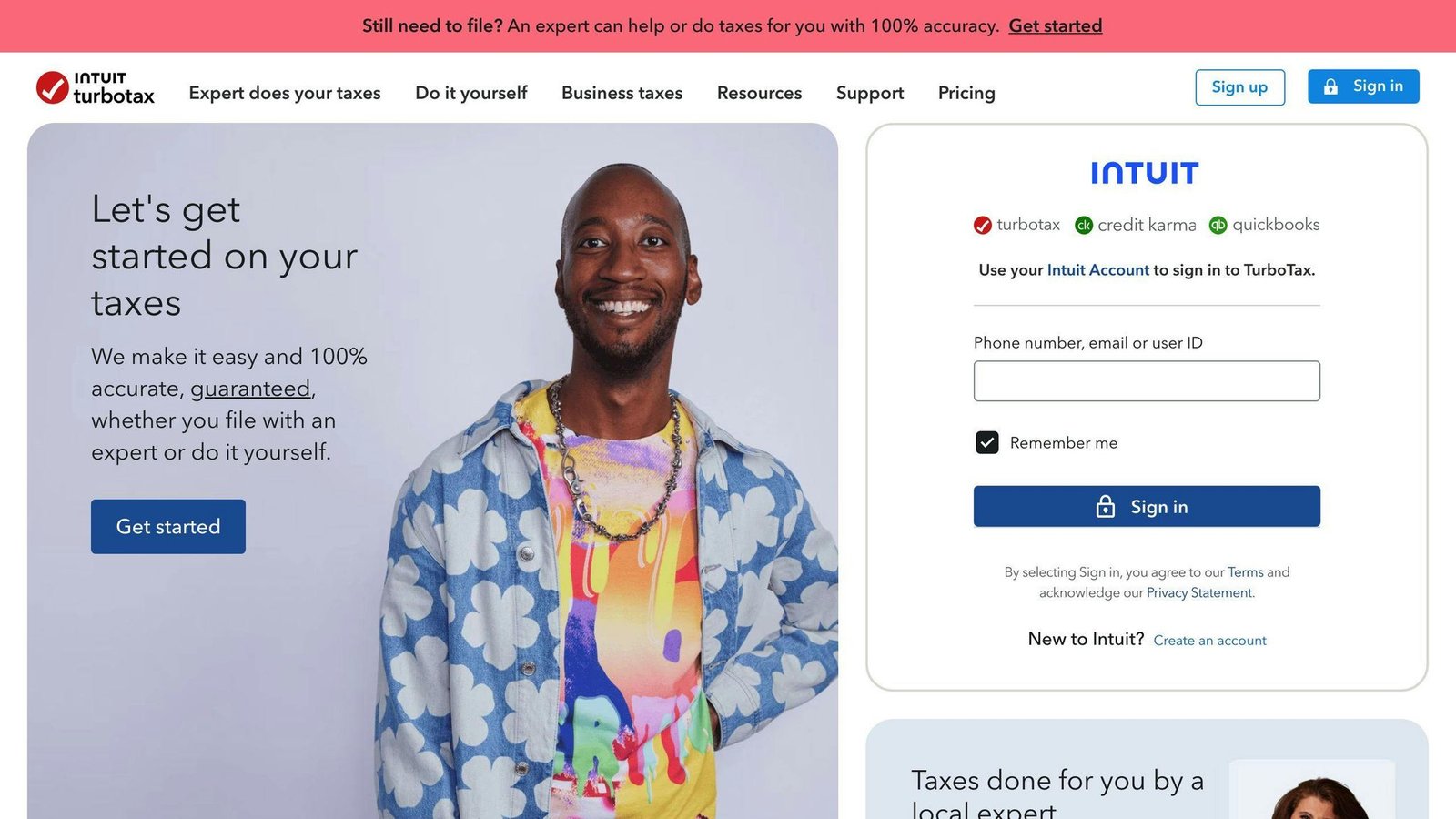
Running a business as a freelancer also means handling your own taxes. Solopreneur hands off to TurboTax, and the Lite and Simple Start tiers include expert tax assistance powered by TurboTax. Note that TurboTax no longer sells a tier called Self-Employed; it now sells do-it-yourself, Expert Assist and Expert Full Service options, priced by the complexity of your return.
Solopreneur is worth a look if you are a sole trader who wants tax estimates and mileage without running a full ledger. It is not the cheapest option here: Wave’s free tier does more bookkeeping for nothing, and Zoho Books’ free plan is free outright below a revenue threshold. Solopreneur earns its money on the tax side.
Accounting Software for Small Business
Accounting software is crucial for self-employed individuals and small business owners to efficiently manage their finances. As a solopreneur, keeping tabs on income, expenses, tax deductions, invoices, and more can be daunting without the right tools. The top accounting solutions provide an all-in-one platform to seamlessly track financials and run reports for smarter decision-making.
Best Free Accounting Software for Small Business
When starting out, investing in expensive accounting software is rarely feasible. Luckily, full-featured free options exist to handle essential financial tasks.
Wave Accounting has a genuinely free tier, called Starter, which covers invoicing, bookkeeping, and reports including the balance sheet, income statement and cash flow. Be clear about what is not in it. Payroll is a paid add-on from $25 a month. Receipt capture is a separate add-on, $11 a month on Starter. Automatic bank import and transaction categorisation sit on the Pro plan at $19 a month, so on the free tier you enter transactions by hand. Card processing is charged per transaction on top. Checked August 2026.
Another option is Zoho Books, whose free plan covers one user plus an accountant and 1,000 invoices a year, but only while your annual revenue stays under $50,000. Above that you move to Standard at $20 a month, or $15 billed annually. Inventory and purchase orders start on the Professional tier, not the free one. Checked August 2026.
Both are usable at zero cost, with conditions: Wave asks you to give up automatic bank import, and Zoho asks you to stay under a revenue ceiling and a single user. Work out which of those you will breach first, because that is the month your free software starts costing money.
Business Accounting Apps
Mobile accounting apps provide on-the-go access for managing finances, tracking deductible mileage, snapping receipts, categorizing expenses, generating invoices, accepting payments, and more. Top accounting apps include:
- QuickBooks Solopreneur, formerly QuickBooks Self-Employed – Mileage tracker, tax estimator, expense manager
- Xero – Cloud accounting, invoicing, expense claims
- FreshBooks – Time tracking, online payments, accounting
These apps allow solopreneurs to handle accounting tasks wherever they are for true flexibility. The ability to separate personal and business transactions also helps come tax season. For self-employed individuals frequently on the move meeting clients or prospects, accounting apps promote productivity.
QuickBooks Solopreneur App
The QuickBooks Solopreneur app, which replaced QuickBooks Self-Employed, aims to simplify taxes for solopreneurs. Key features include:
- Automatic mileage tracking
- Income and expense categorization
- Tax estimates and tips
- Invoicing capabilities
- Time tracking
- Quarterly and annual tax reports
By automatically separating business and personal transactions, Solopreneur makes filing taxes less tedious. The mileage tracker is also handy for maximising deductions. For self-employed professionals focused on taxes, QuickBooks delivers helpful tools. It is not free: the tiers are $0, $20 and $38 a month.
Wave Accounting
Wave Accounting has a free tier, Starter, but it is not 100 per cent free software; several of the things this article used to list as free are paid. What you get for nothing:
- Invoicing and estimates, unlimited
- Bookkeeping for income and expenses, entered manually
- Reports (profit & loss, balance sheet, cash flow)
What costs extra: automatic bank import and categorisation, which is on the Pro plan at $19 a month or $190 a year; receipt capture, $11 a month on Starter or $8 on Pro; payroll, from $25 a month; and card processing at 2.9 per cent plus $0.60 a transaction. Checked August 2026.
For a solopreneur with a low transaction count, the free tier is a real option and the manual entry is tolerable. Once you are reconciling a few hundred lines a month, the $19 Pro plan stops being optional. That is the point at which Wave should be compared on price with the paid tiers of everything else here, not treated as free.
Xero Accounting
Xero markets itself as “small business accounting software made easy” with good reason. This popular platform offers:
- Cloud-based access across devices
- Bank account and credit card connections for automated feeds
- Invoicing
- Expense claims
- Financial reporting
- 700+ app integrations
As a cloud-accounting solution, Xero enables real-time financial data access from anywhere, great for self-employed individuals on the move. Robust third-party integrations also allow connecting platforms like PayPal, Stripe, and MailChimp for centralized business oversight. For solopreneurs seeking an established ecosystem for scaling, Xero delivers.
Invoicing and Billing Software
Invoicing and billing software is crucial for freelancers and self-employed individuals to efficiently manage their finances. As a solo entrepreneur, you need tools to create professional invoices, track payments, manage expenses, and optimize cash flow. The right software can save you time on administrative tasks so you can focus on your core business.
Best Free Invoice Software
Free invoice software helps reduce overhead costs for bootstrapped freelancers. Top options include:
- Wave: Free invoicing and bookkeeping on the Starter tier. Receipt capture is a paid add-on, not part of the free plan.
- Zoho Invoice: Creates customizable invoices and automates payment reminders. Seamless integration with other Zoho business apps.
- Zoho Invoice is the only genuinely free option of the three here besides Wave. FreshBooks has no free plan; its cheapest tier, Lite, is $23 a month, so it does not belong on a free list.
When choosing free invoicing software, ensure it has the core features you need like templates, payment tracking, expense logging, and reporting. Scaled down free versions may lack more advanced capabilities.
Best Invoicing Software for Freelancers
Invoicing tools built for freelancers and small teams streamline operations with features like:
- Recurring invoices to bill regular clients automatically
- Payment processing to collect invoices online
- Time tracking to invoice hourly work accurately
- Expense tracking for tax deductions
- Accounting integration to manage the full financial picture
Top-rated options like FreshBooks, Zoho Invoice, and Wave Accounting check these boxes while offering affordable paid plans, making them suitable for solopreneurs.
Time Tracking Apps
Accurately tracking time is vital for freelancers billing hourly. Time tracking apps like Toggl, Harvest, and Hubstaff provide:
- Productivity monitoring to identify inefficiencies
- Automated time capture via start/stop timers
- Timesheet generation for seamless client invoicing
- Project budgeting based on tracked hours
Integrating a time tracker with invoicing software gives freelancers transparency into billable hours and how their time translates to income. This is invaluable in accurately pricing services.
The right mix of free and paid tools can empower self-employed professionals to take control of their finances, maximize productivity, and set their freelance business up for success.
Tax and Financial Management Tools
Managing finances and taxes can be daunting for the self-employed. Thankfully, there are software solutions available to assist with these complexities.
Self-Employed Accounting Software Free
Free accounting software offers basic financial management features tailored to solo entrepreneurs on a budget. Top options include:
- Wave: Free invoicing and bookkeeping on the Starter tier. Receipt capture and automatic bank import are paid; you enter transactions yourself on the free plan.
- Zoho Books: Free plan covers one user plus an accountant and 1,000 invoices a year, and is available only while annual revenue stays under $50,000. It is not capped at 5 invoices a month, and it is not 2 users.
- QuickBooks Solopreneur: Has a free tier, but the useful features sit on Lite at $20 a month and Simple Start at $38. This is the product that replaced QuickBooks Self-Employed.
While free tools have limitations, they can suit simple financial needs for solopreneurs starting out. Those needing advanced accounting may require upgraded paid plans.
Tax Preparation Software for Self-Employed
Specialized tax software helps the self-employed maximize deductions and track relevant expenses, including:
- TurboTax: Imports data from QuickBooks. TurboTax no longer sells a tier named Self-Employed; it is priced by service level, from do-it-yourself up to full service, with the figure set at the point you print or e-file.
- TaxSlayer Self Employed: Affordable tax filing with guidance for common self-employment tax situations. Lacks support for some complex returns.
- H&R Block Tax Software: Comprehensive tax prep for independent contractors and freelancers. More expensive but offers phone support from tax pros.
Utilizing self-employed focused tax software can save money by identifying all eligible business expense deductions. Those with complex tax situations may benefit from professional accounting services.
Financial Statements and Basic Accounting Principles
Accounting software generates key financial statements based on standard bookkeeping principles:
- Income Statement: Tracks revenues and expenses over a period. Useful for assessing profitability.
- Balance Sheet: Provides a financial snapshot of assets, liabilities and equity on a given date. Indicates financial health.
- Cash Flow Statement: Shows money coming in and out of the business. Helps predict future cash needs.
Understanding these statements and accounting basics like double-entry bookkeeping allows better financial control. Software automates these processes for accurate real-time tracking. Consulting an accountant can provide further insight.
In summary, the self-employed have access to software assisting with financial management, tax preparation, financial reporting, and accounting essentials. Selecting solutions aligned with business needs and complexity allows better focus on core operations.
Productivity and Management Tools
Self-employed individuals and small business owners often struggle with staying organized and managing their time effectively. The right productivity and project management tools can make a big difference in optimizing operations.
Expense Tracking Software
Keeping track of business expenses is critical for self-employed professionals. The best expense tracking software provides features like:
- Automatic syncing with bank and credit card accounts to import transactions
- Customizable categories to tag different types of expenses
- Receipt capture abilities using mobile apps
- Mileage tracking for vehicle expenses
- Reporting to simplify filing self-employed taxes
Examples: QuickBooks Solopreneur, Expensify, MileIQ
Project Management Tools
Juggling multiple client projects while running all aspects of a business solo can quickly lead to missed deadlines. Project management tools help by:
- Enabling task assignment to keep projects moving forward
- Setting reminders and due date notifications
- Building client dashboards for transparency
- Integrating with other apps for seamless workflow
Top picks: Asana, Trello, Basecamp
CRM Software for Freelancers
Customer relationship management (CRM) software helps self-employed professionals stay connected with their clients and prospects by:
- Maintaining organized contact lists
- Logging communications and meetings
- Setting reminders for follow-ups
- Building email marketing campaigns
- Tracking deals in sales pipelines
Best for solopreneurs: Zoho CRM, Insightly, HubSpot CRM
Time Management Software
With no one managing your schedule, time management is a make-or-break skill for the self-employed. Software can assist by:
- Scheduling appointments and blocking off focus time
- Applying time estimates to tasks
- Alerting you when meetings and deadlines are approaching
- Integrating calendars across devices
Top apps: Calendar, Clockify, Timely
Investing in the right mix of productivity and management tools goes a long way toward keeping solo businesses running smoothly. The software options available today help maximize organization and efficiency for self-employed professionals.
Conclusion
With a vast range of software options now available, self-employed professionals can effectively streamline workflows, reduce overhead, and position themselves for sustained growth by leveraging the right digital systems.
Key Takeaways
- Accounting software like QuickBooks Solopreneur (which replaced QuickBooks Self-Employed), Wave, and FreshBooks can help freelancers and solopreneurs manage finances, track expenses, generate invoices, and simplify tax preparation. Check what the free tiers exclude before you count on them.
- Time tracking tools like Toggl provide visibility into how time is being spent on client projects and can feed data directly into invoicing workflows.
- CRM systems like HubSpot and Zoho CRM centralize lead and client data to optimize sales processes.
- Project management platforms like Asana, Trello, and Basecamp enable effective task organization, resource allocation, and team collaboration.
- Cloud storage services like Google Drive or Dropbox facilitate secure document access and seamless file sharing.
- Email marketing software like Mailchimp assists with building professional-looking campaigns and growing audience engagement.
The key is identifying areas of one’s business that can benefit from process improvement or automation, then finding software tailored to those needs. With some research and testing, self-employed professionals can build a customized tech stack that takes their venture to the next level. The time savings and efficiency gains ultimately position solopreneurs to take on more clients and continue expanding.
More on this topic
Browse all 86 articles on Business Operations, or jump straight to our buying guide: Best Productivity Tools for Small Teams.