Disclosure: This page contains commercial links. BizBot may earn a commission from qualifying purchases. Paid placements do not buy a better ranking. Read our affiliate disclosure.
Disclosure: This article links to a third-party programme, and BizBot may have been compensated for that placement. We would rather flag it than leave you guessing. How we evaluate software.
Businesses compete in an environment where online visibility influences revenue directly. Many customers begin a buying journey with a search engine, whether researching services, comparing providers, or ready to purchase. If your business does not appear in those results, a competitor’s will.
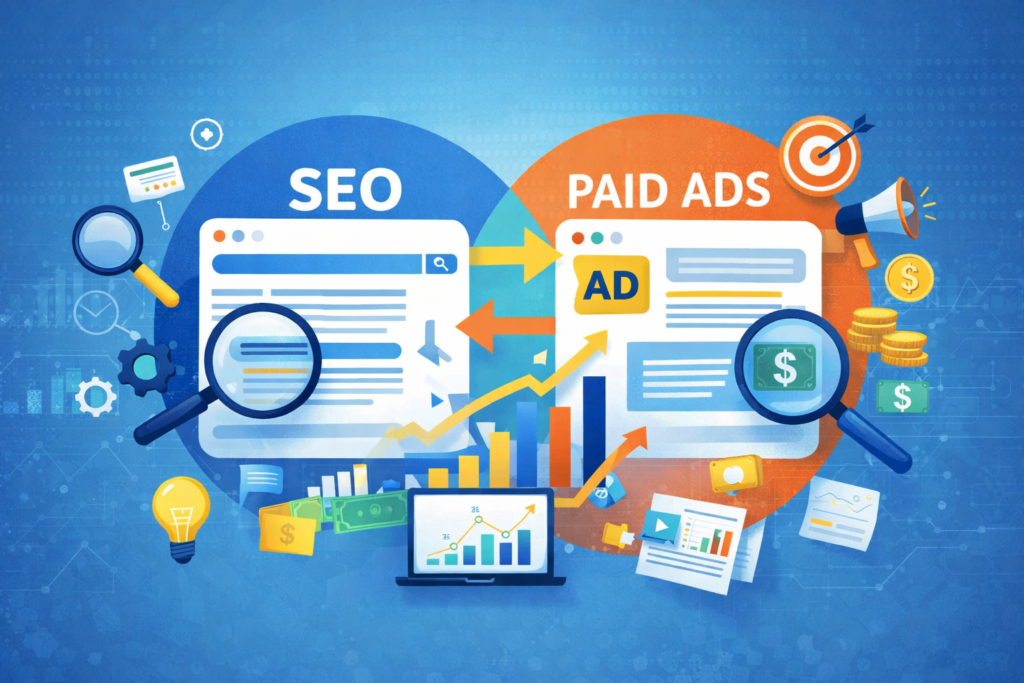
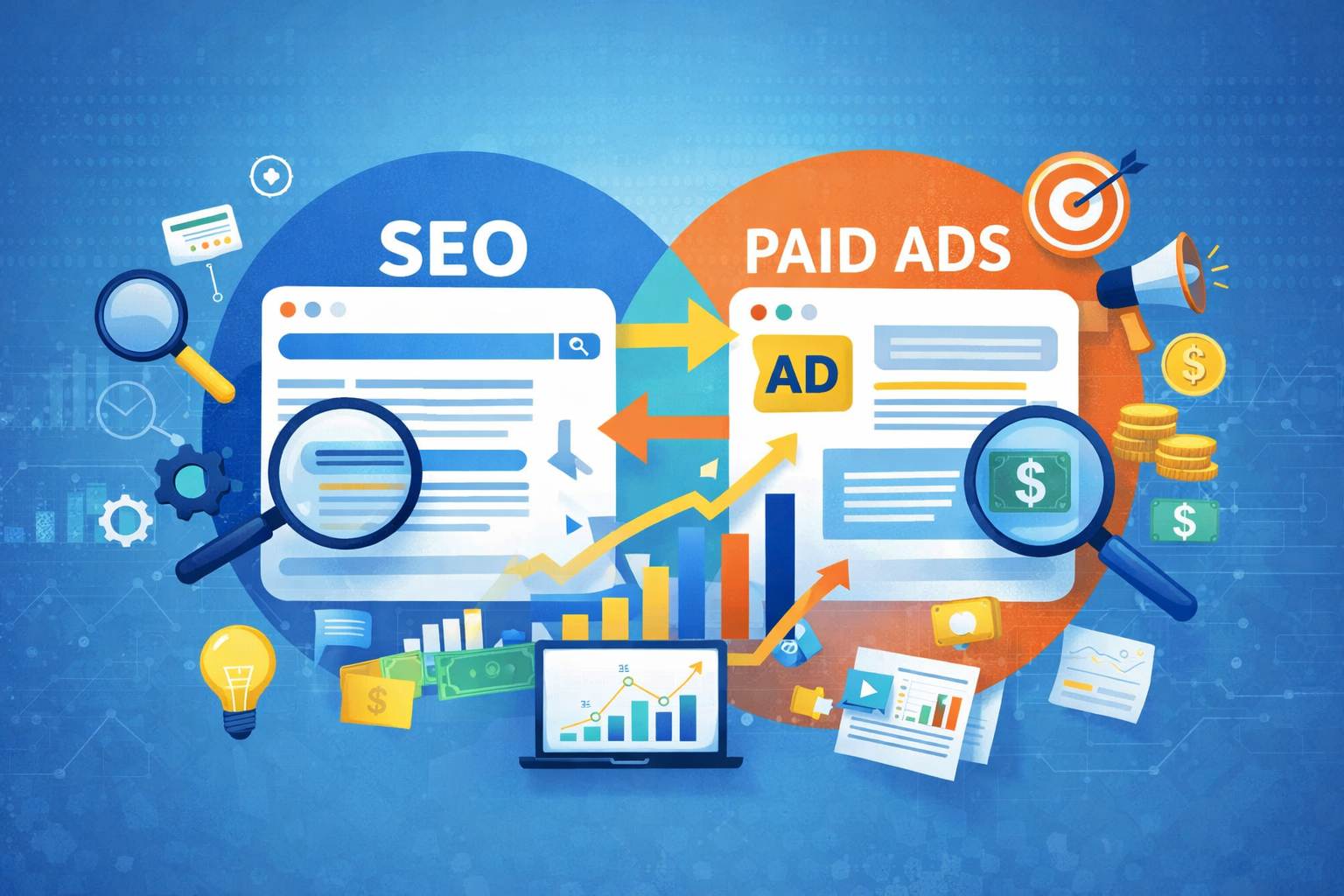
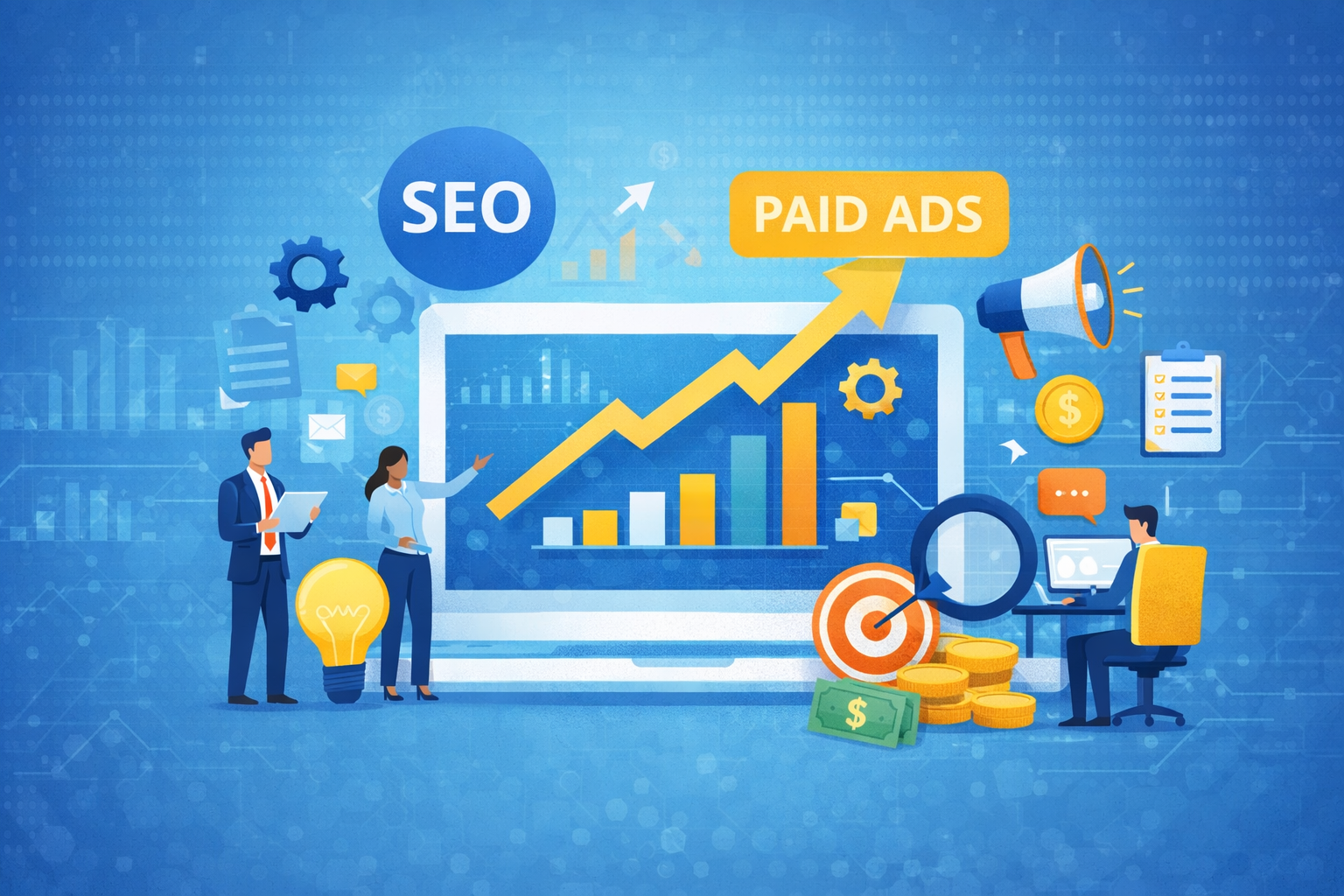
This is why companies invest in Search Engine Optimization (SEO) and Paid Advertising. SEO improves organic rankings to attract traffic over the long term. Paid advertising puts you at the top of results immediately, for as long as you keep paying.
Many businesses treat these as alternatives. They are better understood as different instruments with different cost structures: one is a capital investment that depreciates if neglected, the other is an operating cost that stops working the day you stop paying it.
This article is contributed by the team at Marked og Vekst, a digital marketing agency, and the closing section is theirs.
Why SEO Is the Foundation of Long-Term Online Visibility
SEO keeps generating traffic after the initial work is done. Once a page ranks, it attracts visitors without a per-click cost.
Two honest caveats before the pillars. Rankings are not owned, they are held: algorithm updates, new competitors and content decay all erode them, so “no ongoing cost” means no ad spend, not no ongoing work. And SEO is slow enough that it is the wrong tool if you need customers this quarter.
Effective SEO rests on three things.
Strategic Keyword Research
High-intent keywords often include phrases such as:
- SEO services for businesses
- digital marketing strategy
- online advertising management
- search engine optimization services
Targeting the right terms puts you in front of users already looking for what you sell. The judgement is competitive: ranking for a high-volume generic term may be unachievable, while a narrower phrase with a tenth of the volume may be winnable and convert better.
Valuable Content Creation
Search engines favour pages that answer the question the searcher asked. Publishing useful and personalized dynamic content demonstrates that you can answer it.
Content may include:
- industry insights
- guides and educational articles
- service explanations
- case studies
On case studies specifically: publish them with named clients and figures the client will confirm, or not at all. Anonymous case studies with impressive percentages are the most common form of marketing fiction, and readers have learned to discount them.
Technical Website Optimization
Good content cannot rank on a site search engines struggle to read.
Technical SEO ensures sites are:
- fast loading
- mobile friendly
- easy for search engines to crawl
- properly structured for indexing
Technical work is necessary but rarely sufficient. Fixing crawl errors on a site with nothing worth ranking changes nothing.
Paid Advertising Delivers Immediate Traffic
Paid advertising generates visibility today. Platforms such as Google Ads place you at the top of results for chosen keywords within minutes.
Precise Audience Targeting
The advantage of search advertising is reaching people at the moment they are looking for a solution, rather than interrupting them.
Campaigns can be refined using:
- high-intent search keywords
- geographic targeting for local markets
- audience demographics and interests
- behavioral signals that indicate purchase intent
Note the cost consequence. Precisely the keywords that indicate purchase intent are the ones every competitor bids on, so targeting well raises your cost per click as well as your conversion rate. In some sectors – legal, insurance, B2B software – clicks cost enough that the arithmetic only works with a high-value sale and a landing page that converts.
Measurable Performance and Continuous Optimization
Every campaign produces data on how users interact with ads and landing pages.
Useful metrics:
- impressions and reach
- click-through rate (CTR)
- conversion rate
- cost per acquisition (CPA)
CPA is the one that matters. CTR and impressions can improve while CPA gets worse, and a report that leads with the first two is usually avoiding the third. Set a target CPA from your actual margin before launching, and judge everything against it.
SEO vs PPC: Understanding the Key Differences
Businesses often ask which to invest in. Both increase visibility, but they behave differently.
SEO improves organic rankings through content, technical work, and authority building. It takes time, and once established it generates traffic without per-click cost. It is also the channel you cannot switch off and on: pause it for a year and you lose position slowly and regain it slowly.
PPC buys placement. You pay per click, results start immediately, and they stop immediately when the budget does. That immediacy makes it the right tool for testing, seasonality, and any situation where you need to know within a fortnight whether a market exists.
Most effective strategies use both, for the obvious reason that their weaknesses are opposite. But that is a recommendation for businesses that can fund both. If you can fund one, the answer depends on your timeline: PPC if you need revenue within a quarter, SEO if you are building something you expect to still be running in three years.
Why Combining Them Works
Businesses relying only on SEO grow slowly and are exposed to algorithm changes. Businesses relying only on advertising lose all visibility the day they stop spending, having built no asset. Running both hedges each risk.
Greater Search Visibility
Appearing in both paid and organic results occupies more of the results page and increases the chance of a click.
One caution against a common agency claim: whether paid ads add incremental clicks when you already rank first organically is genuinely contested, and the answer varies by query and brand. Test it. Pause ads on your top-ranking terms for a fortnight and measure total conversions, not just paid ones. Sometimes the ads were buying clicks you would have had for free.
Faster Keyword Insights
Paid campaigns produce data quickly: which keywords attract clicks, which convert, which messaging works.
This is the strongest practical argument for running both. A month of paid spend tells you which terms convert, and you can then commission SEO content for exactly those terms rather than guessing. Guessing is expensive in SEO, because you find out you were wrong six months later.
Stable Lead Generation
Organic traffic fluctuates with algorithm updates, competitors, and seasonality. Paid campaigns hold the floor while rankings recover. This is insurance, and like insurance it costs money in the periods when you do not need it.
Full Funnel Coverage
SEO content typically serves informational and comparison queries earlier in the process. Paid ads suit high-intent queries near the decision. Together they reach people at more than one stage.
How Businesses Use SEO and Paid Ads Together in Practice
Launching New Products or Services
New pages take time to rank. Paid advertising covers the gap while SEO content builds authority, and the paid data tells you which of your new positioning messages people actually respond to before you commit them to permanent pages.
Supporting Seasonal or Competitive Campaigns
Where demand spikes seasonally, organic content works year-round while ad spend increases during peaks. This is more efficient than trying to hold expensive ad positions all year for demand that only exists in two months of it.
What Professional SEO and Paid Ads Management Involves
Effective campaigns need continuous monitoring, testing, and adjustment rather than a launch and a monthly report.
Keyword Research and Opportunity Analysis
Identify queries indicating purchase intent, then assess search volume, competition, and whether you can realistically compete. That last filter is what separates a useful keyword list from a wish list.
Content Development and Optimization
Optimized articles, service pages and guides that answer real customer questions. Volume alone stopped working some time ago; a small number of pages that genuinely answer a question outperform a large number that circle it.
Campaign Optimization and Budget Efficiency
Monitoring performance, adjusting bids, refining targeting, testing creative. Judge this work on cost per acquisition against your target, and ask for negative keyword lists and search term reports – the wasted spend usually hides there.
Landing Page and Conversion Optimization
Targeted traffic converts badly on a poor landing page. Improving messaging, structure, and calls to action often produces a larger return than any change to targeting, and it improves both channels at once.
Performance Tracking and Data Analysis
Track organic traffic, rankings, conversion rates, and cost per acquisition. Insist that conversions mean qualified leads or sales rather than form fills, since the two diverge quickly and only one pays wages.
Frequently Asked Questions
How long does SEO take to produce results?
Three to six months is the usual working assumption before rankings move noticeably, though this is a rule of thumb rather than a measured figure, and it varies with competition, existing site authority, and how much content already exists. In a genuinely competitive commercial market, a year is more realistic. Treat any agency promising faster with suspicion.
Is paid advertising necessary if a business already ranks well in search results?
Not necessarily, and this is worth testing rather than assuming. Ads add top-of-page visibility and let you target specific audiences or promote offers. But where you already hold the top organic position, some of the paid clicks are cannibalising free ones. Run the pause test described above before committing budget indefinitely.
Which strategy is better: SEO or paid advertising?
Neither, in the abstract. PPC if you need results this quarter or want to test a market cheaply. SEO if you are building an asset for the long term and can wait. Both if you can fund both, in which case use the paid data to direct the SEO work.
How much should businesses invest in SEO and paid ads?
Work backwards from your economics rather than from a benchmark percentage. Take your average customer value and close rate, calculate the most you can pay per lead and still profit, and size the budget from there. Start small enough that a failed test is affordable, and scale only what hits the target CPA.
Can small businesses benefit from SEO and paid ads?
Yes, with a narrower focus. Local and long-tail terms are where a small business can realistically outrank or outbid larger competitors. Competing on broad national head terms against companies with far larger budgets is how small marketing budgets disappear without trace.
Take the Next Step Toward Sustainable Growth
SEO builds long-term authority and organic traffic; paid advertising provides immediate, targeted reach. Used together they cover both timescales.
Getting results takes a clear strategy and ongoing optimization rather than a launch and hope. If your business wants to improve search visibility and attract qualified leads, Marked og Vekst offer SEO and paid advertising management and can be contacted through their site, linked above. BizBot does not provide marketing services and has no stake in that arrangement beyond disclosing it.
More on this topic
Browse all 44 articles on Marketing & Growth, or jump straight to our buying guide: Best Marketing and CRM Tools for Small Businesses.