Marketing and CRM software is for small businesses with more leads than memory: enquiries sitting in inboxes, a list someone exports by hand, no honest answer to what happened last month. The choice usually goes wrong at the data model. A pipeline tool assumes deals that open, move and close; an audience tool assumes people you nurture over time. Pick the wrong shape and you spend a year forcing your business into someone else’s sales process.
How to choose
Deals or audiences?
If you sell a considered purchase to named buyers, you want a pipeline with stages, owners and next actions. If you sell repeatedly to a large list, you want segmentation, automations and email deliverability. Tools that claim both usually do one well and treat the other as a tick box.
What does migration actually cost?
Your data sits in spreadsheets, an old system and several inboxes. Before signing, work out how contacts, history and unsubscribes will move, and who does it. Import is the step that quietly kills adoption: a half-migrated CRM is trusted by nobody.
Who will run it after launch?
Automation, scoring and attribution need an owner. Enterprise-grade platforms assume a marketing operations person exists. If nobody has that in their job description, buy something simpler and use all of it.
How is it priced as you grow?
Sales tools are priced per user per month, email tools by contacts or sends, and some sell seats in blocks. Each model punishes growth differently, so price the plan you expect in a year.
The tools in this category
- Pipedrive — best at a visual deal pipeline with reminders and forecasting; suits small B2B sales teams, though add-ons cost extra.
- Freshsales — best at built-in phone and email outreach beside deals; suits teams doing heavy call and email volume.
- Monday CRM — best at reshaping pipelines to an unusual process; suits small teams wanting flexibility, but seats sell in bundles.
- Keap — best at joining CRM, automation, invoicing and payments; suits small service firms replacing several tools at once.
- Marketo — best at lead nurture, scoring and attribution at scale; suits large databases with an operations team behind them.
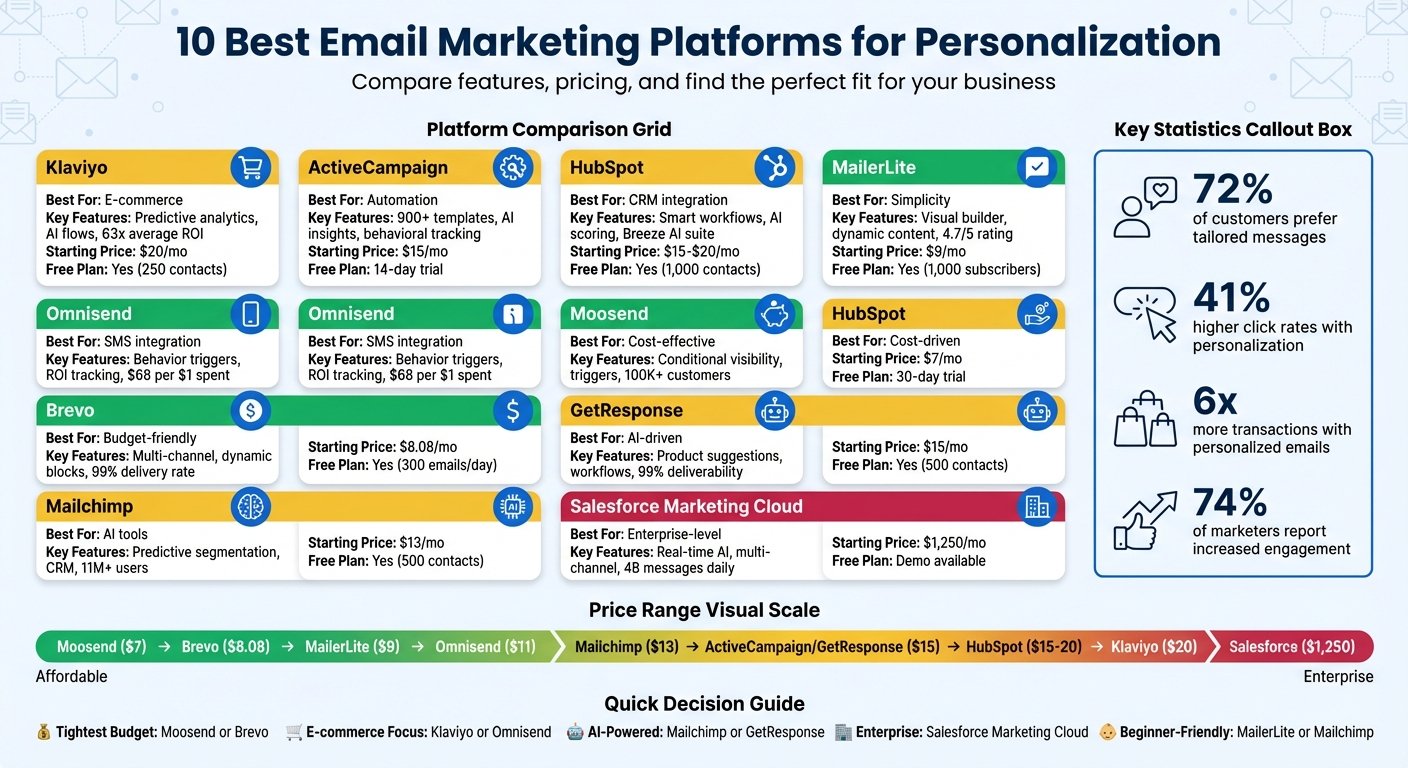
- Brevo — best at campaigns, SMS and transactional mail in one account; suits shops sending both marketing and receipts.
- GetResponse — best at covering email, landing pages and webinars together; suits teams wanting breadth, priced by list size.
- Drip — best at automations driven by store and order data; suits direct-to-consumer brands, not B2B.
- Kit (ConvertKit) — best at tag-based subscribers and selling digital products; suits creators who do not need elaborate design.
- Simplified — best at producing design, copy and social posts in one place; suits solo marketers, though each module is shallow.
- Unicorn Platform — best at getting a landing page live fast; suits startups testing an offer, with customization capped by design.
What to watch out for
- Per-seat pricing that bites at ten people, and bundles that make one new salesperson cost four licences. Check the increment, not the headline rate.
- Email pricing by list size. You pay for contacts who never open anything, so cleaning the list is cheaper than upgrading the plan.
- Migration and setup effort. Fields, history and consent records rarely map cleanly, and the work lands on whoever championed the purchase.
- Automation nobody maintains. Scoring rules and nurture sequences drift out of date within months and quietly email the wrong people.
Questions people ask
Do we need a CRM and a separate email tool?
Not at first. One system covering both is simpler while volumes are low. Split them when the sales team and the marketing list clearly want different things.
Is a free CRM tier enough?
For a couple of people tracking a few dozen deals, often yes. The catch is the jump between tiers, so check the cost of the tier above before you build on the free one.
How do we know it is working?
Pick two numbers before launch: enquiries answered within a day, and deals with a next action booked. If neither improves within a quarter, the tool is not the problem.
See the full, always-current list on the marketing and CRM tools page.