
Disclosure: This page contains commercial links. BizBot may earn a commission from qualifying purchases. Paid placements do not buy a better ranking. Read our affiliate disclosure.

Crowdfunding is four different things wearing one name, and the platforms move around more than most guides admit.
This post explains the four main types and which platforms currently operate in each. Every platform named below was checked in August 2026, and several that appear in older crowdfunding guides — including this article’s own previous version — have changed hands or stopped doing the thing they were listed for.
You will learn the differences between donation, reward, equity and peer-to-peer lending models, and which platforms still support each.
Introduction to Crowdfunding
Crowdfunding means raising small amounts from a large number of people, usually online, to fund a venture or project. It gives founders a route to capital that does not depend on a bank’s credit committee or an investor’s network.
What it is good for
- Raising money from people who want the thing to exist
- Testing whether demand is real before committing to production
- Building an audience alongside the funding
- Reaching backers outside typical angel and VC circles
What it is not good for: raising money quietly, or raising it quickly. A campaign is a marketing project with a deadline, and most of the work happens before it goes live.
The Evolution of Crowdfunding Platforms
- Indiegogo (2008) — flexible funding across categories
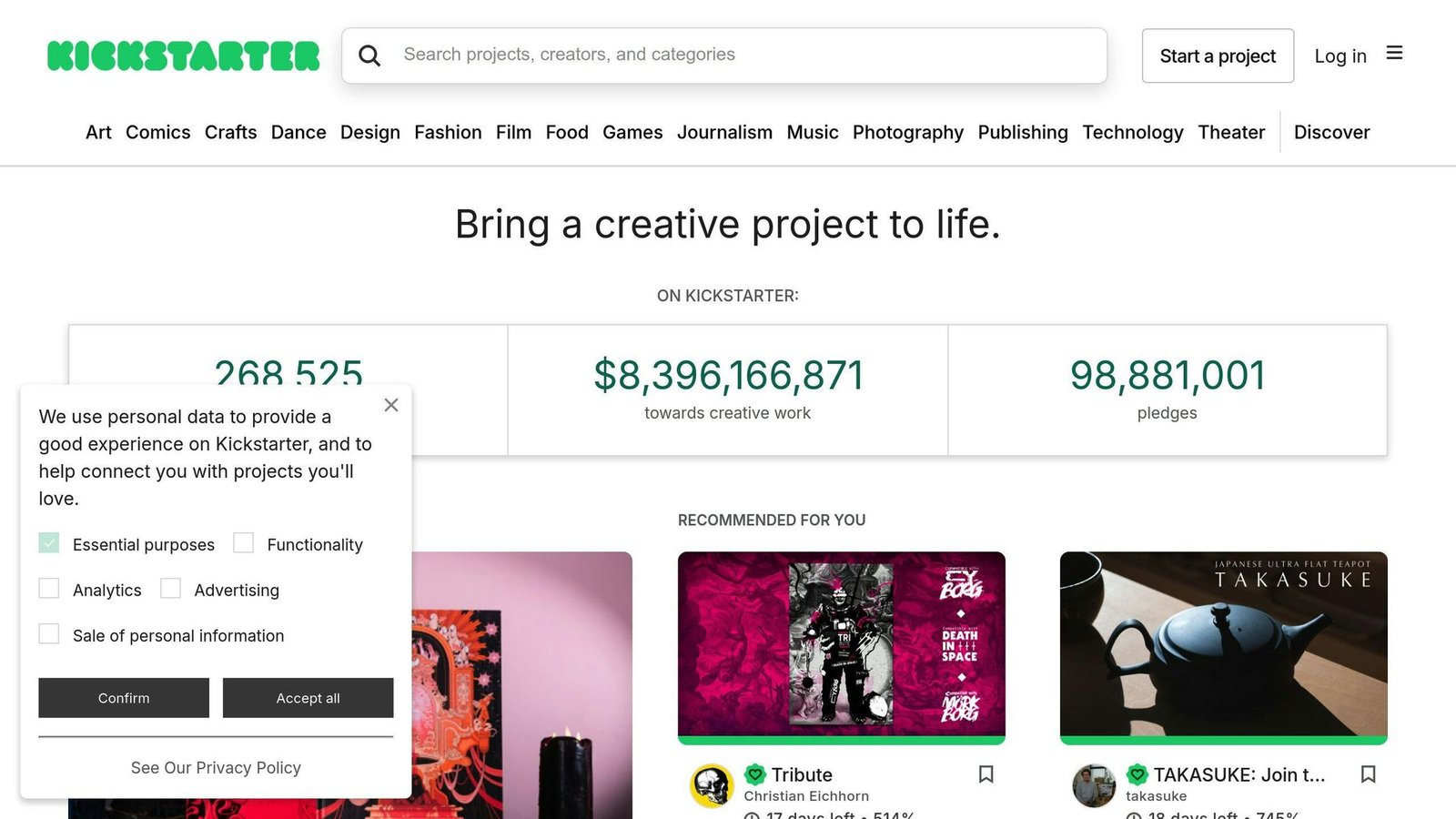
- Kickstarter (2009) — rewards-based funding for creative projects
- GoFundMe (2010) — personal and charitable fundraising
Equity crowdfunding for non-accredited investors followed in the US under the JOBS Act, which created the regulatory basis for ordinary investors to buy stakes in early-stage companies.
What are the four types of crowdfunding?
- Donation-based — backers give money to a cause and receive nothing in return. GoFundMe is the best-known platform. Suited to charities, medical costs and personal causes.
- Rewards-based — backers receive a reward, usually the product itself once it exists. Effectively a pre-order. Kickstarter and Indiegogo are the main platforms.
- Equity-based — backers receive shares and a financial return if the company succeeds. StartEngine, Wefunder and Republic operate in this space in the US.
- Debt-based — also called peer-to-peer lending. Individual lenders fund loans and receive interest. This category has shrunk considerably; see the correction below.
One correction to a common error. An earlier version of this article listed Kickstarter alongside GoFundMe as a donation-based platform. It is not. Kickstarter is strictly rewards-based and does not permit charity or personal-cause fundraising — projects must offer something and must be a project with a clear end, not an ongoing appeal. Sending a donation campaign to Kickstarter will get it rejected.
Which type is best?
Rewards-based crowdfunding is the most accessible starting point for a small business or a product idea. Nobody takes equity and nothing has to be repaid; the obligation is to deliver what you promised, which is a real obligation and the one campaigns most often fail.
Equity crowdfunding raises larger sums but brings shareholders, disclosure requirements and securities regulation. Do not enter it without advice.
Debt crowdfunding suits a business with predictable revenue that can service a loan. It is the only one of the four where you owe money regardless of whether the venture works.
Platform changes you need to know about
This is the section most crowdfunding guides never update. Four platforms that appear routinely in lists like this one no longer do what they are listed for.
- LendingClub is no longer peer-to-peer lending. It closed its retail notes platform in 2020, so individual investors can no longer fund consumer loans through it, and it now operates as a bank following its acquisition of Radius Bank. An earlier version of this article named LendingClub as a peer-to-peer option in four separate places. All have been corrected.
- SeedInvest is now part of StartEngine. StartEngine completed the acquisition in 2023 and seedinvest.com now points there. If SeedInvest is on your shortlist, StartEngine is the platform you are actually looking at.
- Funding Circle has exited retail peer-to-peer lending and sold its US business to iBusiness Funding in 2024. It is not an option for individual lenders.
- CrowdRise no longer exists. It was absorbed into GoFundMe, and the successor charity product has since been folded in again under GoFundMe’s own branding.
The pattern is worth noting in itself: the retail peer-to-peer lending category in the US is much smaller than crowdfunding guides written a few years ago suggest.
Is GoFundMe a type of crowdfunding?
Yes. It is donation-based crowdfunding.
- Campaigns typically cover medical bills, funeral costs and emergencies.
- Donors receive nothing beyond having helped.
- GoFundMe charges payment processing fees on donations; check its current fee page before launching, as the structure has changed over time and varies by country.
Other donation platforms exist, but several named in older guides have been acquired or closed, so verify a platform is still trading before you build a campaign on it.
The Four Types in Detail
Donation-based: no return expected
- Donors give to causes they care about
- Common for charitable, medical and community causes
- Success depends almost entirely on an existing network sharing it — platform discovery contributes far less than people expect
Reward-based: the pre-order model
- Backers fund in exchange for products, perks or experiences
- Kickstarter and Indiegogo dominate
- Tiered rewards drive higher average pledges
- The risk sits with delivery. Under-costing the reward is how funded campaigns still lose money — shipping and fulfilment are routinely underestimated
Equity-based: selling a stake
- Backers receive shares
- StartEngine, Wefunder and Republic operate in this space in the US
- Regulated under the JOBS Act, with disclosure and filing obligations
- You gain a large number of small shareholders, which affects later funding rounds. Understand the cap table consequences before you start
Peer-to-peer lending: debt from individuals
Prosper still operates a retail peer-to-peer marketplace. From Prosper’s own investor page, checked August 2026: investors can fund notes from $25, through taxable accounts or IRAs, and Prosper states a weighted average historical return of 5.2–5.3% on loans originated since July 2009. That is the vendor’s own figure for past performance, and past returns do not predict future ones.
- Loans are repaid with interest on a fixed schedule
- An alternative to bank finance, not a cheaper one by default
- Repayment is due whether or not the venture succeeds — the key difference from the other three models
Crowdfunding Platforms Compared
Kickstarter
Founded in 2009 and the best-known rewards platform. All-or-nothing funding: miss the target and nothing is collected, which protects backers and concentrates risk on the campaign.
Best for creative projects and consumer hardware needing validation. An earlier version of this article quoted a total-pledged figure for Kickstarter; that number is not currently published in a verifiable form on Kickstarter’s own site, so it has been removed rather than repeated.
Indiegogo
Supports rewards and flexible funding, where you keep what you raise even if the goal is missed. That reduces the campaigner’s risk and increases the backer’s, which is worth being honest about on your campaign page.
An earlier version of this article quoted total funds raised and a campaign count for Indiegogo. Neither could be sourced and both have been removed.
GoFundMe
Donation-based, no rewards or equity, and the standard choice for personal and charitable fundraising. Free to create a fundraiser, with payment processing fees deducted from donations.
Fundable and EquityNet
Both connect startups with accredited investors rather than the general public, which makes them a different proposition from Reg CF equity crowdfunding.
Fundable describes itself as a startup fundraising platform for attracting accredited investors, with a data room and investor research tools, and states a network of 20,000+ accredited investors. Note that Fundable states plainly on its own site that it is not a registered broker-dealer and does not advise on raising capital through securities offerings.
EquityNet describes itself as a marketplace for private investment deals, also citing a network of 20,000+ accredited investors.
An earlier version of this article credited Fundable with a network of over 100,000 professional investors. Fundable’s own site says 20,000+, so the figure has been corrected.
Crafting a Crowdfunding Strategy
Set a realistic target
- Work out what you actually need, including production, shipping, platform fees and payment processing.
- On an all-or-nothing platform, set the minimum that gets the project delivered, not the amount you would like.
- Show the budget breakdown on the campaign page. Backers respond to it.
Design reward tiers
- Offer a small number of clear tiers rather than a long list.
- Cost every tier fully before publishing it, including international shipping.
- Limited-edition tiers create urgency and are also the ones that most often cause fulfilment problems.
Build the pitch
- A short video that explains what it is, who made it and why it should exist.
- Say what the money is for, specifically.
- Be honest about what stage the product is at. Backers forgive delays far more readily than surprises.
Plan the promotion
- Promote on the platforms your audience uses — Facebook, X (formerly Twitter), LinkedIn, Instagram or Reddit, depending on the product.
- Build the audience before launch. Campaigns that hit their target usually raise a substantial share in the first 48 hours from people who already knew about it.
- Post updates throughout, and keep posting after funding closes. Silence during production is what turns a delay into a complaint.
Advantages and Disadvantages
The case for
- Validation — a funded campaign is evidence people will pay, which is stronger than survey interest.
- Audience — you finish with a list of customers, not just capital.
- No dilution or debt, in the rewards model.
The case against
- It is public — including the failure, if it fails, and competitors see the idea.
- Delivery pressure — you have taken money for something that does not exist yet, and consumer protection rules apply.
- All-or-nothing — on platforms that use it, missing the target means raising nothing.
- Fees and tax — platform and payment fees come off the top, and funds raised may be taxable income. Check before you spend it.
Conclusion
- Donation-based — GoFundMe. Nothing offered in return.
- Rewards-based — Kickstarter and Indiegogo. A pre-order with a deadline.
- Equity-based — StartEngine, Wefunder, Republic. Regulated, and it changes your cap table.
- Debt-based — Prosper. A smaller category than it was, after LendingClub and Funding Circle exited retail lending.
Before committing to any platform, confirm it still operates in the model you need. As the corrections above show, that is not a formality in this category.
More on this topic
Browse all 53 articles on Finance & Accounting, or jump straight to our buying guide: Best Accounting Software for Small Businesses.