Smartsheet is a work management platform that looks like a spreadsheet but behaves like a project and process tool underneath. Each sheet has rows, columns and formulas you would recognise from Excel, but rows can also carry attachments, comments, approvals, dependencies and automated reminders. It is aimed at teams that already run work in spreadsheets and want the structure and visibility without retraining everyone on unfamiliar software. It has been owned by Blackstone and Vista Equity Partners since going private in 2025.
What you can actually do with it
The sheet is the foundation, and the useful parts are what you layer on top of it.
- Work in the view that suits the job. The same data can be shown as a grid, Gantt chart, card board or calendar, so a project manager and a delivery team can look at one dataset differently.
- Run real project schedules. Task dependencies, critical path, baselines and resource allocation are proper features rather than columns you maintain by hand.
- Collect input through forms. Forms feed straight into sheets, which is how most teams handle intake requests, purchase approvals or field data without giving everyone edit access.
- Automate approvals and reminders. Workflow rules send approval requests, update-request emails, alerts and status changes based on conditions, replacing a lot of chasing.
- Roll data up across sheets. Reports and dashboards pull from many sheets at once, so leadership can see portfolio status without anyone assembling a weekly summary manually.
- Share without giving away seats. Contributors can view, comment and respond to update requests without a paid licence, and external guests can be granted access at higher tiers.
- Connect to the rest of the stack. Integrations cover Microsoft 365, Google Workspace, Slack, Salesforce, Jira and others, with an API for anything custom.
Who it fits best
Smartsheet fits operations managers, project managers and PMOs at organisations that are spreadsheet-native and coordinate work across several teams. Professional services firms, construction and engineering, marketing operations and IT project teams are common users, particularly where the same project structure repeats across many clients or sites.
For a smaller business, it makes sense when you have a handful of complex, multi-step processes with approvals and deadlines, and the current version lives in a shared Excel file that only one person truly understands. If your work is simple task tracking for a small team, a lighter project tool will be faster to adopt and cheaper to run.
Things worth knowing before you commit
- There is no free plan. Unlike most tools in this category, you cannot run it indefinitely for nothing — evaluation is via a trial, so budget from the start.
- Licensing distinguishes members from viewers. You pay per member with full editing rights while contributors and guests are free, which is favourable for wide sharing but requires you to model your access pattern carefully before buying.
- Key capabilities sit above the entry tier. Timeline views, workload tracking, unlimited automations and portfolio-level tools are gated by plan, and the entry tier also caps how many members it can hold.
- It rewards setup discipline. Sheet structure, column types and cross-sheet references need planning. Built ad hoc, it degrades into the same tangle of spreadsheets you were trying to escape.
- The interface shows its age in places. It is capable rather than delightful, and teams used to modern, opinionated project tools sometimes find it clunky.
Alternatives to compare it against
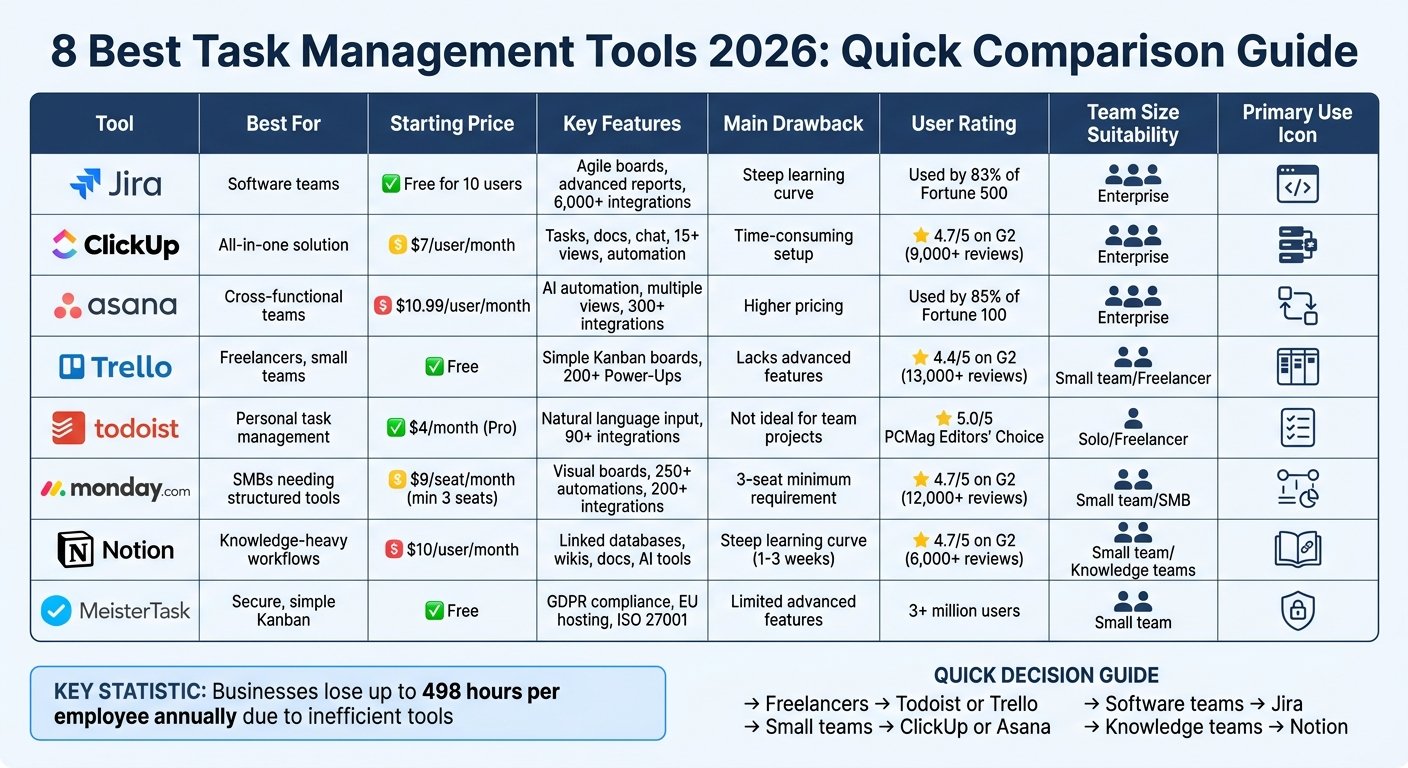
Asana and Monday.com are the usual comparisons for teams that want a friendlier interface and simpler task tracking, at the cost of Smartsheet’s spreadsheet depth. Airtable overlaps heavily if your need is structured data with relationships rather than project schedules. Microsoft Project remains the reference for heavy, formal scheduling, especially in organisations already committed to Microsoft — and Microsoft Planner or Lists may cover lighter needs at no extra cost. If your real requirement is reporting on data that lives elsewhere, a BI tool will serve you better than any work management platform.
Plan tiers, licensing rules and feature placement change regularly. Check Smartsheet’s own pricing page for current details before committing.
Further reading
- 10 Best Gantt Chart Software for Project Management 2024 — compares the timeline and dependency views that sit behind Smartsheet’s higher tiers.
- The 7 Best Project Management Software for Businesses in 2024 — the Asana and Monday.com shortlist you should price against before buying member seats.
- Waterfall Project Management: Complete Guide [2024] — the scheduling discipline that Smartsheet’s critical path and baselines are built for.
- Automate Your Business Processes: A Beginner’s Guide — how to design the approval and reminder workflows before you build them as sheet rules.
- 10 Tips for Choosing KPI Metrics for Dashboards — useful when deciding what the cross-sheet rollup dashboards should actually show leadership.
Have you used Smartsheet?
One sentence is enough. Would you pick it again, and why or why not? We publish the critical reviews too — that is the point.