
Disclosure: This page contains commercial links. BizBot may earn a commission from qualifying purchases. Paid placements do not buy a better ranking. Read our affiliate disclosure.
Customer support is where e-commerce businesses lose repeat buyers. This article covers ten customer support tools built for online retail, from AI-powered platforms to shared-inbox helpdesks.
Pricing note. Every price below was checked against the vendor’s own pricing page in August 2026. Most of the figures previously published here were wrong, some by a factor of three, and one add-on named here was a different company’s product entirely. We have also removed several statistics that carried no source. Confirm rates before budgeting.
-
Yuma AI
: AI ticket resolution with multilingual support. Performance-based pricing; no published rates. -
Gorgias
: Centralises support channels. Priced by ticket volume, not per agent. -
Zendesk
: Scalable omnichannel platform. Suite Team from $55 per agent per month paid yearly. -
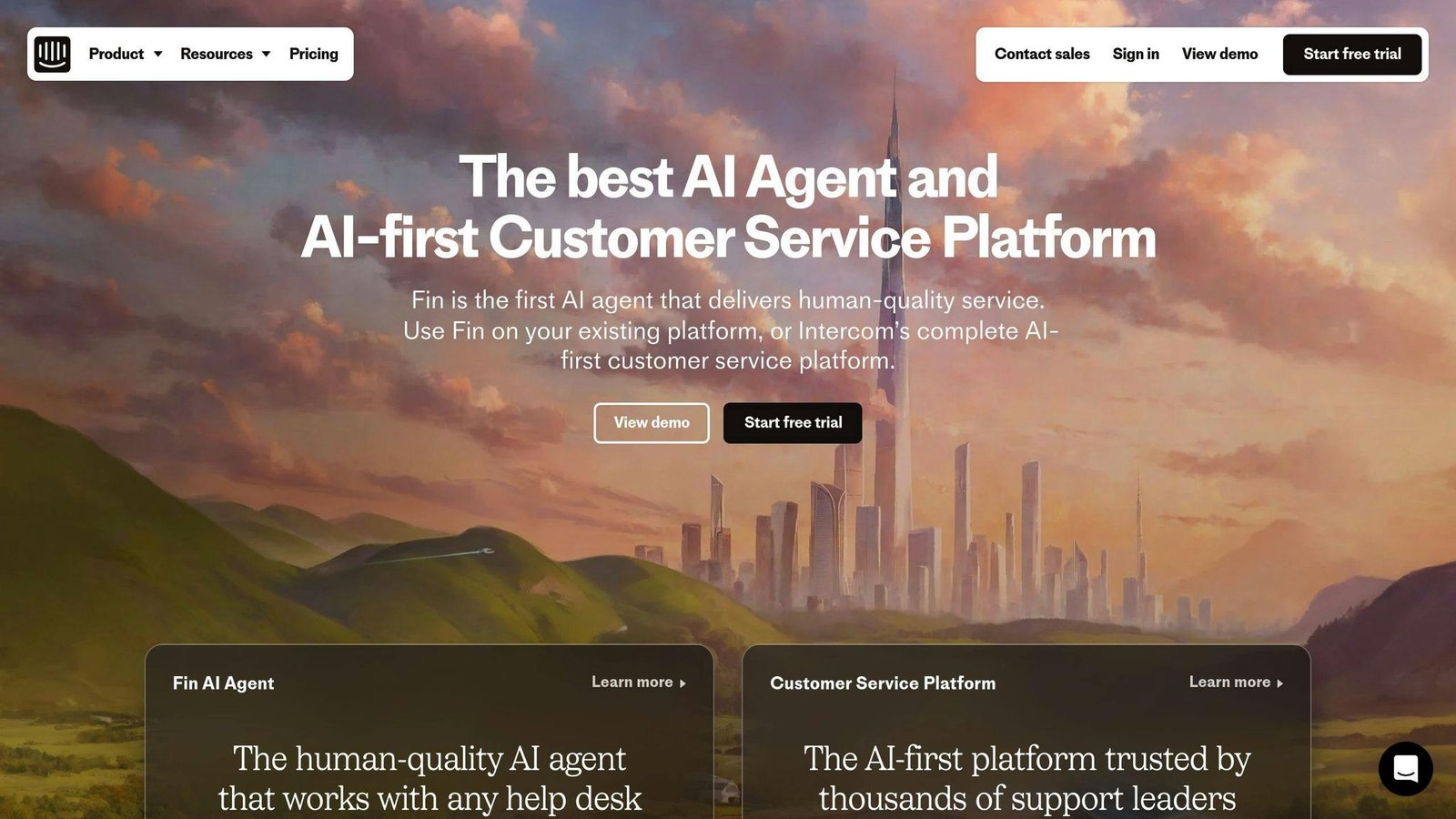
Intercom
: AI agent plus real-time messaging. Essential $29 per seat per month, plus per-resolution AI fees. -
Freshdesk
: Multi-channel with Freddy AI. Growth from $19 per agent per month billed annually. -
Tidio
: Live chat and Lyro AI. Starter $24.17 per month billed annually. -
Ada
: No-code AI agents. Custom pricing. -
Kustomer
: 360-degree customer view. No published pricing. -
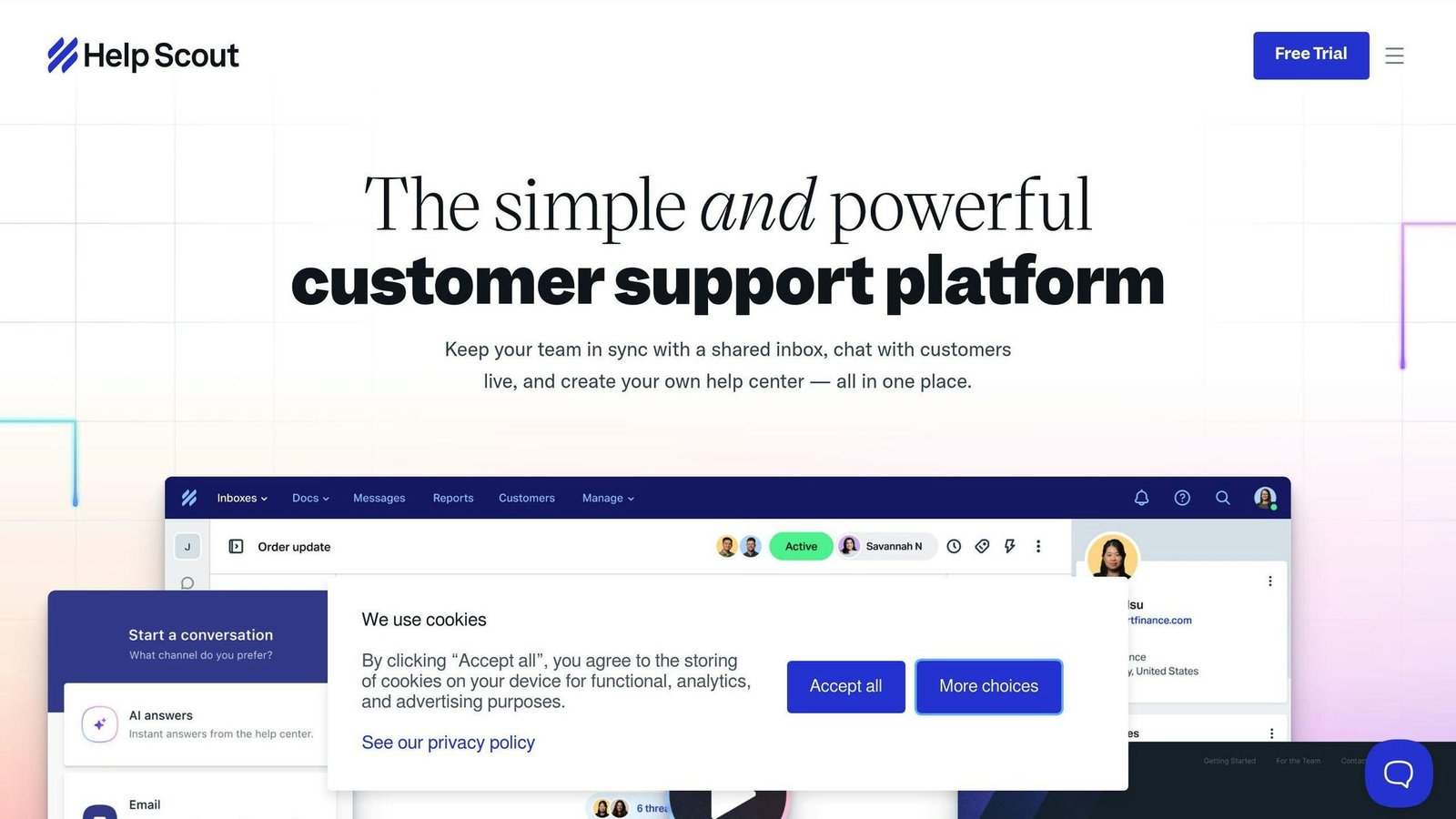
Help Scout
: Shared inbox and live chat. Standard $25 per user per month. -
Richpanel
: Self-service portals and AI agents. $99 per seat per month plus per-conversation AI fees.
Quick Comparison
Prices checked August 2026. Note how many different units appear in one column — per agent, per seat, per ticket, per resolution.
| Tool | Starting Price (USD) | Pricing unit | Best For |
|---|---|---|---|
| Yuma AI | Not published | Per resolved ticket | Small to medium businesses |
| Gorgias | Not displayed on the pricing page | Per ticket volume, plus per AI resolution | Shopify merchants |
| Zendesk | $55/agent/month (Suite Team, paid yearly) | Per agent, plus add-ons | Enterprise |
| Intercom | $29/seat/month (Essential) | Per seat, plus $0.99+ per Fin outcome | Growing businesses |
| Freshdesk | $19/agent/month (Growth, annual) | Per agent | Small to medium businesses |
| Tidio | $24.17/month (Starter, annual) | Flat, then usage-based at higher tiers | Small stores |
| Ada | Not published | Quoted on usage | High-volume automation |
| Kustomer | Not published | Quoted | High-volume, multi-channel |
| Help Scout | $25/user/month (Standard) | Per user, plus $0.75 per AI answer | Small to mid-sized teams |
| Richpanel | $99/seat/month | Per seat, plus $0.20 per AI conversation | Self-service-heavy stores |
Four of the ten do not publish a usable rate. That is worth knowing before you build a shortlist, because it means four sales calls.
1. Yuma AI
Core Purpose
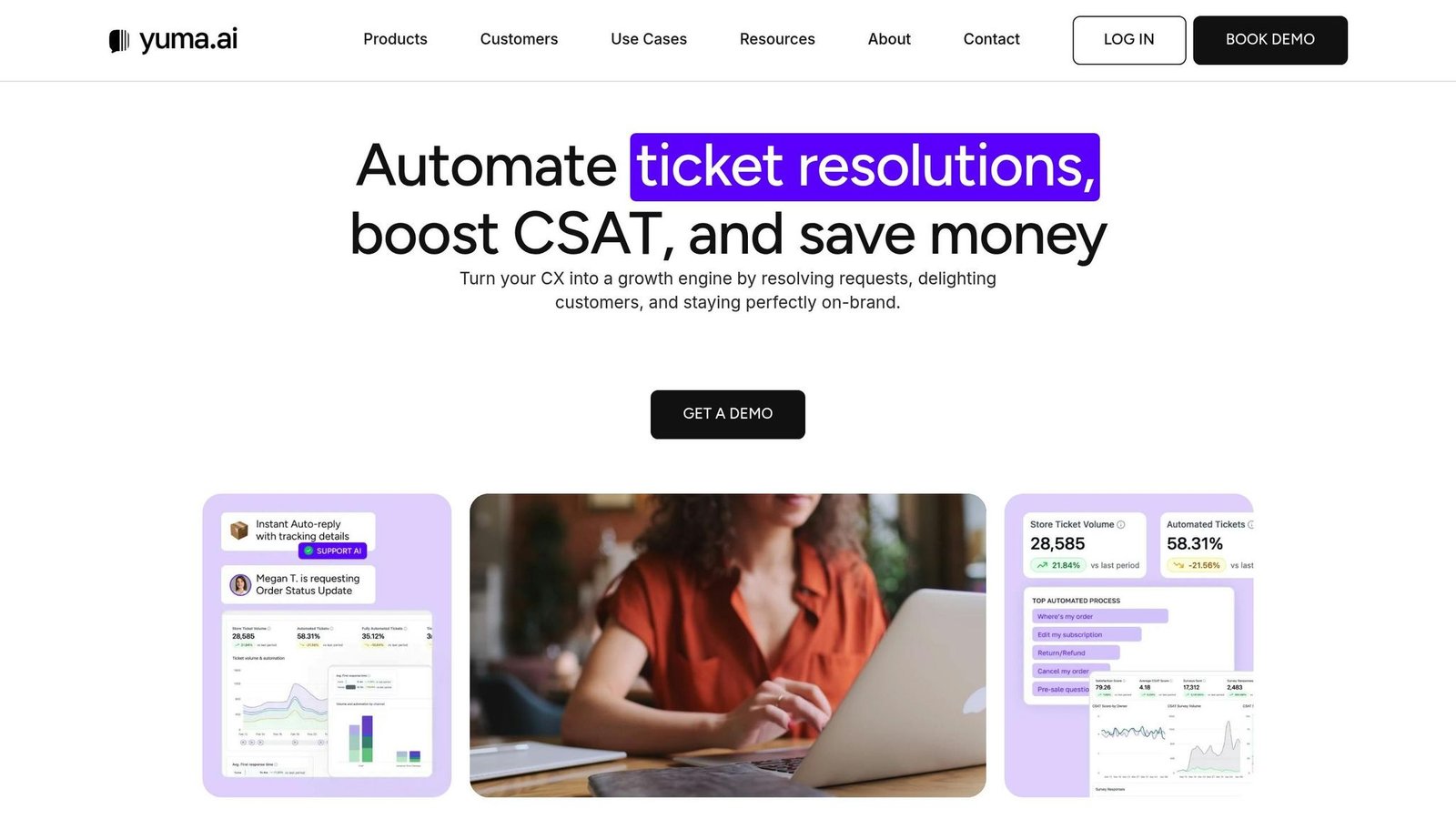
Yuma AI sits on top of an existing helpdesk and resolves tickets automatically rather than replacing your support platform.
Key Features
- AI agents that resolve tickets end to end
- Workflow automation through autopilots
- On-site AI chat for live interactions
- Social media automation
- CX metrics dashboard, including automated CSAT scoring
- Support for more than 50 languages
Best For
Small to medium e-commerce businesses that already run Zendesk or Gorgias and want automation without a migration. Strongest for Shopify and BigCommerce stores.
Pricing Model
Performance-based: Yuma states that “you only pay for tickets the AI fully resolves”. No rates are published, and the site routes to a demo booking. Yuma also advertises a “100% ROI guarantee on every contract” and says most brands reach meaningful automation within 90 days — both are the vendor’s own claims, not independently verified.
The practical consequence of per-resolution pricing: your bill rises when automation works, which is the right incentive but makes forecasting harder than a per-seat plan.
Integrations
Connects to helpdesk platforms including Kustomer, Re:amaze and Front, plus social channels and email ticketing.
2. Gorgias
Core Purpose
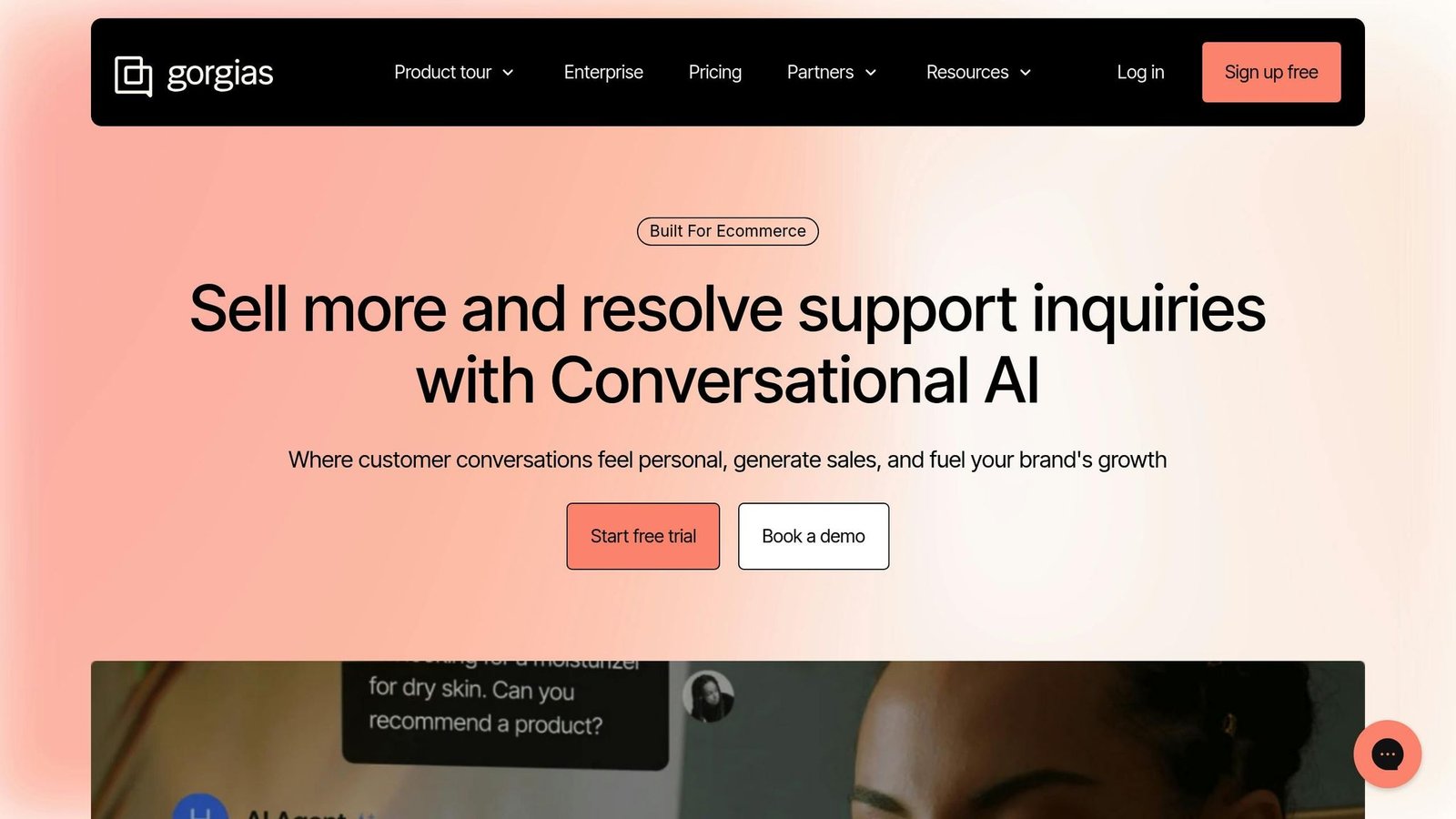
Gorgias pulls email, live chat, social and SMS into one dashboard aimed squarely at e-commerce.
Key Features
- Ticket triage using sentiment and intent detection
- Refunds and order edits from inside the helpdesk
- Macros and routing rules
- Unified inbox with full customer history
Best For
Small to medium direct-to-consumer brands, particularly Shopify merchants dealing with order-status, shipping and returns questions. Reporting is thinner than the enterprise platforms.
Pricing Model
The important structural point, which Gorgias states plainly: the helpdesk is never priced per agent. It scales on ticket volume, from 50 to 5,000 tickets a month, and all plans include unlimited users. The AI Agent is billed separately — you “pay only when it resolves a conversation”. Voice and SMS are volume-priced add-ons.
The specific tiers this article previously listed — $10 for 50 tickets, $60 for 300, $360 for 2,000 — did not render on the pricing page when we checked in August 2026, so they have been removed rather than carried forward. Get current figures from Gorgias directly.
Integrations
Shopify, WooCommerce, BigCommerce and Magento, with order history, returns and refunds available in the helpdesk. Also connects to Klaviyo, Yotpo, Recharge, Facebook Messenger, Instagram, Slack and shipping platforms.
3. Zendesk
Core Purpose
Zendesk unifies email, chat, phone, social and messaging in one platform, aimed at businesses running large support volumes.
Key Features
- Omnichannel console covering email, chat, voice and self-service
- AI-assisted replies and conversation summaries
- Knowledge base with AI ticket deflection
- Real-time agent assistance
- Reporting and analytics across channels
A correction here: earlier versions of this article credited Zendesk with “Supermoon” and the “Zia AI assistant”. Neither is a Zendesk product — Zia is Zoho’s AI assistant, and Supermoon is a separate company. Those references have been removed.
Best For
Enterprise e-commerce with complex, multi-region support operations. Overkill, and over-configurable, for a small team.
Pricing Model
The old “$19 per agent per month” figure conflated two different Zendesk product lines. $19 is the Support Team plan; the Suite plans are considerably more:
| Plan | Price |
|---|---|
| Suite Team | $55 per agent/month, paid yearly |
| Suite Professional | $115 per agent/month, paid yearly |
| Suite Enterprise + Copilot | Quoted |
Add-ons listed at the time of checking: Copilot $50/month, Workforce Engagement Bundle $50/month, Contact Center $83/month.
There is no “Agentforce AI add-on at $125 per user per month” — Agentforce is a Salesforce product, not a Zendesk one. That line has been removed.
Integrations
Shopify and WooCommerce for order tracking and returns, plus email, chat, phone, SMS, WhatsApp and Facebook Messenger.
4. Intercom
Core Purpose
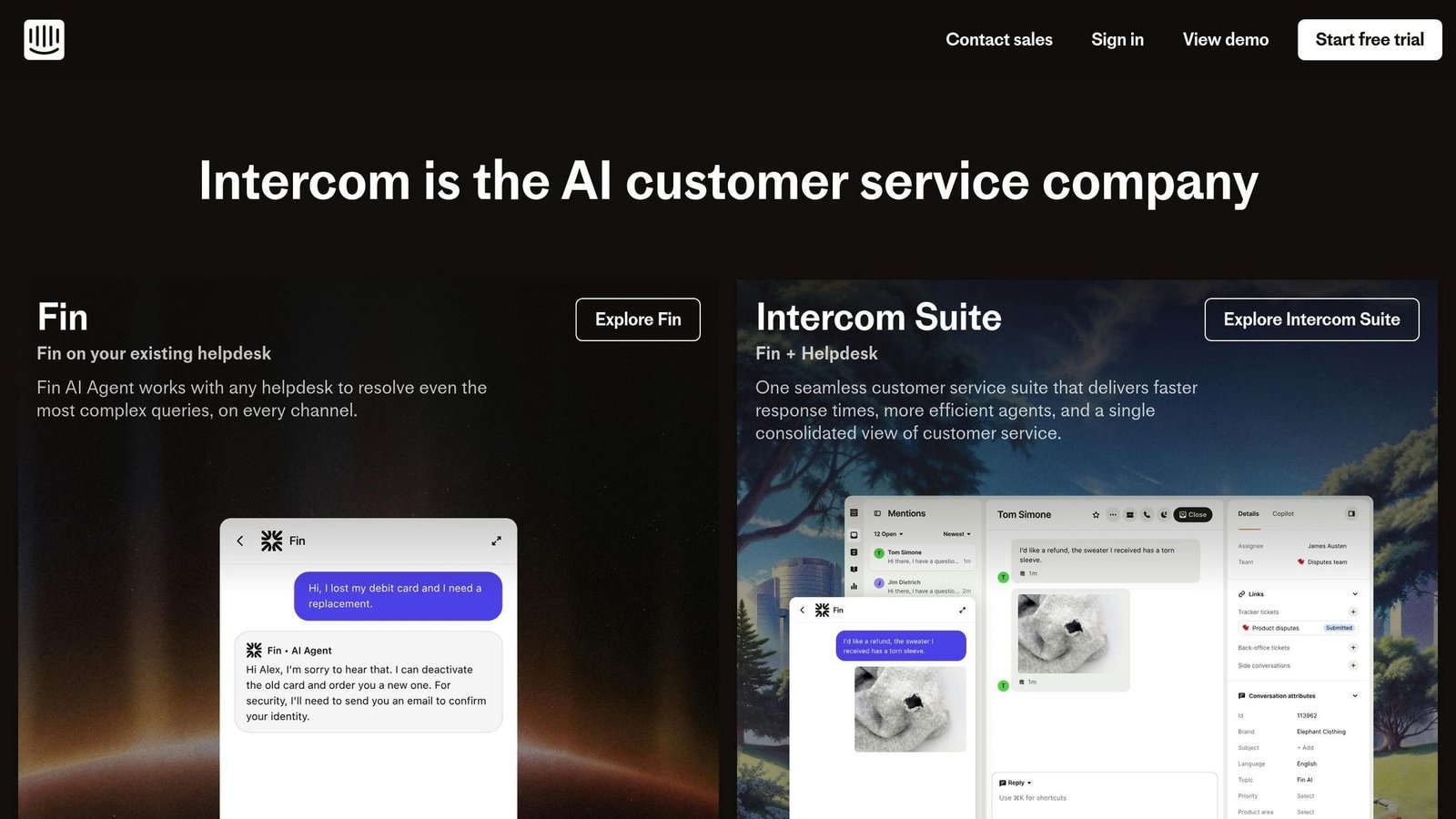
Real-time messaging with an AI agent in front of it, aimed at resolving common questions before a human sees them.
Key Features
- Fin AI Agent and Fin AI Copilot
- Unified inbox across chat, email and social
- Automation for order tracking, returns and FAQs
- Proactive and in-app messaging
- Support analytics
Best For
Growing e-commerce businesses that want to hold support headcount flat while volume rises.
Pricing Model
There is no $39 plan. Intercom charges per seat and per AI resolution, which is the detail that decides the bill:
| Plan | Per seat/month | AI cost |
|---|---|---|
| Essential | $29 | From $0.99 per Fin outcome |
| Advanced | $85 | From $0.99 per Fin outcome |
| Expert | $132 | From $0.99 per Fin outcome |
At 1,000 AI resolutions a month, that is at least $990 on top of the seat cost. Model your own volume before comparing Intercom with a flat-rate tool.
Integrations
Shopify, Magento and WooCommerce, plus CRMs, payment processors and marketing tools through the API and app marketplace.
5. Freshdesk
Core Purpose
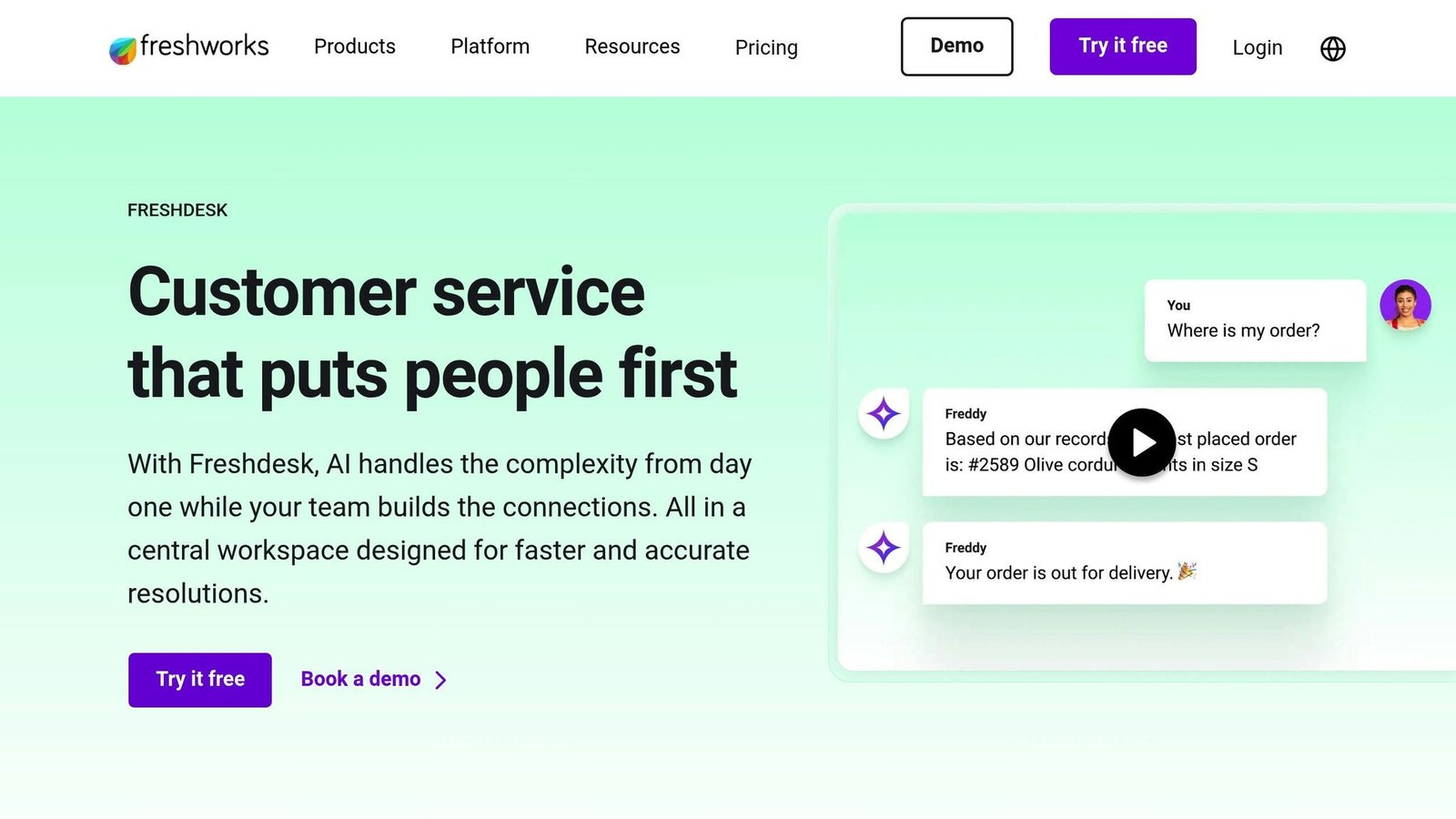
Email, chat, phone and social in one helpdesk, with automation to keep repetitive tickets away from agents.
Key Features
- Freddy AI for ticket categorisation and suggested replies
- Custom ticket workflows
- Self-service portals
- Detailed reporting
This section previously claimed that businesses using Freshdesk automation “have reported up to 30% fewer tickets and a 25% faster first response time”. No source was given for either figure and we could not find one, so both have been removed.
Best For
Small to medium e-commerce teams without dedicated technical resource.
Pricing Model
All three paid figures previously published here were too low. Current rates, billed annually:
| Plan | Price (billed annually) |
|---|---|
| Free | $0, for 2 users |
| Growth | $19 per agent/month |
| Pro | $55 per agent/month |
| Enterprise | $89 per agent/month |
Freshworks advertises a 20% saving for annual billing, so monthly rates are higher. The free plan covers 2 users, not the 10 agents this article used to claim. There is a 14-day trial of Enterprise.
Integrations
Shopify, WooCommerce and Magento for order details and returns, plus Slack, Salesforce, Mailchimp and social platforms.
6. Tidio
Core Purpose
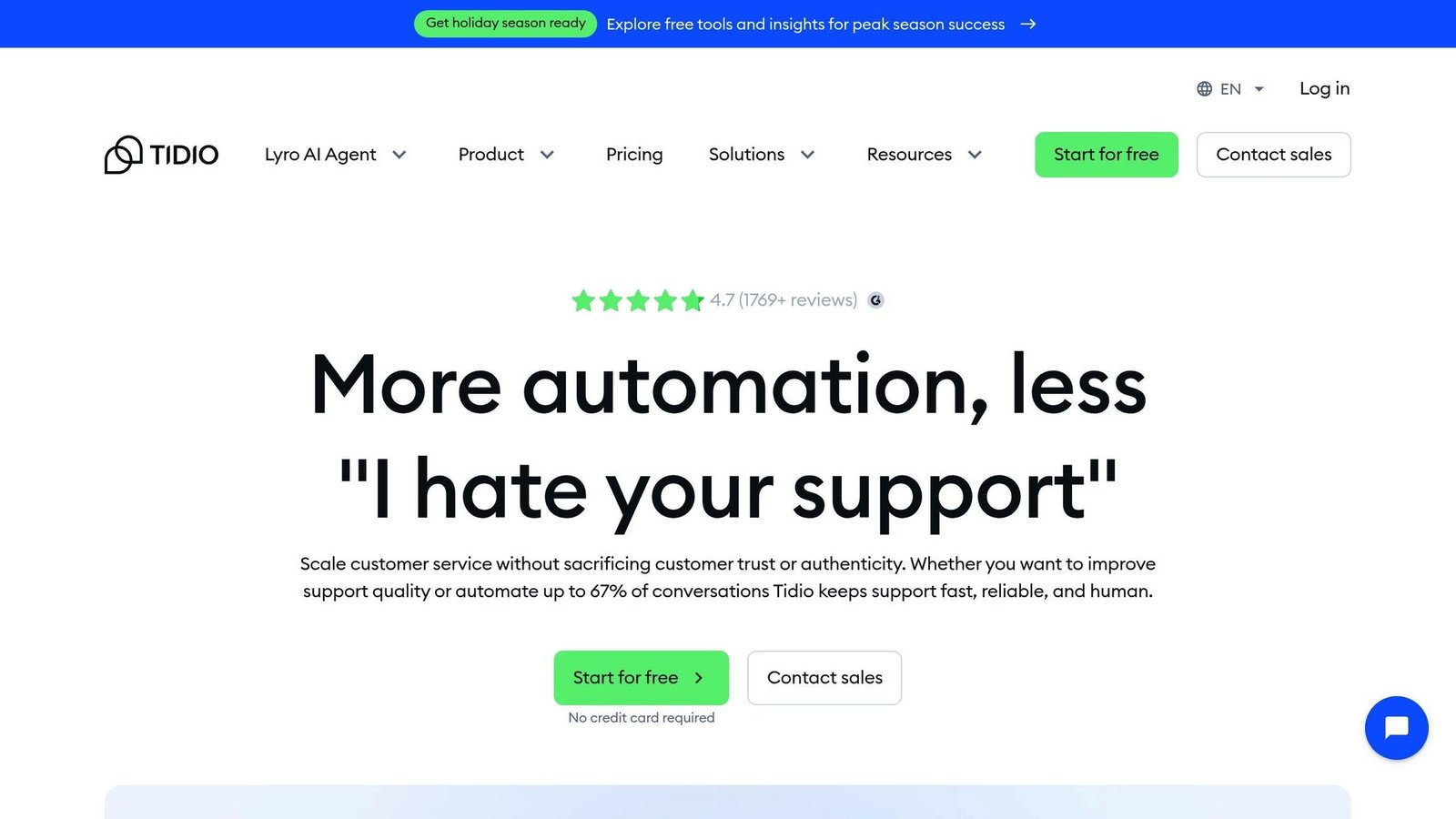
Email, live chat and social in one inbox, with the Lyro AI agent handling routine order, shipping and returns questions.
Key Features
- Lyro AI agent for common e-commerce questions
- Live chat and email automation
- Multichannel inbox
- Refunds and exchanges handled in-platform
Best For
Small stores that want AI chat without an enterprise contract.
Pricing Model
The $24.17 figure was correct, but it is the annual rate, not the monthly one:
| Plan | Price |
|---|---|
| Free | $0 |
| Starter | $24.17/month billed annually, $29.04 billed monthly |
| Growth | From $49.17/month |
| Plus | From $300/month plus usage |
| Premium | Quoted |
Above Starter, Tidio bills for conversations, AI conversations and Flows visitors on top of the base fee. Annual billing is advertised as two months free.
Integrations
Shopify and other major store platforms, plus email and social channels.
7. Ada
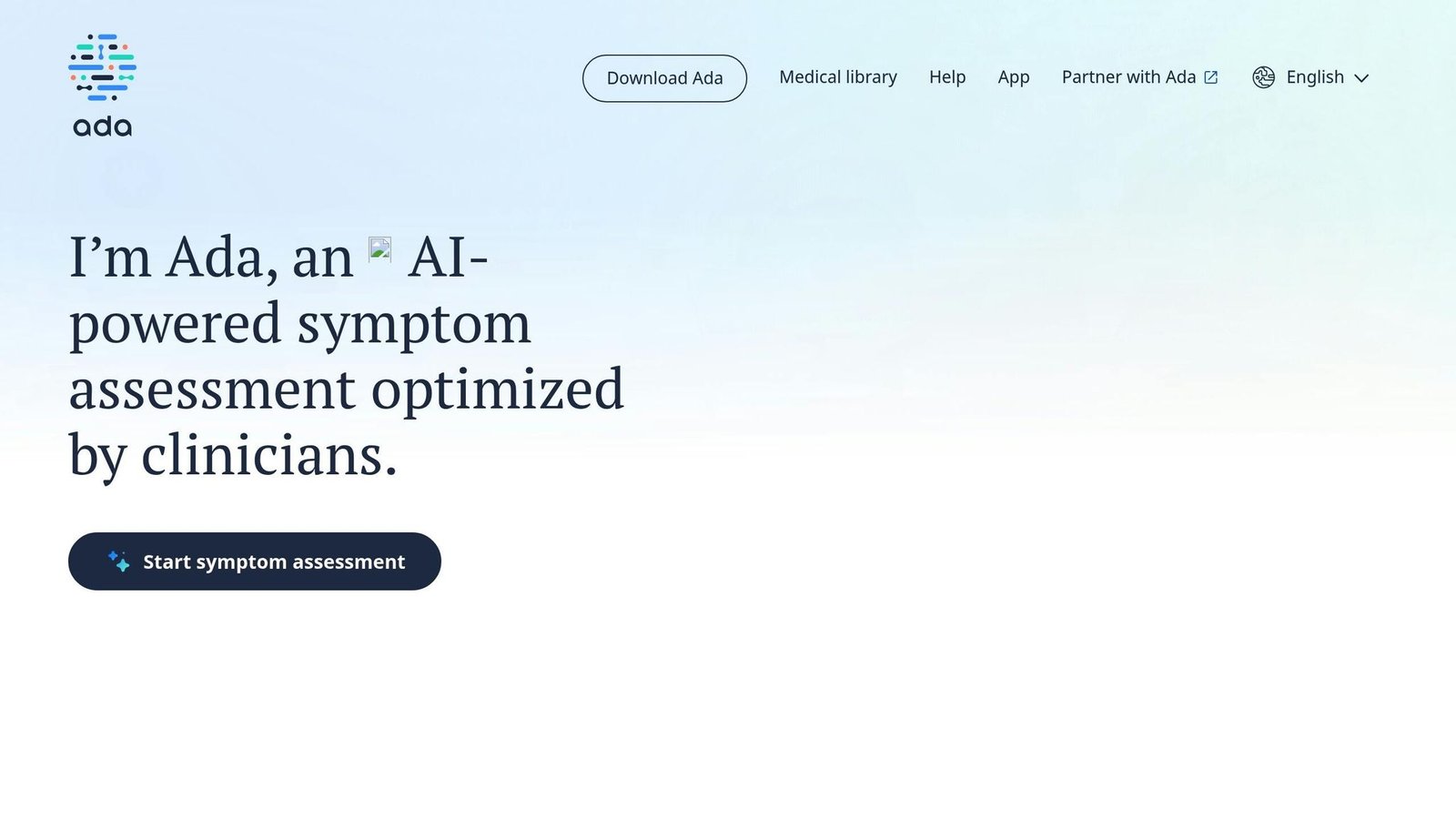
Check the domain. This article previously linked to ada.com, which belongs to a healthcare company, not the customer service vendor. Ada the AI customer service platform is at ada.cx. If you have been researching from an old link, you may have been reading about the wrong company.
Core Purpose
Ada automates customer conversations with AI agents that resolve, act and escalate. On its own site, Ada claims an “84% automated resolution rate” — that is the vendor’s figure, and your result will depend on how repetitive your ticket mix is.
Key Features
- A no-code interface for building and managing AI-driven chatbots without developer time
- Natural language handling for order status, returns, recommendations and FAQs
- Escalation to human agents on complex cases
- Multilingual support across chat, messaging and social
Best For
Businesses with high volumes of repetitive inquiries and international customers across time zones.
Pricing Model
Quoted, based on usage, interaction volume and integrations. No rates are published.
Integrations
Shopify, WooCommerce, Zendesk, Gorgias and Freshdesk, plus WhatsApp and Facebook Messenger.
This section previously stated that businesses using Ada “have reported up to a 30% reduction in support ticket volume and a 20% boost in customer satisfaction scores within just three months”. Neither figure was attributed to a named customer or study, so both have been removed.
8. Kustomer
Core Purpose
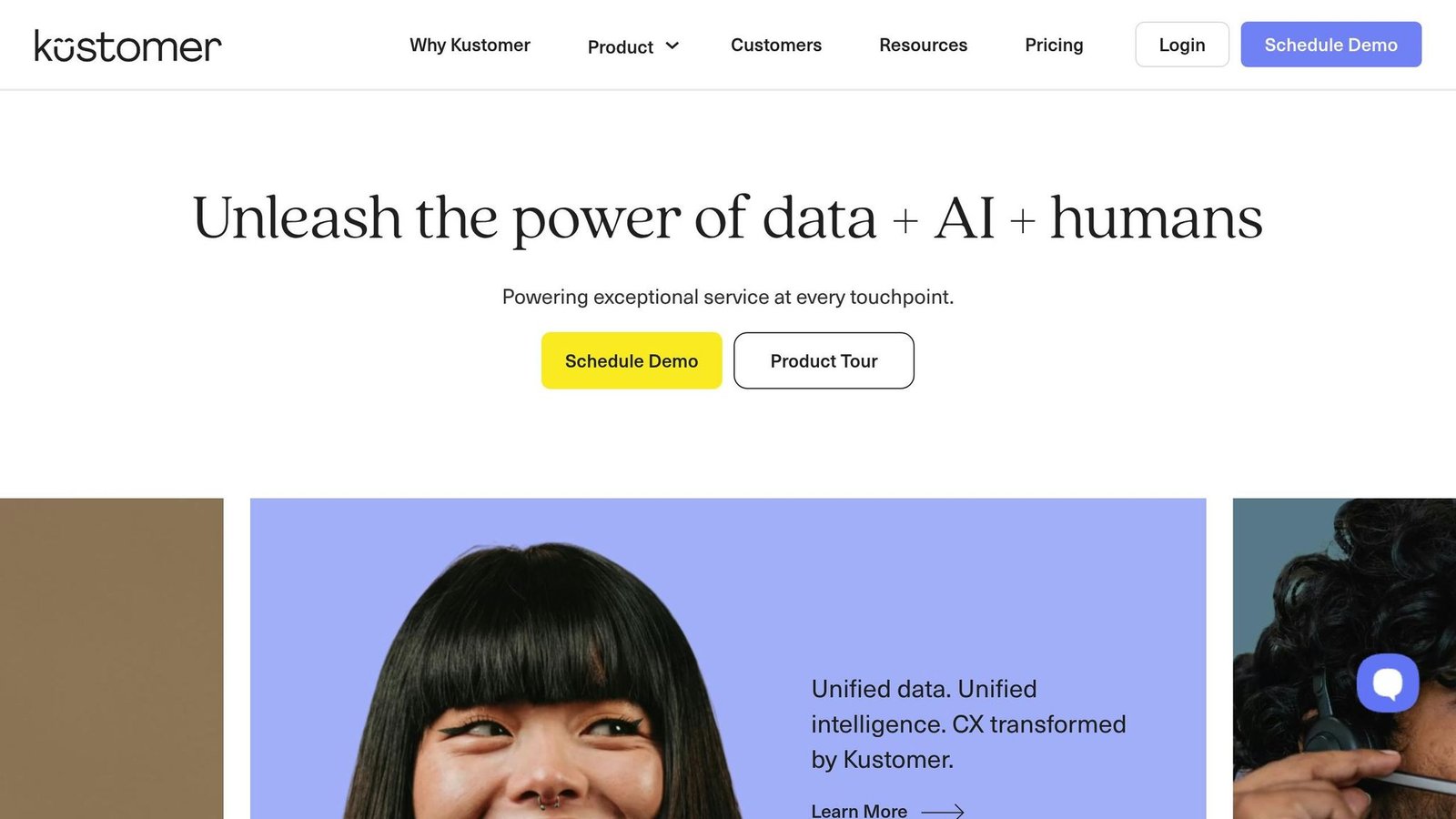
Kustomer centres on a single customer timeline rather than a ticket queue: every interaction, order and touchpoint in one view.
Key Features
- 360-degree customer timeline
- Kustomer IQ and AI agents for routing, sentiment and routine inquiries
- No-code workflow builder for returns, refunds and order updates
- Reporting on performance and satisfaction
Best For
High-volume retailers running several channels who want context rather than tickets.
Pricing Model
Kustomer does not publish pricing. Its page states plainly that “every CX team’s setup is different, so we don’t post one-size-fits-all pricing”, and routes visitors to an assessment or a demo. HIPAA support and implementation are chargeable add-ons.
The “Professional plan starts at $89 per user per month” figure previously carried here does not appear anywhere on Kustomer’s site and has been removed. So has the claim that customers “reported cutting average handle times by up to 30%, improving first contact resolution by 25%, and boosting agent productivity by 20–40%” — no source was given for any of those numbers.
Integrations
Shopify, Magento and BigCommerce, plus payment gateways, shipping tools, CRMs, WhatsApp, Facebook Messenger and Instagram DM.
9. Help Scout
Core Purpose
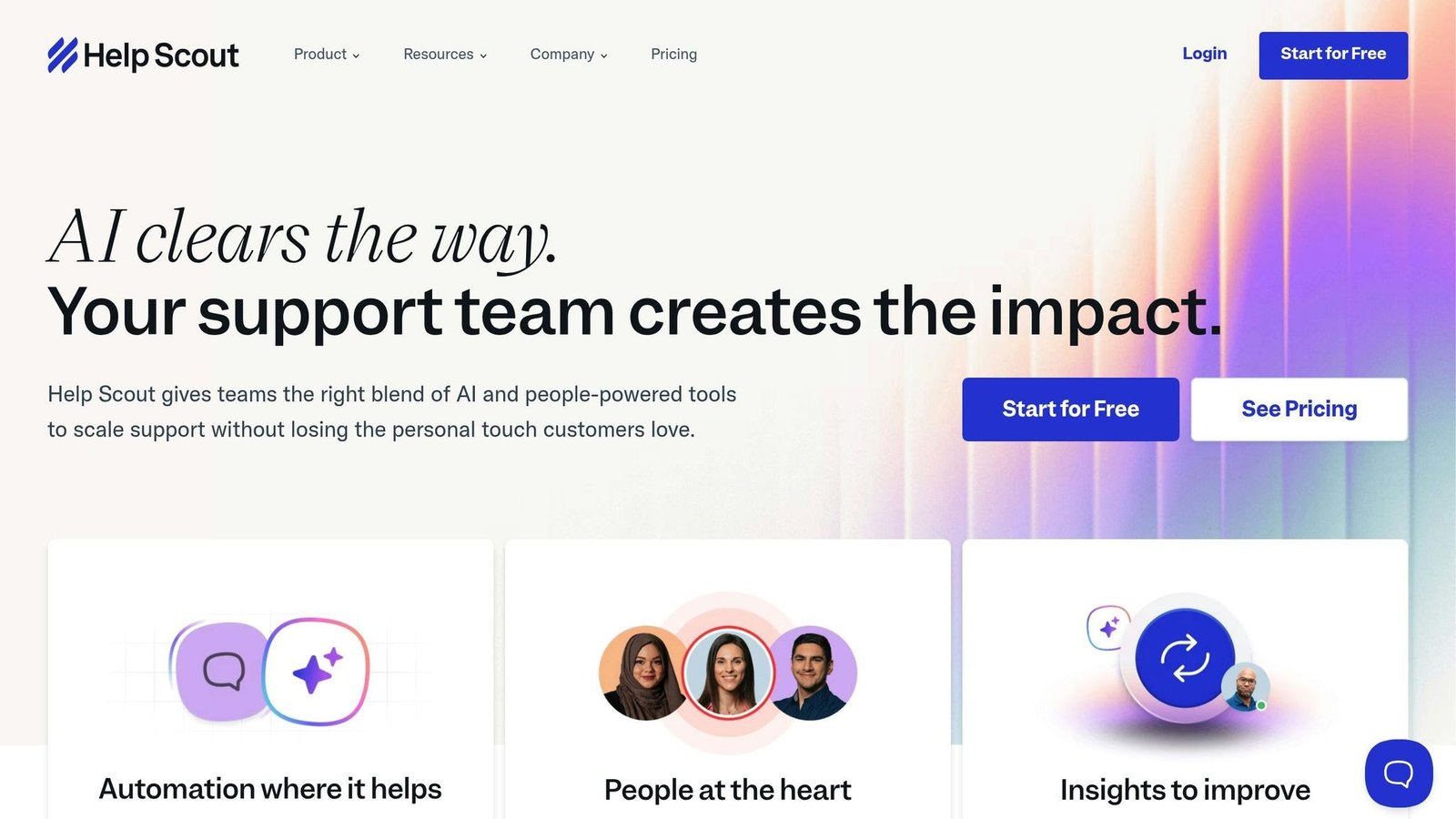
A shared inbox with live chat attached. The simplest tool on this list to get a small team running.
Key Features
- Shared inbox with assignment and collaboration
- Beacon chat widget embedded in the store
- Answers, which serves knowledge base content automatically for common questions
- Drafts for pre-written replies
- Reporting on response time, resolution speed and satisfaction
Best For
Small to mid-sized stores that cannot staff 24/7 live support and want automated answers covering the gaps.
Pricing Model
Help Scout does publish rates, which the previous version of this article said it did not — and the $20 figure quoted in the summary table was wrong. Monthly rates:
| Plan | Price (billed monthly) |
|---|---|
| Free | $0, up to 5 users |
| Standard | $25 per user/month |
| Plus | $45 per user/month |
| Pro | $75 per user/month |
Annual billing saves 16%. AI Answers is charged separately at $0.75 per resolution. The “4.4/5 rating on major review platforms” previously quoted here has been removed — no platform or date was cited.
Integrations
Shopify, WooCommerce and Magento for order and customer data, plus marketing, productivity and analytics tools.
10. Richpanel
Core Purpose
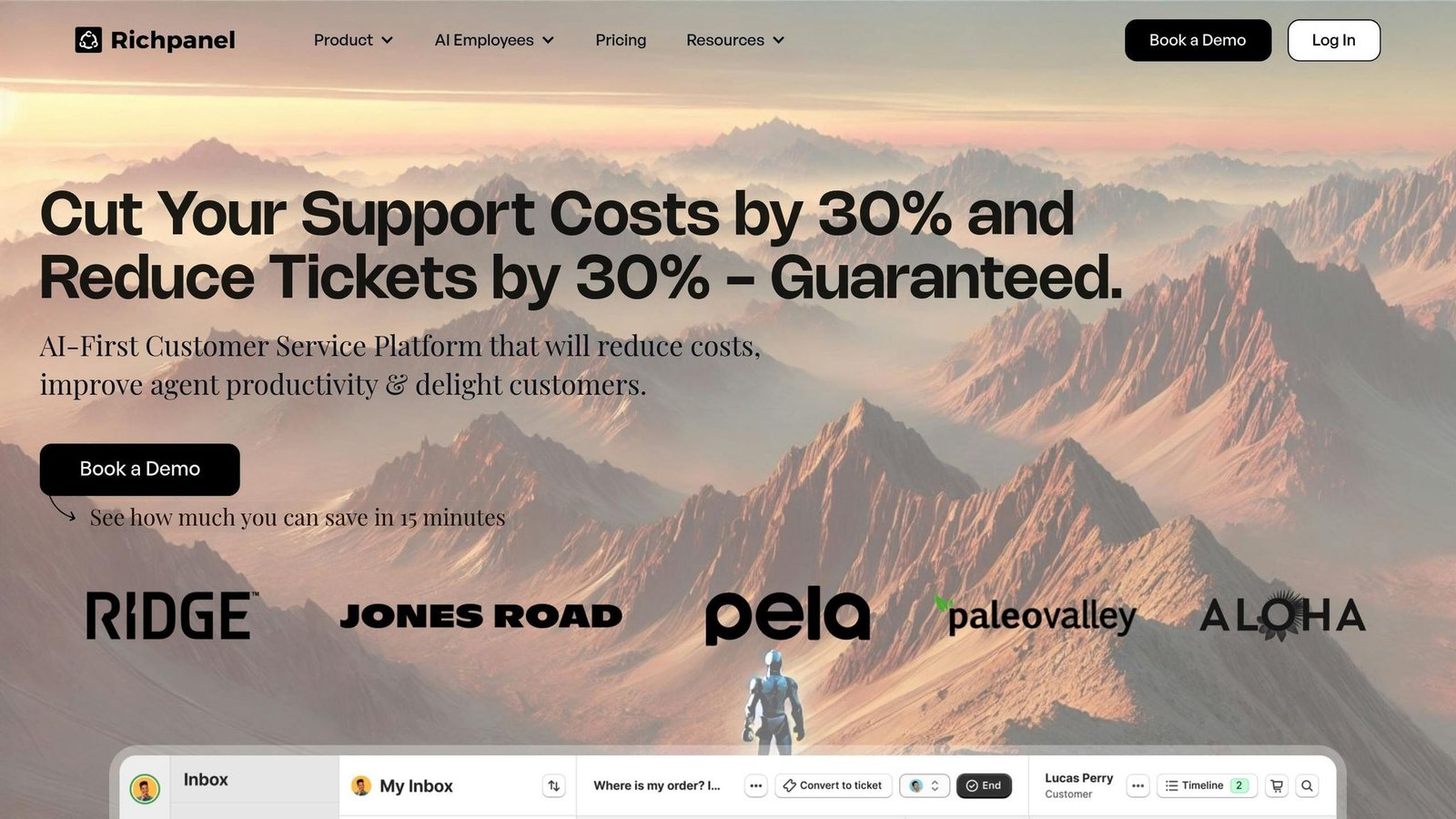
Richpanel leans on self-service: a branded portal where customers handle order tracking, returns and FAQs themselves, with agents picking up what is left.
Key Features
- Customisable self-service portal
- Multichannel inbox across email, chat and social
- Automated ticket routing
- Analytics and reporting
Best For
Stores with a high proportion of repetitive order-status and returns queries.
Pricing Model
The pricing model has changed completely since this article was written. There is no “$249 a month for 1,000 conversations” plan. Current published rates:
| Item | Price |
|---|---|
| Helpdesk seat | $99 per seat, per month |
| AI agents | $0.20 per AI-handled conversation |
| Returns and exchanges add-on | From $99 per month |
The QA agent, social media agent and self-service portal are included at no extra fee and run on the same conversation meter. The “deflects up to 60% of repetitive tickets” claim has been removed as unsourced.
Integrations
Major e-commerce platforms, plus email and social channels.
Key Insights from the Comparison
Pricing models
Four different units appear across these ten tools, and they are not comparable:
- Per agent or seat: Zendesk from $55, Intercom from $29, Freshdesk from $19, Help Scout from $25, Richpanel $99
- Per ticket volume: Gorgias, which explicitly does not charge per agent
- Per resolution: Yuma AI, and the AI layers of Gorgias, Intercom ($0.99+), Help Scout ($0.75) and Richpanel ($0.20)
- Quoted only: Ada and Kustomer
The pattern worth noticing: AI is increasingly billed per resolution on top of the seat fee, not included in it. A per-seat price that looks cheap can carry a usage bill several times larger.
AI capabilities
Yuma AI is built around performance-priced resolution. Gorgias focuses on triage and sentiment. Tidio’s Lyro handles live chat automation. Intercom’s Fin and Ada’s agents aim at full resolution. Vendors’ automation percentages are marketing claims, not benchmarks — treat them as an upper bound on a very repetitive ticket mix.
E-commerce integrations
All ten connect to Shopify. The differences are in depth: whether an agent can issue a refund or process a return without leaving the helpdesk, which is where the time actually goes.
Conclusion
These tools split into two groups. Traditional helpdesks — Zendesk, Help Scout, Freshdesk — consolidate channels and manage tickets. AI-first tools — Yuma AI, Ada, and increasingly Gorgias and Intercom — try to resolve tickets before an agent sees them.
Three practical points:
- Team size. Below about 20 agents, per-seat platforms stay cheap and AI usage fees dominate the bill. Above that, the per-seat cost dominates.
- Pricing unit. Convert every quote into a monthly total using your own ticket volume and headcount. Nothing on this page is comparable until you do.
- Integration depth. If your agents still have to open Shopify in another tab, the tool has not saved you anything.
All prices in this article were checked against vendor pricing pages in August 2026 and should be confirmed before budgeting.
FAQs
How do I choose a support tool for my team size and budget?
Start with the pricing unit rather than the feature list. Work out your monthly ticket volume and agent headcount, then price each option on both. A per-ticket tool such as Gorgias behaves very differently from a per-seat tool such as Zendesk once volume moves.
What AI features actually matter?
Automatic resolution of order-status, shipping and returns questions, because that is the bulk of e-commerce support. Ask what happens on failure: whether the AI escalates cleanly with context, and whether you are billed for a conversation the AI could not resolve.
Why does e-commerce platform integration matter?
Because it decides whether an agent can see an order and act on it in one place. Order history, shipping status and account data in the ticket view removes the tab-switching that makes support slow, and lets refunds and returns be processed without leaving the helpdesk.
More on this topic
Browse all 21 articles on Customer Support, or jump straight to our buying guide: Best Customer Support Tools for Small Teams.