Turning free users into paying customers is the core challenge for app-based businesses. Whether you’re running a freemium model or offering free trials, the goal is to convert users efficiently while keeping a balance between what you give away and what you charge for. Here’s what you need to know:
- Freemium vs. Free Trial: Freemium attracts far more signups and converts a much smaller share of them. Free trials attract fewer, higher-intent users and convert a larger share, especially when payment details are taken upfront.
- Key Conversion Factors: Onboarding, trial design, user segmentation, and clear upgrade prompts. Timing and urgency matter, particularly around feature limits and milestones.
- Upgrade Strategies: In-app messages, push notifications, and email, aimed at users at the right moment. Simplify payment with one-tap options and multiple methods.
- Data-Driven Insights: Cohort analysis and predictive scoring identify high-potential users and let you test trial lengths and pricing properly.
A note on the numbers: an earlier version of this guide quoted specific conversion percentages for each model, a named company’s results from adding countdown timers, and several consumer-behaviour statistics about impulse purchases and the best time of day to send email. None of them could be sourced, and two separate claims in the same section carried the identical figure, which is usually a sign that a number has been copied rather than measured. They have all been removed. Your own funnel data is the only benchmark worth optimising against anyway.
Free-to-Paid Conversion Models Explained
Choosing the right conversion model shapes everything downstream. Each has different strengths and different failure modes.
Freemium vs. Free Trial: What’s the Difference
The freemium model offers a permanently free version with limited features, letting users build habits and discover value slowly. A free trial gives full access for a fixed period, forcing a quicker evaluation.
Freemium is low-friction, so it brings volume: anyone can sign up without commitment. The trade-off is that most of those users never intended to pay and never will, so the converting share is small. Free trials attract fewer people with higher intent, so a larger share convert. Taking payment details upfront raises that share again, for the obvious reason that it filters out anyone unwilling to commit before they have decided.
| Model | User Volume | Conversion | Best For |
|---|---|---|---|
| Freemium | High volume, low friction | Small share of a large base | Apps where value builds gradually over time |
| Free Trial | Lower volume, high intent | Larger share of a smaller base | Feature-rich apps with immediate value |
Neither is inherently better. Freemium suits products with network effects or where usage itself creates value. Trials suit products a user can judge in a week.
How to Calculate Conversion Rates
The formula is straightforward:
Conversion Rate = (Number of Paying Customers ÷ Total Number of Free Users) × 100
If 250 of 10,000 free users convert, that is 2.5%.
Timing changes the answer a lot. In freemium, conversions trickle in over 30 days, 90 days, or a year, so any single figure needs a window attached to it. For trials, the rate is usually measured at trial end, which understates it if you get later conversions.
Use cohort analysis to see which acquisition channels and time periods produce users who actually pay. Also track “qualified conversions”, excluding users who signed up and never returned. A headline conversion rate that includes dead accounts tells you about your signup form, not your product.
What Affects Conversion Rates
- User experience and onboarding: if users cannot see the point of the app quickly, they leave before any pricing decision arises.
- Trial design and feature access: too limited and users never see the value; too generous and there is no reason to upgrade. This is the hardest judgement in the whole model.
- Product-market fit: conversion optimisation cannot rescue a product people do not need. If your rate is very low, check this before rewriting your paywall copy.
- Timing and urgency: asking for payment details upfront raises conversion of those who start, and lowers the number who start. Whether that is a good trade depends on your acquisition cost.
- User segmentation: power users who engage deeply during the free period convert at a much higher rate than casual users. Measure them separately or the average hides everything useful.
- Infrastructure and costs: supporting a free tier costs real money. If serving free users is expensive, freemium may not be viable regardless of conversion rate.
User Onboarding and Activation Best Practices
The first few minutes after install decide most of what follows. Onboarding that shows value quickly sets up everything else.
How to Personalize the Onboarding Process
A one-size-fits-all flow wastes the attention you have. Ask a few questions at signup to learn what the user is trying to do, then show the features that serve that goal rather than all of them.
A productivity app might ask whether the user is a student, a professional, or a team lead. A fitness app might ask about current activity level. A beginner benefits from guided tutorials; an experienced user wants shortcuts and gets irritated by hand-holding.
Behavioural triggers refine this further. Someone exploring settings wants to know about customisation; someone who went straight to the core feature wants to be left alone to use it.
Feature Discovery and Activation Checklists
Activation checklists walk users through the actions that demonstrate value. What counts as activation depends on the app: for a project management tool it might be creating a project, inviting a colleague, and adding tasks.
Keep the list short and specific. “Set up your first project in under 2 minutes” beats “Explore features” because it names an outcome and bounds the effort.
Progress indicators make completion feel achievable, and a small acknowledgement when a step is done does no harm. Gamification helps at the margin; it does not substitute for the app being useful.
Static tutorials fail because they front-load information before it is needed. Contextual guidance – tooltips and inline hints that appear at the moment of relevance – works better. Adaptive checklists can skip ahead for fast learners and offer more support to users who stall.
User Segmentation for High-Potential Customers
Most free users will never pay. That is normal, and chasing all of them equally wastes effort.
Behavioural segmentation is the practical approach: score actions by how much they indicate intent, and target users who cross a threshold. Set the scores from your own data on which behaviours preceded past conversions, not from a template.
Usage patterns reveal a lot. Power users who repeatedly hit feature limits are the clearest upgrade candidates, because they have already demonstrated they need more than the free tier gives. Users who invite colleagues tend to be worth more over time.
Act on the segmentation. Target high-intent users with personalised email, in-app prompts, or a temporary preview of premium features. For lower-potential users, build engagement first; an upgrade prompt to someone who has not yet found the product useful is just noise.
Upgrade Strategies and Payment Process Tips
Upgrading is about timing, message, and removing friction from payment.
When to Show Upgrade Prompts
The best moments are friction points and milestones.
When users hit a feature limit – storage full, usage cap reached, premium tool locked – they are already experiencing the value and the constraint at the same time. An upgrade offer there is relevant rather than intrusive.
Milestones work too. Completing a project, holding a streak, reaching a goal: acknowledge the achievement first, then mention what more is available.
Natural pause points are the third option: after saving a document, finishing a workout, completing a level. Start subtle, and only escalate for users who keep engaging.
Multi-Channel Communication for Upgrades
- In-app messages: best for immediate, contextual offers. Short, benefit-focused, easy to dismiss, and tied to what the user is doing right now.
- Push notifications: useful for returning lapsed users, but only if they carry something worth reading. A push that is purely a sales pitch trains people to disable notifications, which costs you the channel permanently.
- Email campaigns: the place for detail on premium features. Trigger them off behaviour – hitting a limit, viewing a premium section – rather than on a fixed schedule.
Coordinate the channels so they build on each other rather than repeating. Test send timing against your own audience; general advice about the best hour of day is not reliable across products or time zones, and we removed the specific claims this article used to make about it.
Making Payment Processes Simple
A clunky checkout undoes good targeting.
One-tap payment through Apple Pay and Google Pay removes card entry and billing addresses entirely. For mobile purchases this is the single highest-value checkout improvement available.
Offer alternatives too. Some users prefer PayPal or other wallets, and losing a sale over payment method choice is an avoidable loss.
Show full pricing upfront, including what renews and when. If you have tiers, use a plain comparison table. Hidden renewal terms generate chargebacks and one-star reviews, which cost more than the extra conversions they win.
Keep checkout short: auto-fill what you know, minimise fields, use sensible defaults. Allow social login, or let users pay first and create an account after.
Handle errors properly. “Payment failed” tells the user nothing. Say what went wrong and what to try next.
How to Structure Trials and Offers
Trial structure balances giving users enough time to see value against giving them a reason to decide.
Trial Length and Format Options
Apps that deliver value immediately – productivity tools, entertainment – generally suit short trials, in the region of a week or two. Complex software that needs configuration or integration needs longer, because a trial that expires before the user has finished setting up converts nobody.
The right length is testable. Run two cohorts at different durations and compare conversion and retention at 90 days, not just at trial end. A shorter trial that converts more people who then churn is not an improvement.
Two formats:
- Opt-in trials: payment details required upfront. Fewer starts, higher conversion among those who start, and less support load from people who never intended to buy.
- Opt-out trials: start automatically without payment details. More starts, lower conversion, and a larger top of funnel to work with.
Which is right depends on your acquisition cost. If traffic is expensive, opt-in wastes less of it. If it is cheap, opt-out gives you more users to learn from.
Creating Urgency with Limited-Time Offers
Deadlines do move decisions, because an offer with no expiry can always be considered tomorrow. Countdown timers, trial expiry reminders and limited-time discounts all work on that principle.
This section previously cited a named company’s results from adding countdown timers, along with figures on impulse purchasing and shopper behaviour by time of day. We could not source any of them, and one figure appeared twice attached to two different claims. All removed.
What we will say plainly: keep urgency genuine. A countdown that resets when the page reloads is a lie your users will notice, and the trust it costs you is worth more than the conversions it buys. If the offer really does expire, say so. If it does not, do not pretend.
Layering works: a trial expiry reminder combined with a genuine time-limited discount gives users a real reason to decide now rather than a manufactured one.
Choosing the Right Trial Model
Match the model to your app’s complexity and your acquisition budget. Opt-in for committed users and expensive traffic; opt-out for reach and cheap traffic. Then measure, because the answer for your product is an empirical question, not a matter of principle.
Subscription Management and Business Tools
Using Subscription Management Platforms
Subscription management platforms handle billing, payment processing and engagement tracking. Without one, working out what drives conversion is guesswork.
- Automated billing: collects payment and cuts manual error.
- Revenue insights: shows where income actually comes from.
- Promotional management: creates and tracks offers without engineering work.
The most valuable feature is usually the least exciting one: dunning and failed-payment recovery. Involuntary churn from expired cards costs real revenue from customers who wanted to stay, and recovering it is cheaper than acquiring replacements.
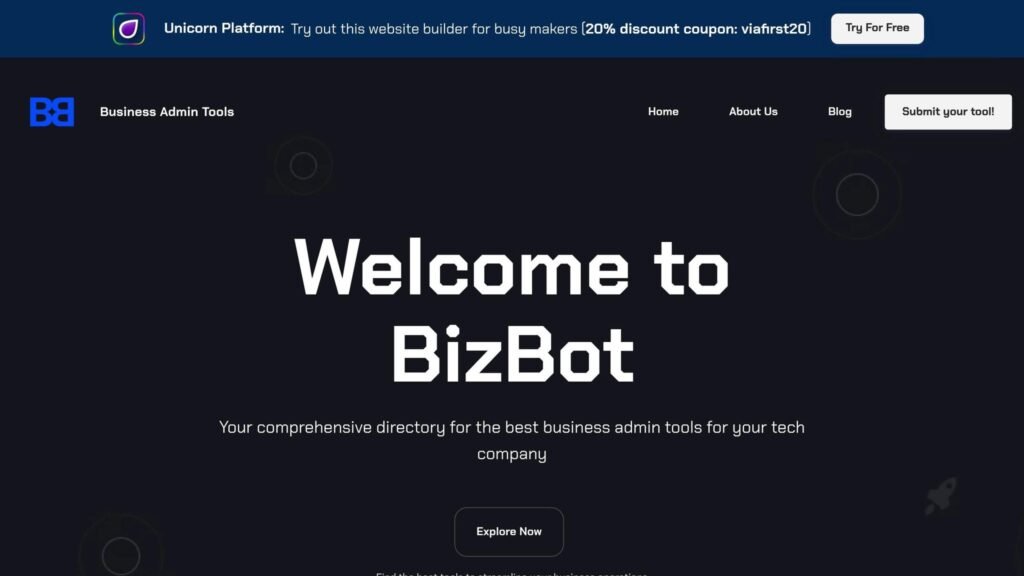
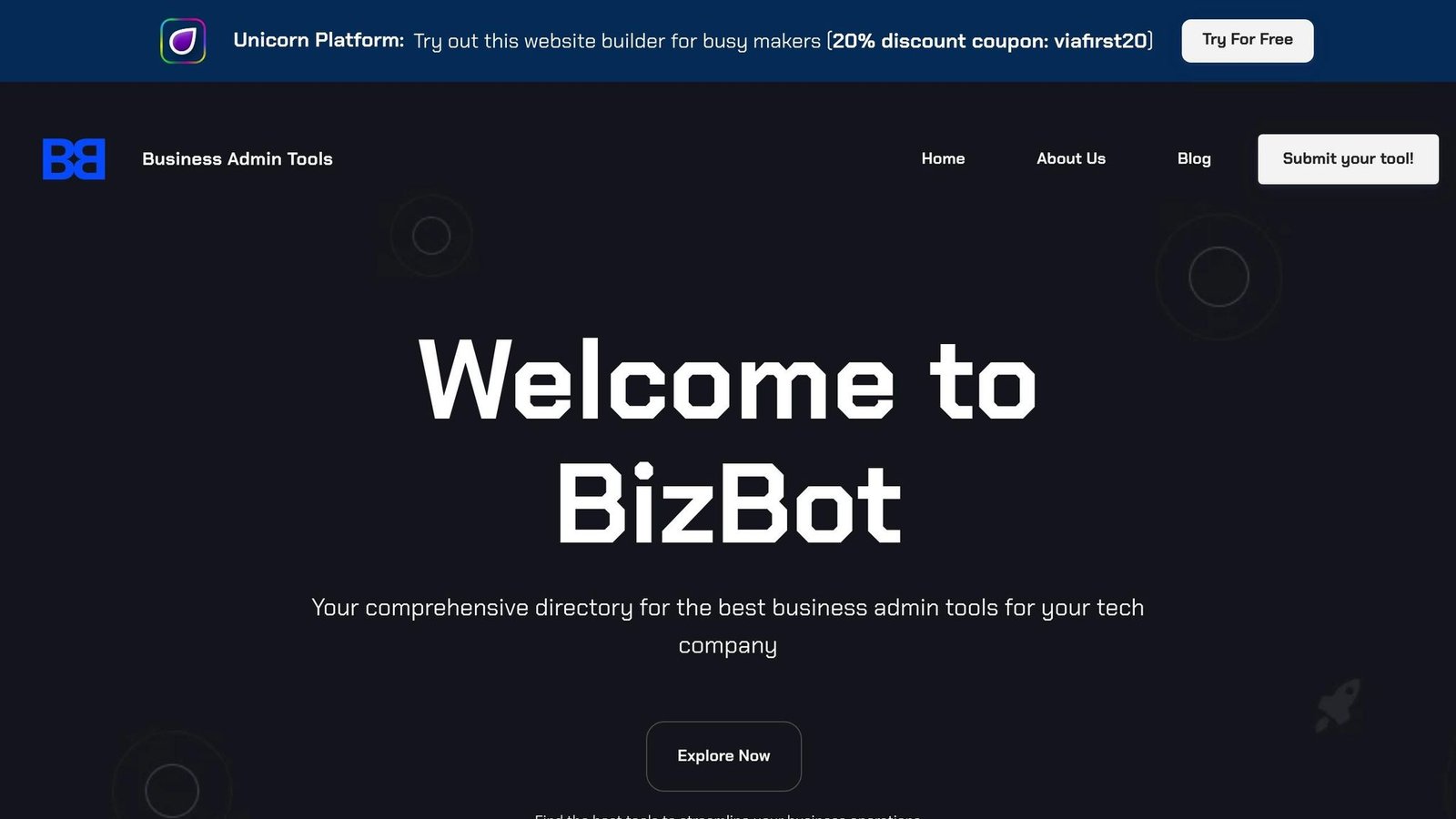
BizBot for Business Management
Beyond billing, a growing app needs accounting, legal, HR and other operational tooling.
BizBot maintains a directory of business tools across categories including:
- Accounting software
- Banking services
- HR tools
- Board management and shareholder registers
Useful once you are past the point where a spreadsheet and one accountant cover it. Before that, it is a solution to a problem you do not have yet.
Improving Conversions Through Analytics
Subscription management data paired with product analytics gives you the whole journey from install to paid.
Cohort analysis tracks users who started trials at the same time, which is how you tell whether a change to onboarding or trial length actually did anything. Revenue attribution links income to channels, which is how you stop funding acquisition that brings volume but no revenue.
Predictive scoring on feature usage, session frequency and engagement lets you spot likely converters before the trial ends, and target them while it still matters. Track completed onboarding, premium feature attempts, and responses to upgrade prompts as the input events.
Key Takeaways for Free-to-Paid Conversions
There is no single trick. What works is a system where users progress toward paying because the product earned it.
User experience is the foundation. Onboarding that shows value fast, personalised where you can, with activation checklists and segmentation to identify who is worth pursuing.
Timing decides whether prompts land. Too early and you interrupt someone who has not yet found the value. Feature limits and milestones are the natural moments.
Trial structure matters, and it is testable. Match length to complexity, then run the experiment rather than taking a figure from an article – including this one.
Operational tools remove distraction. Subscription platforms handle billing and recovery. Directories like BizBot help with the rest of the admin once you are large enough to need it.
Your own data beats published benchmarks. That is why the benchmark figures that used to appear here are gone. Cohort analysis, revenue attribution and predictive scoring on your own users will tell you more than any industry average, because the average includes hundreds of products nothing like yours.
FAQs
How can I identify users who are most likely to upgrade from free to paid subscriptions?
Look at behaviour and engagement patterns: frequent use of key features, time in the app, and consistent return visits. Cohort analysis comparing users who upgraded against those who did not will show you which behaviours actually preceded payment in your product.
Also track Product Qualified Leads – users who engage with the product and show interest in premium features. Build your scoring from your own historical data rather than a generic model.
How should onboarding showcase premium features?
Show what premium does early, in the context of what the user came to do. Tailor it: introduce the premium capability that addresses this user’s stated goal, not the whole feature list.
Use prompts near the relevant free feature rather than a generic paywall, and frame the message around the problem it solves. Users upgrade when they can see the specific thing they are missing.
How can I use data to optimise trial periods and pricing?
Test trial lengths as cohorts and compare not just conversion but retention 90 days later. A shorter trial that converts more people who then cancel is a worse outcome that looks like a better one.
Use A/B testing on price, and watch churn alongside conversion. Analytics on in-trial behaviour lets you personalise upgrade prompts to what a given user has actually used.
The point of all of this is to replace inherited assumptions with measurements from your own product.
More on this topic
Browse all 44 articles on Marketing & Growth, or jump straight to our buying guide: Best Marketing and CRM Tools for Small Businesses.