Project management software is for teams who have outgrown a spreadsheet and a group chat and keep losing track of who owes what by when. The choice usually goes wrong for one reason: people buy the tool with the most features rather than the one their least enthusiastic colleague will update on a Friday afternoon. An abandoned board is worse than no board, because everyone still trusts it.
How to choose
Does anyone report upward?
If a manager, client or board needs a status view, you need dashboards, dependencies and dates that roll up. If it is six people keeping each other straight, that machinery is overhead and a simple to-do model holds better.
Is the work billable?
Agencies need time, budgets and profitability attached to the same tasks people already open. Bolting a separate timer onto a general project tool means double entry, and double entry decays.
Structured project or flexible database?
Some teams run repeatable projects with phases and deadlines. Others manage a pipeline of records — clients, assets, applications — that happens to need tasks. The second group is better served by a flexible database.
The tools in this category
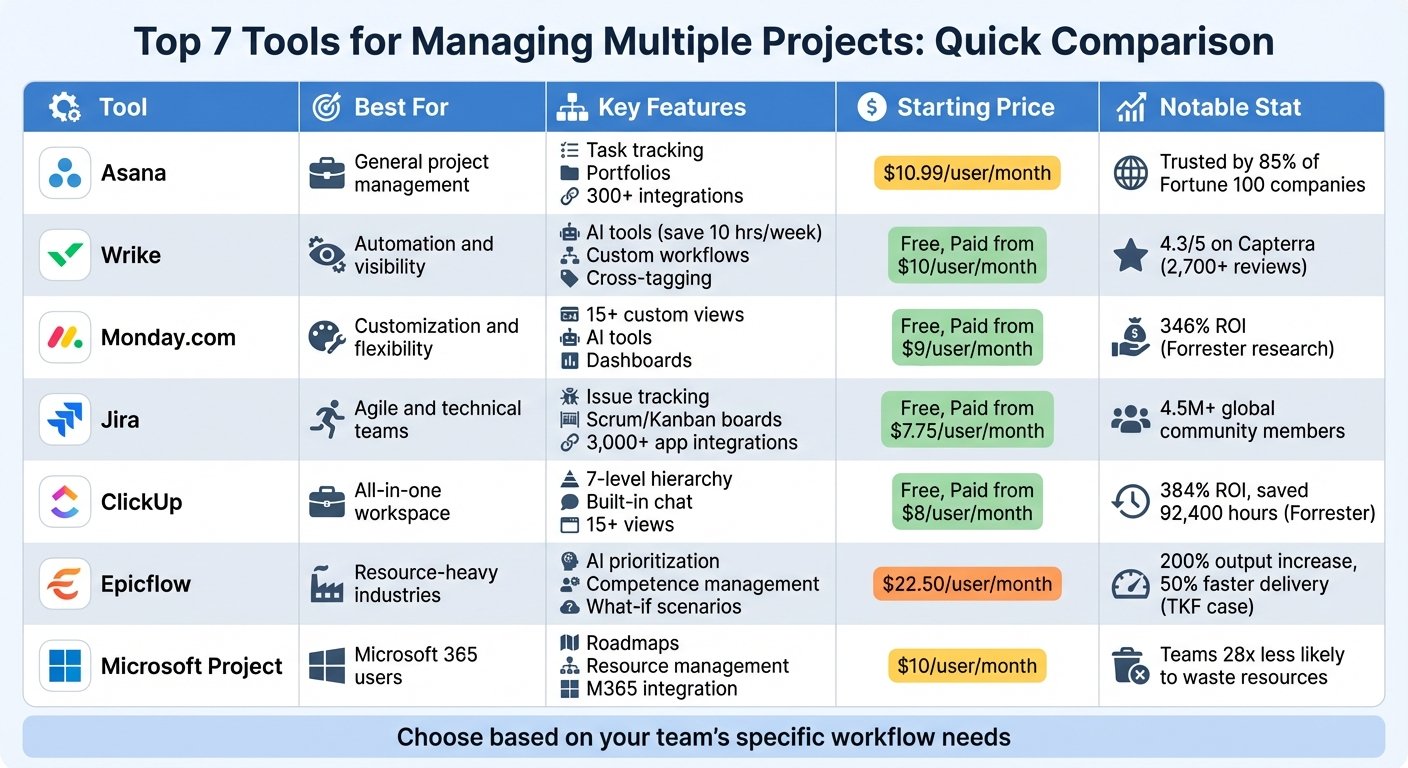
- Basecamp — best at keeping messages, to-dos and schedules on one uncluttered page; suits small teams that want less software, not more.
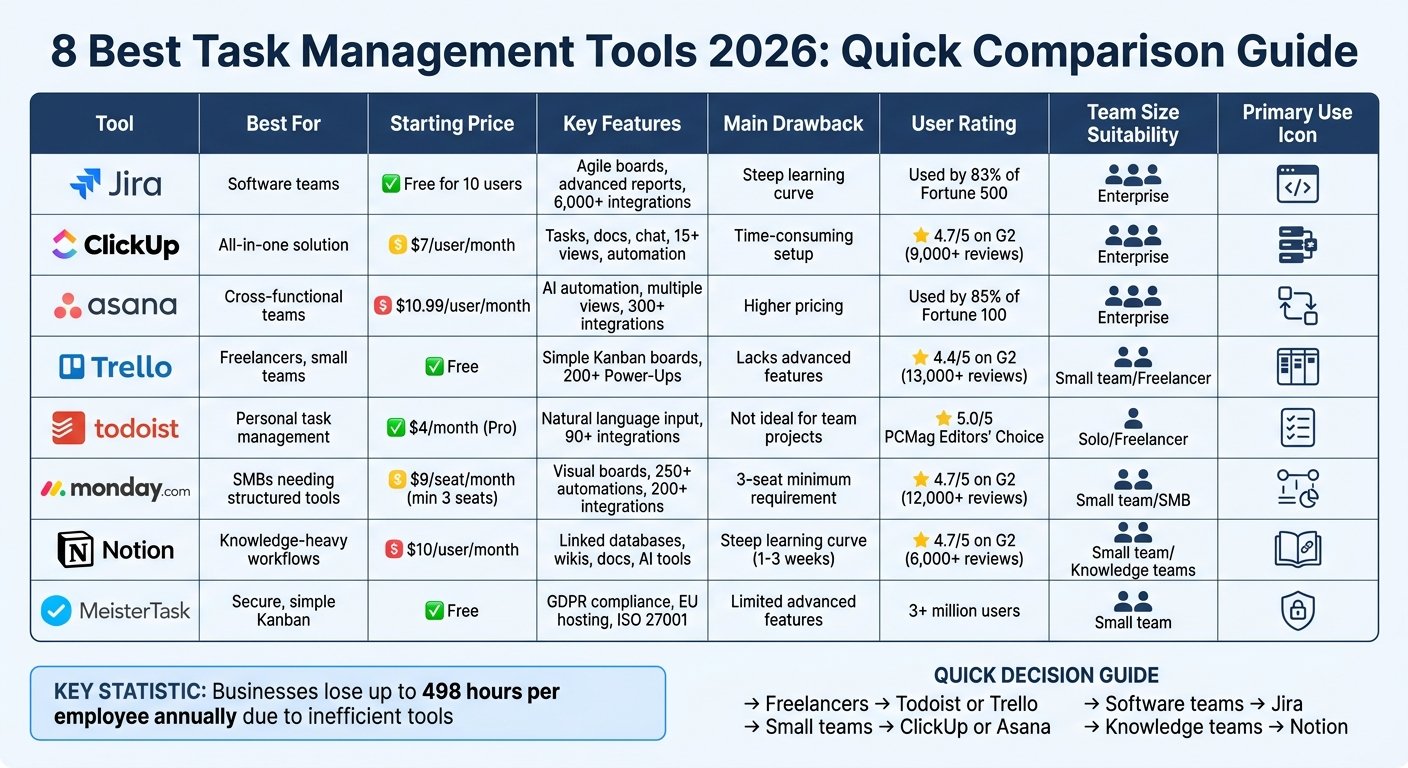
- ClickUp — best at holding tasks, docs, goals and reporting in one place; suits teams disciplined enough to agree a structure first.
- Notion — best at assembling your own workspace from docs and databases; suits small teams happy to build rather than buy.
- Airtable — best at linked records and multiple views of the same data; suits ops teams whose work is really a database.
- Smartsheet — best at project schedules, forms and approvals in a spreadsheet grid; suits spreadsheet-native teams moving up a level.
- Wrike — best at requests, approvals and cross-team reporting at scale; suits large departments, not a team of five.
- Teamwork — best at billable client projects with budgets and profitability; suits agencies watching margin per client.
- Paymo — best at keeping tasks, time and invoicing together; suits freelancers and small agencies billing by the hour.
- Harvest — best at turning logged hours and expenses into invoices; suits firms that have a project tool and need billing.
- Podio — best at modelling unusual processes you design yourself; suits teams with someone willing to own the build.
- Bitrix24 — best at bundling projects, CRM and chat on company-priced plans; suits small firms consolidating tools.
- Miro — best at live planning on a shared canvas; suits remote teams running workshops before the work becomes tasks.
- Lucidchart — best at process maps several people edit at once; suits teams documenting how work flows.
- Box — best at governed file storage with permissions and audit trails; suits regulated teams whose project files need control.
What to watch out for
- Per-seat pricing that is comfortable at four people and painful at fifteen. Price it at next year’s headcount, contractors included, and check whether view-only users are charged.
- Migration cost that lands after the decision. Moving live projects, attachments and history is manual work, done by your busiest person.
- Features nobody uses. Dependencies, workload charts and portfolios sell licences, then go quiet within a quarter unless someone reports on them.
- Free tiers with caps that bite exactly when the tool becomes useful — limits on boards, guests, automations or history. Check the cap before you standardise on it.
Questions people ask
Do we need project management software at all?
If the work fits in one list and nobody hands off, a shared document is fine. Once work passes between people with deadlines attached, a tool starts paying for itself.
Can one tool replace chat, docs and projects?
Partly. Consolidating cuts the bill and the tab count, but bundled chat and docs rarely match the dedicated ones, and switching costs rise sharply once everything sits with one vendor.
How long should a trial run?
Long enough to cover one full cycle of real work — a sprint, a client project, a month of requests — using real data. A trial on invented tasks tells you nothing.
See the full, always-current list on the project management tools page.